


Menards Expanded Metal
In the realm of industrial design and filtration, selecting the right metal substrate is a critical decision that impacts the longevity, efficiency, and structural integrity of a system. For many general contractors and DIY enthusiasts, sourcing materials like menards expanded metal provides a convenient solution for residential projects, basic fencing, or decorative accents. However, when the application shifts toward high-precision industrial filtration, chemical processing, or heavy-duty hydraulic systems, the requirements for material certification, dimensional tolerance, and custom configuration become paramount.
Understanding the distinction between retail-grade expanded metal and engineered solutions is essential for technical professionals. This article explores the technical specifications of expanded metal, the engineering considerations for industrial applications, and how to determine if a standard retail product or a customized Perforated & Expanded Metal solution is required for your specific project.
The Fundamentals of Expanded Metal Production
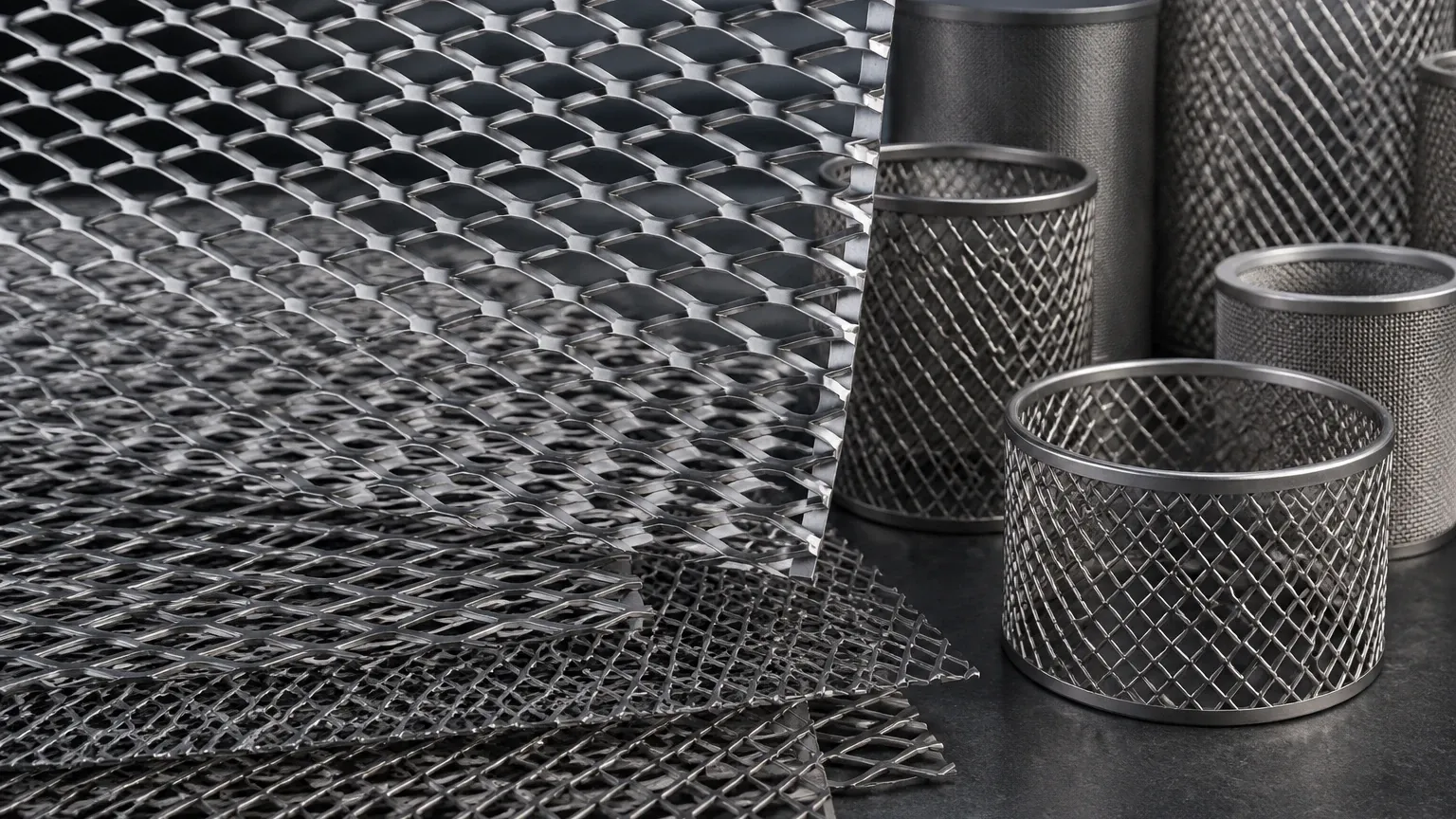
Expanded metal is a versatile material created through a process of slitting and stretching a single sheet of solid metal. Unlike woven wire mesh, which consists of individual wires interlaced together, expanded metal is a single-piece construction. This manufacturing method ensures that the material cannot unravel, maintaining its structural integrity even when cut into complex shapes.
The Expansion Process
During production, a metal sheet is simultaneously slit and cold-stretched. This creates diamond-shaped openings surrounded by interconnected strands of metal. Because no material is lost during the process, expanded metal is often a more cost-effective and environmentally friendly alternative to perforated metal, where the "slugs" or holes are punched out and discarded as scrap.
Standard vs. Flattened Expanded Metal
There are two primary forms of expanded metal used in industrial and commercial settings:
1. Standard (Raised) Expanded Metal: In this form, the strands and bonds are set at a uniform angle to the plane of the sheet. This creates a textured surface that offers excellent grip and strength-to-weight ratios. It is frequently used for catwalks, ramps, and safety guards.
2. Flattened Expanded Metal: This is standard expanded metal that has been cold-rolled through a reducing mill. The process flattens the strands and bonds, resulting in a smooth, level surface. Flattened metal is thinner than the original sheet and is often preferred for filtration supports or decorative panels where a flush surface is required to prevent abrasion to secondary filter media.
Comparing Retail Availability and Industrial Customization
When searching for menards expanded metal, many users find standard sizes and materials suitable for general-purpose use. Retail outlets typically stock carbon steel or aluminum expanded metal in common diamond sizes. These are excellent for home repairs, small-scale security grilles, or basic machine guards.
However, industrial engineers often face challenges that retail products cannot address. In sectors such as pharmaceutical manufacturing or chemical processing, the specific grade of stainless steel (such as 316L for superior corrosion resistance) is non-negotiable. Furthermore, industrial applications often require precise "open area" percentages to manage flow rates and pressure drops—specifications that are rarely detailed on retail product labels.
For high-performance filtration, the consistency of the bond and strand width is vital. Variations in these dimensions can lead to uneven flow distribution or structural failure under high-pressure conditions. While retail options are accessible for immediate, low-stakes needs, customized manufacturing allows for the integration of specific edge treatments, non-standard diamond sizes, and material certifications (MTRs) that ensure compliance with industry standards.
Key Engineering Specifications for Industrial Use
To accurately specify expanded metal for an engineering project, professionals must move beyond general descriptions and use standardized terminology. The performance of the material is dictated by several key dimensions:
* SWD (Short Way of Design): The distance from the center of one bond to the center of the next bond measured across the short diamond diagonal.
* LWD (Long Way of Design): The distance from the center of one bond to the center of the next bond measured across the long diamond diagonal.
* SWO (Short Way of Opening): The actual width of the opening, measured from the inside of the bonds.
* LWO (Long Way of Opening): The actual length of the opening, measured from the inside of the bonds.
* Strand Width: The amount of metal fed into the expanding machine for each stroke.
* Strand Thickness: The thickness of the base metal being expanded.
By manipulating these variables, manufacturers can create a product that balances weight, transparency, and mechanical strength. In filtration, the SWO and LWO are particularly important as they determine the size of the particles that will be captured or allowed to pass through the primary stage of a multi-stage filter.
Material Selection: Why Stainless Steel Matters in Filtration
While carbon steel is common in general construction, stainless steel is the gold standard for industrial filtration components. The choice of material directly affects the filter's lifespan and its compatibility with the fluid or gas being processed.
304 Stainless Steel
This is the most common grade of stainless steel used for expanded metal. It offers good corrosion resistance to most oxidizing acids and is easily cleaned, making it suitable for food and beverage applications. It is a cost-effective choice for environments where moisture is present but extreme chemical exposure is not expected.
316/316L Stainless Steel
For more demanding environments, such as marine applications or chemical processing plants, 316 stainless steel is preferred. It contains molybdenum, which significantly increases resistance to chloride-induced pitting and crevice corrosion. 316L (low carbon) is often specified for components that require welding, as it prevents carbide precipitation that can lead to corrosion at the weld sites.
Specialty Alloys
In extreme cases involving high temperatures or highly corrosive acids, engineers may specify nickel alloys or titanium. These materials ensure that the expanded metal structure remains intact even when exposed to harsh industrial catalysts or high-pressure steam cleaning cycles.
Performance Metrics: Open Area and Flow Dynamics
In B2B industrial procurement, the "open area" of a metal sheet is a critical performance metric. It refers to the percentage of the total area that is comprised of openings. This figure is essential for calculating the flow rate of liquids or gases through a filter assembly.
If the open area is too low, the system will experience a significant pressure drop, forcing pumps to work harder and increasing energy consumption. Conversely, if the open area is too high, the structural integrity of the expanded metal may be compromised, leading to deformation under the weight of the filter cake or the force of the fluid flow.
Engineers must also consider the "angle of the strand." In standard expanded metal, the angled strands can create a directional flow or act as a baffle. This characteristic can be leveraged to deflect larger debris or to promote turbulence, which can be beneficial in certain heat exchange or mixing applications.
Applications in Industrial Filtration Systems
Expanded metal serves several vital roles in the design of industrial filter cartridges and systems. Its unique structure allows it to perform functions that other materials cannot easily replicate.
1. Support Cores
In many liquid filter cartridges, the primary filtration media (such as pleated paper or fine wire mesh) lacks the structural strength to withstand high differential pressures. Expanded metal is rolled into cylinders to act as an internal support core. Its high hoop strength prevents the filter media from collapsing inward as it becomes loaded with contaminants.
2. Protective Outer Guards
Filter elements are often susceptible to mechanical damage during installation or handling. An outer wrap of flattened expanded metal provides a rugged shield that protects the delicate inner media without significantly impeding the flow of the process fluid.
3. Pre-Filtration and Strainers
In systems dealing with heavy debris, expanded metal acts as a robust pre-filter. It captures large particulates (such as wood chips, scale, or stones) before they reach the finer, more expensive secondary filter stages. This extends the service life of the entire filtration system and reduces maintenance costs.
4. Flame Arrestors and Spark Guards
The thermal conductivity of stainless steel expanded metal makes it an effective component in flame arrestors. The mesh-like structure dissipates heat rapidly, preventing the passage of flames through a vent or pipe while still allowing for the necessary ventilation of gases.
Procurement and Quality Assurance: What Engineers Must Confirm
When transitioning from a retail mindset to an industrial procurement strategy, there are several factors that purchasing teams and engineers should verify to ensure the success of their project:
* Dimensional Tolerances: Unlike general-purpose metal, industrial filters require tight tolerances on the SWD and LWD to ensure they fit perfectly into housings or around other components.
* Flatness Requirements: For flattened expanded metal, the degree of flatness is crucial. Any residual camber or waviness can interfere with automated welding processes or cause gaps in a filter assembly.
* Burr-Free Finishes: In food, beverage, and pharmaceutical industries, the presence of metal burrs or sharp edges is a major safety concern. Industrial manufacturers can provide deburring and polishing services to ensure the material is safe for contact with sensitive products.
* Cleaning and Degreasing: Metal used in oxygen service or high-purity chemical lines must be free of residual oils from the manufacturing process. Specifying "oil-free" or "ultrasonically cleaned" material is often necessary.
Conclusion
While menards expanded metal serves a valuable purpose for the general consumer market, the rigors of industrial filtration demand a more specialized approach. By focusing on precise engineering specifications, material purity, and application-specific designs, technical professionals can ensure their filtration systems operate at peak efficiency. Whether you are designing a new hydraulic system or optimizing a chemical processing line, choosing the right Perforated & Expanded Metal solution involves a deep understanding of both the material's capabilities and the specific demands of the industrial environment.
