


Mild Steel Expanded Metal
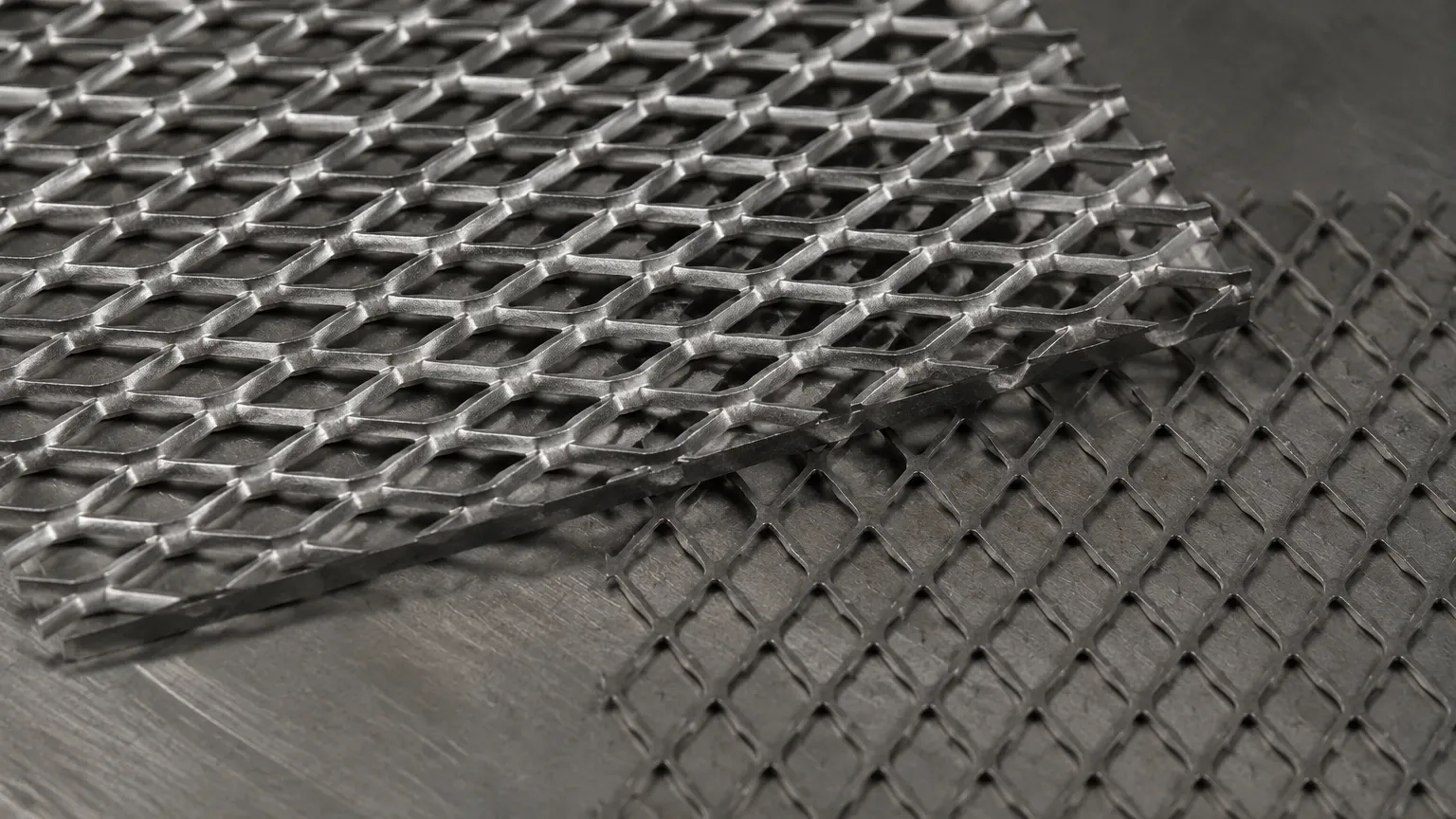
In the realm of industrial fabrication and filtration, mild steel expanded metal stands as one of the most versatile and cost-effective materials available to engineers. Characterized by its diamond-shaped apertures and monolithic structure, this material is produced through a process of simultaneous slitting and stretching. Unlike perforated materials, expanded metal is manufactured without any scrap loss, making it an environmentally and economically efficient choice for a wide range of structural, protective, and filtration applications.
For technical professionals and purchasing teams, understanding the nuances of mild steel expanded metal—from its geometric specifications to its mechanical performance—is essential for optimizing project outcomes. This guide examines the technical properties, manufacturing variations, and engineering considerations necessary for the successful integration of expanded metal into industrial systems.
The Manufacturing Process: Slitting and Stretching
The production of mild steel expanded metal is a precision engineering process that differentiates it from other metal mesh products. It begins with a solid sheet or coil of low-carbon (mild) steel. This base material is fed through an expanding machine equipped with a set of reciprocating knives. As the knives descend, they create a series of precise slits in the metal while simultaneously stretching the material forward.
This stretching action creates the characteristic diamond-shaped openings. Because the metal is expanded rather than punched, there is no waste material generated during the primary forming process. The resulting mesh is a single piece of metal; the "bonds" where the diamonds meet are part of the original sheet, not welds or joints. This structural integrity is a primary reason why expanded metal is preferred in high-stress environments where mechanical failure at joint points must be avoided.
In the context of Perforated & Expanded Metal, the expanded variety offers a unique strength-to-weight ratio. By expanding the metal, a small amount of raw steel can be transformed into a large surface area of mesh, providing significant cost savings without compromising the structural stability required for industrial guards, walkways, or filtration support structures.
Technical Terminology and Geometric Standards
To accurately specify mild steel expanded metal for an OEM project, engineers must use standardized terminology. The geometry of the mesh is defined by several key measurements that dictate its performance in both structural and filtration roles.
* SWD (Short Way of Diamond): The distance from the middle of the bond on one side to the middle of the bond on the opposite side, measured across the short axis of the diamond.
* LWD (Long Way of Diamond): The distance measured across the long axis of the diamond, from bond center to bond center.
* SWO (Short Way of Opening): The actual width of the opening, excluding the strand width.
* LWO (Long Way of Opening): The actual length of the opening.
* Strand Width: The amount of metal fed into the knives for each stroke, which determines the thickness of the mesh walls.
* Strand Thickness: The original thickness of the base mild steel sheet.
When these dimensions are combined, they determine the "open area" of the mesh. In filtration applications, the open area is a critical variable as it directly impacts the flow rate and pressure drop across the filter assembly. For structural applications, the strand width and thickness are the primary determinants of load-bearing capacity and rigidity.
Standard vs. Flattened Expanded Metal
Mild steel expanded metal is typically available in two distinct forms: Standard (Raised) and Flattened. Choosing between these two depends heavily on the intended application and the required surface characteristics.
Standard (Raised) Expanded Metal
Standard expanded metal is the product as it comes directly from the expanding machine. The strands and bonds are set at a uniform angle to the plane of the sheet. This creates a three-dimensional surface that offers several functional advantages. In industrial flooring or walkways, the raised edges provide excellent slip resistance. In filtration, the angled strands can help deflect larger particles or create turbulence that may be desirable in certain mixing or separation processes. Furthermore, the raised structure provides maximum rigidity and resistance to bending.
Flattened Expanded Metal
Flattened expanded metal is produced by passing the standard expanded sheet through a cold-rolling reducing mill. This process flattens the strands and bonds into a single horizontal plane, resulting in a smooth, flat surface. Flattening increases the length of the sheet (usually by about 5%) but maintains the width. Engineers often specify flattened mild steel expanded metal when the mesh needs to be bonded to a secondary filter medium, such as a fine wire mesh or a non-woven fabric. The flat surface prevents the support mesh from cutting into or abrading the finer filtration layers during pressure cycles. It is also preferred for applications where a smooth aesthetic or a specific thickness tolerance is required.
Material Characteristics of Mild Steel in Industrial Filtration
While Kaifil specializes in high-performance stainless steel solutions, mild steel expanded metal serves as a vital component in many industrial systems where cost-efficiency is a priority and the environment is non-corrosive or can be mitigated through coatings. Mild steel, typically defined by a low carbon content (usually less than 0.25%), offers excellent weldability and formability.
In hydraulic and lubrication systems, mild steel expanded metal is frequently used as a rigid support core for pleated filter elements. Its ability to be rolled into cylinders and seam-welded without losing structural integrity makes it an ideal substrate for heavy-duty cartridges. However, engineers must consider the chemical compatibility of the fluid being filtered. Mild steel is susceptible to oxidation (rust) if exposed to water or corrosive chemicals. In such cases, the expanded metal must be treated or replaced with a stainless steel alternative to ensure the longevity of the filtration system.
Engineering Considerations: Open Area and Flow Resistance
One of the most common questions engineers face when selecting Perforated & Expanded Metal is how to calculate the percentage of open area. This value is essential for determining the hydraulic performance of a filter or the ventilation efficiency of a machine guard.
The open area of expanded metal is calculated based on the relationship between the strand width and the SWD. A wider strand results in a smaller opening and a lower percentage of open area, which increases the structural strength but also increases the pressure drop. Conversely, a narrow strand increases the open area, allowing for higher flow rates but reducing the mesh's ability to withstand mechanical loads.
For filtration support, the goal is usually to maximize the open area to reduce energy consumption (pump head) while maintaining enough surface area to support the primary filter media against the differential pressure. If the open area is too high, the primary media may "bridge" across the diamond openings and eventually rupture under high pressure. If it is too low, the filter becomes inefficient. Technical teams must balance these factors during the design phase, often specifying custom strand widths to achieve the exact performance profile required for the application.
Surface Treatment and Corrosion Protection
Because mild steel is prone to corrosion, surface treatment is a critical consideration for any B2B procurement involving this material. Depending on the industrial environment, several options are available to extend the service life of expanded metal components:
1. Galvanizing: Hot-dip galvanizing is the most common treatment for mild steel expanded metal used in outdoor or humid environments. The zinc coating provides both a physical barrier and cathodic protection. This is ideal for industrial walkways, security fencing, and large-scale water intake screens.
2. Powder Coating: This provides a durable, corrosion-resistant finish in a variety of colors. It is often used in machine guarding and architectural applications where both protection and aesthetics are important.
3. Electro-Galvanizing: A thinner zinc coating applied through an electrolytic process. This is suitable for indoor applications or components that will be further processed or painted.
4. Oiling: For components used in hydraulic systems or environments where they will be submerged in oil, a simple light oil coating may be sufficient to prevent rust during transit and storage.
When specifying these treatments, engineers must account for the change in dimensions. For example, hot-dip galvanizing can add a measurable thickness to the strands, which may slightly decrease the open area and affect the fit of precision-engineered components.
Industrial Use Cases and Applications
Mild steel expanded metal is utilized across a diverse range of sectors due to its adaptability. In the chemical processing industry, it serves as a support structure for catalyst beds and as protective screening for sensitive equipment. In the food and beverage sector, while stainless steel is preferred for direct contact, mild steel expanded metal is often used in the secondary packaging and utility areas for safety guarding and ventilation.
In hydraulic and water treatment applications, expanded metal acts as a robust outer cage for filter cartridges, protecting the inner media from mechanical damage during installation and operation. It is also used in heavy machinery as air intake filters and radiator guards, where it must withstand high-velocity impacts from debris while allowing for maximum airflow.
For security and construction, the anti-climb properties and high strength of expanded metal make it a standard choice for security partitions, tool cribs, and reinforced concrete. The fact that the mesh cannot be easily cut with standard wire cutters—due to the thickness of the strands and the lack of individual wires to unravel—adds a significant layer of security.
Procurement and Customization for OEM Projects
When sourcing mild steel expanded metal for OEM applications, purchasing teams should confirm several factors to ensure the material meets the project's technical requirements. Kaifil’s manufacturing expertise allows for a high degree of customization, which is often necessary when standard off-the-shelf sizes do not meet engineering tolerances.
Key confirmations before ordering include:
* Dimensional Tolerances: Specify the allowable variance in sheet size, flatness, and diamond dimensions. Standard industrial tolerances may not be sufficient for precision filtration housings.
* Edge Configurations: Expanded metal can be supplied with "random sheared" edges (where the diamonds are cut mid-pattern) or "bond sheared" edges (where the cut follows the line of the bonds). Bond shearing provides a safer, smoother edge but may affect the overall dimensions.
* Flattening Requirements: Ensure that if a flat surface is required, the flattening process does not compromise the strand integrity for the specific gauge of steel used.
* Material Certification: For critical industrial applications, request material test reports (MTRs) to verify the chemical composition and mechanical properties of the mild steel batch.
By working closely with a manufacturer that understands both the structural and filtration aspects of the material, engineers can develop customized solutions that optimize the total cost of ownership. Whether the requirement is for a high-strength support core or a lightweight protective screen, mild steel expanded metal remains a foundational material in modern industrial design.
For those evaluating the best mesh type for their specific environment, comparing the benefits of expanded metal against perforated options is a necessary step. Detailed specifications and application support can be found by reviewing professional product options for Perforated & Expanded Metal, ensuring that the chosen material aligns with both performance expectations and budgetary constraints.
