


Three-quarter Inch Expanded Metal
In industrial manufacturing and structural engineering, the selection of metal mesh components requires a precise understanding of material geometry, load-bearing capacity, and environmental resistance. Among the various specifications available in the category of Perforated & Expanded Metal, three-quarter inch expanded metal stands as one of the most versatile and widely utilized standards. This specification is frequently employed in applications ranging from heavy-duty industrial guards and walkways to critical support structures within filtration systems.
For engineers and procurement professionals, specifying three-quarter inch expanded metal involves more than selecting a hole size. It requires an evaluation of the manufacturing process, the metallurgical properties of the substrate, and the mechanical performance of the finished mesh. As a specialized manufacturer of stainless steel filtration solutions, Kaifil provides high-precision expanded metal components designed to meet the rigorous demands of chemical processing, food and beverage production, and hydraulic applications.
Understanding the Geometry of 3/4" Expanded Metal
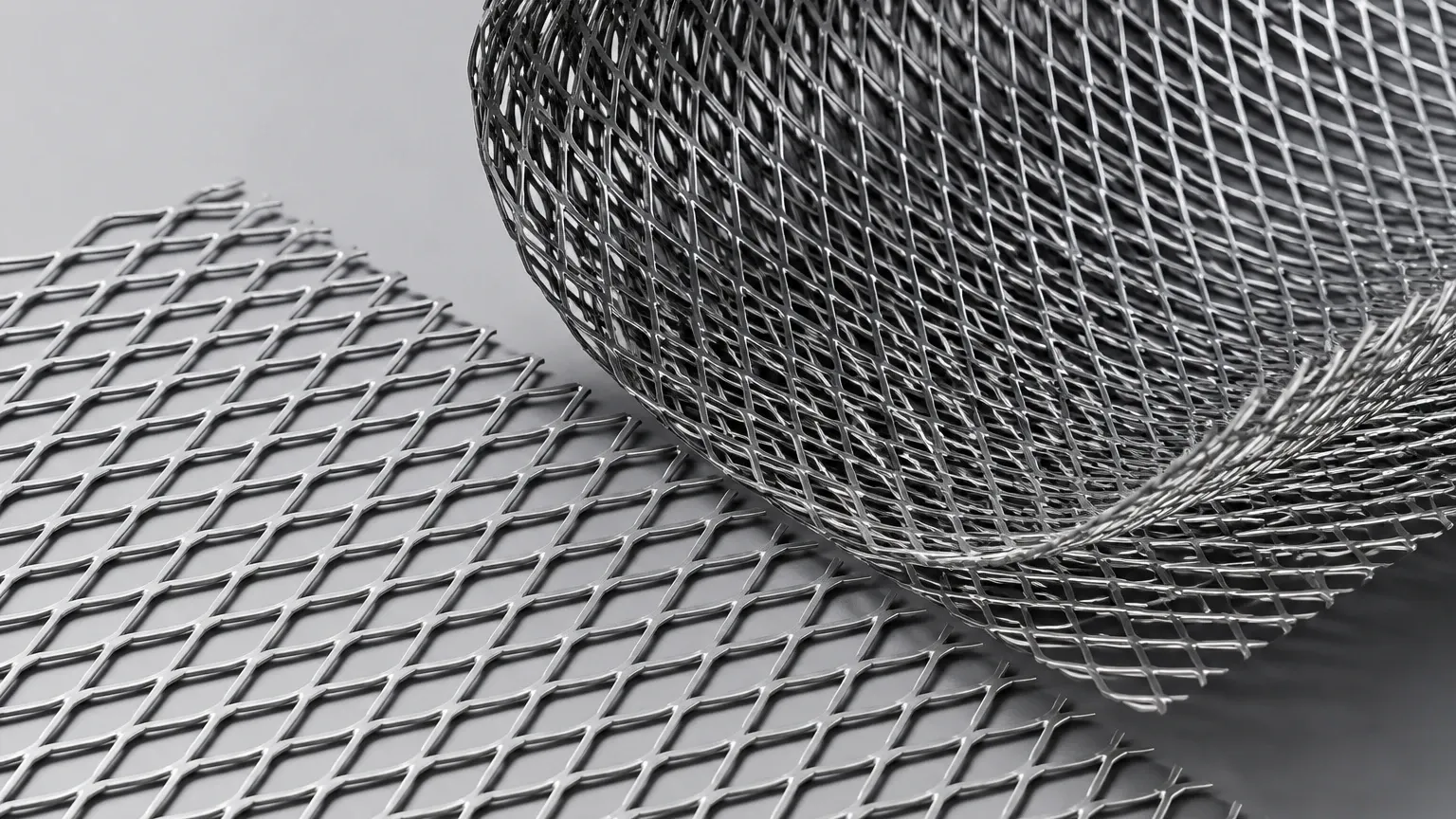
The term "three-quarter inch expanded metal" refers to the nominal dimension of the diamond-shaped openings created during the expansion process. Unlike perforated metal, which is produced by punching holes out of a solid sheet, expanded metal is manufactured by simultaneously slitting and stretching the material. This process creates a continuous mesh without joins or welds, maintaining the structural integrity of the original metal sheet while significantly reducing its weight.
To accurately specify three-quarter inch expanded metal, engineers must focus on four primary geometric variables:
1. Long Way of the Diamond (LWD): This is the distance from the center of one joint to the center of the next joint across the long axis of the diamond. In a standard 3/4" mesh, the actual LWD is typically around 0.923 inches, though this can vary slightly based on the manufacturer’s tooling.
2. Short Way of the Diamond (SWD): This is the distance across the short axis of the diamond. For 3/4" specifications, the SWD usually measures approximately 0.500 inches.
3. Strand Width: This refers to the amount of metal between the openings. Increasing the strand width increases the overall strength and weight of the mesh but reduces the open area percentage.
4. Strand Thickness: This is the thickness of the original base metal. Common gauges for 3/4" expanded metal include #9, #10, and #13 gauge.
By manipulating these variables, manufacturers can tailor the mesh to provide specific levels of rigidity, transparency, and airflow. For filtration applications, the precision of these dimensions is critical, as they dictate the mechanical support provided to finer filter media.
Standard vs. Flattened Expanded Metal Profiles
When sourcing three-quarter inch expanded metal, one of the most important technical decisions is choosing between "Standard" (raised) and "Flattened" profiles. Each profile offers distinct mechanical advantages depending on the intended industrial environment.
Standard Expanded Metal
Standard expanded metal, also known as raised expanded metal, is the product as it comes off the expanding machine. The strands and bonds are set at a uniform angle to the plane of the sheet. This creates a three-dimensional surface that offers several benefits:
* High Strength-to-Weight Ratio: The angled strands provide inherent structural rigidity, making it excellent for load-bearing applications.
* Anti-Slip Properties: The raised edges provide natural traction, which is why 3/4" #9 standard expanded metal is a preferred choice for industrial catwalks and stair treads.
* Deflection and Shielding: The angular orientation of the strands can be used to deflect light or provide security screening while still allowing for ventilation.
Flattened Expanded Metal
Flattened expanded metal is produced by passing the standard expanded sheet through a cold-roll reducing mill. This process flattens the strands and bonds into the same plane as the sheet. The results include:
* Smooth Surface: Flattened mesh is safer to handle and prevents snagging, which is essential in food processing environments or where personnel frequently come into contact with the mesh.
* Consistent Thickness: Flattening ensures a uniform thickness across the entire sheet, which is a requirement when the mesh is used as a pleat support in stainless steel filter cartridges.
* Ease of Fabrication: A flat surface is often easier to weld or bolt into frames compared to the raised profile of standard mesh.
Material Selection and Corrosion Resistance
The performance of three-quarter inch expanded metal is heavily dependent on the material grade selected. While carbon steel is common for general structural use, industrial filtration and chemical processing applications typically require stainless steel or specialized alloys to ensure longevity and prevent contamination.
Stainless Steel 304 and 316
At Kaifil, we specialize in stainless steel Perforated & Expanded Metal because of its superior resistance to oxidation and corrosion.
* Type 304: This is the most common stainless steel grade, providing excellent durability and resistance to most atmospheric conditions. It is frequently used in food processing and general industrial machinery.
* Type 316: For environments involving high salinity, chlorides, or aggressive chemicals (such as in pharmaceutical or marine applications), Type 316 is the preferred choice. The addition of molybdenum enhances its pitting resistance, ensuring the mesh maintains its structural integrity over long-term exposure.
Aluminum and Special Alloys
In applications where weight reduction is a primary concern, such as in aerospace or portable filtration units, aluminum expanded metal is utilized. For high-temperature environments or highly acidic processes, nickel alloys or titanium may be specified to prevent premature failure of the mesh components.
Engineering Considerations for Filtration and Support
In the context of industrial filtration, three-quarter inch expanded metal often serves as the "backbone" of a multi-layered filtration system. It is rarely the primary filter medium for fine particles; instead, it provides the necessary mechanical reinforcement for wire mesh or synthetic membranes.
Open Area and Flow Dynamics
One of the most critical calculations for engineers is the percentage of open area. For a typical 3/4" #9 flattened expanded metal, the open area is approximately 65-75%. This high percentage of open area is vital for:
* Minimizing Pressure Drop: In hydraulic or gas filtration, maintaining a low pressure drop across the filter assembly is essential for system efficiency. The large openings of the 3/4" mesh allow for high flow rates with minimal resistance.
* Effective Pre-filtration: In wastewater treatment, 3/4" expanded metal can act as a primary screen to remove large debris before the fluid reaches finer filtration stages, protecting sensitive equipment downstream.
Mechanical Support for Filter Media
When fine wire mesh is used for high-precision filtration, it often lacks the structural strength to withstand high-pressure differentials. By using three-quarter inch expanded metal as a support cage or outer wrap, the finer media is protected from deformation. The diamond pattern of the expanded metal distributes pressure evenly across the surface, preventing the "ballooning" or bursting of filter cartridges under heavy loads.
Selection Criteria and Procurement Checklist
To ensure the successful integration of three-quarter inch expanded metal into a project, purchasing teams and engineers should confirm several technical details before procurement. Overlooking these factors can lead to installation difficulties or premature component failure.
1. Style Designation: Clearly specify whether the application requires "Standard" or "Flattened" mesh.
2. Material Grade: Confirm the chemical environment. If the mesh will be exposed to cleaning agents (CIP processes) or corrosive fluids, ensure a 304 or 316 stainless steel grade is selected.
3. Sheet Direction: The orientation of the diamonds (LWD vs. SWD) can affect the strength and appearance of the final product. Specify if the LWD should run parallel or perpendicular to the length of the sheet.
4. Edge Conditions: Expanded metal can have "random sheared" edges, where diamonds are cut through, or "bond sheared" edges, which provide a smoother finish. For safety and ease of welding, bond shearing is often preferred.
5. Tolerances: Standard commercial tolerances may not be sufficient for precision filtration components. Discuss specific dimensional requirements with the manufacturer to ensure the mesh fits perfectly into housings or frames.
Customization and OEM Solutions from Kaifil
Standard off-the-shelf expanded metal often fails to meet the specialized needs of advanced industrial applications. Kaifil addresses this gap by providing customized Perforated & Expanded Metal solutions tailored to specific engineering requirements. Our manufacturing capabilities allow for precise control over strand width, thickness, and material selection, ensuring that every component performs reliably in its intended environment.
Whether you are designing a new hydraulic filtration system, a chemical reactor screen, or a protective industrial guard, the choice of three-quarter inch expanded metal must be backed by technical data and material expertise. By focusing on the nuances of mesh geometry and material science, engineers can optimize their systems for both performance and cost-effectiveness.
For more information on selecting the right mesh for your application or to discuss custom OEM requirements, reviewing technical product options is the first step toward achieving durable and efficient filtration performance. The integration of high-quality expanded metal is an investment in the longevity and safety of industrial infrastructure.
