


Expanded Metal Roll
In the landscape of industrial filtration and structural support, the choice of material and its delivery format significantly impacts both production efficiency and final product performance. An expanded metal roll represents a versatile, cost-effective, and highly functional solution for engineers and procurement professionals across diverse sectors, including chemical processing, hydraulics, and food production. Unlike individual sheets, the roll format is specifically engineered for continuous manufacturing processes, offering distinct advantages in material handling and waste reduction.
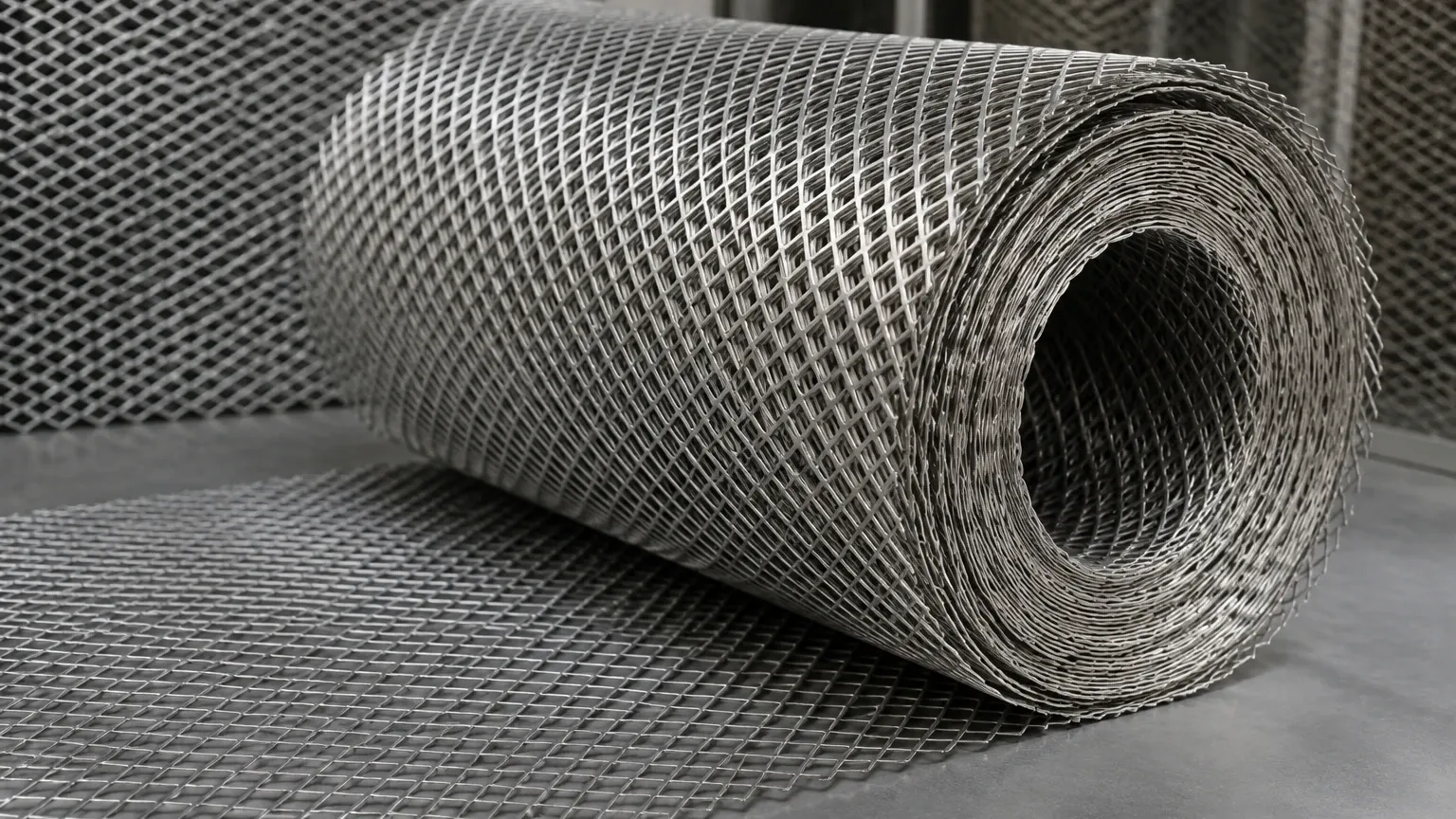
Expanded metal is a unique material produced by simultaneously slitting and stretching a solid metal sheet or coil. This process creates a network of diamond-shaped openings, resulting in a product that is stronger, lighter, and more rigid than the original base material. When this process is applied to continuous coils, the result is an expanded metal roll, a staple in high-volume industrial applications where consistency and mechanical integrity are non-negotiable.
The Manufacturing Process: From Coil to Expanded Mesh
The production of an expanded metal roll is a precision engineering feat that involves no material waste—a critical factor in modern sustainable manufacturing. The process begins with a solid metal coil, typically stainless steel, carbon steel, or aluminum. As the coil is fed through an expanding machine, a set of reciprocating knives slits the metal while simultaneously stretching it.
The geometry of the knives and the degree of stretching determine the size and shape of the diamond apertures. Because the metal is stretched rather than punched, the "bonds" (the intersections of the strands) remain integral to the material. This ensures that the structural strength of the original metal is maintained and often enhanced through work hardening.
For filtration applications, manufacturers often distinguish between "raised" and "flattened" expanded metal. Raised expanded metal retains the natural angularity of the strands, providing a three-dimensional surface that can enhance turbulence in fluid flow or provide better grip for secondary coatings. Flattened expanded metal, however, undergoes an additional cold-rolling process. This flattens the strands and bonds into a single plane, creating a smooth, uniform surface that is ideal for support layers in fine wire mesh filters, where a consistent thickness and a non-abrasive surface are required.
Key Technical Specifications for Engineering Selection
When specifying an expanded metal roll for industrial filtration or structural components, engineers must navigate several critical dimensions that define the material's performance. Understanding these metrics is essential when evaluating Perforated & Expanded Metal options for specific projects.
SWD and LWD (Short Way and Long Way of Diamond)
These dimensions refer to the distance from the center of one bond to the center of the next bond across the diamond's short and long axes. SWD and LWD are the primary indicators of the aperture size. In filtration, the SWD is often the more critical dimension as it determines the maximum particle size that can pass through the mesh before it reaches the secondary filter media.
Strand Width and Thickness
The strand width is the amount of metal fed between the knives for each stroke, while the thickness refers to the gauge of the original base metal. Together, these dimensions determine the mechanical strength of the mesh and its total weight. In high-pressure hydraulic applications, a thicker strand is often necessary to resist deformation under flow-induced stress.
Open Area Percentage
The open area is perhaps the most vital specification for filtration engineers. It represents the ratio of the area of the openings to the total area of the mesh. A higher open area reduces pressure drop across the filter but may compromise structural rigidity. Calculating the optimal balance between permeability and strength is a core task in filter design.
Material Considerations for Industrial Filtration
The environment in which the expanded metal roll will operate dictates the material selection. At Kaifil, the focus is often on high-performance alloys that can withstand corrosive or high-temperature environments.
1. Stainless Steel (304 and 316L): The industry standard for filtration. Grade 304 offers excellent strength and basic corrosion resistance, while 316L provides superior resistance to chlorides and acids, making it essential for pharmaceutical and marine applications.
2. Carbon Steel: Frequently used in hydraulic oil filtration where corrosion is less of a concern due to the presence of lubricating oils. It offers high strength-to-weight ratios and is a cost-effective choice for internal support cores.
3. Aluminum: Chosen for lightweight applications or where specific chemical compatibility is required. Aluminum expanded metal rolls are common in aerospace and air filtration systems.
4. Specialty Alloys: For extreme environments, materials like Monel, Inconel, or Titanium can be expanded, though these require specialized manufacturing expertise to ensure the integrity of the bonds during the stretching process.
Advantages of Utilizing Rolls in High-Volume Production
For many B2B buyers, the decision to procure an expanded metal roll rather than cut-to-size sheets is driven by operational efficiency. The roll format is inherently designed for integration into automated production lines.
Continuous Feeding and Reduced Downtime
In manufacturing environments where expanded metal is used as a support layer for pleated filters, rolls allow for continuous feeding into pleating machines. This eliminates the need for frequent manual reloading and reduces the risk of machine downtime associated with handling individual sheets.
Waste Minimization
When working with rolls, manufacturers can cut the exact length required for a specific production run. This "just-in-time" cutting significantly reduces scrap compared to using pre-cut sheets that may not perfectly match the final product dimensions. In large-scale operations, the cumulative material savings can be substantial, directly impacting the total cost of ownership.
Logistics and Storage
Expanded metal rolls are more compact to store and easier to transport than large crates of flat sheets. They can be handled with standard coil-handling equipment, reducing the labor intensity of the receiving and inventory management processes.
Critical Roles in Filtration Systems
An expanded metal roll serves several functional roles within a complex filtration assembly. It is rarely the primary filtration media but is almost always the component that ensures the primary media performs as intended.
Support and Pleat Spacing
In pleated filter cartridges, expanded metal is often laminated to the filter paper or synthetic mesh. It acts as a "spacer," ensuring that the pleats remain open and evenly distributed under high flow rates. This prevents "pleat bunching," which would otherwise reduce the effective filtration area and increase pressure drop.
Protective Outer Wraps and Inner Cores
For industrial filter elements, expanded metal provides the necessary mechanical protection. As an outer wrap, it shields the delicate filter media from handling damage and large debris. As an inner core, it prevents the filter media from collapsing inward under the vacuum or pressure generated by the fluid flow.
Pre-Filtration and Trash Racks
In water treatment and heavy industrial processes, coarser expanded metal rolls are used as pre-filters. They capture large contaminants—such as stones, wood chips, or plastic debris—before they can reach and damage more sensitive downstream equipment like pumps or fine membrane filters.
Evaluating Performance and Durability
When integrating an expanded metal roll into a product design, engineers must look beyond the initial price point and consider long-term performance metrics.
* Pressure Drop (ΔP): Every component in a fluid system contributes to resistance. Engineers must select an expanded metal pattern that provides sufficient support without creating an excessive pressure drop, which would increase energy consumption for the system's pumps or compressors.
* Mechanical Stress and Fatigue: In applications with pulsating flows, such as hydraulic systems, the expanded metal must resist fatigue. The integrity of the bonds is paramount here; any micro-cracking during the expansion process can lead to structural failure over time.
* Cleaning and Reusability: In many industrial sectors, filters are cleaned and reused. Stainless steel expanded metal rolls are highly resistant to the ultrasonic cleaning or back-flushing processes used to extend the life of the filter element.
Customization and OEM Capabilities
Standard expanded metal patterns may not meet the specific requirements of advanced filtration technology. This is where the value of a specialized manufacturer like Kaifil becomes apparent. Customization options for an expanded metal roll include:
* Bespoke Aperture Sizes: Engineering specific SWD and LWD dimensions to match a proprietary filter media.
* Variable Strand Widths: Adjusting the strand width to achieve a precise balance between weight and burst strength.
* Surface Finishes: Providing degreased, passivated, or electro-polished finishes to meet the stringent hygiene standards of the food and pharmaceutical industries.
* Slitting to Width: Delivering rolls in the exact width required for the customer's production line, eliminating the need for secondary slitting operations at the customer's facility.
Conclusion: Making an Informed Procurement Decision
Selecting the right expanded metal roll requires a deep understanding of both the material's physical properties and the operational requirements of the final application. For engineers and purchasing teams, the goal is to find a balance between filtration efficiency, mechanical durability, and manufacturing throughput.
Before finalizing a specification, it is advisable to confirm the material grade, the precision of the expansion pattern, and the tolerances required for automated processing. By partnering with a manufacturer that understands the nuances of industrial filtration, companies can ensure they receive a product that not only meets technical standards but also contributes to a more efficient and cost-effective production cycle. Whether used as a robust support core or a protective outer layer, the expanded metal roll remains an indispensable component in the pursuit of high-performance industrial filtration solutions.
