


Expanded Metal Raised
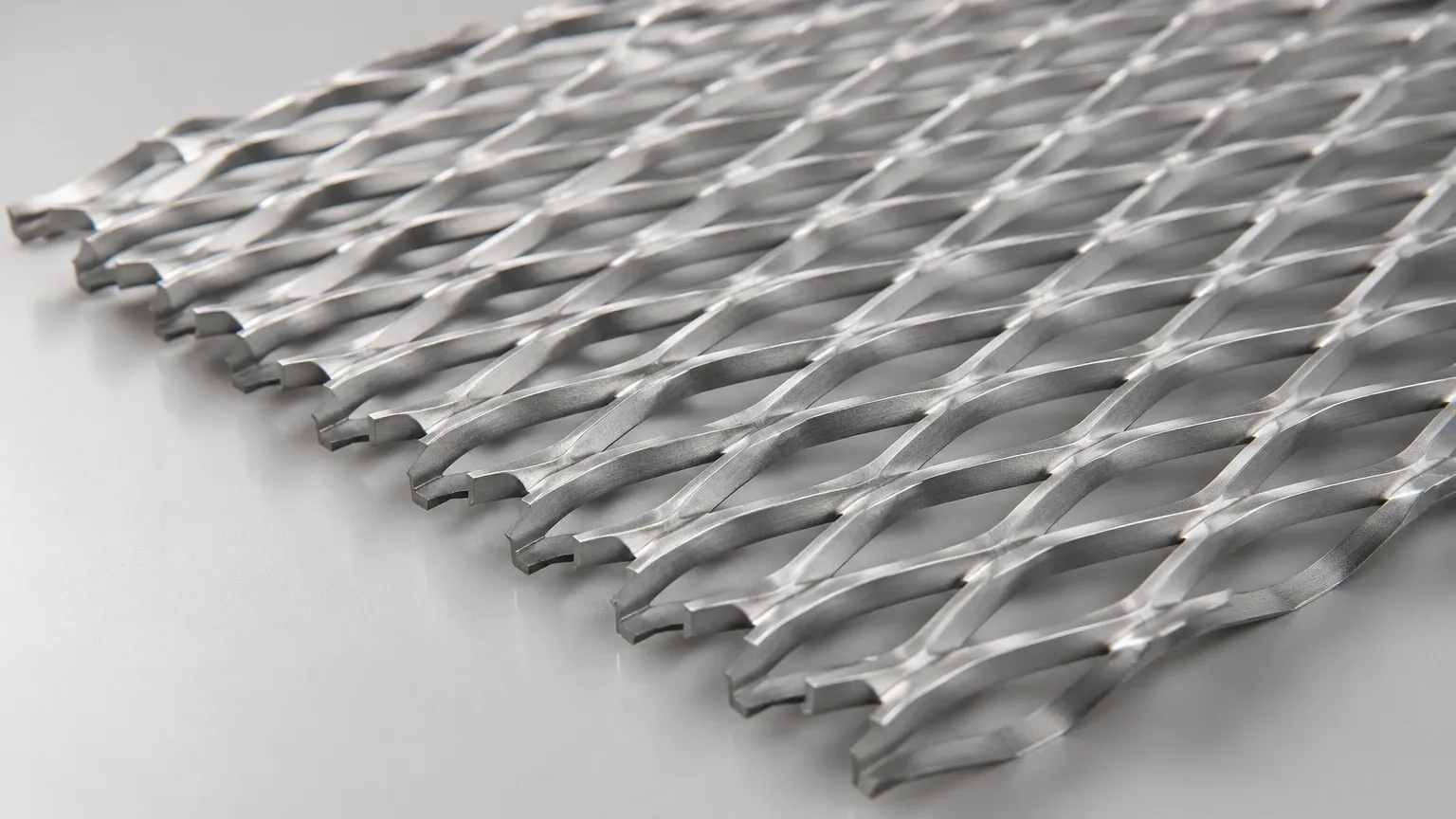
In the landscape of industrial materials, expanded metal raised serves as a foundational component for structural, filtration, and safety applications. Unlike perforated metals that are created by punching holes and generating scrap, expanded metal is produced through a process of simultaneous slitting and stretching. The "raised" designation refers to the standard state of the material immediately following the expansion process, where the strands are set at a sharp angle to the plane of the sheet. This geometry provides unique mechanical advantages, including a high strength-to-weight ratio and an inherently slip-resistant surface.
For engineers and procurement professionals, understanding the technical nuances of expanded metal raised is essential for optimizing performance in demanding environments. This guide explores the engineering specifications, material considerations, and industrial applications that define this versatile product.
The Technical Fundamentals of Expanded Metal Raised
Expanded metal raised, often referred to as "standard" or "regular" expanded metal, is characterized by its three-dimensional profile. During manufacturing, the metal sheet is fed through a machine that slits and expands the material in a single motion. Because no material is removed, the resulting mesh is significantly larger than the original sheet, making it a highly resource-efficient choice.
The strands and bonds (the points where strands intersect) are angled. This orientation creates a structural rigidity that is superior to the original flat sheet. In B2B applications ranging from heavy-duty walkways to precision filtration supports, this rigidity allows for the use of thinner gauges without sacrificing load-bearing capacity. Furthermore, the open area of the mesh can be precisely controlled, allowing for specific rates of airflow, light transmission, or fluid passage.
Manufacturing Dynamics: Slitting and Stretching
The production of expanded metal raised is a cold-working process. A solid sheet of metal—typically stainless steel, carbon steel, or aluminum—is placed into an expansion press. The press is equipped with specialized knives that determine the diamond pattern's size and shape.
As the knives descend, they slit the metal and simultaneously stretch it forward. The pattern is staggered, creating the classic diamond-shaped openings. Because the metal is stretched rather than cut out, the structural integrity of the material remains intact. The bonds between the diamonds are part of the original solid metal, meaning there are no welds or joins that could fail under stress. This makes expanded metal raised an exceptionally durable choice for high-vibration or high-pressure environments, such as those found in chemical processing or hydraulic systems.
Key Engineering Specifications and Terminology
To accurately specify expanded metal raised for a project, engineers must use standardized terminology. These metrics define the geometry and performance characteristics of the mesh:
* SWD (Short Way of Diamond): The distance from the center of one bond to the center of the next bond measured across the short diamond diagonal.
* LWD (Long Way of Diamond): The distance from the center of one bond to the center of the next bond measured across the long diamond diagonal.
* SWO (Short Way of Opening): The clear distance between the inside edges of the bonds across the short diagonal.
* LWO (Long Way of Opening): The clear distance between the inside edges of the bonds across the long diagonal.
* Strand Thickness: The thickness of the original base metal.
* Strand Width: The amount of metal fed into the knives for each slit.
When evaluating options for Perforated & Expanded Metal, these dimensions dictate the mesh's open area percentage and its mechanical strength. For instance, a smaller SWD typically results in a denser mesh with higher rigidity, whereas a larger LWD increases the open area for better flow rates.
Material Selection for Demanding Industrial Environments
The choice of material is arguably the most critical factor in the longevity of expanded metal raised. While carbon steel is common for general industrial use, specialized sectors like pharmaceutical and food processing require high-performance alloys.
Stainless Steel (304 and 316)
Stainless steel is the preferred material for filtration and chemical applications. Grade 304 offers excellent corrosion resistance for most standard environments. However, in marine environments or applications involving high chloride concentrations, Grade 316 is necessary due to its molybdenum content, which provides superior pitting resistance. Stainless steel expanded metal raised is also favored for its ability to withstand high temperatures and its ease of sterilization.
Aluminum
Aluminum expanded metal is utilized when weight reduction is a priority. It is naturally corrosion-resistant and offers a high strength-to-weight ratio, making it ideal for aerospace components, architectural facades, and lightweight filtration housings.
Carbon Steel
For structural applications where corrosion is not a primary concern or where the material will be coated (galvanized or powder-coated), carbon steel provides a cost-effective solution with high tensile strength.
The Role of Expanded Metal Raised in Industrial Filtration
In the filtration industry, expanded metal raised serves several critical functions. It is rarely the primary filtering medium for fine particulates; instead, it acts as a robust support structure for finer wire mesh or non-woven filter media.
Support Cages and Pleat Support
In high-pressure filtration systems, such as hydraulic oil filters, the fine mesh layer can collapse or deform under the force of the fluid. Expanded metal raised is wrapped around or placed inside the filter element to provide a rigid skeleton. The raised strands provide more surface contact and grip for the filter media, preventing shifting during pressure surges.
Pre-Filtration and Debris Shielding
In heavy industrial water treatment or air intake systems, expanded metal raised is used as a pre-filter. Its angled strands are effective at catching large debris, such as leaves, plastic, or metal shavings, before they reach the more delicate primary filter. This extends the service life of the entire filtration system and reduces maintenance costs.
Flow Diffusion
The three-dimensional nature of the raised mesh can also be used to diffuse fluid or gas flow. By breaking up the flow path, it helps to eliminate turbulence and ensure that the fluid passes through the primary filter media at a uniform velocity, which optimizes filtration efficiency.
Comparative Analysis: Raised vs. Flattened Expanded Metal
One of the most common questions during the procurement process is whether to use raised or flattened expanded metal. While both start from the same manufacturing process, flattened expanded metal undergoes an additional step where the raised sheet is passed through a cold-rolling reducing mill.
* Surface Profile: Expanded metal raised has a textured, slip-resistant surface. Flattened expanded metal is smooth and flush with the plane of the sheet.
* Strength: The raised version is generally stiffer and stronger because the strands are oriented at an angle, acting like structural beams. Flattening the metal slightly reduces its overall thickness and structural rigidity.
* Open Area: Flattening can slightly distort the diamond shape, sometimes reducing the clear opening size compared to the raised version.
* Application Suitability: Raised metal is ideal for catwalks, filter supports, and security fencing. Flattened metal is preferred when a smooth surface is required to prevent snagging, such as in drying racks, partitions, or decorative grilles.
Quality Standards and Customization in OEM Manufacturing
For B2B buyers, sourcing expanded metal raised requires a partner capable of meeting tight tolerances and specific application needs. Quality control in this field focuses on several key areas:
1. Flatness: While the strands are raised, the overall sheet should remain flat without bowing or cambering, which is essential for proper installation in filter housings.
2. Edge Integrity: For filtration components, edges must be clean and free of excessive burrs that could damage the primary filter media or injure personnel during assembly.
3. Dimensional Consistency: In automated assembly lines, even minor variations in SWD or LWD can lead to production delays.
Customization is a hallmark of professional manufacturing. OEM providers can adjust the strand width and opening sizes to meet specific pressure drop requirements or weight constraints. Furthermore, specialized coatings such as electro-polishing for stainless steel can enhance the material's cleanliness and corrosion resistance in pharmaceutical applications.
Procurement Checklist for Engineering Teams
Before finalizing a purchase order for expanded metal raised, engineering and purchasing teams should confirm the following technical details to ensure the product is fit for purpose:
* Load Requirements: Will the material be used for a walkway or a structural support? This determines the required gauge and strand width.
* Chemical Compatibility: Does the environment involve acids, bases, or high salinity? This dictates the grade of stainless steel or the need for protective coatings.
* Flow Characteristics: What is the required open area percentage? This is crucial for filtration applications to prevent excessive pressure drop.
* Installation Method: Will the material be welded, bolted, or clamped? Raised metal requires specific considerations for welding due to the angled strands.
* Total Cost of Ownership: Consider the lifespan of the material. While stainless steel 316 has a higher upfront cost than carbon steel, its resistance to corrosion can significantly reduce replacement cycles and downtime in harsh environments.
By focusing on these factual engineering parameters, organizations can leverage expanded metal raised to improve the durability and efficiency of their industrial systems. Whether used as a robust support for precision filter cartridges or as a safety-enhancing walkway, the unique geometry of this material remains a staple of modern industrial design.
