


Expanded Metal Trailer Flooring
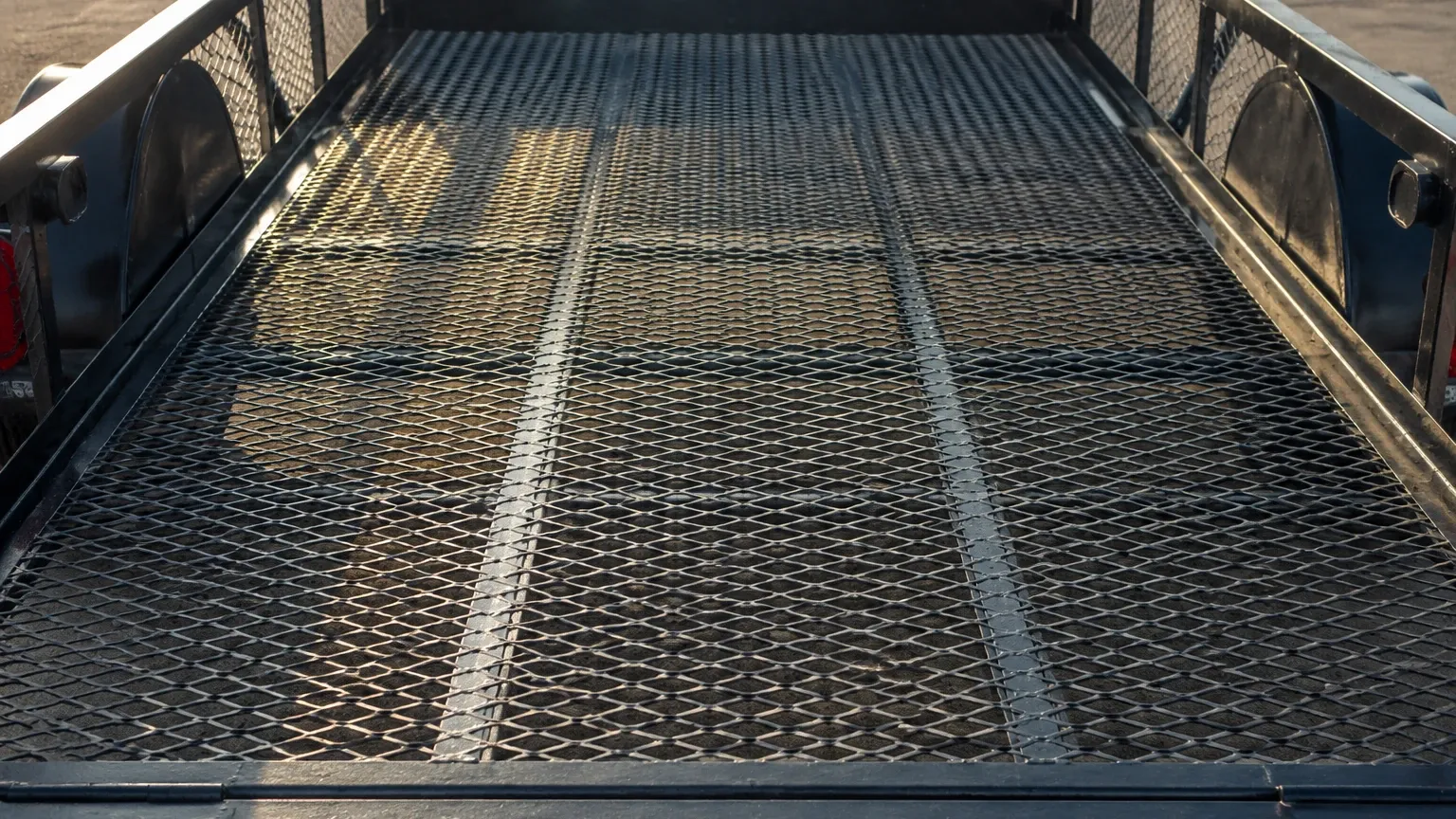
In industrial logistics and heavy-duty equipment transport, the selection of flooring material is a critical engineering decision that impacts safety, durability, and operational efficiency. Expanded metal trailer flooring has emerged as a preferred solution for various sectors, including chemical processing, food and beverage, and hydraulic equipment transport. Unlike solid plate or wood flooring, expanded metal offers a unique combination of high strength-to-weight ratios, superior traction, and self-cleaning properties.
As a specialist in precision metal components, Kaifil provides technical insights into the selection and application of Perforated & Expanded Metal to help engineers and procurement teams optimize their trailer designs for demanding environments.
Understanding Expanded Metal for Industrial Applications
Expanded metal is manufactured through a process of simultaneous shearing and stretching of a solid metal sheet. This process creates a diamond-shaped pattern of openings, where the "strands" and "bonds" form a continuous, one-piece structure. Because the material is expanded rather than punched or perforated, there is zero waste in the manufacturing process, making it a cost-effective alternative to other open-mesh products.
For trailer flooring, the structural integrity of this single-piece construction is paramount. There are no welds to break or joints to loosen under the constant vibration and stress of transit. When evaluating expanded metal trailer flooring, it is essential to distinguish between "Standard" (raised) and "Flattened" expanded metal.
* Standard Expanded Metal: The strands are set at a sharp angle to the plane of the sheet. This provides maximum rigidity and a high-grip surface, which is ideal for ramps and flooring where slip resistance is the primary concern.
* Flattened Expanded Metal: The raised material is passed through a cold-roll reducing mill, resulting in a smooth, flat surface. While this is easier to walk on and easier to clean, it offers less traction than the raised variety.
Key Advantages of Expanded Metal Trailer Flooring
Industrial trailers often operate in environments where moisture, oils, and debris are present. The open-mesh design of expanded metal addresses these challenges through several functional advantages:
1. Superior Traction and Safety
In applications such as hydraulic equipment transport or chemical processing facilities, floors can become slick with fluids. The raised edges of standard expanded metal provide multi-directional grip, significantly reducing the risk of slips and falls for operators. This is particularly critical for expanded metal trailer flooring used on loading ramps and external walkways.
2. Self-Cleaning and Drainage
The diamond-shaped apertures allow water, mud, snow, and industrial debris to fall through the floor rather than accumulating on the surface. This "self-cleaning" nature prevents the buildup of corrosive substances and ensures that the trailer does not carry unnecessary weight from trapped debris.
3. High Strength-to-Weight Ratio
Weight management is a constant concern in trailer design to maximize payload capacity and fuel efficiency. Expanded metal provides the necessary structural support to carry heavy loads while weighing significantly less than solid steel plate of equivalent thickness. This allows engineers to design lighter trailers without compromising on the floor's weight-bearing capacity.
4. Air and Light Permeability
In specialized transport scenarios where airflow is required—such as transporting temperature-sensitive components or equipment that needs ventilation—the open area of expanded metal facilitates consistent air circulation. It also allows for easier inspection of the trailer's undercarriage without removing the flooring.
Material Selection and Performance
The choice of material for expanded metal trailer flooring depends heavily on the environment in which the trailer will operate. Kaifil specializes in custom stainless steel solutions, which are frequently required for high-performance industrial applications.
* Stainless Steel: For trailers used in the food and beverage or pharmaceutical industries, stainless steel (typically 304 or 316 grade) is the standard. It offers exceptional corrosion resistance, can withstand harsh chemical cleaning agents, and maintains its structural integrity in extreme temperatures.
* Carbon Steel: This is the most common choice for general industrial trailers. It is cost-effective and provides high tensile strength. However, it requires a protective coating, such as hot-dip galvanizing or specialized paint, to prevent oxidation and rust.
* Aluminum: When weight reduction is the absolute priority, aluminum expanded metal is used. While it offers excellent corrosion resistance and low weight, it has a lower load-bearing capacity than steel and may require more frequent support structures.
Technical Specifications for Load-Bearing Floors
When specifying expanded metal trailer flooring, engineers must look beyond the basic material type and focus on the geometric properties that dictate performance. The following parameters are critical for determining the suitability of a mesh for heavy-duty use:
* LWD (Long Way of Diamond): The distance from the center of one bond to the center of the next bond across the long axis of the diamond.
* SWD (Short Way of Diamond): The distance across the short axis of the diamond.
* Strand Width and Thickness: These dimensions determine the cross-sectional area of the metal and directly influence the floor's ability to resist bending and shearing under load.
* Percent Open Area: This calculation indicates how much of the sheet is open space versus solid metal. A higher open area improves drainage but may decrease the overall load capacity.
For trailer flooring, "Expanded Metal Grating" is often used instead of standard expanded metal. Grating is produced from heavier gauge plate (typically 1/4" or thicker) and is specifically designed for pedestrian and light-vehicle traffic. It features a more robust strand structure to handle concentrated loads.
Engineering Considerations for Installation and Support
The performance of expanded metal trailer flooring is only as good as its installation and the underlying support structure. Engineers should consider the following during the design phase:
Span and Deflection
Expanded metal is not an isotropic material; its strength varies depending on the orientation of the diamonds. To maximize load-bearing capacity, the Long Way of the Diamond (LWD) should generally run perpendicular to the support beams (cross-members). The spacing of these supports must be calculated to minimize deflection under the maximum anticipated load. If the span is too wide, the metal may "bounce" or permanently deform under heavy equipment.
Attachment Methods
Welding is the most common method for securing expanded metal to the trailer frame. Tack welds should be placed at regular intervals along the perimeter and at every intersection with a support beam. For stainless steel flooring, compatible welding rods must be used to maintain the corrosion resistance of the joints. In some modular designs, mechanical fasteners or clips may be used, though these require regular inspection to ensure they haven't vibrated loose.
Edge Treatment
The edges of expanded metal can be sharp. For safety and to prevent snagging, the edges should be capped with U-edging or welded flush against the trailer's side rails. This also adds lateral rigidity to the floor panels.
Maintenance and Total Cost of Ownership
While the initial cost of expanded metal trailer flooring may be higher than wood, the total cost of ownership is often lower due to its longevity. Wood floors are susceptible to rot, splintering, and chemical absorption, requiring frequent replacement in industrial settings. Expanded metal, particularly when made from stainless steel or galvanized carbon steel, can last the entire lifespan of the trailer with minimal maintenance.
Maintenance typically involves periodic inspections for weld integrity and the removal of any large debris that might be wedged in the diamonds. In corrosive environments, regular rinsing with water or neutralized cleaning agents will help preserve the protective oxide layer of the metal.
Customization Options for Specialized Trailers
At Kaifil, we understand that standard off-the-shelf solutions do not always meet the rigorous demands of specialized industrial transport. Customization is often necessary to balance weight, strength, and filtration (or drainage) requirements.
Custom options include:
* Variable Opening Sizes: Adjusting the LWD and SWD to accommodate specific tire sizes or foot traffic requirements.
* Precision Gauges: Selecting exact strand thicknesses to meet specific weight-bearing certifications.
* Integrated Components: Combining expanded metal with other Perforated & Expanded Metal components for multi-stage filtration or specialized containment within the trailer.
Conclusion
Expanded metal trailer flooring is a technically superior choice for industrial applications that demand safety, durability, and weight efficiency. By understanding the nuances of material selection, diamond orientation, and support requirements, engineers can specify flooring that enhances the performance and safety of their transport equipment.
Whether you are designing a trailer for chemical transport, food processing, or heavy machinery, selecting the right metal specification is the first step toward a reliable long-term solution. For more information on material compatibility and custom manufacturing capabilities, explore our range of Perforated & Expanded Metal products or contact our engineering team to discuss your specific application requirements.
