


Vitex Expanded Metal
In the landscape of industrial filtration and structural support, material selection is dictated by the precise balance of mechanical strength, open area, and chemical compatibility. Among the various options available to engineers, vitex expanded metal represents a specialized category of expanded mesh known for its durability and versatility in demanding environments. Unlike traditional woven wire mesh or perforated sheets, expanded metal is produced through a unique slitting and stretching process that creates a continuous, jointless structure.
For procurement teams and design engineers, understanding the technical nuances of expanded metal is essential for optimizing the performance of filtration systems, protective guards, and structural components. This guide explores the engineering characteristics of vitex expanded metal, its role within the broader category of Perforated & Expanded Metal, and the critical factors that influence its selection in industrial applications.
The Engineering Principles of Expanded Metal
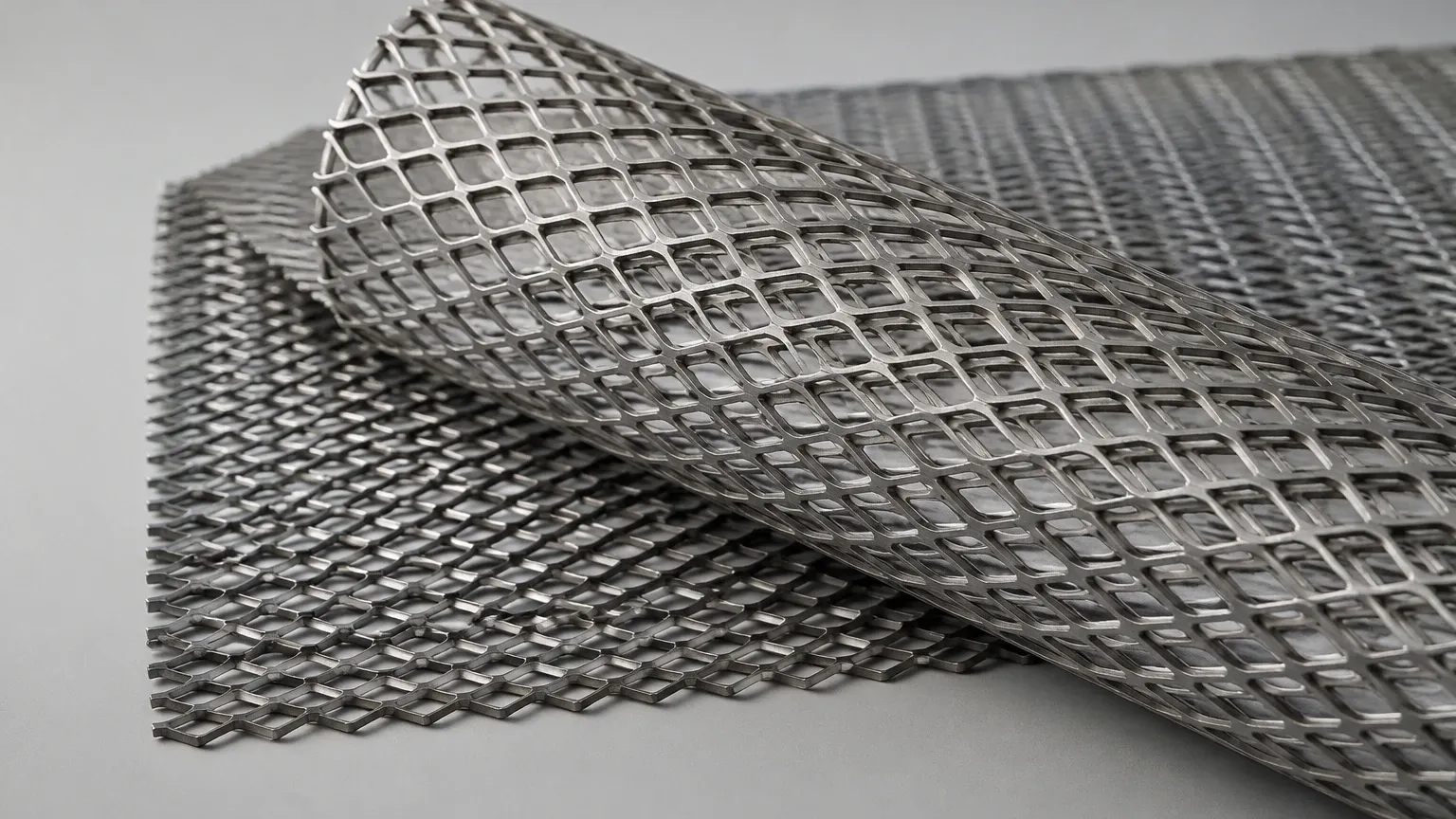
The production of expanded metal is a resource-efficient process where a solid metal sheet is simultaneously slit and cold-stretched. This expansion results in diamond-shaped openings, though hexagonal and square patterns are also possible depending on the tooling. Because the metal is stretched rather than punched, there is zero material waste, making it a cost-effective alternative to perforated metal in many high-volume applications.
Structural Integrity and the "Bond"
One of the primary advantages of vitex expanded metal is its structural continuity. In woven wire mesh, individual wires can shift or fray under high pressure or mechanical vibration. In contrast, expanded metal is a single piece of material. The points where the strands intersect are known as "bonds." These bonds remain unworked and solid, providing inherent rigidity and ensuring that the mesh maintains its shape even when cut into complex geometries.
Raised vs. Flattened Profiles
When evaluating expanded metal, engineers must choose between two primary finishes:
1. Standard (Raised) Expanded Metal: This is the product as it comes off the expanding machine. The strands and bonds are set at a sharp angle to the plane of the sheet. This creates a three-dimensional surface that offers high slip resistance and excellent strength-to-weight ratios. In filtration, the raised profile can help create turbulence, which may be desirable in certain fluid dynamics scenarios.
2. Flattened Expanded Metal: The raised mesh is passed through a cold-rolling reducing mill. This process flattens the strands and bonds into the same plane as the sheet. Flattened vitex expanded metal is often preferred when a smooth surface is required to prevent abrasion or when the mesh must be bonded to other thin layers, such as fine wire cloth in a multi-stage filter element.
Technical Specifications and Dimensional Accuracy
To specify vitex expanded metal accurately, engineers must look beyond simple hole sizes. The performance of the mesh in a filtration or support context is defined by several key dimensions:
* Long Way of Diamond (LWD): The distance from the center of one bond to the center of the next bond across the long axis of the diamond.
* Short Way of Diamond (SWD): The distance across the short axis of the diamond.
* Strand Width: The amount of metal fed into the machine between slits.
* Strand Thickness: The original thickness of the base metal sheet.
* Open Area Percentage: This is perhaps the most critical value for filtration. It determines the flow rate and pressure drop across the mesh. Unlike perforated metal, where the open area is easily calculated by hole diameter and pitch, expanded metal calculations must account for the angle of the strands in raised versions.
Material Selection for Industrial Environments
While expanded metal can be produced from various materials, industrial applications—particularly in chemical processing, pharmaceuticals, and food production—overwhelmingly require stainless steel. As a specialist in stainless steel filtration, Kaifil emphasizes the use of high-grade alloys to ensure longevity and compliance with safety standards.
Stainless Steel 304 vs. 316L
* Type 304: The most common grade, offering excellent corrosion resistance for general industrial use. It is suitable for water treatment and most food-grade applications.
* Type 316L: Contains molybdenum, which provides superior resistance to chlorides and pitting. This is the standard for marine environments, pharmaceutical manufacturing, and aggressive chemical processing. The "L" denotes low carbon content, which is essential for components that require welding, as it prevents carbide precipitation and maintains corrosion resistance at the weld zones.
In addition to stainless steel, vitex expanded metal can be manufactured from carbon steel, aluminum, or specialty alloys like Monel or Inconel for extreme temperature or highly acidic environments.
Applications in Industrial Filtration Systems
Within the scope of Perforated & Expanded Metal solutions, expanded metal serves several distinct roles in filtration engineering.
Support Cores and Outer Protectors
In high-pressure hydraulic or liquid filtration, fine wire mesh or pleated paper elements lack the structural strength to withstand the differential pressure (ΔP) across the filter. Vitex expanded metal is frequently used as a rigid internal core to prevent the filter media from collapsing. It is also used as an outer wrap to protect delicate pleated materials from mechanical damage during installation and maintenance.
Coarse Pre-Filtration
In systems dealing with large particulate matter—such as industrial wastewater or raw intake water—expanded metal acts as an effective pre-filter. Its three-dimensional structure allows it to capture debris while maintaining a high flow rate. Because it is easy to clean and highly durable, it can be reused in many heavy-duty industrial cycles.
Flame and Spark Arrestors
The continuous metal structure of vitex expanded metal makes it an excellent heat conductor. In gas filtration or exhaust systems, it can be used to dissipate heat rapidly, acting as a flame or spark arrestor to prevent combustion in downstream equipment.
Evaluating Quality and Mitigating Risks
When sourcing vitex expanded metal for critical industrial projects, several risks must be managed to ensure system reliability.
1. Burr and Edge Quality
The slitting process used to create expanded metal can leave sharp edges or burrs. In filtration, these burrs can break off and become contaminants themselves (downstream migration) or puncture delicate secondary filter layers. High-quality manufacturing involves deburring or specialized finishing to ensure the mesh is safe for handling and integration.
2. Dimensional Consistency
Inconsistent stretching can lead to variations in the SWD and LWD across a single sheet. For automated assembly of filter cartridges, even minor deviations in thickness or diamond size can cause machine jams or improper sealing. Precise tension control during the expansion process is vital for maintaining tolerances.
3. Material Fatigue
Because the metal is cold-worked during expansion, internal stresses are introduced. If the material is of poor quality or the expansion ratio is too aggressive, the bonds may develop micro-cracks. Under conditions of thermal cycling or mechanical vibration, these cracks can lead to premature failure of the component.
What Engineers Should Confirm Before Procurement
To ensure the successful integration of vitex expanded metal into a project, the following technical details should be confirmed with the manufacturer:
* Exact Alloy Grade: Ensure the material certifications (MTRs) match the application's chemical resistance requirements.
* Direction of the Diamond: The orientation of the LWD (parallel or perpendicular to the length of the sheet) affects how the material bends and its structural load-bearing capacity.
* Flattening Requirements: If the mesh will be layered with other materials, specify the maximum allowable thickness after flattening.
* Customization Options: Many industrial filters require non-standard dimensions. Confirm if the manufacturer can provide custom-slit widths or pre-formed cylinders to reduce on-site fabrication time.
Conclusion
Vitex expanded metal is a fundamental component in the toolkit of industrial engineers. Its unique combination of structural rigidity, cost-efficiency, and versatility makes it indispensable for support and filtration tasks. By focusing on material integrity, dimensional precision, and application-specific configurations, organizations can achieve superior filtration performance and extended equipment lifespans. As a dedicated provider of custom stainless steel filtration solutions, Kaifil remains committed to helping technical professionals navigate these complexities to find the most effective Perforated & Expanded Metal products for their specific industrial needs.
