


Expanded Metal Weight Chart
In industrial engineering and filtration design, precision is the difference between a high-performing system and a costly failure. When selecting materials for filter supports, protective screens, or structural components, the weight of the material is a critical variable that influences structural load-bearing capacity, logistics costs, and the overall efficiency of the filtration assembly. An expanded metal weight chart is an indispensable tool for engineers and procurement professionals, providing the data necessary to calculate the mass of specific mesh configurations before they are integrated into a project.
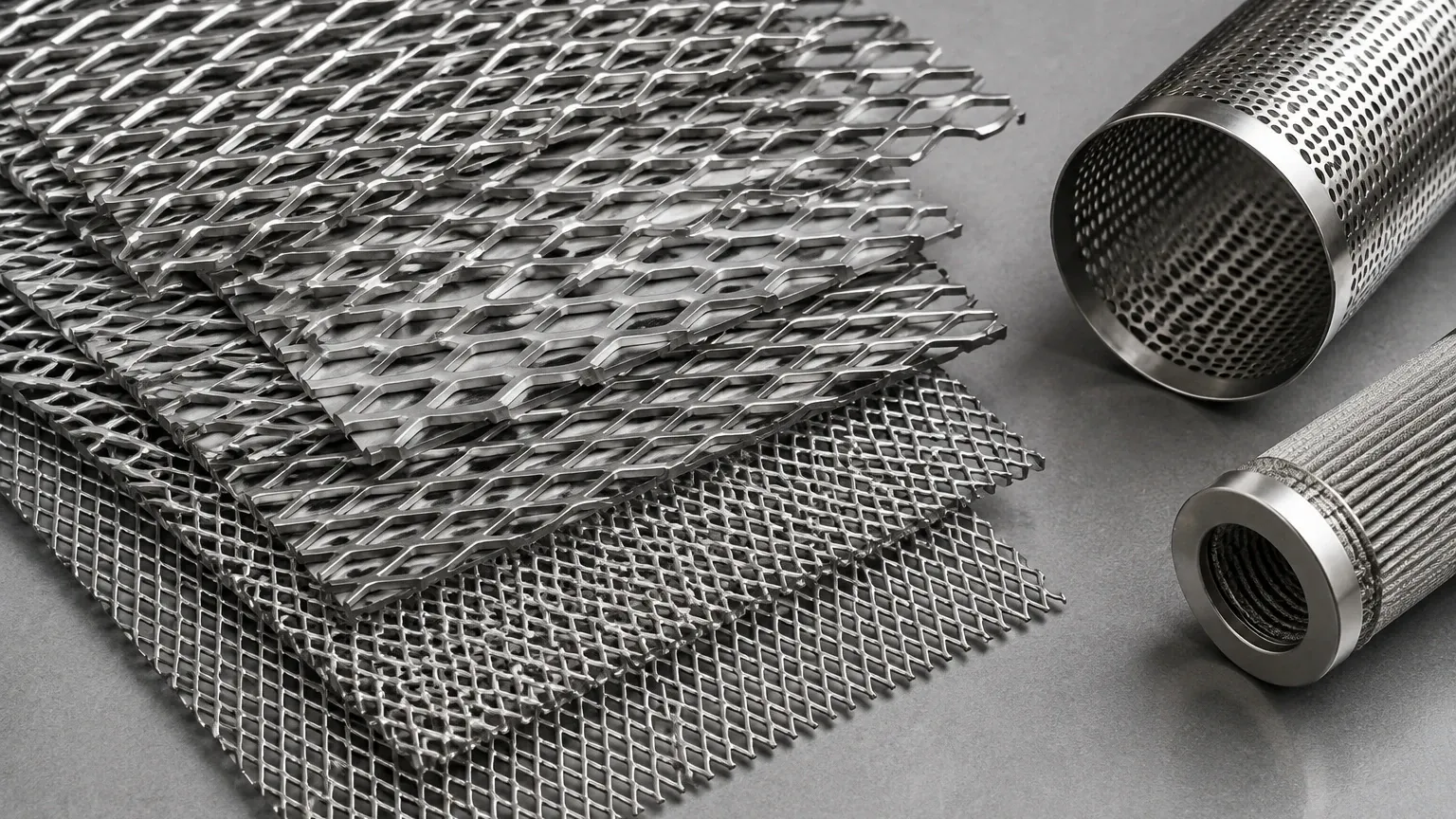
Expanded metal is produced by simultaneously slitting and stretching a solid metal sheet, creating a diamond-shaped pattern of openings. Unlike perforated metal, which involves punching out material and creating scrap, expanded metal is formed without waste, making it a highly cost-effective and sustainable option. However, because the material is stretched, calculating its weight requires an understanding of the relationship between the original sheet thickness, the strand width, and the dimensions of the diamond openings.
Understanding the Technical Parameters of Expanded Metal
To effectively use an expanded metal weight chart, one must first master the terminology used to define the material’s geometry. These parameters directly dictate the final weight per square foot (or square meter) and the structural integrity of the mesh.
SWD and LWD (Short Way of Design and Long Way of Design)
These terms refer to the dimensions of the diamond-shaped opening. The SWD is the distance from the center of a bond to the center of the next bond across the short axis of the diamond. The LWD is the distance measured across the long axis. These dimensions are crucial because they determine how much the original sheet has been stretched. A larger opening generally results in a lighter weight per unit area, as the original metal is distributed over a larger surface.
Strand Thickness and Strand Width
Strand thickness refers to the thickness of the base metal used to produce the expanded metal. Strand width refers to the amount of metal between the diamonds. These two dimensions, when multiplied, represent the cross-sectional area of the metal "ribs" that form the mesh. In a weight chart, these are the primary drivers of the final mass. For example, a "heavy" expanded metal style will have a thicker strand and a wider width compared to a "light" style with the same opening size.
Raised vs. Flattened Expanded Metal
Expanded metal is naturally produced in a "raised" state, where the strands are set at an angle to the plane of the sheet. This provides maximum strength and rigidity. However, for applications like fine filtration where a smooth surface is required to prevent damage to filter media, the material may be cold-rolled to create "flattened" expanded metal. While the total weight of the sheet remains largely the same after flattening, the thickness of the overall sheet is reduced, and the diamonds are slightly elongated. An accurate weight chart will often list both styles to ensure engineers account for these subtle dimensional shifts.
How to Read an Expanded Metal Weight Chart
A standard weight chart typically categorizes expanded metal by "Style Designation." For carbon steel, this is often a combination of the nominal opening size and the gauge of the metal (e.g., 1/2" #13). For stainless steel, which is the primary focus for high-performance filtration solutions, the designation usually specifies the exact decimal thickness and the SWD.
When consulting the chart, you will find several key columns:
1. Style Designation: The industry-standard name for the specific mesh size and weight.
2. Weight per Square Foot (lb/sq.ft): This is the most critical figure for logistics and structural calculations. It allows you to estimate the total weight of a shipment or the load a support frame must carry.
3. Percent Open Area: Essential for filtration engineers, this value indicates how much of the sheet is comprised of holes versus solid metal. This directly impacts flow rates and pressure drops.
4. Overall Thickness: The total depth of the sheet (especially important for raised metal).
For those sourcing Perforated & Expanded Metal, these charts provide the baseline data needed to compare different materials—such as Stainless Steel 304 versus 316L—and determine which configuration offers the optimal balance of weight and corrosion resistance.
The Calculation Logic: Theoretical vs. Actual Weight
While an expanded metal weight chart provides standardized values, it is helpful to understand the underlying physics. The weight of expanded metal is fundamentally derived from the weight of the solid metal sheet from which it was made.
If you take a solid sheet of stainless steel that weighs 10 pounds and expand it to twice its original length, the resulting expanded metal sheet will still weigh 10 pounds, but its area will have doubled. Consequently, its weight per square foot will have halved.
The Formula for Theoretical Weight:
`Weight per Sq. Ft. = (Strand Width / SWD) * 2 * (Weight of Solid Sheet of the same thickness)`
In practice, manufacturers like Kaifil use precision machinery to ensure that the expansion process adheres to strict tolerances. However, engineers should always account for a small margin of error (typically +/- 5% to 10%) due to variations in the raw material’s density and the mechanical stretching process. When using an expanded metal weight chart, always verify whether the weights listed are "nominal" or "minimum" to avoid underestimating the load in critical structural applications.
Material Selection and Its Impact on Weight
The type of alloy selected significantly influences the data found on a weight chart. In industrial filtration, stainless steel is the gold standard due to its durability and chemical compatibility.
* Stainless Steel 304/316: These alloys have a density of approximately 0.284 to 0.29 lbs per cubic inch. They are heavier than aluminum but offer significantly higher tensile strength, allowing for thinner strands to be used to achieve the same structural support.
* Carbon Steel: Slightly less dense than stainless steel but prone to oxidation, requiring additional coatings (like galvanization) which can add to the final weight.
* Specialty Alloys (Monel, Inconel): Used in extreme chemical environments, these materials have different densities that must be specifically accounted for, as a standard carbon steel weight chart will not be accurate for these high-performance metals.
For engineers designing filtration systems for the chemical or pharmaceutical industries, selecting the right grade of Perforated & Expanded Metal involves balancing the weight of the support structure with the corrosive nature of the fluid being processed.
Applications in Industrial Filtration
In the context of Kaifil’s expertise, expanded metal is rarely a standalone product; it is a critical component of a larger filtration assembly. The weight and structural properties of the expanded metal determine the performance of the entire unit.
Filter Cartridge Support Cores
In high-pressure hydraulic or process water applications, the filter media (such as wire mesh or fiber) is often wrapped around an expanded metal core. The core must be heavy enough to resist collapsing under differential pressure but light enough to keep the overall cartridge weight manageable for maintenance crews. An expanded metal weight chart helps designers select a style that provides the necessary "crush strength" without adding unnecessary mass.
Pre-filtration and Debris Screens
Expanded metal is frequently used as a primary screen to capture large particulates before they reach finer filtration stages. In these applications, the weight of the screen impacts the design of the housing and the ease of removal for cleaning. Using a weight chart allows for the selection of a mesh that is robust enough to withstand the impact of heavy debris while remaining light enough for manual handling.
Outer Protective Wraps
For pleated filter elements, an outer wrap of expanded metal protects the delicate pleats from mechanical damage during installation and operation. Here, a very light expanded metal (often with a high percentage of open area) is preferred to minimize the impact on the flow path while providing a rigid protective cage.
Common Risks and Evaluation Criteria in Procurement
When using an expanded metal weight chart to inform a purchase, there are several risks that procurement teams must mitigate to ensure the delivered product meets the engineering specifications.
1. Tolerance Deviations: Standard commercial tolerances for expanded metal can be broad. If your application requires a precise weight for balance or high-speed rotation, you must specify "restricted tolerances" with the manufacturer.
2. Edge Configurations: Expanded metal sheets can be supplied with "random sheared" edges or "bond sheared" edges. Bond shearing ensures a solid metal border, which adds weight compared to a sheet where the diamonds are cut through at the edges. This difference is often overlooked in basic weight calculations.
3. Finish and Coating: If the expanded metal is to be passivated, electropolished, or coated, the weight will change. While electropolishing removes a microscopic layer of metal (reducing weight), powder coating or galvanizing adds a measurable layer (increasing weight).
4. Material Substitution: Ensure that the weight chart you are using corresponds to the specific alloy you are ordering. A chart for aluminum expanded metal is useless when ordering stainless steel components.
What to Confirm Before Finalizing Your Order
Before moving from the planning phase to procurement, engineers should confirm several technical details with their supplier to ensure the expanded metal will perform as expected within the filtration system.
* Confirm the Specific Gravity: Ensure the weight calculations are based on the correct density of the specific stainless steel grade (e.g., 304L vs. 316L).
* Verify Open Area Requirements: Weight is often a proxy for strength, but in filtration, the open area is the priority. Ensure the selected weight does not compromise the required flow rate.
* Request a Sample for Weighing: For large-scale projects, it is best practice to request a sample of the specific Perforated & Expanded Metal style and weigh it in-house to verify that it aligns with the theoretical chart values.
* Discuss Structural Load: If the expanded metal is acting as a support for a heavy filter cake, provide the manufacturer with the expected pressure drop and temperature so they can recommend a weight and strand configuration that prevents deformation.
By utilizing a detailed expanded metal weight chart and understanding the engineering principles behind it, technical professionals can optimize their filtration solutions for durability, efficiency, and cost-effectiveness. Whether you are designing a custom stainless steel filter cartridge or a large-scale industrial screen, the data found in these charts is the foundation of a successful build.
