


Expanded Metal 1520
In the landscape of industrial filtration and structural support, the specification of materials plays a critical role in determining the efficiency, longevity, and safety of a system. Among the various configurations available to engineers and procurement specialists, expanded metal 1520 stands out as a versatile and robust option. This technical guide explores the characteristics, applications, and engineering considerations of expanded metal 1520, particularly within the context of high-performance filtration environments.
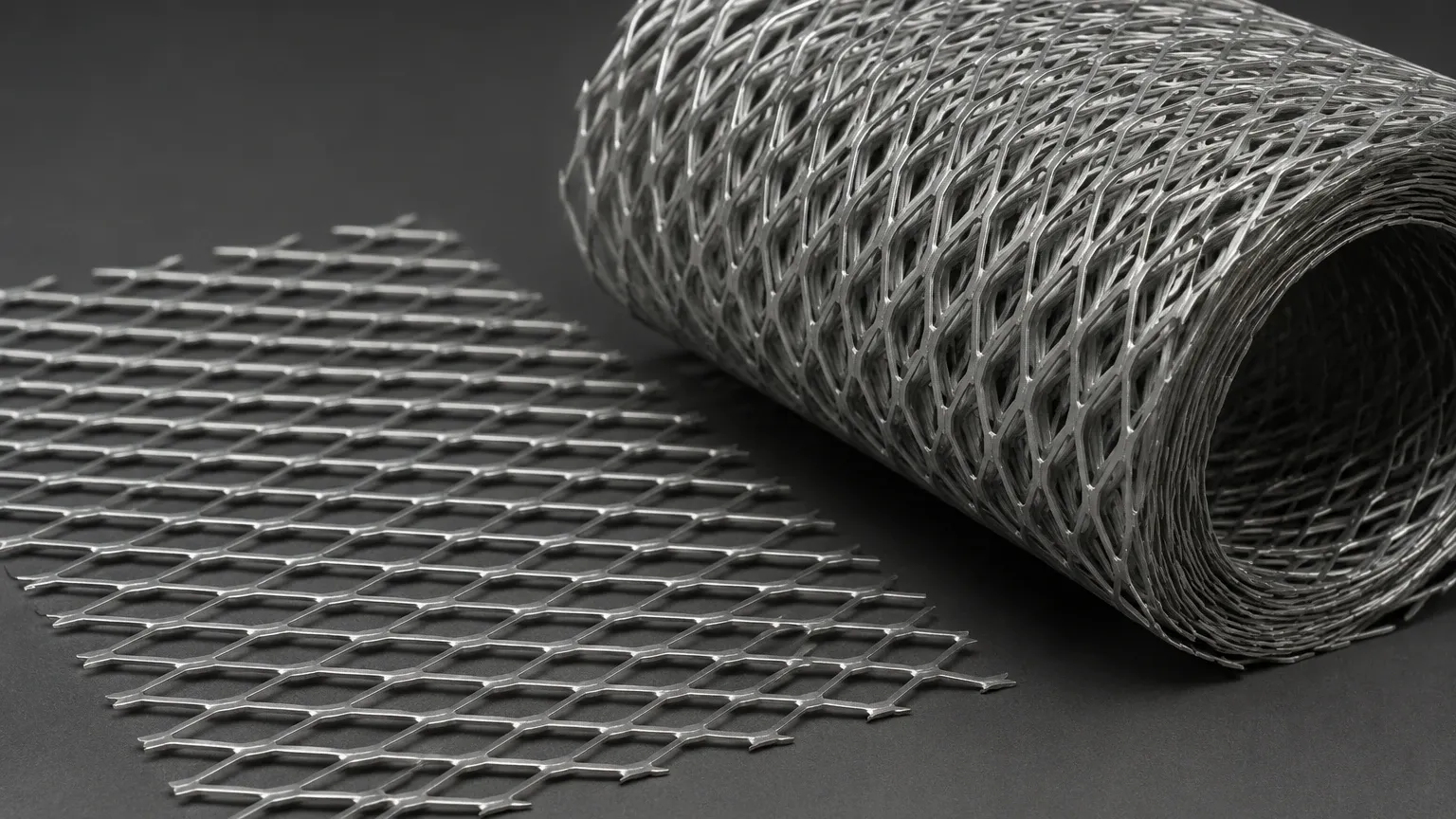
Expanded metal is a unique material produced by simultaneously slitting and stretching a solid sheet of metal. Unlike perforated metal, which involves punching holes and creating scrap, the expansion process creates a diamond-shaped pattern without any material waste. The resulting mesh is structurally sound, often stronger than the original sheet, and provides a high strength-to-weight ratio that is essential for demanding industrial applications.
Technical Specifications and Geometry of Expanded Metal 1520
The designation "1520" typically refers to the dimensional characteristics of the diamond openings or the specific gauge and strand width combination used in the manufacturing process. In technical terms, expanded metal is defined by several key measurements:
* Short Way of Diamond (SWD): The distance from the center of one bond to the center of the next bond measured across the short axis of the diamond. In a 1520 configuration, this often aligns with a 15mm or proportional measurement.
* Long Way of Diamond (LWD): The distance across the long axis of the diamond. For 1520 patterns, this typically corresponds to a 20mm or proportional measurement.
* Strand Width: The amount of metal between the openings. This dimension dictates the overall open area and the structural rigidity of the mesh.
* Strand Thickness: The thickness of the base material used. For industrial filtration, stainless steel is the preferred substrate due to its mechanical properties.
There are two primary forms of expanded metal 1520: raised (standard) and flattened. Raised expanded metal features strands that are turned at an angle to the plane of the sheet, providing a slip-resistant surface and high structural stiffness. Flattened expanded metal is processed through a cold-rolling mill, which levels the strands and bonds to create a smooth, flat surface. For filtration applications where the mesh serves as a support for delicate filter media, flattened expanded metal is often preferred to prevent abrasion or puncturing of the media.
Material Selection: The Role of Stainless Steel
While expanded metal can be manufactured from various alloys, stainless steel is the standard for B2B industrial filtration. The choice of material directly impacts the chemical compatibility and thermal resistance of the final product. Kaifil specializes in utilizing high-grade stainless steel to ensure that Perforated & Expanded Metal components can withstand harsh operating conditions.
304 Stainless Steel
Grade 304 is the most common choice for general industrial use. It offers excellent corrosion resistance to most oxidizing acids and is highly durable. In applications like water treatment or standard hydraulic filtration, 304 stainless steel expanded metal 1520 provides a cost-effective solution without compromising structural integrity.
316L Stainless Steel
For environments involving high chloride concentrations, organic acids, or pharmaceutical-grade requirements, 316L stainless steel is the preferred specification. The addition of molybdenum enhances its resistance to pitting and crevice corrosion. Furthermore, the "L" designation signifies low carbon content, which minimizes carbide precipitation during welding, ensuring the mesh remains corrosion-resistant at the joints.
Applications in Industrial Filtration and Support
Expanded metal 1520 is rarely used as a standalone filter for fine particles; rather, it serves as a critical component in complex filtration assemblies. Its primary roles include:
1. Filter Cartridge Support Tubes
In high-pressure hydraulic or chemical processing systems, the internal filter media (such as wire mesh or fiber felt) must be supported against differential pressure. Expanded metal 1520 is rolled into cylinders to form the inner core or outer cage of a filter cartridge. Its rigid structure prevents the media from collapsing or bursting under flow surges.
2. Pleat Support and Spacing
In pleated filter designs, expanded metal can be layered with the filter media. It acts as a spacer, ensuring that the pleats remain open and that the entire surface area of the media is available for filtration. The 1520 pattern provides a balance between structural support and open area, preventing "pleat bunching" which can lead to premature pressure drop increases.
3. Pre-Filtration and Debris Guarding
In large-scale intake systems or cooling towers, expanded metal 1520 functions as a primary guard against large debris. Its diamond pattern is effective at catching linear objects (like twigs or plastic strips) that might pass through square mesh of a similar open area.
Engineering Considerations: Flow Rate and Pressure Drop
When specifying expanded metal 1520, engineers must calculate the impact of the mesh on the system's fluid dynamics. The most critical factor here is the Percentage of Open Area.
The open area determines how much resistance the mesh will offer to the fluid flow. A higher open area results in a lower initial pressure drop (clean pressure drop), which is vital for energy efficiency. However, increasing the open area usually requires narrowing the strand width, which can reduce the structural strength of the mesh.
For expanded metal 1520, the calculation of open area must account for the angle of the strands (in raised mesh) or the reduction in thickness (in flattened mesh). Engineers should request technical data sheets that specify the effective open area to ensure the filtration system meets its flow requirements without exceeding the pump's capacity.
Customization and OEM Capabilities
Industrial applications often require more than off-the-shelf solutions. Customization of expanded metal 1520 involves tailoring the dimensions to fit specific filter housings or performance criteria. Manufacturers like Kaifil provide OEM services that include:
* Custom Sheet Sizes: Reducing waste by producing sheets or coils to the exact dimensions required for the production line.
* Specialized Finishes: Electropolishing or passivating the stainless steel to meet the stringent hygiene standards of the food and beverage or pharmaceutical industries.
* Precision Fabrication: Cutting, rolling, and welding the expanded metal into finished components such as support baskets or cylindrical screens.
By working closely with an OEM manufacturer, purchasing teams can ensure that the expanded metal components integrate seamlessly into their proprietary filtration designs, maintaining tight tolerances and consistent performance.
Quality Control and Procurement: What to Verify
Procuring expanded metal 1520 for industrial use requires a rigorous vetting process to avoid common risks such as material fatigue, corrosion, or contamination. Engineers should confirm the following before finalizing a purchase:
1. Material Certification
Always request Mill Test Reports (MTRs) to verify the chemical composition of the stainless steel. This ensures that the material is truly 304 or 316L and not a lower-grade substitute that may fail in corrosive environments.
2. Dimensional Tolerances
Expanded metal production involves mechanical stretching, which can introduce variances in the SWD and LWD. Confirm the manufacturer’s tolerances for diamond size, strand width, and overall sheet flatness. For automated assembly lines, consistent dimensions are crucial to prevent machine downtime.
3. Surface Integrity
In filtration, the presence of burrs or sharp edges on the expanded metal can damage the primary filter media or shed metallic particles into the filtrate. Specify "burr-free" or "deburred" finishes, especially for applications in the pharmaceutical or microelectronics sectors.
4. Weldability and Formability
If the expanded metal is to be rolled into a tube or welded to a flange, its formability is paramount. The expansion process work-hardens the metal; therefore, the manufacturer must ensure the material retains enough ductility for secondary fabrication processes without cracking at the bonds.
Total Cost of Ownership (TCO)
While the initial purchase price is a significant factor, the total cost of ownership for expanded metal 1520 includes the lifespan of the component and the maintenance requirements of the filtration system. High-quality stainless steel expanded metal reduces the frequency of filter replacements and prevents catastrophic failures that could lead to costly system downtime.
By selecting a manufacturer that emphasizes precision and material quality, companies can optimize their filtration processes, ensuring that the expanded metal 1520 provides reliable support for years of service. Whether used as a protective cage for a stainless steel filter cartridge or as a structural element in a chemical reactor, the technical integrity of the expanded metal is the foundation of a successful filtration solution.
In conclusion, expanded metal 1520 is a fundamental component in modern industrial filtration. Its unique geometry, combined with the durability of stainless steel, makes it an ideal choice for engineers looking to balance structural strength with fluid permeability. By understanding the technical nuances of its specification—from diamond dimensions to material grades—procurement professionals can make informed decisions that enhance the performance and reliability of their industrial systems.
