


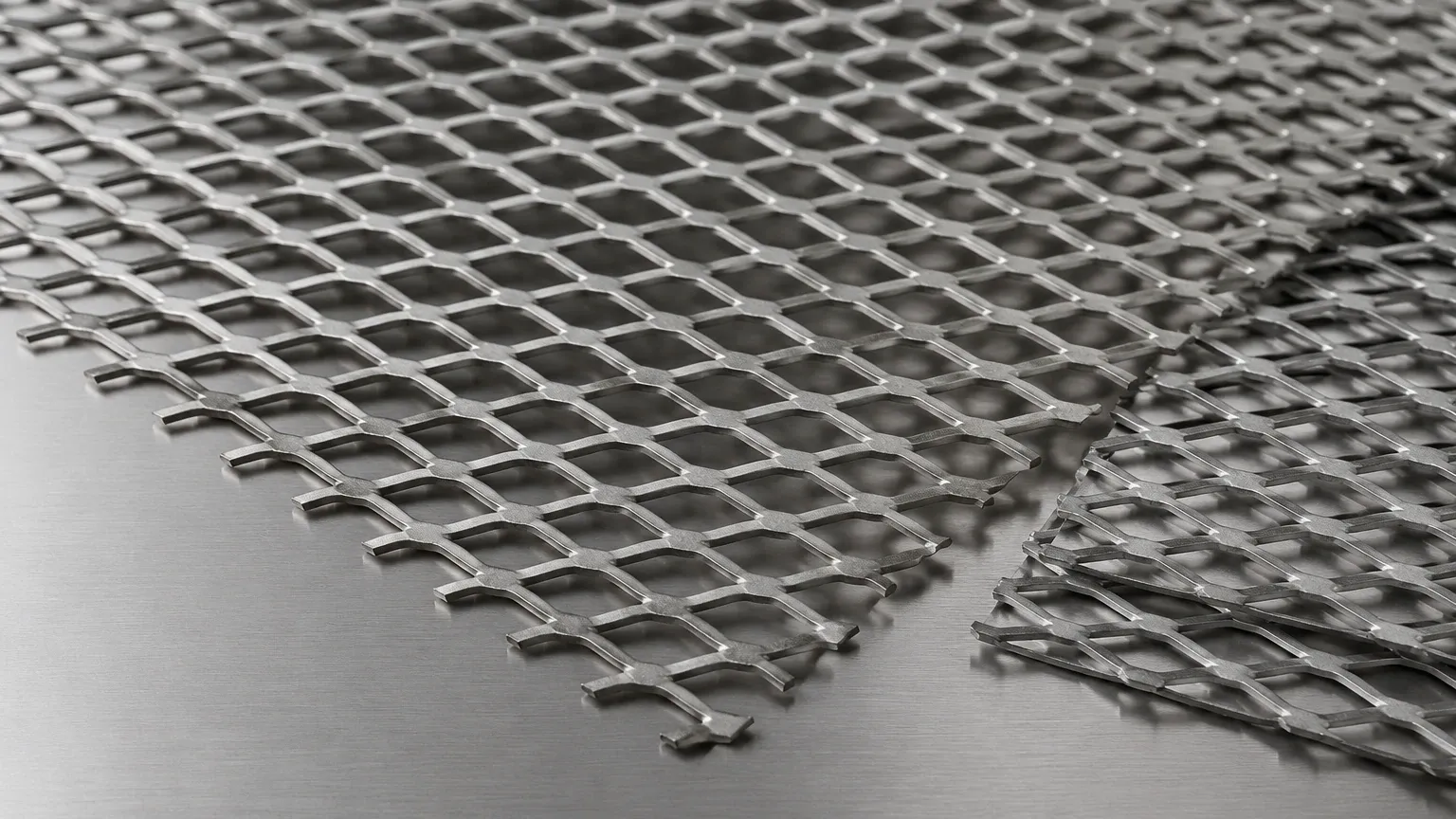
3 4 #9 Flat Expanded Metal
In the realm of industrial material science and filtration engineering, 3 4 #9 flat expanded metal represents one of the most versatile and widely utilized specifications. This specific grade of expanded metal is characterized by its unique balance of structural rigidity, open area, and surface smoothness. For engineers and procurement specialists, understanding the technical nuances of this material is essential for ensuring the performance and longevity of industrial components, particularly when used as a support substrate in complex filtration systems.
At its core, expanded metal is produced by simultaneously slitting and stretching a solid metal sheet. The "3/4" designation refers to the nominal width of the diamond opening, while the "#9" indicates the thickness or gauge of the base material. When this material undergoes the flattening process, it is cold-rolled to reduce the thickness and create a smooth, level surface. This article provides a comprehensive technical analysis of 3 4 #9 flat expanded metal, focusing on its engineering properties, material selection, and industrial applications.
Technical Specifications and Geometric Properties
To accurately specify 3 4 #9 flat expanded metal for industrial use, one must understand the geometric terminology used in its manufacture. Unlike perforated metal, which involves punching holes and creating scrap, expanded metal is a waste-free product where the material is displaced rather than removed.
Diamond Dimensions
Two primary measurements define the diamond pattern: the Short Way of Diamond (SWD) and the Long Way of Diamond (LWD). For a standard 3/4 #9 specification, the nominal SWD is approximately 0.923 inches, and the LWD is 2.10 inches. However, once the material is flattened, these dimensions shift slightly. The flattening process compresses the strands, typically resulting in an SWD of approximately 0.688 inches to 0.750 inches and an LWD of 2.0 inches to 2.1 inches.
Strand Width and Thickness
The "#9" gauge traditionally corresponds to a thickness of approximately 0.144 inches in carbon steel before expansion. In the flattened state, the strand thickness is reduced—often to around 0.120 inches—while the strand width remains relatively constant at approximately 0.150 inches. These dimensions are critical for calculating the structural load-bearing capacity and the total weight per square foot, which for 3 4 #9 flat expanded metal is roughly 1.71 to 1.80 pounds depending on the specific alloy used.
Open Area Percentage
For filtration and ventilation applications, the percentage of open area is a vital metric. 3 4 #9 flat expanded metal generally offers an open area of approximately 60% to 75%. This high transparency allows for excellent fluid flow and minimal pressure drop, making it an ideal choice for high-volume air or liquid processing environments where structural support is also required.
The Flattening Process: Engineering Advantages
Expanded metal is naturally produced in a "raised" or "standard" state, where the strands and bonds are set at a sharp angle to the plane of the sheet. While raised metal provides excellent grip for walkways, it is often unsuitable for precision industrial components. The flattening process involves passing the raised expanded metal through a heavy-duty cold-rolling mill.
Surface Uniformity
The primary advantage of the flat variety is its smooth, level surface. In filtration applications, a flat surface prevents the abrasion of delicate secondary filter media, such as fine wire mesh or synthetic membranes. When 3 4 #9 flat expanded metal is used as a support cage or outer wrap, the lack of sharp edges ensures that the internal components remain intact even under high-pressure pulses or mechanical vibration.
Dimensional Stability
Cold-rolling the metal increases its dimensional stability. The flattening process work-hardens the material, which can improve the yield strength of certain alloys. This makes the sheet easier to shear, weld, and form into cylindrical or conical shapes without the unpredictable warping that can sometimes occur with raised expanded metal.
Material Selection: Stainless Steel vs. Carbon Steel
While 3 4 #9 flat expanded metal is available in various materials, the choice of alloy is dictated by the operating environment. As a specialist in stainless steel filtration solutions, Kaifil emphasizes the importance of selecting materials that can withstand chemical exposure, extreme temperatures, and moisture.
Stainless Steel (304 and 316 Grades)
For the majority of B2B industrial applications, stainless steel is the preferred material. Grade 304 provides excellent corrosion resistance for general industrial use, while Grade 316 contains molybdenum, offering superior resistance to chlorides and acetic acids. In pharmaceutical and food processing, stainless steel is mandatory due to its hygienic properties and ability to withstand rigorous Clean-in-Place (CIP) cycles.
Carbon Steel and Galvanized Options
Carbon steel is a cost-effective alternative for indoor applications or dry environments where corrosion is not a primary concern. To enhance its lifespan, carbon steel can be hot-dip galvanized or powder-coated. However, for precision Perforated & Expanded Metal components used in filtration, the potential for zinc flaking or coating degradation often makes stainless steel the more reliable long-term investment.
Industrial Applications and Filtration Utility
3 4 #9 flat expanded metal serves as a workhorse across multiple sectors, ranging from heavy machinery to specialized laboratory equipment. Its structural integrity makes it particularly useful in the following areas:
Filtration Support Structures
In industrial filtration, fine meshes lack the rigidity to withstand high differential pressures. 3 4 #9 flat expanded metal is frequently used as a "backup" or support layer. By placing the expanded metal on the downstream side of a filter element, it prevents the finer mesh from collapsing or deforming under the force of the fluid flow. Its smooth surface ensures uniform contact with the mesh, distributing the load evenly.
Machine Guarding and Safety
The strength-to-weight ratio of the #9 gauge makes it an excellent choice for protective guards. It allows for clear visibility and airflow while providing a robust barrier against mechanical hazards. Because it is flattened, it is safer for operators to handle during maintenance, as there are no protruding edges to catch on clothing or skin.
Heat Shielding and Ventilation
In chemical processing and power generation, expanded metal is used to create ventilation panels and heat shields. The diamond pattern breaks up direct heat radiation while allowing air to circulate freely. The 3/4-inch opening is large enough to prevent significant air resistance but small enough to provide a degree of physical protection for sensitive internal components.
Customization and Manufacturing Considerations
When sourcing 3 4 #9 flat expanded metal for a specific project, off-the-shelf sheets may not always meet the engineering requirements. Customization is often necessary to integrate the material into complex assemblies.
Precision Shearing and Edging
Standard expanded metal sheets come with "random shears," meaning the diamonds are cut at arbitrary points along the edge. For high-precision B2B applications, "bond shearing" or "side shearing" may be required to ensure that the edges are uniform and easy to weld into frames. This is particularly important for cylindrical filter cartridges where a seamless longitudinal joint is required.
Forming and Welding
Despite its thickness, 3 4 #9 flat expanded metal can be rolled into cylinders or bent into U-channels. However, the orientation of the diamonds (SWD vs. LWD) significantly affects the ease of forming. Engineers must specify the direction of the diamond pattern relative to the bend to avoid cracking or irregular deformation. TIG and MIG welding are the standard methods for joining these components, though resistance welding is also effective for high-volume production runs.
Selection Criteria for Procurement and Engineering Teams
To ensure the successful integration of 3 4 #9 flat expanded metal into an industrial system, procurement teams should evaluate several factors beyond the basic dimensions.
1. Load-Bearing Requirements: Will the metal be subjected to static loads, such as in a tray, or dynamic loads, such as fluid pressure? The #9 gauge is robust, but the span between supports must be calculated to prevent sagging.
2. Chemical Compatibility: In filtration, the material must be compatible with both the process fluid and the cleaning agents used. Stainless steel 316L is often the safest choice for aggressive chemical environments.
3. Tolerances: Flattened expanded metal has different thickness tolerances than standard sheet metal. It is important to confirm with the manufacturer what the allowable variance is, especially if the metal must fit into a precision-machined groove or housing.
4. Total Cost of Ownership: While stainless steel has a higher upfront cost than carbon steel, its durability and lack of maintenance requirements often result in a lower total cost over the lifecycle of the equipment.
Conclusion
3 4 #9 flat expanded metal is a critical component in modern industrial design, offering a unique combination of strength, flow efficiency, and surface smoothness. Whether it is used as a protective guard, a ventilation panel, or a vital support structure in a high-pressure filtration system, its performance depends on precise specification and quality manufacturing.
For engineers and technical professionals seeking reliable filtration components, selecting the right substrate is as important as the filter media itself. By understanding the geometric properties and material advantages of flattened expanded metal, organizations can optimize their processes for better efficiency and durability. For more information on customized metal components and industrial filtration solutions, you can Review product options and application support to find the exact configuration for your specific engineering needs.
