


3 8 Expanded Metal
In industrial filtration and structural engineering, selecting the correct substrate is critical for ensuring both performance and longevity. Among the various configurations available, 3 8 expanded metal stands as a versatile and robust choice for engineers and procurement specialists. This specific mesh size, often utilized in the manufacturing of Perforated & Expanded Metal components, provides a unique balance of open area, structural rigidity, and material efficiency.
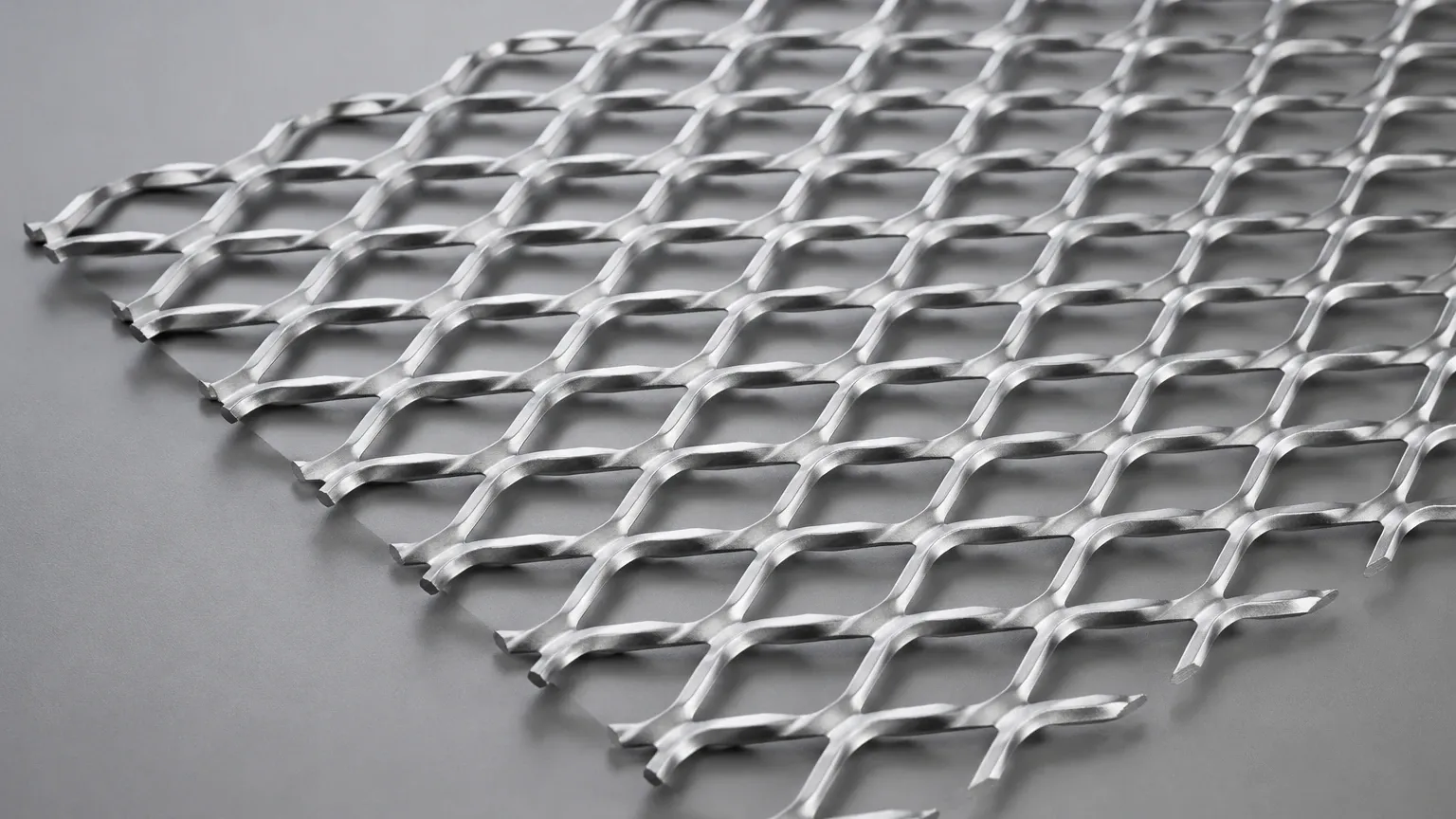
At its core, expanded metal is produced by simultaneously slitting and stretching a solid metal sheet. Unlike perforated metal, which involves punching holes and creating scrap, the expansion process creates a diamond-shaped pattern without any material waste. For technical applications requiring high-strength support or primary filtration in demanding environments, understanding the nuances of 3 8 expanded metal is essential for optimizing system design.
Understanding the Technical Specifications of 3 8 Expanded Metal
When specifying 3 8 expanded metal for industrial use, it is necessary to look beyond the nominal size. The term "3 8" typically refers to the Short Way of Design (SWD), which is the distance from the center of one bond to the center of the next bond across the short axis of the diamond opening. In this configuration, the SWD is approximately 0.375 inches (3/8").
To fully define the product, several other metrics must be considered:
* Long Way of Design (LWD): This is the distance across the long axis of the diamond. For a standard 3/8" pattern, the LWD often falls between 0.900" and 1.25", depending on the specific tooling and expansion ratio.
* Strand Width and Thickness: These dimensions determine the overall strength and weight of the mesh. A thicker strand provides higher mechanical resistance but reduces the percentage of open area.
* Opening Size (SWO and LWO): While SWD and LWD measure from bond centers, the Short Way of Opening (SWO) and Long Way of Opening (LWO) measure the actual clear space. This is the most critical metric for engineers calculating particle bypass or flow rates.
In the context of filtration, the relationship between these dimensions dictates the mesh's ability to support secondary filter media, such as fine wire mesh or non-woven fabrics, without causing excessive pressure drop.
Material Selection for Industrial Filtration Environments
The performance of 3 8 expanded metal is heavily dependent on the alloy from which it is manufactured. In sectors like chemical processing, pharmaceuticals, and food production, material integrity is non-negotiable. Kaifil specializes in stainless steel solutions, which are preferred for their corrosion resistance and thermal stability.
Stainless Steel 304 vs. 316L
For most general industrial applications, Grade 304 stainless steel offers excellent durability and cost-effectiveness. However, in environments involving high chloride concentrations or acidic solutions—common in marine and chemical industries—Grade 316L is the standard. The addition of molybdenum in 316L provides superior resistance to pitting and crevice corrosion, which is vital when the expanded metal serves as a permanent internal core for a filter cartridge.
Specialized Alloys
In high-temperature or highly corrosive hydraulic systems, other materials like Monel, Inconel, or specialized carbon steels with protective coatings may be used. However, for the majority of liquid and gas filtration tasks, stainless steel remains the authoritative choice due to its ability to withstand rigorous cleaning cycles, including backwashing and ultrasonic cleaning.
Structural Variations: Flattened vs. Raised 3 8 Expanded Metal
One of the most important decisions an engineer must make when selecting 3 8 expanded metal is whether to use the "Raised" (Standard) or "Flattened" version. Each has distinct physical properties that impact how the material interacts with other components in a filtration assembly.
Raised (Standard) Expanded Metal
In its standard form, the strands and bonds are set at a uniform angle to the plane of the sheet. This creates a three-dimensional texture that provides maximum rigidity and a high strength-to-weight ratio. The angled strands can also act as a pre-filter, breaking up laminar flow and creating turbulence that can be beneficial in certain mixing or heat exchange applications. However, the raised edges can be abrasive, which may be a concern if the expanded metal is in direct contact with delicate synthetic filter membranes.
Flattened Expanded Metal
Flattened 3 8 expanded metal is produced by passing the standard raised sheet through a cold-roll reducing mill. This process flattens the strands and bonds into a single plane, resulting in a smooth, level surface. Flattened mesh is slightly thinner than the original sheet and the openings are slightly enlarged. For B2B manufacturers of filter cartridges, flattened expanded metal is often preferred for internal support cores because the smooth surface prevents abrasion of the outer filter media and allows for easier welding and assembly into end caps.
The Role of Expanded Metal in Filter Cartridge Support
In complex filtration systems, 3 8 expanded metal rarely acts alone. Its primary function is often as a structural skeleton for multi-layered filter elements. Engineers utilize this material to ensure that the filter can withstand high differential pressures without collapsing.
Internal Support Cores
In high-pressure hydraulic or water treatment applications, the inner core of a cylindrical filter cartridge must resist the inward force of the fluid flow. A 3 8 expanded metal tube provides the necessary hoop strength to prevent deformation. The diamond pattern is particularly effective at distributing mechanical stress evenly across the cylinder.
Outer Protective Sleeves
Conversely, expanded metal can be used as an outer cage to protect the pleats of a filter element from mechanical damage during installation or handling. The 3/8" opening is large enough to allow for unrestricted fluid entry while being small enough to provide a rigid protective barrier against large debris or physical impact.
Pleat Support
In pleated filter designs, expanded metal can be laminated with wire mesh or fiber media. Here, the 3 8 expanded metal maintains the spacing between pleats, ensuring that the entire surface area of the filter remains active and preventing "pleat bunching" which can lead to premature clogging and system failure.
Engineering Considerations for Flow Dynamics and Pressure Drop
When integrating 3 8 expanded metal into a technical design, calculating the impact on flow dynamics is a priority. The percentage of open area is the primary variable here. For a standard 3/8" #18 gauge expanded metal, the open area typically ranges from 60% to 75%.
Pressure Drop (ΔP)
Every component in a fluid path contributes to pressure drop. While expanded metal is highly porous, the thickness of the strands and the angle of the bonds (in raised versions) create resistance. Engineers must balance the need for structural thickness (for strength) against the requirement for low ΔP. In high-viscosity applications, such as heavy oil filtration, a larger opening or a thinner strand might be necessary to maintain efficient flow rates.
Flow Distribution
The geometry of 3 8 expanded metal helps in diffusing the flow of liquids or gases. As the fluid passes through the diamond-shaped orifices, it is forced to redistribute, which can help in achieving a more uniform loading of the primary filter media. This prevents "hot spots" where one area of the filter becomes clogged faster than the rest, thereby extending the overall service life of the component.
Quality Standards and Customization for OEM Applications
For purchasing teams and engineers, sourcing 3 8 expanded metal requires a partner capable of meeting strict industrial tolerances. Standard commercial-grade expanded metal may have variations in strand width or flatness that are unacceptable for precision filtration components.
Precision Slitting and Forming
When used in filter tubes, the expanded metal must be slit to precise widths to ensure that the resulting cylinders have a consistent diameter. Kaifil’s manufacturing process focuses on maintaining tight tolerances during the expansion and subsequent forming stages. This ensures that the components fit perfectly into housings and interface correctly with seals and gaskets.
Customization Options
Beyond the standard 3/8" dimensions, customization is often required for specific OEM projects. This includes:
* Custom Sheet Sizes: Reducing waste by providing exact dimensions for the production line.
* Edge Treatments: Providing sheared edges or random edges depending on the welding requirements.
* Surface Finishes: Electropolishing or passivating stainless steel components to meet the hygiene standards of the pharmaceutical and food industries.
Total Cost of Ownership
While the initial cost of 3 8 expanded metal is a factor, B2B buyers should evaluate the total cost of ownership. Using a high-quality stainless steel mesh that resists corrosion and mechanical fatigue reduces the frequency of filter replacements and prevents costly system downtime. In the long run, a precision-engineered Perforated & Expanded Metal solution provides better value than lower-grade alternatives.
Conclusion: Confirming Requirements for Procurement
Before finalizing an order for 3 8 expanded metal, technical teams should confirm several key parameters with their manufacturer. These include the exact alloy grade, the preference for flattened or raised structures, the required strand thickness for pressure resistance, and any specific cleaning or finishing standards required for the end-use application.
By focusing on these technical details, engineers can ensure that the 3 8 expanded metal they integrate into their systems will perform reliably under the most demanding industrial conditions. Whether it serves as a support core for a chemical filter or a protective cage for a hydraulic element, the right expanded metal specification is a cornerstone of efficient industrial filtration.
