


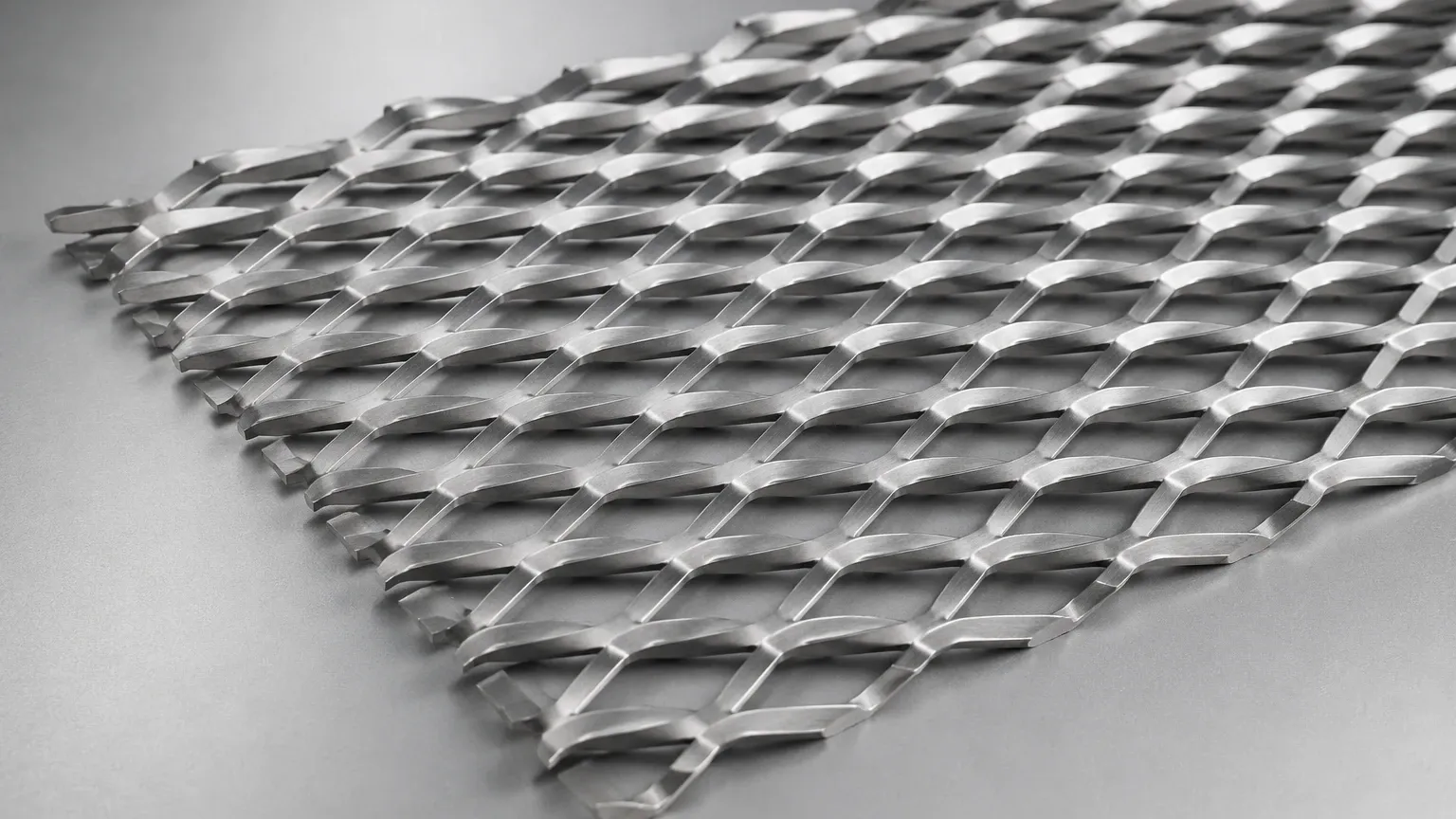
3 4 #9 Flattened Expanded Metal
In industrial filtration and structural engineering, material selection is dictated by the balance between mechanical strength, open area, and surface profile. Among the various specifications available, 3 4 #9 flattened expanded metal stands out as a versatile and robust choice for demanding applications. This specific grade of expanded metal is frequently utilized in the manufacturing of heavy-duty filter supports, protective cages, and industrial partitions where a smooth, flat surface is required without sacrificing the structural integrity of the base metal.
At Kaifil, we specialize in providing precision-engineered filtration solutions that incorporate high-quality metal components. Understanding the technical nuances of 3/4" #9 flattened expanded metal is essential for engineers and procurement teams who must ensure that their filtration systems can withstand high pressure, corrosive environments, and rigorous cleaning cycles.
Understanding the Specifications of 3/4" #9 Expanded Metal
The designation "3 4 #9" refers to specific measurements within the expanded metal industry. To select the correct material for a filtration or industrial project, it is necessary to decode these figures into actionable engineering data.
Nominal Opening Size (3/4")
The "3/4" refers to the nominal Short Way of Diamond (SWD) dimension. In expanded metal terminology, the SWD is the distance from the center of one bond to the center of the next bond across the short axis of the diamond opening. For a 3/4" specification, the actual clear opening is typically slightly less than the nominal value due to the width of the metal strands. This size provides a significant amount of open area, usually ranging between 60% and 75%, making it ideal for applications requiring high flow rates with minimal pressure drop.
Material Gauge (#9)
The "#9" indicates the thickness of the original metal sheet before the expansion process. In the context of carbon steel, #9 gauge is approximately 0.144 inches (3.66 mm) thick. When this heavy-gauge material is expanded, it retains substantial rigidity. For stainless steel variants, which are common in Kaifil’s filtration products, the thickness may vary slightly based on the specific alloy and manufacturing standards, but the "#9" designation serves as the primary indicator of the material's heavy-duty nature.
The Long Way of Diamond (LWD)
While not explicitly in the name, the Long Way of Diamond for a 3/4" specification is typically around 2.0 to 2.1 inches. This elongated diamond shape provides directional strength, which is a critical consideration when designing cylindrical filter cartridges or large-scale screening panels.
The Flattening Process: Engineering Advantages
Expanded metal is produced by simultaneously slitting and stretching a solid metal sheet. This process creates a "raised" or "standard" expanded metal where the strands and bonds are set at a sharp angle to the plane of the sheet. For many industrial applications, particularly in filtration, this raised profile is undesirable. This is where the flattening process becomes essential.
Cold Rolling for Precision
3 4 #9 flattened expanded metal is manufactured by passing standard expanded metal through a cold-roll reducing mill. This secondary process flattens the strands and bonds, pushing them back into the same plane as the original sheet. The result is a smooth, level surface that offers several engineering benefits:
1. Surface Smoothness: The absence of raised edges prevents the material from snagging or damaging secondary filtration media, such as fine wire mesh or synthetic fabrics, which are often layered against the expanded metal support.
2. Consistent Thickness: Flattening reduces the overall depth of the material. While the original #9 gauge strand remains thick, the total thickness of the sheet is reduced compared to the raised version, allowing for tighter tolerances in filter housing assemblies.
3. Enhanced Safety: In environments where workers handle the material, flattened expanded metal is significantly safer as it lacks the sharp, protruding edges characteristic of standard expanded metal.
4. Improved Bonding: For components that require welding or mechanical fastening, the flat surface provides a much larger contact area, ensuring stronger and more reliable joints.
Material Selection: Stainless Steel vs. Carbon Steel
While 3/4" #9 flattened expanded metal can be produced from various materials, the choice of alloy is critical for the longevity of the filtration system. As a manufacturer focused on high-performance solutions, Kaifil emphasizes the use of stainless steel for most industrial applications.
Stainless Steel (304 and 316L)
In the chemical processing, food and beverage, and pharmaceutical industries, stainless steel is the standard.
* Type 304: Offers excellent strength and basic corrosion resistance, suitable for many general industrial environments.
* Type 316L: Contains molybdenum, which provides superior resistance to chlorides and pitting. This is the preferred choice for marine environments, pharmaceutical manufacturing, and aggressive chemical filtration.
Using stainless steel for Perforated & Expanded Metal components ensures that the filter supports do not introduce contaminants into the process stream through oxidation or material degradation.
Carbon Steel and Galvanized Options
For applications where corrosion is not a primary concern, such as hydraulic oil filtration in closed systems or structural guards, carbon steel provides a cost-effective alternative. It can be further protected through hot-dip galvanizing or powder coating, though these coatings may slightly alter the dimensions of the 3/4" openings.
Applications in Industrial Filtration and Support
The structural characteristics of 3 4 #9 flattened expanded metal make it an indispensable component in various filtration architectures. Its primary role is often as a "support skeleton" for more delicate filtration layers.
Support for Pleated Media
In high-pressure hydraulic or gas filtration, pleated wire mesh or fiberglass media can collapse under the force of the flow. A cylinder made from 3/4" #9 flattened expanded metal provides the necessary hoop strength to maintain the filter's shape. The flattened surface ensures that the pleats are supported uniformly without the risk of the expanded metal strands cutting into the media.
Outer Protective Cages
For large industrial filter cartridges, an outer cage is required to protect the internal media from mechanical damage during installation, removal, and backwashing. The 3/4" opening size is large enough to allow for unrestricted flow (low-pressure drop) while the #9 gauge thickness provides a rugged shield against impact.
Pre-Filtration and Debris Screening
In water treatment and intake systems, 3/4" #9 flattened expanded metal serves as an effective primary screen. It can capture large debris, such as stones or organic matter, before the fluid reaches finer filtration stages. The flattening process is particularly useful here, as it prevents debris from becoming wedged in the "pockets" created by raised strands, making the screen easier to clean via mechanical scraping or high-pressure spray.
Engineering Considerations for Selection
When specifying 3/4" #9 flattened expanded metal for a project, engineers must evaluate several factors beyond the basic dimensions to ensure optimal performance.
Open Area and Flow Dynamics
The percentage of open area determines the velocity of the fluid as it passes through the metal. For 3/4" #9, the open area is substantial, but engineers must still calculate the potential for turbulence. In some high-velocity gas applications, the diamond shape of expanded metal can induce turbulence differently than the round holes found in perforated metal.
Weight and Structural Load
At approximately 1.71 to 1.80 pounds per square foot (depending on the material and strand width), #9 gauge expanded metal is relatively heavy. Designers must ensure that the filter housing or support structure can accommodate the cumulative weight of the expanded metal, especially in large-scale multi-cartridge systems.
Directional Strength
Expanded metal is stronger across the Short Way of the Diamond (SWD) than the Long Way (LWD). When rolling the material into cylinders for filter cores, the orientation of the diamonds is critical. Typically, the LWD should run circumferentially to provide maximum resistance to internal or external pressure.
Customization and OEM Capabilities
Every industrial application has unique requirements. While 3/4" #9 is a standard size, the specific needs of a filtration system often require customization. Kaifil works closely with engineers to provide tailored solutions that go beyond off-the-shelf specifications.
Custom Strand Widths
The width of the strand (the amount of metal between the openings) can be adjusted during the expansion process. A wider strand increases the strength and weight of the sheet while decreasing the open area. For 3/4" #9, a standard strand width is approximately 0.150 inches, but this can be modified to meet specific burst pressure requirements.
Precision Cutting and Forming
Flattened expanded metal can be difficult to cut accurately without the right equipment due to its hardness and the geometry of the diamonds. We provide precision shearing, circle cutting, and rolling services to ensure that the components arrive ready for immediate integration into the final product. This is particularly important for OEM manufacturers who require consistent tolerances for automated welding processes.
Maintenance and Durability in Demanding Environments
The longevity of 3 4 #9 flattened expanded metal is one of its greatest assets. In industrial settings, filters are often subjected to "Clean-in-Place" (CIP) procedures involving caustic chemicals, high-temperature steam, or high-pressure water jets.
Because the material is flattened, there are fewer crevices where bacteria or particulates can accumulate. This makes it highly suitable for the food and beverage industry, where hygiene is paramount. Furthermore, the robust #9 gauge thickness ensures that the material does not warp or fatigue under the thermal stresses of steam sterilization.
In the event of heavy fouling, the flat surface allows for more effective mechanical cleaning. Unlike raised expanded metal, which can trap solids in the angular bonds, the flattened version allows brushes or scrapers to move across the surface with minimal resistance.
Conclusion
Selecting the right material for industrial filtration involves more than just picking a hole size. The use of 3 4 #9 flattened expanded metal offers a unique combination of high open area, significant mechanical strength, and a user-friendly surface profile. Whether used as a support core for a high-pressure hydraulic filter or as a protective screen in a chemical reactor, this specification provides the reliability that modern industrial processes demand.
At Kaifil, we combine manufacturing expertise with deep engineering knowledge to help our clients navigate the complexities of material selection. By focusing on quality materials like stainless steel and employing precise flattening techniques, we ensure that our filtration components deliver long-term value and optimal performance.
For engineers and purchasing teams looking to optimize their filtration systems, we invite you to explore our full range of Perforated & Expanded Metal options. Our team is available to provide technical guidance on material compatibility, structural requirements, and custom configurations to meet your specific application needs.
