


4×8 Expanded Metal #9
In industrial filtration and structural engineering, material selection is dictated by the balance between mechanical strength and functional permeability. Among the various configurations of metal substrates, 4×8 expanded metal #9 stands out as a foundational component for heavy-duty applications. Whether used as a rigid support for fine wire mesh or as a primary screening element in high-flow environments, understanding the technical nuances of this specific gauge and sheet size is critical for engineering teams and procurement specialists.
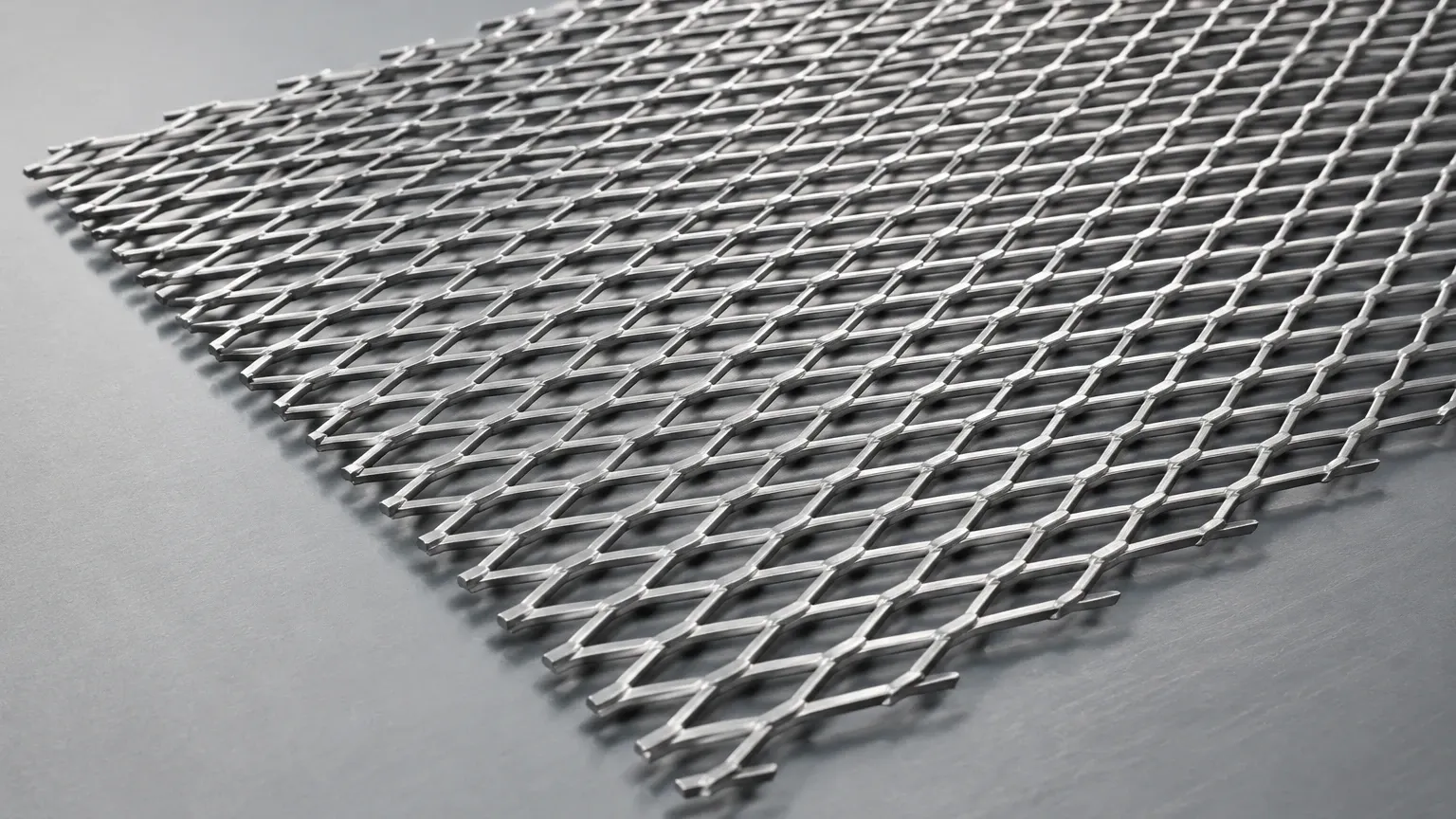
Expanded metal is manufactured by simultaneously slitting and stretching a solid metal sheet, creating a continuous pattern of diamond-shaped openings. Unlike perforated metal, which involves punching out material and creating waste, the expansion process increases the overall surface area and structural rigidity without adding weight or losing material. The "4×8" designation refers to the standard sheet dimensions (4 feet by 8 feet), while the "#9" indicates the thickness and weight of the material, typically corresponding to a nominal thickness of approximately 0.120 inches for carbon steel variants, though specific dimensions can vary based on whether the material is raised or flattened.
Understanding the Specifications of 4×8 Expanded Metal #9
When evaluating 4×8 expanded metal #9 for industrial use, engineers must distinguish between the two primary forms: Raised (Standard) and Flattened.
Raised vs. Flattened Expanded Metal
Raised expanded metal is the immediate product of the expanding machine. The strands and bonds are set at a uniform angle to the plane of the sheet, providing a three-dimensional texture that offers high slip resistance and maximum structural stiffness. In filtration, raised metal is often preferred when the component needs to create turbulence in fluid flow or when it serves as a high-strength outer cage for a filter cartridge.
Flattened expanded metal is produced by passing the raised sheet through a cold-roll reducing mill. This process flattens the strands and bonds into the same plane, resulting in a smooth, level surface. For many Perforated & Expanded Metal applications, flattened #9 is chosen because it is easier to weld, safer to handle, and provides a flush mounting surface for secondary filtration layers like fine stainless steel mesh.
Dimensional Terminology
To accurately specify 4×8 expanded metal #9, technical professionals use the following metrics:
* SWD (Short Way of Diamond): The distance from the center of one bond to the center of the next bond across the short axis of the diamond.
* LWD (Long Way of Diamond): The distance across the long axis of the diamond.
* Strand Width: The amount of metal fed into the machine between slits.
* Strand Thickness: The thickness of the original base metal (for #9, this is nominally 0.120").
Material Selection: The Shift Toward Stainless Steel
While #9 expanded metal is commonly associated with carbon steel in general construction, industrial filtration environments—particularly in chemical processing, food and beverage, and pharmaceuticals—require the corrosion resistance and longevity of stainless steel.
Kaifil specializes in manufacturing these components from high-grade alloys such as 304 and 316L stainless steel. The choice of material significantly impacts the total cost of ownership. While carbon steel may offer a lower initial purchase price, the risk of oxidation and product contamination in fluid processing often makes it unsuitable. Stainless steel expanded metal provides:
1. Chemical Compatibility: Resistance to acids, alkalis, and high-salinity environments.
2. Thermal Stability: The ability to maintain structural integrity under extreme temperature fluctuations found in steam cleaning or high-heat chemical reactions.
3. Sanitary Compliance: A non-porous surface that can be passivated or electropolished to meet stringent hygiene standards in food and pharma sectors.
Engineering Considerations for Expanded Metal Supports
In the design of industrial filter cartridges, 4×8 expanded metal #9 often serves as the "skeleton" or core. Its primary role is to prevent the collapse of the finer filtration media under high differential pressure (ΔP).
Open Area and Flow Dynamics
The open area percentage of #9 expanded metal is a critical variable. A higher open area reduces pressure drop across the filter but may compromise the structural support of the mesh. Engineers must calculate the required flow rate against the mechanical load. For 4×8 expanded metal #9, the open area typically ranges between 50% and 80%, depending on the specific diamond size (e.g., 3/4" or 1-1/2" openings).
Structural Rigidity and Pressure Limits
The #9 gauge is a relatively heavy specification, making it ideal for high-pressure hydraulic systems or large-scale water treatment filters. When used as an inner core, the expanded metal must resist the compressive forces of the fluid pushing inward. When used as an outer guard, it protects the delicate inner mesh from mechanical damage during installation or backwashing cycles.
Applications in Industrial Filtration and Fluid Handling
The versatility of 4×8 expanded metal #9 allows it to be integrated into various industrial systems. Its unique geometry provides benefits that standard perforated sheets or woven wire cannot always match.
* Basket Strainers: Used in the initial stages of water treatment or chemical processing to remove large debris. The #9 gauge provides the impact resistance necessary to handle heavy solids without deforming.
* Centrifuge Liners: In pharmaceutical and food processing, expanded metal acts as a rigid support for fine filter cloths in centrifugal separation equipment.
* Intake Screens: For industrial cooling systems drawing from natural water sources, large 4×8 sheets of expanded metal are used to construct robust intake screens that prevent fish and large debris from entering the system while maintaining high flow rates.
* Catalyst Support Grids: In petrochemical reactors, expanded metal provides a stable platform for catalyst beds, allowing gas or liquid to pass through while holding the solid catalyst in place.
Selection Criteria: Evaluating Quality and Performance
When sourcing 4×8 expanded metal #9, purchasing teams should look beyond the basic dimensions. Quality manufacturing is essential to ensure the component does not fail prematurely in a demanding environment.
Edge Conditions and Safety
In its raw state, expanded metal has sharp edges where the diamonds are cut. For filtration applications, "random sheared" edges can lead to burrs that damage the fine filter mesh or injure personnel. Specifying "bond sheared" or "side-matched" edges ensures a more uniform perimeter, which is vital for achieving a proper seal in filter housings.
Flatness and Camber
For large 4×8 sheets, maintaining flatness is a technical challenge. If the sheet has significant camber (bowing), it will be difficult to roll into a cylinder for filter cartridge production. High-quality expanded metal undergoes leveling processes to ensure it meets strict flatness tolerances, facilitating easier fabrication and more consistent end-products.
Surface Finish
In many B2B applications, the surface finish of the metal is as important as its dimensions. For stainless steel #9 expanded metal, options include:
* Mill Finish: Standard finish after expansion.
* Pickled and Passivated: Removes surface contaminants and restores the chromium oxide layer for maximum corrosion resistance.
* Electropolished: Provides a mirror-like, ultra-smooth finish that minimizes particle adhesion, making it ideal for "clean-in-place" (CIP) systems.
Common Risks and Implementation Challenges
Implementing 4×8 expanded metal #9 into an industrial design is not without risks. Engineers should be aware of the following potential pitfalls:
1. Material Thinning: During the expansion process, the strands are stretched. If the process is not controlled, the strands may become too thin, leading to premature fatigue failure under cyclic pressure loading.
2. Welding Difficulties: Welding #9 gauge expanded metal to a thin-walled housing or a fine mesh requires precision. Excessive heat can warp the diamond pattern or blow through the material. Using TIG (Tungsten Inert Gas) welding or resistance welding is often necessary for high-integrity filtration components.
3. Corrosion at the Bonds: The "bonds" (where the diamonds intersect) can sometimes harbor stagnant fluid if not properly cleaned, leading to crevice corrosion. This is particularly relevant in chemical processing where aggressive media are used.
Maintenance and Replacement Cycles
While 4×8 expanded metal #9 is designed for durability, it is not indestructible. In filtration systems, the replacement cycle is usually dictated by the condition of the primary filter media. However, the expanded metal support should be inspected for:
* Stress Cracks: Particularly at the bonds, which may indicate that the system is operating beyond its designed pressure limits.
* Erosion: High-velocity fluid containing abrasive particles can eventually wear down the strands of the expanded metal, reducing its structural integrity.
* Permanent Deformation: If the filter has experienced a significant pressure spike, the expanded metal may "belly" or deform. Once the yield strength is exceeded, the component must be replaced to prevent a catastrophic collapse of the filter assembly.
Conclusion: Optimizing Your Filtration Strategy
Selecting 4×8 expanded metal #9 is more than a commodity purchase; it is a critical engineering decision that affects the efficiency, safety, and longevity of industrial filtration systems. By focusing on material grade, edge conditions, and the specific requirements of the application—whether it be a coarse strainer or a high-pressure support core—engineers can ensure optimal performance.
Kaifil provides comprehensive support for those seeking customized Perforated & Expanded Metal solutions. With expertise in stainless steel fabrication and a deep understanding of industrial filtration challenges, Kaifil assists technical teams in moving from standard specifications to high-performance, application-specific components. When evaluating your next project involving 4×8 expanded metal #9, consider the total lifecycle costs and the technical advantages of a precision-manufactured substrate.
