


Clip in Perforated Metal Ceiling
In modern industrial and commercial architecture, the ceiling is no longer viewed merely as a structural enclosure. It has evolved into a functional component responsible for air distribution, acoustic management, and aesthetic uniformity. Among the various modular systems available, the clip in perforated metal ceiling stands out as a preferred choice for engineers and facility managers who require a combination of high durability, accessibility, and precision.
Unlike traditional lay-in systems where panels sit loosely on a visible T-grid, clip-in systems utilize a hidden suspension mechanism. This design creates a monolithic, seamless appearance while ensuring that each panel is securely locked into place. For facilities ranging from pharmaceutical laboratories to high-traffic transport hubs, understanding the technical nuances of these systems—specifically the role of Perforated & Expanded Metal—is essential for optimizing long-term performance and maintenance efficiency.
Understanding the Architecture of Clip-in Systems
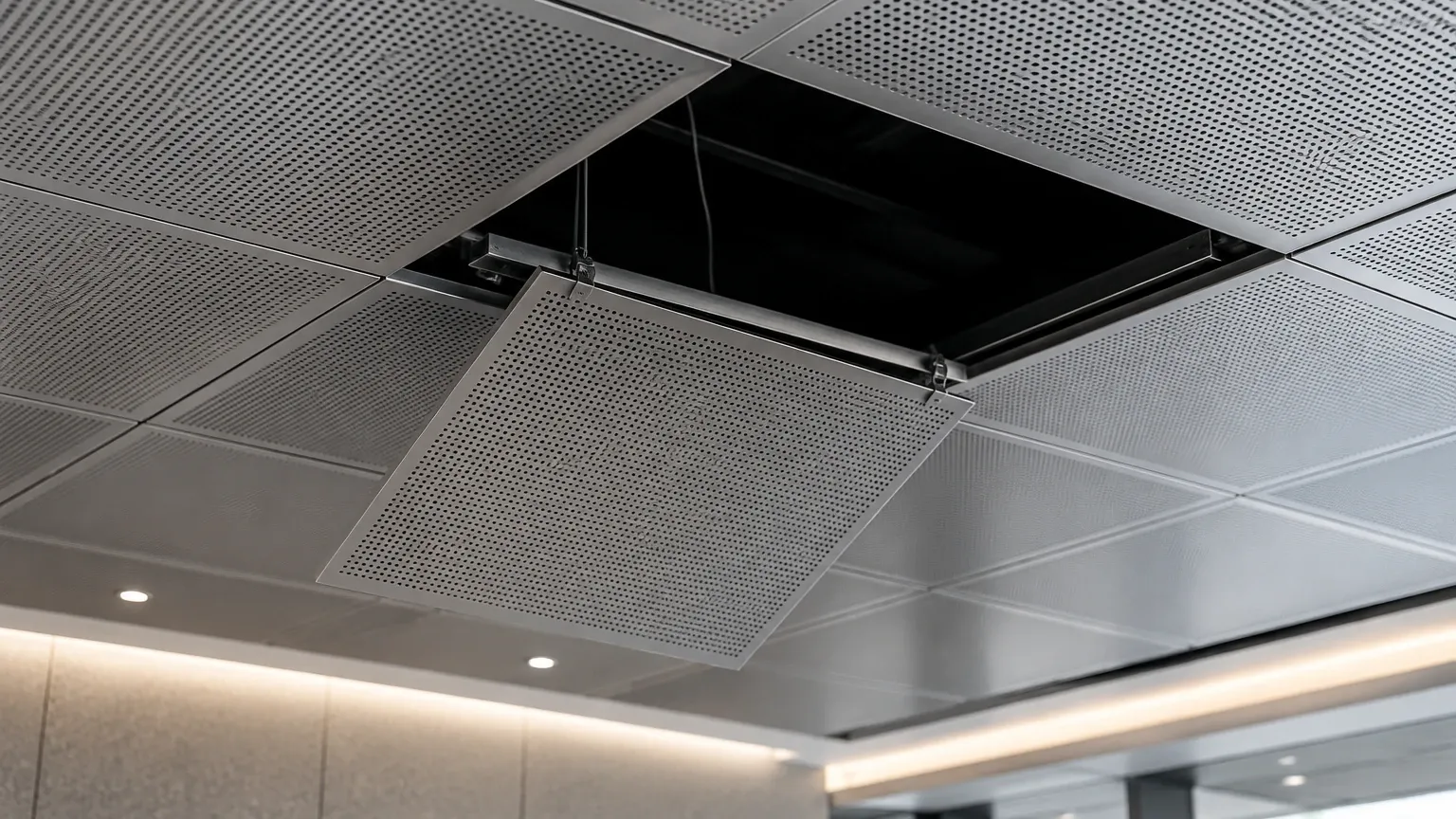
The fundamental advantage of a clip in perforated metal ceiling lies in its suspension geometry. The system typically employs a "spring tee" or "A-bar" carrier. The metal panels are manufactured with a specific up-turned edge or "pip" that allows them to be pushed upward into the carrier, where they snap into place.
The Hidden Grid Advantage
From an engineering perspective, the hidden grid serves two primary purposes. First, it provides a high level of security. Because the panels are clipped in from below and held by tension, they are less likely to be displaced by localized air pressure changes—a common issue in cleanrooms or high-velocity HVAC environments. Second, the absence of a visible grid minimizes the accumulation of dust and particulates on exposed horizontal surfaces, making it a superior choice for sterile environments.
Structural Integrity and Alignment
The precision of the manufacturing process is critical here. If the tolerances of the perforated metal panels are not tightly controlled, the "clip" mechanism may fail to engage properly, leading to uneven gaps or sagging. High-quality systems ensure that the panels remain perfectly level across large spans, maintaining the integrity of the visual plane even when subjected to the vibrations of industrial machinery.
Material Selection and Durability Factors
When specifying a clip in perforated metal ceiling, the choice of substrate material is the most significant factor affecting the lifecycle cost and performance. While aluminum is often used for its lightweight properties, stainless steel is the gold standard for demanding industrial applications.
Stainless Steel (Grade 304 and 316)
For industries such as chemical processing or food and beverage production, stainless steel is frequently mandated. Grade 304 offers excellent corrosion resistance for most indoor applications. However, in environments where the ceiling may be exposed to chloride-based cleaning agents or saltwater mist, Grade 316 is required due to its molybdenum content, which provides superior pitting resistance.
Coating and Surface Finishes
Beyond the base metal, the finish plays a role in both durability and light reflectance. Powder coating is the most common finish for perforated ceilings, providing a robust layer that resists scratching and chemical degradation. In industrial settings, a high-reflectance white finish can improve the effectiveness of overhead lighting, potentially reducing energy consumption. For specialized applications, anti-microbial coatings can be applied to the perforated metal surface to inhibit the growth of bacteria and fungi.
Technical Parameters of Perforated & Expanded Metal
The performance of a clip-in ceiling is largely defined by the characteristics of the metal infill. Engineers must balance the need for structural rigidity with the requirements for airflow and sound absorption.
Hole Patterns and Open Area
The "open area" refers to the percentage of the panel that consists of holes. This is a critical calculation for HVAC engineers. A higher open area (e.g., 40-50%) allows for greater air transparency, making the ceiling suitable for use as a return air plenum. Common patterns include:
* Round Holes: The most versatile and structurally stable pattern, often arranged in a 60-degree staggered layout for maximum strength.
* Square Holes: Provide a modern aesthetic and a high open area, though they can be more prone to stress at the corners if the gauge is too thin.
* Slotted Holes: Useful for directional airflow or specific architectural visual effects.
Pitch and Gauge
The pitch (distance between the centers of the holes) and the gauge (thickness of the metal) determine the panel's resistance to deflection. In a clip-in system, the metal must be thick enough to maintain its shape under its own weight and the pressure of the clipping mechanism, typically ranging from 0.6mm to 1.2mm depending on the panel size and material.
Industrial Applications and Performance Requirements
Clip in perforated metal ceilings are engineered for environments where standard ceiling tiles would fail. Their application is usually driven by specific performance mandates.
Cleanrooms and Controlled Environments
In pharmaceutical and semiconductor manufacturing, maintaining ISO air cleanliness standards is paramount. A clip-in system with perforated panels allows for laminar airflow, where air is pushed through the ceiling and exhausted through the floor. The secure clipping mechanism ensures that the panels do not vibrate or shift under the high-pressure differentials required for cleanroom operation.
Food and Beverage Processing
Hygiene is the primary concern in food production. Stainless steel perforated ceilings are non-porous and can withstand rigorous wash-down procedures involving high-pressure water and chemical sanitizers. The clip-in design allows for easy removal of individual panels for inspection of the void above, where utilities and piping are typically housed.
Acoustic Management in Large Volumes
In large industrial halls or transit hubs, noise reverberation can reach dangerous levels. Perforated metal ceilings are often paired with an acoustic fleece or mineral wool backing. The perforations allow sound waves to pass through the metal surface, where they are trapped and dissipated by the backing material. This significantly reduces the Noise Reduction Coefficient (NRC), creating a safer and more productive work environment.
Engineering Considerations for Specification
Before finalizing the design of a clip in perforated metal ceiling, several technical variables must be confirmed to ensure the system meets the project’s specific needs.
Load-Bearing Capacity
While the ceiling is not a primary structural element, it must support integrated services such as LED lighting fixtures, fire sprinklers, and smoke detectors. Engineers should verify the load-bearing capacity of the spring tee carriers. If heavy equipment is to be suspended, independent support brackets that bypass the ceiling panels may be necessary to prevent warping.
Fire Resistance and Safety
Metal is inherently non-combustible, making perforated metal ceilings an excellent choice for meeting strict fire codes (such as Class A fire ratings). However, the specification must also account for the acoustic backing material. Specifiers should ensure that any fleece or insulation used is also fire-rated and does not produce toxic smoke in the event of a fire.
Seismic and Wind Load Requirements
In certain geographic regions or high-rise buildings, the ceiling system must be engineered to withstand seismic forces or internal wind pressures caused by the "piston effect" in elevator shafts and stairwells. Clip-in systems are generally more resilient than lay-in systems in these scenarios because the panels are mechanically constrained within the grid.
Maintenance and Longevity in Demanding Environments
The total cost of ownership (TCO) for a clip in perforated metal ceiling is often lower than cheaper alternatives due to its extended service life and ease of maintenance.
Cleaning Protocols
In industrial settings, the accumulation of oils, dust, or chemical residues can impair both the aesthetics and the functional open area of the perforations. Stainless steel panels can be cleaned with standard industrial detergents. For perforated surfaces, it is important to use non-linting cloths or vacuum attachments with soft brushes to prevent debris from being pushed into the holes.
Access and Replacement
One of the primary reasons engineers select clip-in systems is the ease of "point access." If a leak occurs in the overhead plumbing or a cable needs to be rerouted, individual panels can be removed using a specialized suction tool or a thin spatula-like device designed to disengage the spring. This allows for localized maintenance without disturbing the rest of the ceiling.
Replacement Cycles
Unlike mineral fiber tiles that can sag, discolor, or crumble over time, metal panels are virtually permanent if maintained correctly. In a typical industrial environment, a stainless steel clip-in ceiling can last 20 to 30 years. The primary reason for replacement is usually a change in facility layout or a complete renovation rather than product failure. When specifying, it is advisable to order a small percentage of overage (attic stock) to ensure that if a panel is mechanically damaged, a replacement with the exact same perforation pattern and color batch is available.
By focusing on material grade, perforation precision, and the mechanical reliability of the clip-in interface, engineering teams can implement a ceiling solution that supports the rigorous demands of modern industrial infrastructure while providing a clean, professional finish.
