


Perforated Metal Decking
In industrial architecture and facility engineering, the selection of flooring and walkway materials is a critical decision that impacts structural integrity, worker safety, and operational efficiency. Perforated metal decking has emerged as a preferred solution for environments requiring a balance of high load-bearing capacity, ventilation, and drainage. As a specialized component within the broader category of Perforated & Expanded Metal, this material is engineered to meet the rigorous demands of chemical processing plants, food and beverage facilities, and pharmaceutical laboratories.
Unlike solid plate flooring, perforated metal decking features a systematic pattern of punched holes that allow for the passage of light, air, and liquids. This functional transparency is essential for maintaining visibility between levels, ensuring proper HVAC performance, and preventing the accumulation of hazardous fluids or debris on walking surfaces. For engineers and procurement specialists, understanding the technical nuances of material grade, hole geometry, and structural span is vital for optimizing the performance of industrial platforms.
Engineering Considerations for Material Selection
The performance of perforated metal decking is primarily dictated by the base material. While carbon steel and aluminum are common in light-duty commercial applications, industrial environments often necessitate the use of stainless steel due to its superior mechanical properties and resistance to environmental degradation. Kaifil specializes in precision-manufactured stainless steel components, focusing on grades that provide longevity in harsh conditions.
Grade 304 Stainless Steel
Grade 304 is the standard "18/8" stainless steel. It offers excellent corrosion resistance in most atmospheric conditions and is widely used in food processing and general industrial decking. Its high ductility allows for precise perforation without compromising the structural stability of the deck.
Grade 316 Stainless Steel
For applications involving high chloride exposure, such as marine environments or chemical processing plants, Grade 316 is the preferred choice. The addition of molybdenum enhances its resistance to pitting and crevice corrosion. In pharmaceutical or high-purity chemical sectors, 316L (low carbon) may be specified to prevent sensitization during welding processes if the decking requires integrated structural supports.
Gauge and Thickness
The thickness of the metal, typically measured in gauges or millimeters, directly correlates with the deck's stiffness and load capacity. For industrial perforated metal decking, thicknesses generally range from 11-gauge (approx. 3mm) to 3/16 inch or thicker, depending on the required span between support beams. Engineers must calculate the "net section" of the material—the remaining metal after perforation—to ensure it meets the safety factors required for the intended application.
Optimizing Open Area and Hole Patterns
The "open area" percentage is perhaps the most critical technical specification for perforated metal decking. It refers to the ratio of the total area of the holes to the total area of the sheet. This value determines the efficiency of airflow and drainage but also affects the structural rigidity of the panel.
Common Hole Patterns
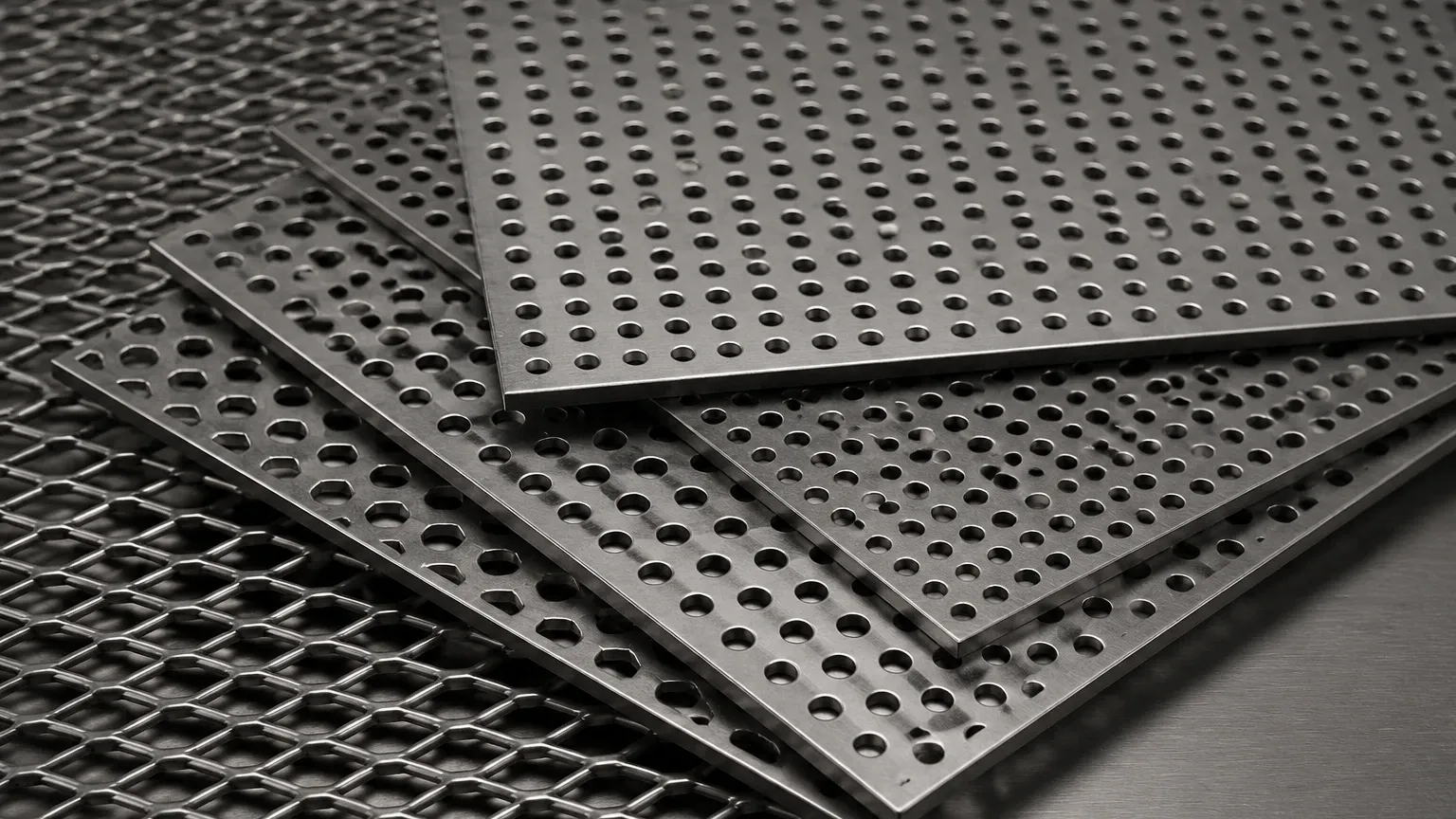
1. Round Holes (Staggered): The 60-degree staggered round hole pattern is the most popular for decking. It provides a high open area (often between 30% and 60%) while maintaining uniform strength across the panel. This pattern is ideal for maximizing light transmission and liquid drainage.
2. Square Holes: Square patterns offer a higher open area than round holes of the same diameter but may result in lower structural stability under heavy concentrated loads. They are often selected for aesthetic reasons or specific filtration requirements.
3. Slotted Holes: Slotted or oblong perforations are frequently used in applications where directional drainage or specific mechanical interlocking is required. They are less common for general walking surfaces but are vital in specialized processing equipment.
Balancing Performance
When specifying perforated metal decking, increasing the open area improves ventilation but decreases the load-bearing capacity. Engineers must find the "sweet spot" where the decking provides sufficient drainage to prevent slip hazards while remaining stiff enough to avoid excessive deflection under foot traffic or equipment loads.
Structural Integrity and Load-Bearing Considerations
Designing a system with perforated metal decking requires a different approach than solid plate design. Because the perforation process removes material, the moment of inertia and the section modulus of the panel are reduced. This means the decking will deflect more than a solid sheet of the same thickness.
Uniform Distributed Load (UDL) vs. Concentrated Load
* UDL: This represents the weight of items spread evenly across the deck surface, such as stored inventory or standard foot traffic. Industrial decking is typically rated for 100 to 250 pounds per square foot (psf).
* Concentrated Load: This represents a heavy weight applied to a small area, such as the wheels of a cart or the legs of a heavy machine. Perforated decking must be engineered to resist localized deformation in these scenarios.
Deflection Limits
In most industrial standards, the maximum allowable deflection for walkways is L/240 (the span length divided by 240) or 1/4 inch, whichever is less. For more sensitive applications, such as platforms supporting precision instruments, a limit of L/360 may be required. Selecting the correct combination of material thickness and hole pattern is essential to stay within these engineering boundaries.
Safety and Performance Features in Industrial Design
Safety is the paramount concern in any facility design. Perforated metal decking contributes to a safer work environment through several key mechanisms:
Slip Resistance
While the perforations themselves provide some traction by allowing liquids to drain away, many industrial decks incorporate additional safety features. This can include serrated edges around the holes or embossed "traction buttons" between the perforations. These features are critical in oily or wet environments, such as hydraulic pump stations or beverage bottling lines.
Fire Safety and HVAC Efficiency
In multi-level facilities, perforated decking allows smoke to rise to ceiling-mounted detectors and heat to reach sprinkler systems more effectively than solid flooring. Furthermore, it facilitates the free movement of air, reducing the energy required for climate control and preventing the buildup of stagnant fumes in lower levels.
Light Transmission
By allowing light to pass through to the levels below, perforated decking reduces the need for extensive artificial lighting in crawl spaces or lower mezzanine levels. This improves visibility for maintenance personnel and contributes to overall energy savings.
Customization and OEM Solutions for Specialized Projects
Every industrial application has unique requirements that off-the-shelf products may not satisfy. As a manufacturer specializing in custom solutions, Kaifil provides OEM support to develop perforated metal decking tailored to specific engineering drawings. Customization options often include:
* Variable Margins: Leaving solid metal borders around the perimeter of the panel to facilitate easier welding or bolting to the structural frame.
* Custom Hole Sizes: Engineering specific diameters to prevent small tools or parts from falling through the deck while maintaining high airflow.
* Integrated Formed Edges: Bending the edges of the perforated sheet into "C" or "Z" channels to create self-supporting planks, which can significantly reduce the amount of secondary structural steel required.
By leveraging advanced CNC punching and laser cutting technologies, manufacturers can ensure that every panel meets the precise tolerances required for seamless installation in complex industrial assemblies. This level of precision is particularly important in the Perforated & Expanded Metal sector, where even minor deviations can lead to structural misalignment.
Installation and Maintenance Best Practices
The longevity of perforated metal decking depends as much on proper installation and maintenance as it does on material quality. For stainless steel decking, following industry-standard protocols ensures the material retains its corrosion resistance and structural properties over its full service life.
Fastening Methods
Decking can be secured using several methods:
* Welding: Provides the most rigid connection but can be difficult to modify and requires specialized stainless steel welding rods to prevent carbon contamination.
* Mechanical Fasteners: Using clips, bolts, or TEK screws allows for easier removal for maintenance or equipment access. When using fasteners, it is essential to use stainless steel hardware to prevent galvanic corrosion between the deck and the fastener.
Maintenance and Cleaning
Stainless steel perforated decking is relatively low-maintenance, but it is not "maintenance-free." In food-grade or pharmaceutical environments, regular cleaning is required to prevent bio-film buildup in the perforations. High-pressure water or steam cleaning is generally effective. For chemical environments, periodic rinsing with deionized water can help remove accumulated salts or corrosive residues that might otherwise lead to localized pitting.
Conclusion: Selecting the Right Solution
Perforated metal decking is a sophisticated engineering component that offers significant advantages in airflow, drainage, and safety. However, its implementation requires a thorough understanding of material science and structural mechanics. By focusing on high-quality materials like stainless steel and working with experienced manufacturers who understand the complexities of Perforated & Expanded Metal, engineers can ensure their facilities are built for both performance and durability.
When evaluating options for your next project, consider the total cost of ownership. While stainless steel perforated decking may have a higher initial material cost than galvanized steel or aluminum, its resistance to corrosion and reduced maintenance requirements often result in a lower total cost over the lifespan of the facility. For more detailed technical specifications or to discuss custom OEM requirements, engineers should consult with specialists who can provide data-driven recommendations based on specific application loads and environmental conditions.
