


Perforated Metal Landscape Edging
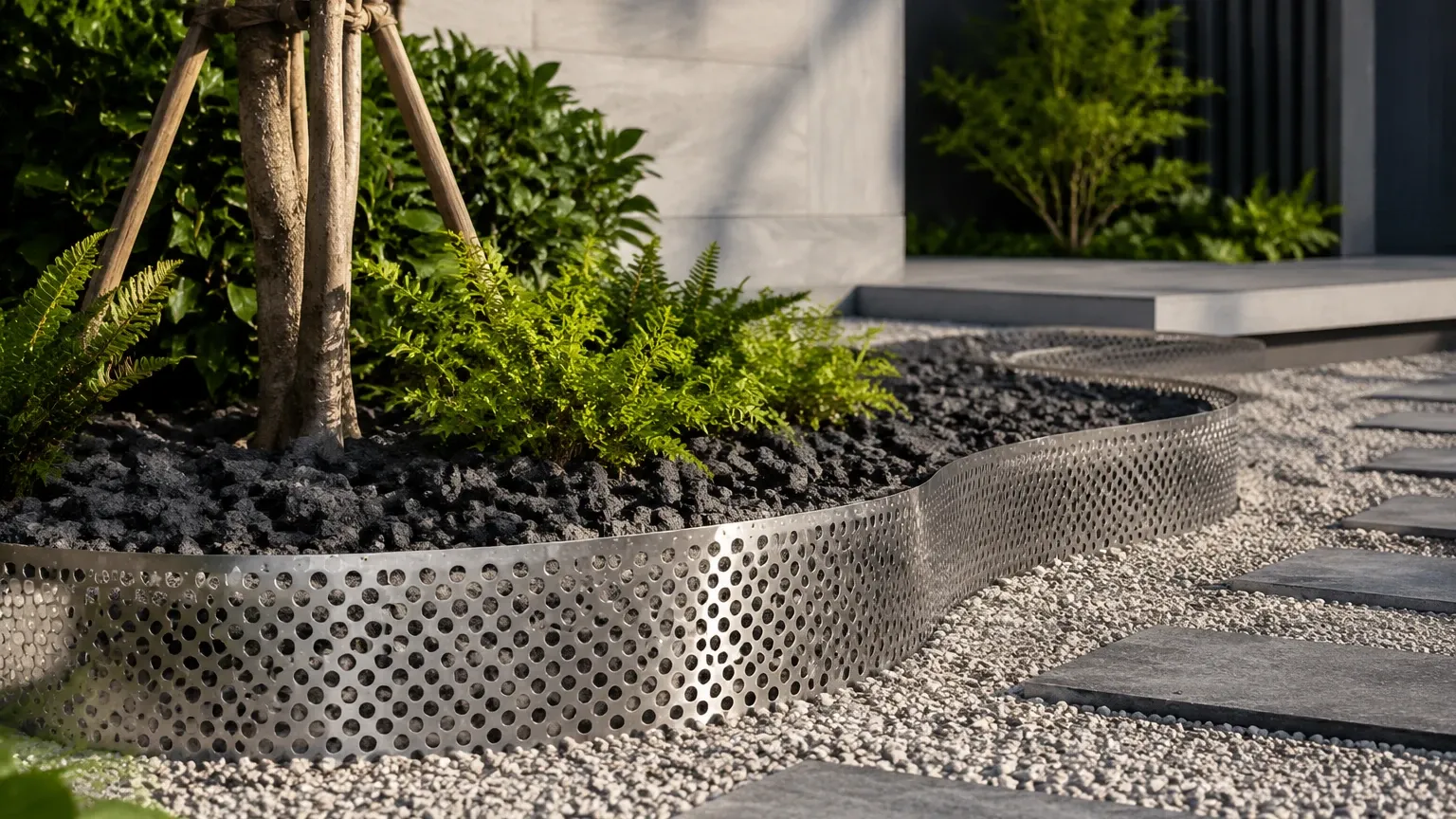
In industrial and commercial landscape architecture, the selection of materials for boundary definition and soil retention requires a balance between structural integrity and environmental functionality. Perforated metal landscape edging has emerged as a high-performance alternative to traditional solid steel, plastic, or wood edging. By utilizing precision-engineered Perforated & Expanded Metal, engineers and project managers can address complex drainage requirements while maintaining clean, durable aesthetic lines.
As a specialized manufacturer of stainless steel filtration and metal components, Kaifil provides technical insights into how the physical properties of perforated materials influence the performance of landscape systems. This guide examines the engineering considerations, material selection criteria, and long-term benefits of integrating perforated metal into modern landscape design.
Understanding the Functional Requirements of Landscape Edging
Landscape edging serves several critical roles in commercial and industrial environments. Its primary purpose is to create a physical barrier between different ground covers—such as separating gravel paths from turf or mulch beds from paved areas. However, in professional applications, the edging must do more than just provide a visual boundary; it must resist lateral soil pressure, withstand maintenance equipment impacts, and facilitate proper moisture management.
Standard solid edging often acts as a dam, trapping water on one side of the barrier. This can lead to soil oversaturation, root rot in planting beds, or the destabilization of aggregate paths. Perforated metal landscape edging solves this by allowing for controlled fluid migration. The precision-cut apertures in the metal allow water to pass through the barrier at a molecular level or in larger volumes depending on the design, preventing hydrostatic pressure buildup behind the edging wall.
Technical Advantages of Perforated Metal Landscape Edging
When evaluating materials for large-scale projects, engineers prioritize durability and maintenance cycles. Perforated metal offers several distinct technical advantages over other materials:
1. Superior Drainage and Hydrostatic Relief
The defining feature of perforated metal landscape edging is its permeability. By selecting specific hole patterns and open area percentages, designers can ensure that water moves freely across the landscape. This is particularly vital in regions with heavy rainfall or in projects involving complex irrigation systems. The ability to mitigate water pressure reduces the risk of the edging shifting or "heaving" over time.
2. Structural Rigidity and Flexibility
Unlike plastic edging, which can become brittle under UV exposure or deform under heat, stainless steel perforated metal maintains its structural profile. Depending on the gauge thickness, it offers the rigidity needed for straight runs and the flexibility required for geometric curves. The perforation process itself can sometimes enhance the material's ability to be formed into complex shapes without compromising the integrity of the metal.
3. Root Management and Soil Health
Perforated barriers can be used to discourage aggressive root growth while still allowing for the exchange of gases and nutrients within the soil. This creates a healthier ecosystem for plants compared to solid barriers that completely isolate soil sections. The size of the perforations can be calibrated to prevent specific root types from penetrating the barrier while allowing beneficial mycorrhizal activity to continue across the boundary.
Material Science: Selecting the Right Alloy for Soil Contact
The longevity of perforated metal landscape edging is almost entirely dependent on the material grade. Because edging is in constant contact with soil, moisture, and often fertilizers (which can be corrosive), selecting the correct alloy is critical for preventing premature failure.
Stainless Steel (304 and 316 Grades)
Stainless steel is the gold standard for industrial landscape edging. Grade 304 offers excellent corrosion resistance for most standard environments. However, for projects in coastal areas or environments where de-icing salts are used, Grade 316 is recommended due to its increased molybdenum content, which provides superior resistance to chlorides and pitting.
Carbon Steel and Weathering Steel
While carbon steel is a cost-effective option, it requires protective coatings (such as powder coating or galvanization) to prevent rust. Weathering steel (often referred to by the brand name Corten) is frequently used in landscape applications for its intentional rusted patina. However, even with weathering steel, the perforation process must be handled carefully to ensure that the edges of the holes develop a stable oxide layer rather than succumbing to accelerated corrosion.
Aluminum
Aluminum perforated edging is lightweight and naturally resistant to corrosion. It is an excellent choice for projects where weight is a concern, such as rooftop gardens. However, it lacks the extreme impact resistance of stainless steel and may not be suitable for high-traffic industrial zones where heavy machinery is operated.
Design Engineering: Hole Patterns and Structural Integrity
The performance of perforated metal landscape edging is dictated by its geometric configuration. Engineers must specify the hole shape, size, and arrangement to meet the project's mechanical requirements.
* Round Holes: These are the most common and cost-effective. They provide a balanced distribution of strength and open area. Staggered patterns (60-degree orientation) generally offer higher strength than straight-row patterns.
* Square Holes: Square perforations provide a high open area percentage, which is ideal for maximum drainage. However, they can create stress concentration points at the corners, which may be a consideration if the edging is subject to significant mechanical loads.
* Slotted Holes: These are often used when the designer wants to allow for lateral movement of water while maintaining a higher degree of vertical stiffness. Slotted patterns can be oriented horizontally or vertically depending on the desired aesthetic and functional goals.
When specifying Perforated & Expanded Metal, the "Open Area" percentage is a key metric. For landscape edging, an open area of 20% to 40% is typically sufficient to provide drainage without compromising the barrier's ability to retain soil or aggregate.
Comparing Perforated and Expanded Metal Solutions
While perforated metal is created by punching holes out of a solid sheet, expanded metal is produced by slitting and stretching the material simultaneously. This creates a diamond-shaped mesh pattern.
* Perforated Metal: Offers a cleaner, more precise aesthetic. It is easier to clean and provides a smoother surface, which may be safer in public-facing landscapes. It allows for highly specific drainage calculations based on hole size.
* Expanded Metal: Is often more cost-effective because the manufacturing process results in zero material waste. The raised strands of expanded metal provide excellent grip for soil and can help "lock" the edging into place. However, the sharp edges of standard expanded metal may require additional finishing or framing for safety.
For most high-end architectural and industrial landscape projects, perforated metal is preferred for its versatility and the ability to customize the hole pattern to match other site elements, such as ventilation grates or decorative screens.
Customization and OEM Manufacturing Capabilities
Industrial projects often require bespoke solutions that off-the-shelf edging products cannot provide. Working with a manufacturer like Kaifil allows for the customization of several key parameters:
1. Gauge Thickness: Depending on the height of the edging and the pressure of the soil it must retain, the thickness can be adjusted. Typical landscape edging ranges from 14-gauge to 10-gauge (approximately 2mm to 3.5mm).
2. Custom Heights and Lengths: Standard edging is often sold in fixed lengths, but custom manufacturing allows for longer continuous runs, reducing the number of joints and potential failure points.
3. Integrated Anchoring Systems: Perforated metal can be manufactured with pre-punched holes for stakes or integrated tabs that allow for secure anchoring into the substrate.
4. Edge Finishing: To ensure safety and structural integrity, the top edge of the perforated metal can be folded (hemmed) or capped with a solid U-channel. This prevents sharp edges from being exposed and adds significant longitudinal stiffness to the run.
Installation and Long-Term Performance Considerations
The effectiveness of perforated metal landscape edging is heavily influenced by the quality of installation. For industrial applications, the following best practices should be observed:
* Trenching and Bedding: The edging should be set into a trench that is deep enough to bury at least half of the metal's height. This provides the necessary leverage to resist lateral soil pressure.
* Secure Joining: Overlapping joints or using dedicated connector plates ensures that the edging remains a continuous line. In perforated systems, joints should be secured with stainless steel fasteners to prevent galvanic corrosion.
* Anchoring: Heavy-duty stakes should be driven through the perforations or dedicated anchor points at regular intervals (typically every 3 to 4 feet) to prevent the edging from shifting due to frost heave or soil expansion.
From a maintenance perspective, stainless steel perforated edging is virtually maintenance-free. Unlike wood, it will not rot; unlike plastic, it will not crack; and unlike standard carbon steel, it will not require periodic repainting or rust treatment. The total cost of ownership (TCO) for stainless steel perforated edging is often lower than cheaper alternatives when considering the lifespan of the landscape project.
Conclusion
Perforated metal landscape edging represents a sophisticated engineering solution for modern site development. By combining the durability of high-grade alloys with the functional benefits of precision perforations, it addresses the dual challenges of soil retention and moisture management. Whether used in a high-traffic commercial plaza or a sensitive industrial facility, Perforated & Expanded Metal components provide the reliability and performance that professional engineers demand.
When selecting a partner for these components, it is essential to work with a manufacturer that understands the nuances of metal fabrication and the specific demands of industrial environments. Kaifil’s expertise in custom stainless steel solutions ensures that every piece of perforated metal meets the highest standards of accuracy and durability, providing a long-lasting boundary for any landscape application.
