


Expanded Graphite with Perforated Metal Insertion
In high-pressure and high-temperature industrial environments, the integrity of sealing components is critical to operational safety and efficiency. Among the various materials available to engineers, expanded graphite with perforated metal insertion stands out as a premier solution for demanding gasket applications. This composite material leverages the unique sealing properties of flexible graphite while addressing its inherent mechanical weaknesses through the integration of a robust metal core.
For engineers and procurement professionals in the chemical processing, power generation, and petrochemical sectors, understanding the technical nuances of this material is essential. This guide explores the structural composition, performance advantages, and engineering considerations of reinforced graphite gaskets, focusing on how the metal insert transforms a fragile mineral into a high-performance industrial component.
Understanding the Composite Structure
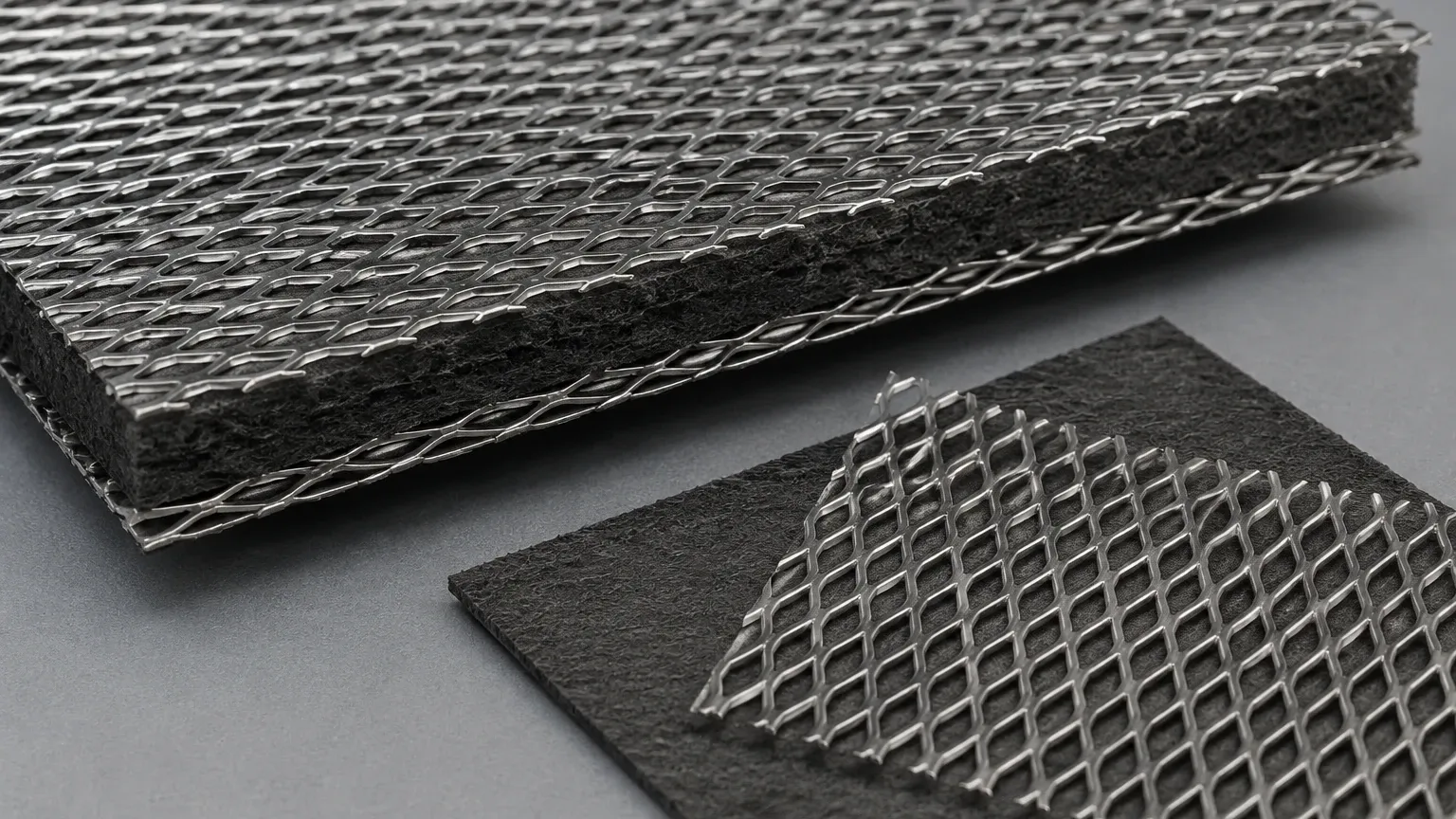
Expanded graphite with perforated metal insertion is a multi-layered material typically consisting of a central metal sheet sandwiched between two layers of high-purity flexible graphite. The graphite itself is produced from natural flake graphite that has been chemically treated and heat-expanded to create a material with excellent thermal stability and chemical resistance.
However, pure expanded graphite is mechanically fragile and prone to "extruding" or blowing out under high pressure. To solve this, a metal core—often referred to as a "tang" or "tanged" insert—is introduced. The Perforated & Expanded Metal core serves as the structural skeleton of the gasket.
The Role of the Tanged Insert
In a tanged metal insertion, the metal sheet is perforated in a way that creates sharp, protruding prongs (tangs) on both sides. When the graphite layers are mechanically pressed onto the metal core, these prongs penetrate the graphite, creating a physical bond. This mechanical interlocking eliminates the need for adhesives, which is a significant advantage because adhesives can degrade or outgas at high temperatures, potentially contaminating the process media or causing the gasket to fail.
Engineering Advantages of Perforated Metal Reinforcement
The primary reason for specifying expanded graphite with perforated metal insertion is its superior mechanical performance compared to non-reinforced or foil-inserted alternatives.
Blowout Resistance
In high-pressure piping systems, the risk of a gasket "blowing out"—where the internal pressure forces the gasket material out of the flange—is a major safety concern. The perforated metal insert provides the necessary tensile strength to resist these internal forces. The prongs of the tanged metal grip the graphite securely, ensuring that the sealing material remains in place even during pressure surges.
Mechanical Rigidity and Handling
Pure graphite sheets are notoriously difficult to handle, especially in large diameters. They are prone to cracking, creasing, and breaking during transport or installation. The inclusion of a Perforated & Expanded Metal core provides the gasket with the rigidity required for easier handling and precise alignment within the flange. This reduces the risk of installer error and material waste.
Thermal and Chemical Stability
Graphite is naturally resistant to a vast range of chemicals (pH 0-14) and can withstand temperatures from cryogenic levels up to 450°C in oxidizing atmospheres (and much higher in non-oxidizing environments). By using a stainless steel insert—typically Grade 316L—the composite material maintains this broad chemical compatibility while gaining the structural integrity needed for steam and hydrocarbon services.
Material Selection: Stainless Steel vs. Specialty Alloys
When specifying expanded graphite with perforated metal insertion, the choice of the metal insert is as critical as the grade of the graphite itself. The metal must be compatible with both the process media and the operating temperature.
1. Stainless Steel 316L: This is the industry standard for most chemical and steam applications. It offers excellent corrosion resistance and maintains its mechanical properties at elevated temperatures. The "L" (low carbon) designation is preferred to prevent sensitization during any high-heat processing.
2. Stainless Steel 304: Often used in less corrosive environments or where cost-efficiency is a priority. It provides similar mechanical reinforcement to 316L but with slightly lower chemical resistance.
3. Specialty Alloys: For extreme environments, such as those involving highly acidic media or temperatures exceeding the limits of standard stainless steel, inserts can be manufactured from Monel, Inconel, or Titanium.
The thickness of the metal insert also plays a role in performance. While standard inserts are often 0.1mm to 0.12mm thick, custom applications may require thicker cores to handle higher mechanical loads or specific flange configurations.
Key Performance Metrics for Engineers
To ensure the selected material meets the requirements of a specific application, engineers must evaluate several performance metrics, often standardized by ASTM or DIN protocols.
Compressibility and Recovery (ASTM F36)
Expanded graphite is prized for its high compressibility, which allows it to conform to irregular or worn flange surfaces. However, the recovery rate—the ability of the material to "spring back" after the load is removed—is equally important for maintaining a seal during thermal cycling. The perforated metal core helps stabilize these values, ensuring consistent performance even as the system heats and cools.
Sealability (ASTM F37)
This metric measures the leakage rate of a fluid through the gasket material under specific conditions. Expanded graphite with perforated metal insertion typically exhibits extremely low leakage rates because the graphite flows into the microscopic imperfections of the flange face, while the metal core prevents the graphite from shifting under the compressive load.
Creep Relaxation (ASTM F38)
Over time, all gaskets experience some loss of bolt tension due to the material "creeping" or thinning under load. The mechanical bond provided by the tanged Perforated & Expanded Metal core significantly reduces creep relaxation compared to pure graphite or fiber-based gaskets, leading to longer service lives and fewer requirements for re-torquing.
Customization and Manufacturing Considerations
Industrial filtration and sealing requirements are rarely one-size-fits-all. Customization is often necessary to optimize performance for specific equipment. Manufacturers like Kaifil specialize in providing tailored solutions that address these specific needs.
Graphite Density and Purity
The density of the graphite layers (typically ranging from 0.7 g/cm³ to 1.1 g/cm³) affects the gasket's sealability and compressibility. Higher density graphite offers better resistance to fluid penetration but requires higher bolt loads to achieve a seal. Furthermore, for nuclear or high-purity chemical applications, graphite with a carbon content of 99% or higher and low sulfur/halogen levels is required to prevent flange corrosion.
Insert Geometry
The pattern and density of the perforations in the metal core can be adjusted. A higher density of tangs provides a stronger mechanical bond but may slightly reduce the overall flexibility of the sheet. Engineering teams must balance these factors based on the flange type (e.g., raised face vs. flat face) and the available bolt load.
Dimensions and Shapes
Using advanced CNC cutting or die-cutting technologies, expanded graphite with perforated metal insertion can be fabricated into complex shapes, ranging from standard pipe gaskets to intricate heat exchanger gaskets with multiple ribs. For large-scale components, the ability to produce the Perforated & Expanded Metal core in wide formats is a distinct manufacturing advantage.
Common Challenges and Risk Mitigation
While expanded graphite with perforated metal insertion is a robust material, certain risks must be managed during the selection and installation process.
* Galvanic Corrosion: In some environments, the contact between the metal insert and the flange material can lead to galvanic corrosion. Using high-purity graphite with corrosion inhibitors can mitigate this risk by providing a protective barrier.
* Oxidation Limits: In oxidizing atmospheres, graphite begins to oxidize at approximately 450°C (842°F). If the application exceeds this temperature, the graphite may lose mass over time, leading to seal failure. In such cases, specialized "oxidation-inhibited" grades of graphite should be specified.
* Installation Torque: Because reinforced graphite is so effective at sealing, there is sometimes a tendency to over-tighten bolts. Over-compression can crush the graphite structure or damage the metal tangs. Following manufacturer-recommended torque sequences and values is essential for ensuring the longevity of the seal.
Conclusion
Expanded graphite with perforated metal insertion represents a critical advancement in industrial sealing technology. By combining the thermal and chemical resilience of graphite with the structural integrity of a Perforated & Expanded Metal core, this material provides a reliable solution for the most challenging industrial environments.
For engineers, the key to success lies in selecting the right combination of graphite purity, metal alloy, and insert geometry. Whether dealing with high-pressure steam, aggressive chemicals, or extreme thermal cycling, reinforced graphite gaskets offer the durability and performance necessary to maintain system integrity. As a professional manufacturer, Kaifil provides the technical expertise and manufacturing capabilities to develop customized filtration and sealing components that meet these rigorous standards, ensuring that every application is supported by precise engineering and high-quality materials.
Download Expanded Graphite with Perforated Metal Insertion as a PDF
