


Folded Perforated Metal
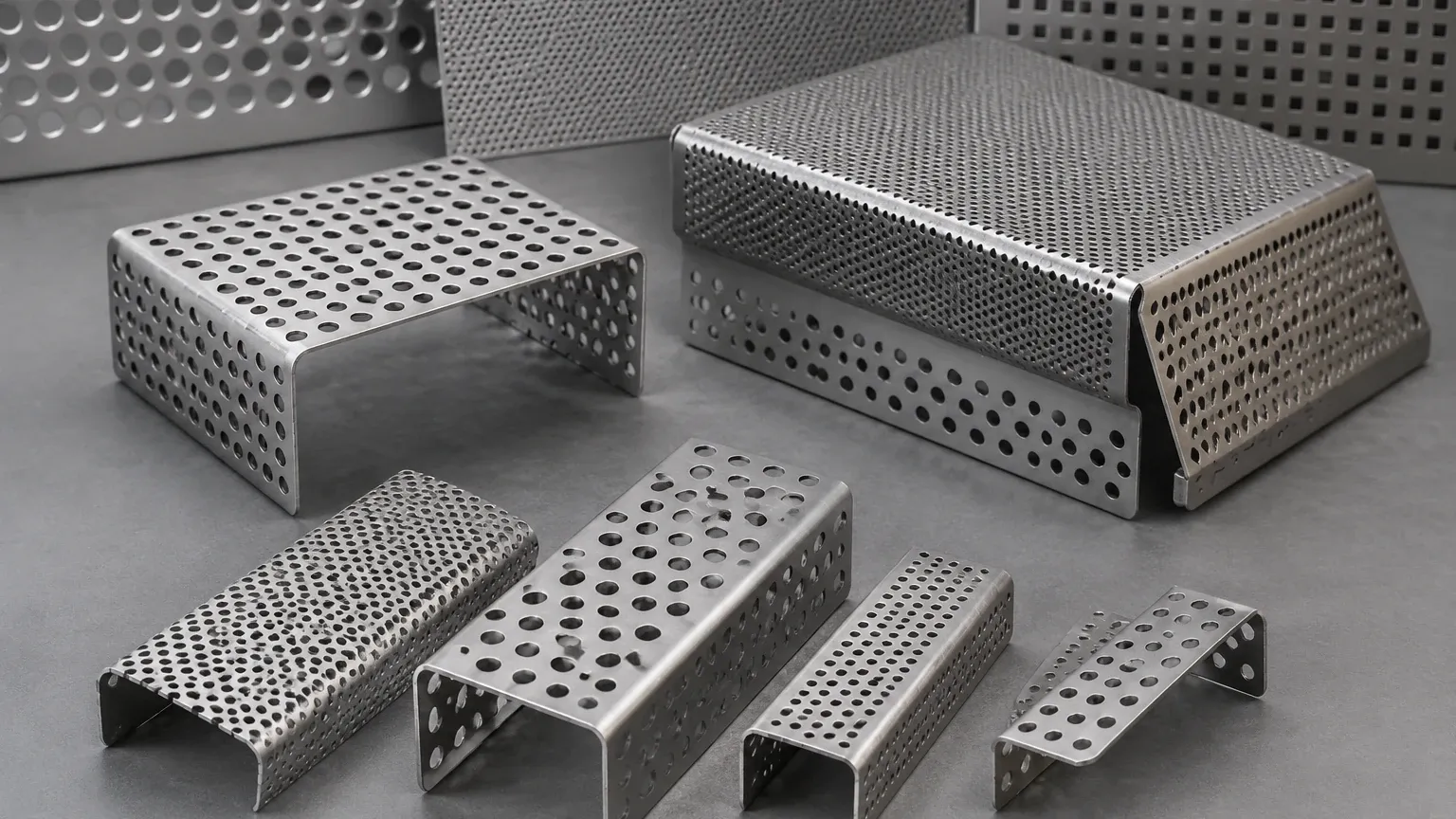
In the landscape of industrial filtration and structural engineering, the transition from flat sheets to three-dimensional components is a critical manufacturing step. Folded perforated metal represents a specialized category of metal fabrication where precision-punched sheets are manipulated through hydraulic or mechanical bending to meet specific geometric and functional requirements. For engineers and procurement specialists, understanding the technical nuances of how folding affects the integrity, filtration efficiency, and structural performance of Perforated & Expanded Metal is essential for optimizing industrial systems.
While flat perforated sheets are common, the process of folding introduces mechanical complexities. This guide examines the engineering considerations, material behaviors, and application-specific benefits of utilizing folded perforated metal in demanding environments such as chemical processing, food and beverage production, and hydraulic systems.
Engineering Fundamentals of Folded Perforated Metal
The primary objective of folding perforated metal is usually twofold: to increase the available surface area within a confined volume or to provide structural rigidity to a component that must also allow for fluid or gas passage. When a flat sheet of perforated metal is folded, it undergoes plastic deformation along the bend line.
From a technical perspective, the "neutral axis" of the metal sheet shifts during the folding process. Because the material is perforated, the presence of holes significantly alters how the metal reacts to stress. Unlike solid sheet metal, where the material is continuous, perforated metal has a reduced cross-sectional area. Engineers must calculate the "Equivalent Solid Material" properties to predict how the sheet will behave during the folding process. If the fold line passes directly through a row of holes, the structural integrity of the bend may be compromised, leading to premature fatigue or cracking. Conversely, folding between hole rows requires higher tonnage and precision to ensure the bend radius remains consistent.
The Relationship Between Folding and Filtration Surface Area
One of the most common applications for folded perforated metal is in the construction of high-capacity filter cartridges and strainers. By folding the metal into pleats or cylindrical segments, manufacturers can significantly increase the effective filtration area (EFA) without increasing the footprint of the filter housing.
Increasing the EFA has several direct benefits for industrial processes:
1. Lower Pressure Drop: A larger surface area allows fluid to pass through the media at a lower velocity, reducing the resistance and energy consumption of the system.
2. Extended Service Life: With more holes available to capture contaminants, the time between cleaning or replacement cycles is extended, reducing the total cost of ownership.
3. Improved Dirt Holding Capacity: Folded structures can trap larger volumes of particulate matter before reaching a critical pressure differential.
In these applications, the precision of the fold is paramount. Inconsistent pleat spacing or sharp internal angles can create "dead zones" where fluid flow is restricted, leading to uneven contaminant loading and localized stress points.
Material Selection and Compatibility
Selecting the correct alloy is the first step in ensuring the longevity of folded perforated metal components. Because the folding process stresses the material, the ductility of the alloy must be balanced against its environmental resistance.
* Stainless Steel 304/304L: The industry standard for general-purpose applications. It offers excellent formability and is well-suited for folding without the risk of brittle fracture. It is commonly used in food processing and general industrial filtration.
* Stainless Steel 316/316L: Specified for environments involving chlorides or high acidity, such as marine applications or chemical processing. The addition of molybdenum improves corrosion resistance, though it may require slightly different tooling parameters during the folding process due to its work-hardening characteristics.
* Duplex Stainless Steels: Used in high-stress, highly corrosive environments. While offering superior strength, these materials are more difficult to fold and require specialized equipment to prevent springback and cracking.
When evaluating Perforated & Expanded Metal for folding, engineers must also consider the "open area" percentage. A higher open area (more holes) reduces the weight but also decreases the structural strength available to withstand the bending forces. Finding the "sweet spot" between filtration transparency and mechanical durability is a core part of the design phase.
Structural Rigidity and Load-Bearing Capacity
Beyond filtration, folded perforated metal is frequently used for structural components such as trays, baskets, and machine guards. In these contexts, the fold acts as a reinforcement rib. A flat sheet of 2mm perforated stainless steel may sag under a 50kg load, but once that same sheet is folded into a "U" or "Z" profile, its moment of inertia increases exponentially.
This structural enhancement is critical in applications like:
* Drying Trays: In pharmaceutical or food processing, trays must support heavy loads of wet product while allowing airflow from beneath. Folded edges provide the necessary stiffness to prevent warping during thermal cycling.
* Centrifuge Baskets: High-speed rotation generates immense centrifugal force. Folded perforated structures provide the necessary hoop strength to maintain shape under pressure.
* Acoustic Enclosures: Folded panels can be designed to break up sound waves more effectively than flat surfaces, while the perforations allow for the integration of sound-absorbing materials.
Manufacturing Challenges: Precision and Quality Control
Folding perforated metal is not without risks. Several technical challenges must be managed to ensure a high-quality finished product:
1. Hole Deformation
When a sheet is folded, the holes near the bend line will naturally deform. They may stretch into ovals or, in tight bends, partially close. This can affect the filtration rating (micron size) at the bend. For precision applications, manufacturers must account for this deformation during the initial punching phase or adjust the bend radius to minimize distortion.
2. Springback Management
All metals exhibit some degree of "springback"—the tendency of the material to return to its original shape after the bending force is removed. Perforated metal is particularly prone to inconsistent springback because the hole pattern creates varying levels of internal stress. Advanced CNC folding equipment and experienced operators are required to compensate for these variations to achieve precise angles.
3. Edge Cracking
If the material is too hard or the bend radius is too tight, micro-cracks can form along the exterior of the fold. In a filtration system, these cracks can become sites for stress corrosion cracking (SCC) or bacterial growth in food-grade applications. Proper annealing and radius selection are essential to prevent this failure mode.
Customization and OEM Considerations
For B2B buyers, the decision to source folded perforated metal often involves a high degree of customization. Unlike standard flat sheets, folded components are usually designed for a specific piece of equipment or a particular process flow. When working with a manufacturer like Kaifil, engineers should be prepared to confirm several technical specifications:
* Pitch and Pattern: Should the holes be staggered (60-degree) or straight (90-degree)? Staggered patterns generally offer better structural integrity for folding.
* Margin Requirements: Unperforated margins (solid metal edges) are often required along the fold lines to maintain strength and provide a clean surface for welding or mounting.
* Tolerances: What is the allowable deviation in the fold angle and the overall dimensions? In hydraulic systems, even a 1mm deviation can prevent a filter cartridge from sealing correctly.
* Surface Finish: Will the component require electropolishing or passivating after folding? The folding process can leave tool marks that may need to be removed for sanitary or aesthetic reasons.
Conclusion: Selecting the Right Solution
Folded perforated metal is a versatile and high-performance solution for complex industrial challenges. By combining the transparency of perforated sheets with the structural advantages of three-dimensional forming, engineers can create components that are light, strong, and highly efficient.
However, the success of these components depends on a deep understanding of material science and precision manufacturing. When selecting a partner for Perforated & Expanded Metal solutions, it is vital to choose a manufacturer that understands the interplay between hole patterns and mechanical stress. Proper planning during the design phase—considering everything from the alloy grade to the specific bend radius—will ensure that the final folded product meets the rigorous demands of the industrial environment, providing reliable performance and a lower total cost of ownership over the product's lifecycle.
