


Fine Perforated Metal Sheet
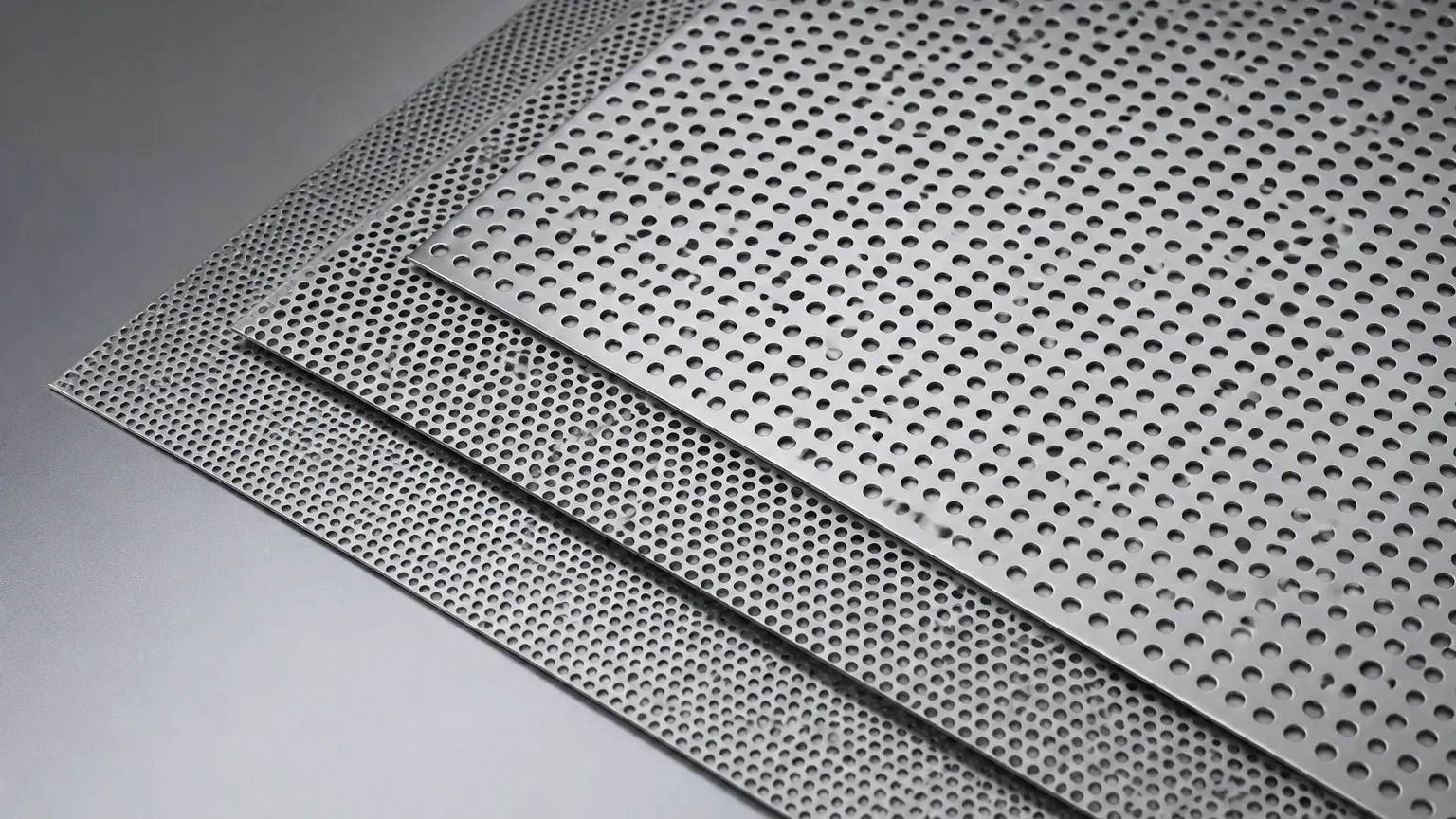
In industrial filtration and precision engineering, the fine perforated metal sheet serves as a critical component for separation, protection, and flow control. Unlike standard perforated materials used in architectural or general-purpose applications, fine perforation refers to sheets where the hole diameters are exceptionally small, often ranging from 0.5mm down to micron-level apertures. These components are engineered to meet stringent tolerances and provide reliable performance in demanding environments such as chemical processing, pharmaceutical manufacturing, and food production.
Selecting the correct Perforated & Expanded Metal solution requires a deep understanding of material properties, hole patterns, and the mechanical stresses the sheet will encounter during its service life. This guide examines the technical specifications, manufacturing considerations, and selection criteria essential for engineers and purchasing teams.
Technical Specifications and Hole Patterns
The performance of a fine perforated metal sheet is primarily dictated by its geometric configuration. The relationship between hole diameter, pitch (the distance between the centers of adjacent holes), and sheet thickness determines both the filtration efficiency and the structural integrity of the component.
Hole Geometry
There are three primary hole patterns utilized in industrial filtration:
1. Round Holes: The most common configuration due to its structural stability and uniform distribution of stress. Round holes are typically arranged in a 60-degree staggered pattern, which provides the highest open area and maximum strength.
2. Square Holes: Often used when a higher open area is required, though they may offer less resistance to mechanical deformation under high pressure compared to round holes.
3. Slotted Holes: Ideal for filtering elongated particles or for applications requiring specific directional flow. Slotted perforations are frequently used in sieving and sorting equipment.
The "Hole-to-Thickness" Ratio
In precision manufacturing, a key engineering challenge is the ratio between the hole diameter (d) and the material thickness (t). For standard punching processes, it is generally recommended that the hole diameter be equal to or greater than the material thickness (d ≥ t). However, advanced manufacturing techniques allow for "fine" perforations where the hole size is significantly smaller than the thickness, though this often requires specialized tooling or alternative fabrication methods like laser drilling or chemical etching to prevent tool breakage and ensure hole cylindricality.
Material Selection for Industrial Environments
Material choice is the most significant factor in determining the longevity and chemical compatibility of a fine perforated metal sheet. Because these sheets are often exposed to corrosive fluids, high temperatures, or abrasive particles, stainless steel is the industry standard.
Stainless Steel 304 vs. 316L
* Grade 304: Suitable for general industrial applications, providing good corrosion resistance and excellent formability. It is commonly used in food processing and decorative-functional components.
* Grade 316L: Contains molybdenum, which provides superior resistance to chlorides and pitting. This is the preferred material for marine environments, pharmaceutical processes, and aggressive chemical filtration.
Specialty Alloys
For extreme conditions, manufacturers may utilize Duplex stainless steel, Monel, or Inconel. These materials are selected when the application involves high-pressure steam, highly acidic environments, or temperatures exceeding the operational limits of standard austenitic stainless steels.
Calculating Open Area and Flow Characteristics
The "Open Area" percentage is a vital metric for engineers calculating pressure drop and flow rates across a filter medium. It represents the ratio of the total area of the holes to the total area of the sheet.
For a standard 60-degree staggered round hole pattern, the formula is:
Open Area % = (d² × 90.69) / p²
*(Where d = hole diameter and p = pitch)*
A higher open area reduces the pressure drop across the fine perforated metal sheet, allowing for higher throughput. However, increasing the open area reduces the mechanical strength of the sheet. Engineers must find the optimal balance between flow efficiency and the ability of the sheet to withstand differential pressure without buckling or tearing.
Manufacturing Processes and Quality Control
Producing a high-quality fine perforated metal sheet involves more than just punching holes. The process must ensure that the sheet remains flat, the holes are free of burrs, and the metallurgical properties of the material are preserved.
Precision Punching
High-speed CNC punching presses are used for most industrial applications. For fine perforations, the clearance between the punch and the die must be extremely tight to ensure clean edges. Improper clearance leads to "burrs"—small protrusions of metal—which can trap contaminants, impede flow, or break off and contaminate the downstream fluid.
Secondary Operations
* Leveling: The punching process introduces internal stresses that can cause the metal sheet to curl or warp. Roller leveling is necessary to return the sheet to a precision-flat state.
* Deburring and Cleaning: For pharmaceutical and food-grade applications, the sheets undergo ultrasonic cleaning or electropolishing to remove all traces of manufacturing oils and microscopic burrs.
* Surface Finishing: Options such as pickling, passivating, or coating can be applied to further enhance corrosion resistance or reduce friction.
Applications in Precision Filtration
Fine perforated metal sheets are versatile components found in various stages of industrial processing. Their primary role is often as a support medium or a primary filter layer.
1. Support for Wire Mesh: In many high-pressure filter cartridges, a fine perforated metal sheet acts as the rigid inner or outer core, providing structural support to a more delicate layer of woven wire mesh.
2. Centrifuge Liners: Used in the chemical and sugar industries to separate solids from liquids at high rotational speeds.
3. Acoustic Damping: In turbine exhausts or industrial machinery, fine perforations help dissipate sound energy while allowing air to pass through.
4. Catalyst Recovery: In petrochemical reactors, these sheets prevent expensive catalyst beads from escaping the reaction chamber while maintaining a high flow of gases or liquids.
Selection Criteria: What Engineers Should Confirm
When sourcing a fine perforated metal sheet for a specific project, providing vague specifications can lead to performance failure. Technical teams should confirm the following parameters before procurement:
* Dimensional Tolerances: Specify the allowable variance in hole diameter and pitch. For precision filtration, even a 0.05mm deviation can significantly alter the filtration rating.
* Edge Margins: Determine if the sheet requires "blank margins" (areas without holes) for welding or mounting. Standard sheets often have a small unperforated border along the length.
* Flatness Requirements: If the sheet is to be used in a multi-layered stack or a precision housing, specify the maximum allowable bow or twist.
* Environmental Compatibility: Define the pH levels, operating temperatures, and cleaning chemicals the sheet will encounter to ensure the material grade is appropriate.
Customization and OEM Solutions
Industrial applications rarely fit a "one-size-fits-all" model. Customization is often required to integrate a fine perforated metal sheet into existing hardware. Manufacturers like Kaifil specialize in providing tailored solutions, from custom hole patterns designed for specific particle retention to the fabrication of complete filter components.
By working closely with a manufacturer during the design phase, engineers can optimize the perforation pattern to maximize the service life of the filter and reduce the total cost of ownership. This includes considering the ease of cleaning (backwashing) and the frequency of replacement cycles based on the mechanical fatigue limits of the chosen material.
In conclusion, the fine perforated metal sheet is a high-performance engineering tool. Its effectiveness depends on precise calculation, quality manufacturing, and appropriate material selection. Whether used as a standalone screen or as a structural backbone for complex filtration systems, understanding these technical nuances ensures that the final product meets the rigorous demands of modern industrial processes.
