


Perforated Metal Gates
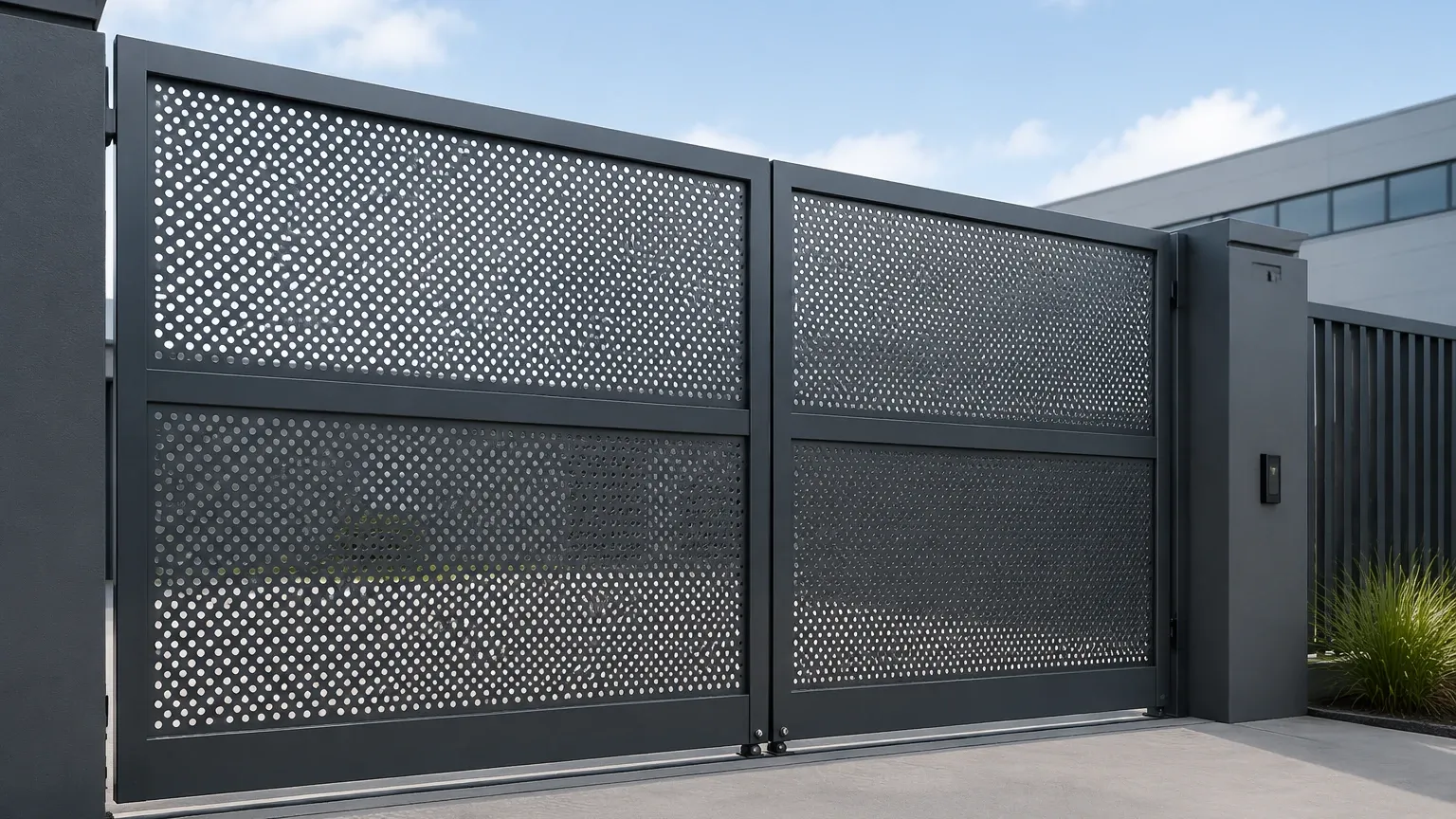
In industrial and commercial architecture, the selection of materials for access control and perimeter security is a critical engineering decision. Perforated metal gates represent a sophisticated intersection of structural integrity, ventilation, and visual transparency. Unlike solid plate gates, which can create wind-loading issues and complete visual blockages, or chain-link fences, which may lack the necessary rigidity and aesthetic professionality, perforated solutions offer a customizable balance of physical properties.
For engineers and facility managers, understanding the technical specifications of Perforated & Expanded Metal is essential for ensuring that a gate system meets the specific demands of its environment. This guide explores the engineering considerations, material science, and performance metrics required to specify high-quality perforated metal gates for industrial applications.
Material Science in Gate Fabrication
The longevity and performance of perforated metal gates are primarily dictated by the base material. In industrial settings where exposure to corrosive chemicals, high humidity, or saline environments is common, material selection is the first line of defense against structural failure.
Stainless Steel
Stainless steel is the preferred material for high-performance industrial gates. Grade 304 offers excellent corrosion resistance for standard industrial use, while Grade 316, containing molybdenum, is specified for marine environments or chemical processing facilities where chloride exposure is a concern. Stainless steel’s inherent strength-to-weight ratio allows for thinner gauges to be used without sacrificing the security of the gate.
Carbon Steel and Galvanization
For applications where budget constraints are tighter and the environment is less aggressive, carbon steel is an option. However, it must be treated with hot-dip galvanization or high-performance powder coatings to prevent oxidation. While cost-effective initially, the total cost of ownership may rise over time due to the maintenance required to address chips in the coating or sacrificial anode depletion in the galvanized layer.
Aluminum
Aluminum is utilized when weight is a primary concern, such as in large cantilevered sliding gates where reducing the load on motors and rollers extends the service life of the automation system. While aluminum offers natural corrosion resistance through its oxide layer, it lacks the impact resistance and tensile strength of stainless steel.
Comparing Perforated and Expanded Metal Structures
When specifying a gate, engineers must choose between perforated and expanded metal. Both fall under the broader category of Perforated & Expanded Metal, but their manufacturing processes result in different mechanical behaviors.
Perforated Metal
Perforated metal is created by punching a series of holes into a solid sheet. This process allows for extreme precision in hole placement and shape. From an engineering perspective, perforated metal provides a flat, smooth surface that is easy to clean and maintain. The "margins" (the unperforated areas around the edges of the sheet) can be customized to provide solid sections for welding to the gate frame, which enhances the overall structural rigidity of the assembly.
Expanded Metal
Expanded metal is produced by simultaneously slitting and stretching the material. This creates a diamond-shaped mesh that is integral to the sheet, meaning there are no welds that can break. Expanded metal is often more cost-effective because the process involves no waste (unlike perforation, where the "slugs" are removed). However, expanded metal has a three-dimensional texture that can be difficult to paint evenly and may catch debris in certain industrial environments. For gates, "flattened" expanded metal is often used to provide a smoother profile while maintaining the strength of the expanded structure.
Technical Parameters: Open Area and Hole Geometry
The functionality of perforated metal gates is defined by two main technical factors: the percentage of open area and the geometry of the perforations. These factors influence airflow, security, and the gate’s ability to withstand wind loads.
Calculating Open Area
The open area is the ratio of the total area of the holes to the total area of the sheet, expressed as a percentage. For gates, an open area between 30% and 50% is common.
* High Open Area (>50%): Provides excellent visibility and airflow, reducing the "sail effect" in high-wind areas. However, it may reduce the physical strength of the panel.
* Low Open Area (<30%): Offers higher security and privacy but increases the wind load on the gate posts and hinges.
Hole Patterns and Pitch
* Round Holes: The most common and structurally stable pattern. Staggered round holes (usually at a 60-degree angle) provide the best strength-to-open-area ratio.
* Square Holes: Offer a higher open area for better visibility but can lead to stress concentrations at the corners, potentially leading to cracks over long-term vibration or impact.
* Slotted Holes: Often used for specific aesthetic requirements or to allow for directional airflow while maintaining a higher level of privacy from certain angles.
Performance Advantages in Industrial Settings
Perforated metal gates offer several functional advantages that make them superior to traditional solid or wire-mesh alternatives in a B2B context.
Airflow and Pressure Equalization
In facilities with large HVAC systems or near high-traffic loading docks, wind pressure can make large solid gates difficult or dangerous to operate. Perforated metal allows air to pass through the gate, equalizing pressure on both sides and ensuring that automated gate operators function within their designed torque limits.
Security and Surveillance
Security personnel require clear lines of sight to monitor facility perimeters. Perforated metal gates provide a "one-way" visual effect depending on lighting conditions; they allow those inside a well-lit area to see out while obscuring the view for those outside. This transparency also ensures that security cameras can monitor the area behind the gate without the blind spots created by solid barriers.
Acoustic Control
In certain configurations, perforated metal can act as part of an acoustic barrier system. When combined with sound-absorbent materials in a sandwich construction, perforated gates can help mitigate noise pollution from industrial machinery or loading bays, which is often a requirement for facilities located near residential zones.
Customization and Precision Engineering
For B2B procurement, off-the-shelf solutions rarely meet the specific requirements of a facility's infrastructure. Customization is where the technical expertise of the manufacturer becomes vital.
Framing and Attachment
A perforated panel is only as strong as its frame. Precision engineering ensures that the perforated sheet is tensioned correctly within the frame to prevent "oil-canning" (the popping sound made by metal when it flexes). Common attachment methods include plug welding, U-edging, or bolting through reinforced margins. For industrial gates, welding is generally preferred for its permanent, tamper-proof nature.
Tolerances and Flatness
During the perforation process, the metal can experience internal stresses that cause it to curl or bow. Professional manufacturers utilize leveling rollers to ensure the final panels are perfectly flat. This is crucial for sliding gates, where even a slight bow can cause the gate to catch on its tracks or fail to align with the receiving post.
Maintenance and Durability Factors
The total cost of ownership for a gate system includes its maintenance requirements. Perforated metal gates, particularly those made from stainless steel, are low-maintenance compared to wood or standard chain-link.
1. Cleaning: In food processing or pharmaceutical environments, the ability to sanitize equipment is paramount. Stainless steel perforated gates can be pressure washed and are resistant to the harsh cleaning agents used in these industries.
2. Inspection: The open structure of the gate allows for easy inspection of the hinges, rollers, and motor drives without having to open or dismantle the gate.
3. Repairability: If a section of the gate is damaged by a vehicle impact, the modular nature of perforated panels allows for the replacement of a single panel rather than the entire gate structure, provided the frame remains intact.
Selection Criteria for Procurement Teams
Before finalizing a purchase order for perforated metal gates, engineering and purchasing teams should confirm the following technical details with their supplier:
* Gauge Thickness: Ensure the metal thickness is appropriate for the span of the gate. Thinner gauges may vibrate or rattle in the wind.
* Hole Size vs. Material Thickness: As a general rule of thumb in perforation, the hole diameter should not be smaller than the material thickness to prevent tool breakage and ensure clean edges.
* Finishing Requirements: Confirm if the material requires passivation (for stainless steel) or specific coating thicknesses (for carbon steel) to meet the environmental exposure rating of the site.
* Load Calculations: For automated gates, provide the manufacturer with the expected wind speeds and the weight of the perforated panels to ensure the motor and hardware are correctly specified.
By focusing on these factual engineering parameters, organizations can invest in Perforated & Expanded Metal solutions that provide long-term security, operational efficiency, and structural reliability. Whether for a chemical plant, a data center, or a commercial warehouse, the right perforated gate is a critical component of a facility's physical security infrastructure.
