


Home Depot Perforated Metal
For maintenance managers, small-scale fabricators, and DIY enthusiasts, sourcing materials from local retail outlets is a common practice. When a project requires a quick fix or a decorative element, searching for "home depot perforated metal" often yields immediate, off-the-shelf solutions. However, for industrial engineers and procurement professionals in the chemical, pharmaceutical, or food processing sectors, the requirements for Perforated & Expanded Metal extend far beyond what is typically available in a general hardware aisle.
Industrial filtration and structural components demand precise tolerances, specific alloy compositions, and verified performance characteristics. While retail-grade perforated metal serves a purpose in residential and light commercial applications, industrial-grade solutions require a deeper understanding of metallurgy, open area calculations, and manufacturing precision. This article examines the distinctions between retail-sourced materials and engineered industrial filtration components to help technical teams make informed procurement decisions.
Understanding Retail vs. Industrial Perforated Metal
The primary difference between a retail product like home depot perforated metal and an industrial-grade component lies in the specification range. Retail outlets generally stock "utility grade" materials. These are designed for general-purpose use where the exact chemical composition or mechanical properties are secondary to availability and price.
Material Grade and Traceability
In industrial environments, particularly in chemical processing or marine applications, the difference between Stainless Steel 304 and 316L is critical. Retail perforated metal is often labeled generically as "stainless steel" or "aluminum," without providing Mill Test Reports (MTRs) or specific alloy certifications. For a B2B application, such as a filter core for a high-pressure hydraulic system, knowing the exact carbon content and molybdenum levels is essential to prevent premature corrosion or structural failure.
Dimensional Tolerances
Retail sheets are often pre-cut to standard sizes (e.g., 12"x24" or 24"x36"). The tolerances on these cuts, as well as the flatness of the sheet, may vary significantly. Industrial manufacturing processes, such as those employed by Kaifil, utilize CNC punching and precision leveling to ensure that every sheet or component meets strict dimensional requirements. This is vital when the perforated metal must be rolled into a cylinder or welded into a larger filter housing assembly.
Technical Specifications of Perforated & Expanded Metal
When transitioning from a retail mindset to an engineering mindset, several technical parameters must be evaluated. These factors determine the efficiency of a filtration system and the longevity of the equipment.
Hole Patterns and Open Area
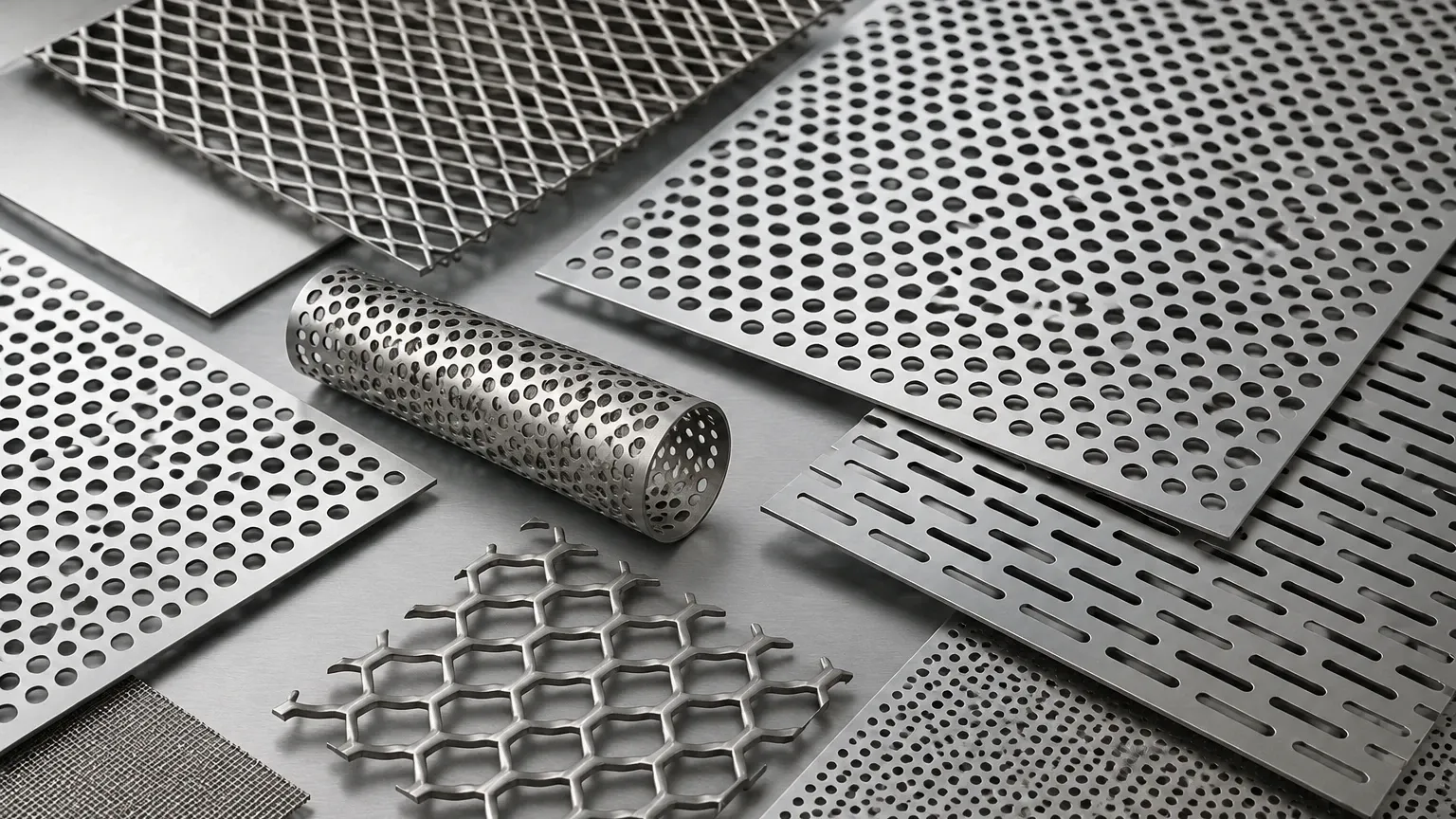
The "open area" is the percentage of the sheet that consists of holes. This calculation is fundamental to determining flow rate and pressure drop. Retail products usually offer a limited selection of standard round holes with a fixed pitch. In contrast, industrial Perforated & Expanded Metal can be customized with:
* Round Holes: Staggered (60-degree) or straight patterns.
* Square Holes: High open area for maximum flow.
* Slotted Holes: Ideal for sorting and sifting applications.
* Hexagonal Patterns: Providing a high strength-to-weight ratio.
For a filtration engineer, a 40% open area versus a 50% open area can mean the difference between a system that runs efficiently and one that requires constant pump maintenance due to excessive backpressure.
Gauge and Thickness
Home depot perforated metal is typically available in thinner gauges (20ga to 24ga) suitable for decorative screens or vent covers. Industrial applications often require heavy-duty performance, necessitating thicknesses ranging from 0.5mm for fine mesh support to 10mm or more for heavy-duty strainers and architectural grilles. The thickness must be balanced against the hole diameter; as a rule of engineering, the hole diameter should generally not be smaller than the material thickness to ensure clean punching and structural integrity.
Limitations of Retail Perforated Metal for Industrial Filtration
While the convenience of a local pickup is attractive, using retail-grade materials in an industrial filtration context introduces several risks that can lead to increased total cost of ownership (TCO).
Chemical Incompatibility
In the food and beverage or pharmaceutical industries, materials must be non-reactive and easy to sanitize. Retail-grade aluminum or low-grade stainless steel may contain impurities that lead to pitting corrosion when exposed to CIP (Clean-in-Place) chemicals or acidic process fluids. Industrial manufacturers provide high-purity alloys that are specifically tested for these environments.
Structural Failure under Pressure
Filter cartridges and strainers are often subjected to high differential pressures. If the perforated metal used as a support core lacks the necessary tensile strength or is made from a material with inconsistent grain structure, it can collapse. Industrial expanded metal, which is slit and stretched rather than punched, provides a unique structural advantage as the "strands" and "bonds" are angled to provide greater rigidity than flat perforated sheets.
Burrs and Surface Finish
Retail perforated metal is often sold with a "mill finish," which may include sharp burrs or oil residue from the punching process. For filtration applications, especially those involving sensitive fluids or gases, these burrs can break off and contaminate the downstream flow. Industrial components undergo secondary processes such as deburring, degreasing, and electropolishing to ensure a smooth, contaminant-free surface.
Customization Options for B2B Applications
One of the most significant advantages of sourcing directly from a manufacturer like Kaifil, rather than relying on home depot perforated metal, is the ability to customize the product to the specific application. Retail products are "what you see is what you get," whereas industrial B2B solutions are engineered to order.
Custom Margins and Blank Areas
When welding perforated metal into a cylinder or frame, having a solid "margin" (an unperforated edge) is crucial for a strong weld. Retail sheets are often perforated "all over," meaning the holes go right to the edge. This makes welding difficult and creates weak points. Industrial manufacturing allows for specified margins on all four sides, or even solid zones within the pattern, to accommodate mounting brackets or reinforcement ribs.
Forming and Fabrication
Beyond simple flat sheets, B2B providers offer value-added services such as:
* Rolling: Precisely forming the metal into tubes or cones.
* Welding: Utilizing TIG, MIG, or spot welding for seamless integration.
* Capping: Adding solid end caps to filter cartridges.
* Coating: Applying specialized finishes like PTFE or epoxy for enhanced chemical resistance.
Cost Considerations: Retail Price vs. Industrial Value
At first glance, the price of a single sheet of home depot perforated metal might seem lower than a custom-ordered industrial component. However, for B2B operations, the unit price is only one part of the equation.
1. Volume Discounts: Retail prices are fixed. For an OEM (Original Equipment Manufacturer) requiring thousands of units, direct manufacturing offers significant economies of scale.
2. Labor Costs: If a maintenance team has to spend hours cutting, deburring, and prepping a retail sheet to fit an industrial machine, the labor costs quickly exceed the savings on the material.
3. Replacement Cycles: An industrial-grade SS316L perforated filter may last five times longer than a retail-grade SS304 version in a corrosive environment, reducing downtime and replacement frequency.
4. Compliance: In regulated industries (FDA, 3-A, ASME), the cost of a non-compliant part can include fines, product recalls, or safety incidents. Industrial suppliers provide the documentation necessary to meet these standards.
Selecting the Right Supplier for Industrial Filtration
When your project moves beyond the scope of general maintenance and into the realm of precision engineering, the choice of supplier becomes a strategic decision. Engineers should look for partners who offer more than just a product catalog.
* Technical Support: Can the supplier help calculate the required open area for a specific flow rate?
* Material Expertise: Do they offer a wide range of materials, including Hastelloy, Monel, or Titanium for extreme environments?
* Quality Management: Is the manufacturer ISO certified? Do they have a robust QC process for checking hole diameters and pitch consistency?
Kaifil specializes in bridging the gap between raw material and finished filtration solutions. By focusing on the specific needs of the industrial sector, we ensure that every piece of Perforated & Expanded Metal we produce is fit for its intended purpose, whether it is a simple debris strainer or a complex multi-layer filter element.
Conclusion
While "home depot perforated metal" is an accessible solution for minor repairs or aesthetic projects, it rarely meets the rigorous demands of industrial filtration and B2B manufacturing. The requirements for material traceability, precise open area calculations, and custom fabrication necessitate a partnership with a specialized manufacturer. By understanding the technical limitations of retail-grade products and the advantages of engineered solutions, purchasing teams and engineers can ensure the reliability, efficiency, and safety of their industrial systems. For those seeking high-performance filtration components, the focus should remain on verified specifications and manufacturing expertise that can only be provided by an industrial specialist.
