


Hendricks Perforated Metal
In the landscape of industrial filtration and structural engineering, perforated metal serves as a foundational component for fluid dynamics, particle separation, and mechanical protection. For decades, the industry has looked toward established standards, often associated with legacy names like hendricks perforated metal, to define the quality, precision, and durability required in demanding environments. Today, the selection of perforated materials involves a deep understanding of metallurgy, hole geometry, and the specific stresses of industrial applications.
For engineers and procurement professionals, sourcing these components requires a move beyond generic specifications. Whether the application involves chemical processing, food-grade filtration, or hydraulic systems, the performance of Perforated & Expanded Metal depends on the interaction between the media and the environment it serves. This guide explores the technical parameters, material considerations, and engineering benchmarks necessary for high-performance filtration solutions.
Understanding Perforated Metal Engineering Standards
The manufacturing of perforated metal is a high-precision process that involves punching or laser-cutting patterns into metal sheets or coils. The legacy of hendricks perforated metal is built upon the ability to maintain tight tolerances across large surface areas, a requirement that remains critical for modern OEM manufacturers like Kaifil.
Hole Patterns and Pitch
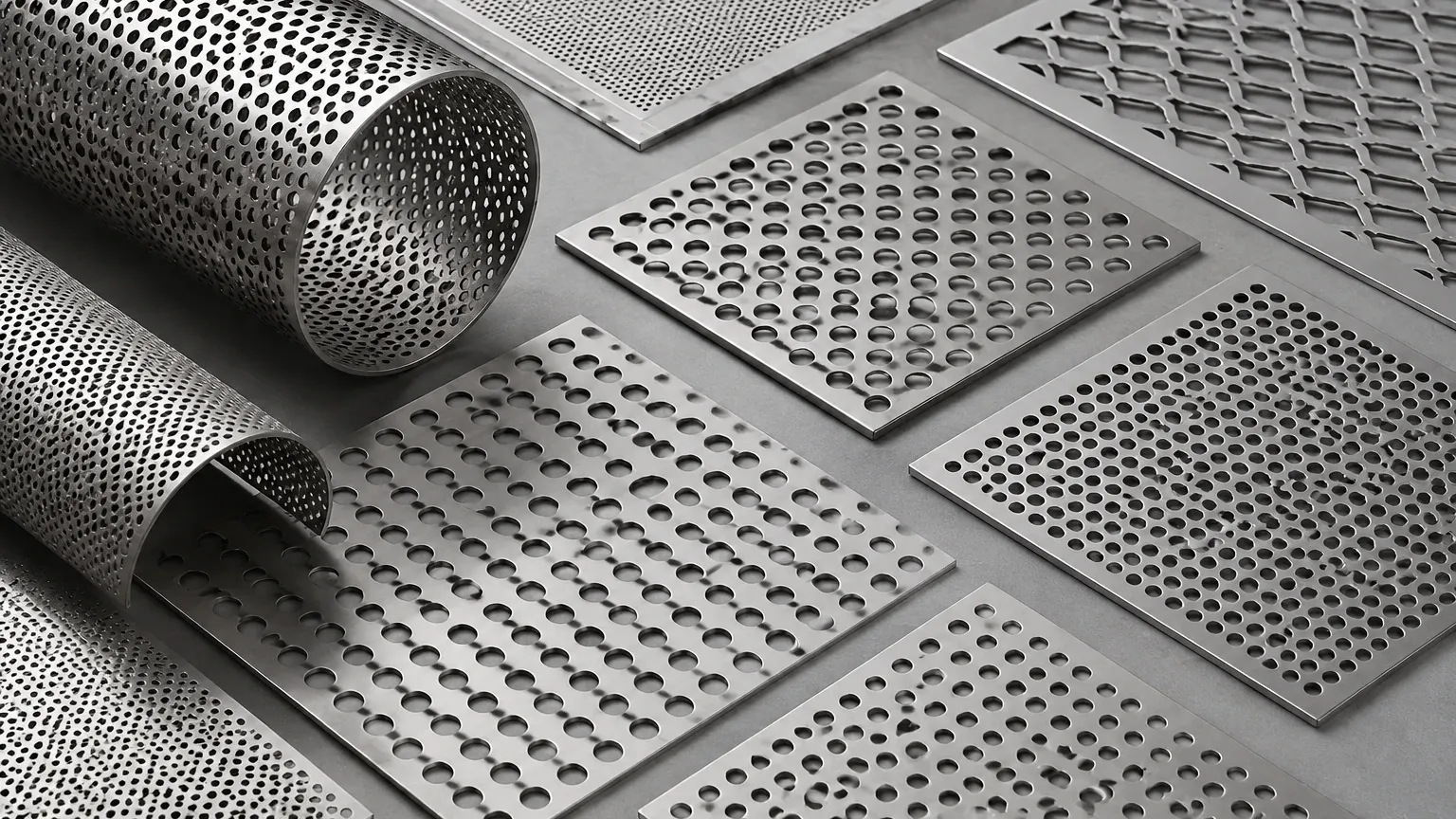
The arrangement of holes—the pattern—directly influences both the structural integrity and the filtration efficiency of the sheet. The three most common configurations are:
1. 60° Staggered Centers: This is the industry standard for filtration. It provides the highest open area and the most uniform stress distribution across the sheet.
2. 45° Staggered Centers: Used when specific directional flow or aesthetic requirements are present, though it typically offers less open area than the 60° configuration.
3. Straight Centers: Holes are aligned in both horizontal and vertical rows. While easier to manufacture, this pattern is generally weaker and more prone to deformation under high pressure.
Calculating Open Area
Open area is the ratio of the total area of the holes to the total area of the sheet, expressed as a percentage. For a 60° staggered pattern, the formula is:
Open Area % = (D² × 90.69) / P²
Where *D* is the hole diameter and *P* is the pitch (the distance from the center of one hole to the center of the next). Accurate calculation of the open area is vital for determining flow rates and pressure drops across the filter medium.
Material Selection for Industrial Filtration
The choice of material is perhaps the most significant factor in the longevity of a perforated component. While carbon steel and aluminum are common in architectural applications, industrial filtration typically demands stainless steel or specialty alloys.
Stainless Steel 304 vs. 316L
* Type 304: Offers excellent strength and basic corrosion resistance. It is suitable for many food and beverage applications and general industrial use where exposure to harsh chemicals is limited.
* Type 316L: The "L" stands for low carbon, which improves weldability and prevents sensitization during the welding process. 316L contains molybdenum, making it significantly more resistant to chlorides and pitting, which is essential for pharmaceutical and marine applications.
Specialty Alloys
In high-temperature or highly corrosive environments (such as petrochemical processing), materials like Monel, Inconel, or Hastelloy may be required. These alloys maintain their structural properties at temperatures where standard stainless steels would oxidize or lose tensile strength.
Comparing Perforated vs. Expanded Metal in Filtration Systems
When evaluating Perforated & Expanded Metal, it is important to distinguish between the two manufacturing methods, as they offer different performance characteristics.
Perforated Metal
Perforated metal is produced by removing material from a sheet. This allows for precise control over hole size and placement.
* Advantages: High precision, smooth surface finish, and the ability to leave "blank" margins for welding or mounting.
* Applications: Fine filtration, centrifuge baskets, and components requiring specific flow characteristics.
Expanded Metal
Expanded metal is created by simultaneously slitting and stretching the metal sheet. No material is lost in the process.
* Advantages: Cost-effective, higher strength-to-weight ratio, and a three-dimensional texture that can help break up flow or provide better grip in structural applications.
* Applications: Coarse pre-filters, support structures for finer mesh, and safety guards.
For most high-precision industrial filtration tasks, perforated metal is preferred due to the uniformity of the apertures and the ease of cleaning. However, expanded metal serves as an excellent support layer (pleat support) for wire mesh filter cartridges.
Technical Specifications and Customization Options
Customization is at the heart of modern B2B filtration sourcing. When moving away from off-the-shelf products toward specialized solutions like those once standardized by hendricks perforated metal, several technical variables must be confirmed.
Tolerances and Leveling
During the punching process, the metal sheet can undergo significant stress, leading to "oil canning" or bowing. High-quality manufacturers utilize precision leveling rollers to ensure the final product is flat within specified tolerances. This is critical when the perforated sheet is to be rolled into a cylinder for a filter cartridge.
Margins and Blank Areas
Margins refer to the unperforated areas along the edges of the sheet. For industrial filters, custom margins are often necessary to provide a clean surface for longitudinal welding. Specifying "no margins" (finished ends) or "custom margins" is a key step in the design phase to ensure the component fits perfectly into the filter housing.
Secondary Operations
To meet the needs of the pharmaceutical or food industries, perforated components often require secondary processing:
* Degreasing: Removing lubricants used during the punching process.
* Deburring: Ensuring the edges of the holes are smooth to prevent particle entrapment or injury during handling.
* Electropolishing: Enhancing corrosion resistance and providing a mirror-like finish that is easy to sterilize.
Maintenance and Replacement Cycles for Perforated Components
Industrial filters are subject to fouling, erosion, and mechanical fatigue. Establishing a maintenance protocol is essential for minimizing the total cost of ownership.
Cleaning Protocols
Perforated stainless steel is highly durable and can often be cleaned using ultrasonic baths, high-pressure washing, or chemical CIP (Clean-In-Place) systems. However, the cleaning agents must be compatible with the metal grade to avoid stress corrosion cracking. For example, using chlorine-based cleaners on Type 304 stainless steel can lead to rapid failure.
Signs of Fatigue
Engineers should monitor for:
* Aperture Deformation: Indicates the filter is operating beyond its designed pressure differential.
* Pitting Corrosion: Small holes or craters on the surface, often a sign that the material grade is insufficient for the chemical environment.
* Edge Cracking: Often occurs near weld points if the thermal stress was not properly managed during fabrication.
Procurement Considerations for Engineers
When sourcing hendricks perforated metal or custom alternatives, the procurement team must evaluate the manufacturer’s technical capabilities alongside the unit price. A lower initial cost often results in higher long-term expenses if the filtration efficiency is compromised or the replacement cycle is too frequent.
Quality Documentation
For regulated industries (FDA, ASME), documentation is as important as the physical product. Ensure your supplier can provide:
* Material Test Reports (MTRs): Confirming the chemical composition of the alloy.
* Dimensional Inspection Reports: Verifying hole size and pitch.
* Certificate of Conformance (CoC): Stating the product meets the specific purchase order requirements.
Lead Times and OEM Capabilities
In a global supply chain, lead times can fluctuate. Working with an OEM like Kaifil, which manages the process from material selection to final fabrication, allows for better control over schedules and the ability to produce small-batch prototypes before moving to full-scale production.
Conclusion
Selecting the right Perforated & Expanded Metal is a balance of engineering precision and material science. While the legacy of hendricks perforated metal set the bar for quality in the industry, modern filtration demands even higher levels of customization and technical support. By focusing on hole geometry, material compatibility, and precision manufacturing, engineers can ensure their filtration systems operate with maximum efficiency and minimal downtime. Whether you are replacing a legacy component or designing a new system from the ground up, understanding these technical boundaries is the first step toward a successful filtration solution.
