


Thick Perforated Metal
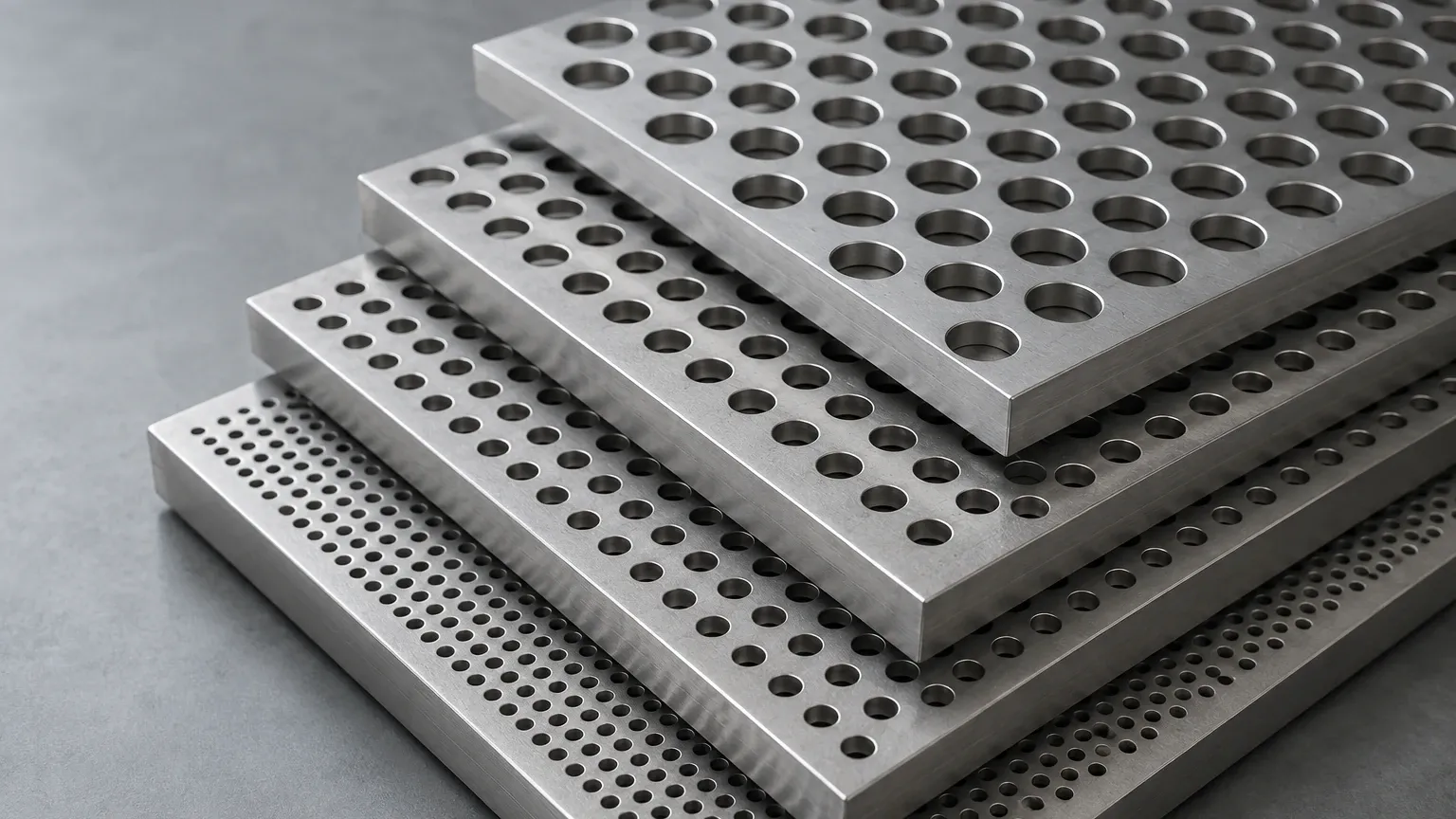
In industrial filtration and structural engineering, the term "thick perforated metal" refers to heavy-gauge materials where the plate thickness is significant relative to the hole diameter. While standard perforated sheets are often used for aesthetic or light-duty screening, thick perforated metal is engineered for high-pressure environments, abrasive media, and structural applications where mechanical integrity is as critical as the filtration performance. For engineers and procurement specialists, selecting the right specifications for heavy-gauge Perforated & Expanded Metal requires a deep understanding of metallurgy, punching mechanics, and fluid dynamics.
Engineering the Hole-to-Thickness Ratio
One of the most critical technical constraints in the production of thick perforated metal is the relationship between the hole diameter (d) and the material thickness (t). In the perforation industry, the standard rule of thumb is a 1:1 ratio. This means the hole diameter should generally not be smaller than the thickness of the plate.
When the thickness exceeds the hole diameter, the mechanical stress on the punching pins increases significantly. Attempting to punch a 2mm hole through 5mm stainless steel, for example, risks tool breakage and excessive work hardening of the hole edges. For applications requiring very small apertures in very thick plates, alternative manufacturing methods like laser cutting or waterjet cutting may be necessary, though these often come at a higher cost per unit compared to high-speed mechanical punching. Understanding this ratio is essential for engineers during the design phase to ensure the component can be manufactured reliably and cost-effectively.
Material Selection for Heavy-Duty Filtration
Thick perforated metal is frequently utilized in demanding environments such as chemical processing, oil and gas extraction, and heavy industrial water treatment. The choice of material impacts not only the durability of the filter but also its compatibility with the processed media.
1. Stainless Steel 304/304L: The most common choice for general industrial use, providing good corrosion resistance and excellent mechanical properties. It is widely used in food and beverage applications where hygiene and durability are paramount.
2. Stainless Steel 316/316L: Containing molybdenum, this grade offers superior resistance to chlorides and pitting. It is the standard for marine environments and aggressive chemical filtration.
3. Duplex Stainless Steels: For extreme high-pressure applications or highly corrosive environments, duplex steels provide higher yield strength than austenitic steels, allowing for thinner (yet still "thick") plates to achieve the same structural performance.
4. Carbon Steel: Often used in hydraulic systems or oil filtration where corrosion is managed by the medium itself (e.g., oil). It is a cost-effective solution for structural support cores in large-scale filtration housings.
Manufacturing Challenges and Precision
Producing thick perforated metal involves significantly more energy and specialized equipment than standard gauges. High-tonnage presses are required to shear through heavy plates. This process introduces several physical phenomena that engineers must account for:
Punching Force and Tool Wear
The force required to punch a hole is a function of the perimeter of the hole, the thickness of the material, and the shear strength of the metal. In thick materials, the "breakout" or "fracture zone" of the hole is more pronounced. The top portion of the hole is sheared cleanly by the punch, while the bottom portion fractures away. In thick perforated metal, this can result in a slight taper within the hole, which may affect flow characteristics if not properly managed.
Work Hardening
Stainless steel, in particular, work-hardens rapidly. When punching thick plates, the edges of the holes become significantly harder than the base material. This can be beneficial for wear resistance but may complicate subsequent welding or forming processes. Quality manufacturers like Kaifil manage this through precise tool clearance and lubrication strategies to maintain consistent hole quality.
Leveling and Flatness
The perforation process introduces internal stresses into the metal plate, often causing it to curl or bow. With thick materials, these stresses are substantial. Precision leveling is a mandatory post-perforation step to ensure the sheets or finished components meet the flatness tolerances required for assembly into filter housings or structural frames.
Applications in Industrial Filtration
Thick perforated metal serves two primary roles in industrial filtration: as a primary coarse filter or as a structural support (backup) for finer filter media.
Primary Filtration
In mining and wastewater treatment, thick perforated plates act as the first line of defense. They are designed to withstand the impact of heavy debris and high flow rates. The thickness of the metal ensures that the "bridges" (the material between the holes) do not deform under the weight of the captured solids or the pressure of the fluid stream.
Support Cores for Filter Cartridges
In high-pressure hydraulic systems or large-scale chemical reactors, fine wire mesh or pleated synthetic media lack the structural strength to resist collapse. Thick perforated metal is rolled into cylinders to form the inner core or outer cage of a filter cartridge. These cores must maintain perfect roundness and withstand high differential pressures (often exceeding 100 bar) without buckling.
Performance Metrics: Open Area and Pressure Drop
For any filtration component, the "open area" percentage is a key performance indicator. It is calculated based on the hole pattern—typically 60-degree staggered, 45-degree staggered, or straight row patterns.
In thick perforated metal, the open area must be balanced against structural integrity. While a higher open area reduces pressure drop (the loss of fluid pressure as it passes through the filter), it also narrows the bridges between holes, weakening the plate. Engineers must perform a trade-off analysis: increasing the thickness of the metal allows for a higher open area while maintaining the same structural strength, but this increases the weight and material cost of the component.
Key Evaluation Criteria for Purchasing Teams
When sourcing thick perforated metal for OEM projects, purchasing teams should confirm several technical details beyond just the hole size and pitch:
* Edge Requirements (Margins): Do you require "finished ends" (a solid metal border around the perforated area) or "unfinished ends" (where the pattern is sheared through)? For thick materials, margins are critical for welding the component into a larger assembly.
* Burr Removal: Punching thick metal inevitably creates burrs on the exit side of the hole. For filtration applications, these burrs must be removed through vibratory finishing, sanding, or chemical deburring to prevent media migration or damage to secondary filter layers.
* Tolerances: Standard commercial tolerances may not be sufficient for precision engineering. Specify tolerances for hole diameter, pitch, and overall dimensions, especially if the part is to be robotically welded.
* Surface Finish: Depending on the application, the metal may require passivating (for stainless steel), galvanizing (for carbon steel), or electropolishing to improve corrosion resistance and ease of cleaning.
Total Cost of Ownership and Durability
While thick perforated metal has a higher initial acquisition cost than thinner alternatives, its total cost of ownership (TCO) is often lower in industrial settings. The increased mass provides a "corrosion allowance," meaning the component can lose a small amount of material to corrosion or abrasion over years of service without failing structurally. Furthermore, the rigidity of thick-gauge materials reduces the frequency of replacement caused by mechanical fatigue or deformation under pressure spikes.
Kaifil specializes in providing customized filtration solutions that leverage the strengths of heavy-gauge materials. By working closely with global customers, Kaifil ensures that the material selection, hole pattern, and secondary processing are optimized for the specific demands of the application, whether it involves chemical processing, hydraulic systems, or industrial water treatment.
Conclusion
Thick perforated metal is a foundational component in heavy industrial filtration. Its selection is not merely a matter of choosing a hole size but involves complex engineering decisions regarding material science, manufacturing feasibility, and structural mechanics. By understanding the limitations of the hole-to-thickness ratio and the importance of post-processing steps like leveling and deburring, engineers can specify components that provide reliable, long-term performance in the most demanding environments. For those seeking high-performance Perforated & Expanded Metal solutions, focusing on technical precision and material quality is the key to optimizing filtration efficiency and system longevity.
