


Perforated Sheet Metal 4×8 Price
In industrial procurement, the 4×8 sheet (4 feet by 8 feet) is the standard dimensional unit for metal substrates. When evaluating the perforated sheet metal 4×8 price, engineers and purchasing managers must look beyond the surface-level cost per sheet. The price is a reflection of material grade, perforation precision, open area calculations, and the manufacturing complexity required to meet specific industrial filtration or structural standards.
For industries ranging from chemical processing to food and beverage production, selecting the right perforated material involves balancing initial capital expenditure with long-term operational efficiency. This guide examines the technical and economic factors that determine the market value of these essential components and how to optimize selection for performance-critical applications.
Understanding the Variables in Perforated Sheet Metal 4×8 Price
The price of a 4×8 perforated sheet is rarely static. It is influenced by a combination of global raw material indices and the specific engineering requirements of the project. Because perforated metal is often used as a support structure for finer mesh or as a standalone filter in coarse applications, the integrity of the sheet is paramount.
Raw Material Fluctuations
The primary driver of cost is the base metal. Stainless steel, particularly grades 304 and 316, is the industry standard for filtration due to its corrosion resistance. The price of these alloys is tied to the market costs of nickel, chromium, and molybdenum. A 4×8 sheet of 316L stainless steel will consistently command a higher price than 304 due to its superior resistance to chlorides and acids, which is critical in pharmaceutical and marine environments.
Gauge and Thickness
The thickness of the metal, measured in gauge or millimeters, directly impacts the weight of the sheet. Since metal is often sold by weight, a thicker 11-gauge sheet will be significantly more expensive than a 22-gauge sheet of the same dimensions. However, in high-pressure hydraulic or water treatment systems, the structural rigidity provided by a thicker sheet is necessary to prevent deformation under flow stress.
Material Selection and Its Impact on Long-term Costs
When requesting a quote for a perforated sheet metal 4×8 price, specifying the correct material grade is the most effective way to manage the Total Cost of Ownership (TCO). While carbon steel or aluminum may offer a lower initial price point, they often fail to meet the hygiene and durability requirements of specialized industrial sectors.
1. Stainless Steel 304: The most common grade used in industrial filtration. It offers excellent formability and weldability. For general food processing or industrial machinery guards, SS304 provides a cost-effective balance between performance and price.
2. Stainless Steel 316/316L: Contains molybdenum, which provides resistance to pitting and crevice corrosion. In chemical processing plants where the perforated sheet is exposed to aggressive solvents, the higher upfront price of 316L is offset by a significantly longer service life and reduced replacement frequency.
3. Specialty Alloys: For extreme temperatures or highly acidic environments, alloys like Monel or Hastelloy may be required. These materials can increase the sheet price by several orders of magnitude compared to standard stainless steel but are essential for safety and reliability in critical systems.
Technical Specifications: Hole Patterns and Open Area
The perforation pattern is not merely an aesthetic choice; it dictates the filtration efficiency and the structural strength of the sheet. The complexity of the pattern and the amount of material removed during the punching process are key components of the perforated sheet metal 4×8 price.
Round vs. Square vs. Slotted Holes
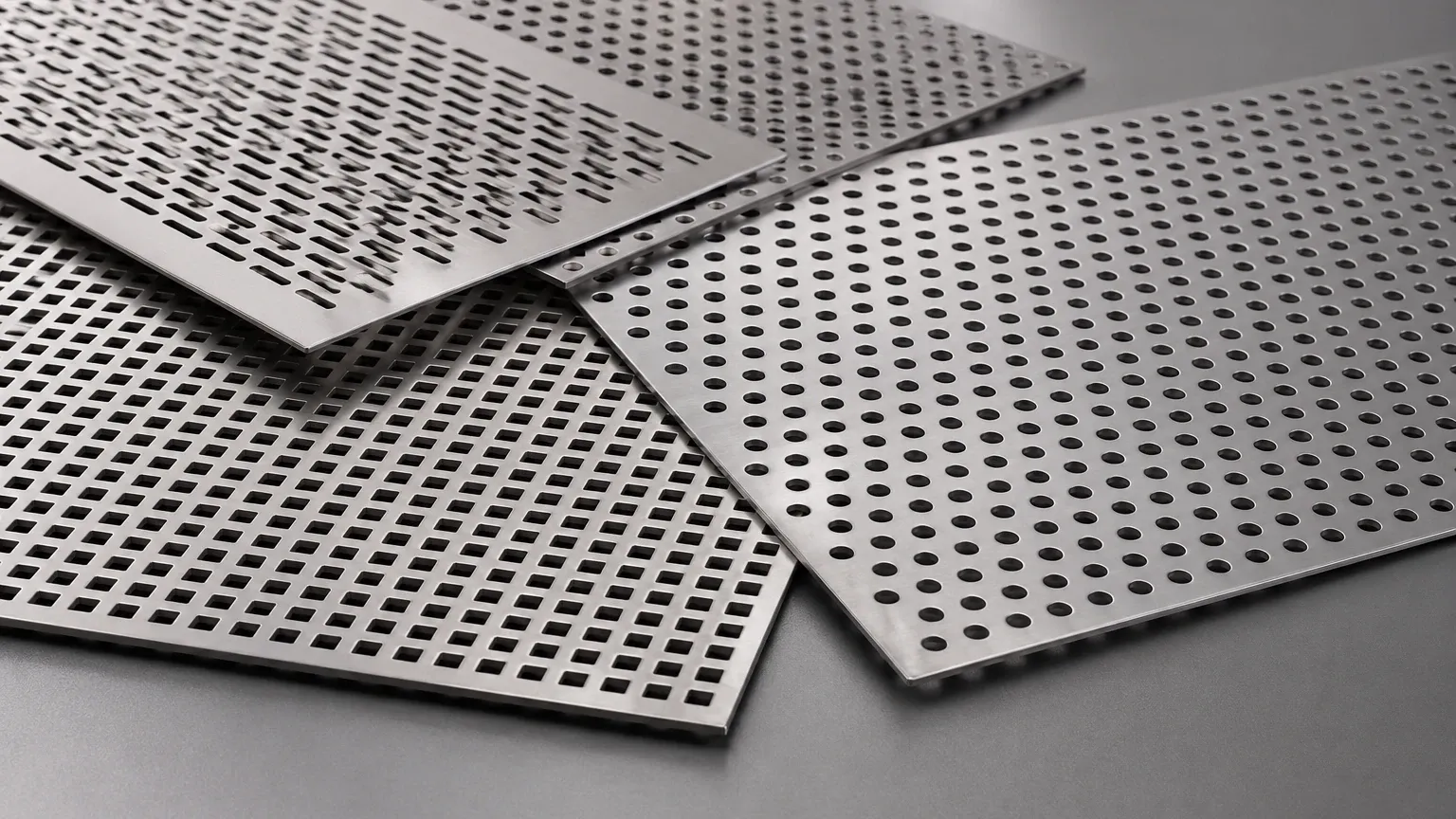
Round holes are the most common and economical pattern to produce. They offer the best structural integrity and are the easiest for manufacturers to punch at high speeds. Square holes provide a higher open area, which is beneficial for airflow or high-volume liquid filtration, but they can lead to stress concentrations at the corners. Slotted holes are often used for sorting and sifting applications. Custom or staggered patterns require specialized tooling, which adds to the setup cost and the final price per sheet.
The Open Area Percentage
The "open area" refers to the cumulative area of the holes compared to the total area of the sheet. A higher open area means more material is removed. While this might seem like it should lower the price (less metal remaining), it often increases the cost because high-open-area sheets are more difficult to manufacture without warping. Maintaining flatness in a 4×8 sheet with a 60% open area requires precision leveling and slower production speeds, which is reflected in the quote.
Comparing Perforated & Expanded Metal for Industrial Use
When engineers evaluate filtration and support options, they often compare Perforated & Expanded Metal to determine which is more suitable for their specific application. Both serve similar functions but are manufactured through different processes that impact their price and performance.
Manufacturing Differences
Perforated metal is created by punching holes into a solid sheet, which results in "slugs" or waste material. Expanded metal, on the other hand, is slit and stretched simultaneously. This process creates diamond-shaped openings without any material waste. Consequently, expanded metal is often more cost-effective when the primary goal is to cover a large area with a rigid, lightweight mesh.
Performance Considerations
Despite the lower cost of expanded metal, perforated metal is preferred for precision filtration. The hole sizes in perforated sheets can be controlled to within very tight tolerances, which is essential for ensuring consistent particle retention. In applications like centrifugal baskets or precision strainers, the uniform surface and predictable flow characteristics of perforated metal justify the higher price point compared to expanded alternatives.
Manufacturing Processes: Precision vs. Production Speed
The method used to create the perforations significantly affects the perforated sheet metal 4×8 price. Industrial manufacturers typically use one of two primary methods:
All-Across Perforating Presses
For high-volume orders of standard 4×8 sheets, an all-across press is the most efficient. These machines feature a die that spans the entire width of the sheet, punching thousands of holes in a single stroke. This method offers the lowest per-unit price for large quantities but has high initial tooling costs, making it less suitable for small batches or custom patterns.
CNC Punching and Laser Cutting
For small orders, complex patterns, or very thick materials, CNC (Computer Numerical Control) punching or laser cutting is used. While these methods are slower and have a higher per-hour operating cost, they eliminate the need for expensive custom dies. If a project requires a non-standard hole size or specific margins around the edges of the 4×8 sheet, CNC manufacturing is the most precise—albeit more expensive—option.
Secondary Operations and Finishing
A raw perforated sheet often requires secondary processing before it is ready for industrial use. These additional steps are factored into the final price:
* Leveling: The punching process naturally creates internal stresses that cause the metal to curl or bow. Precision roller leveling is required to ensure the 4×8 sheet is perfectly flat for installation.
* Degreasing: During perforation, lubricants are used to protect the tools and the metal. For food-grade or pharmaceutical applications, the sheets must undergo a thorough degreasing and cleaning process.
* Deburring: Punching can leave sharp edges or "burrs" on the exit side of the hole. Deburring ensures the sheet is safe to handle and prevents turbulence in fluid filtration applications.
* Passivation: For stainless steel, passivation is a chemical treatment that removes free iron from the surface and enhances the protective oxide layer, ensuring maximum corrosion resistance.
Total Cost of Ownership and Procurement Strategies
For B2B buyers, the lowest perforated sheet metal 4×8 price is not always the best value. A cheaper sheet that corrodes prematurely or fails under pressure can lead to expensive downtime and equipment damage. When sourcing these components, consider the following procurement strategies:
Volume Discounts
Ordering in bulk significantly reduces the price per sheet. Since the setup time for a perforating press is the same whether you are punching one sheet or one hundred, the labor cost is amortized over a larger number of units. If your facility has a predictable replacement cycle, ordering an annual supply can yield substantial savings.
Standardization
Whenever possible, design systems around standard hole sizes and patterns. Custom tooling is a major cost driver. Utilizing industry-standard specifications for a 4×8 sheet allows manufacturers to use existing dies, reducing both the lead time and the price.
Verification of Certifications
In regulated industries, ensure the manufacturer provides material test reports (MTRs). This confirms that the stainless steel grade matches the specification. A lower price from a supplier who cannot provide traceability often indicates a lower-quality alloy that may fail in demanding environments.
Conclusion: Making an Informed Purchase
Selecting perforated metal for industrial applications requires a technical understanding of how material choice and manufacturing precision influence the perforated sheet metal 4×8 price. By focusing on the specific needs of the application—such as filtration accuracy, structural load, and environmental exposure—engineers can select a product that offers the best balance of performance and cost.
Whether the application calls for the high precision of perforated sheets or the cost-efficiency of expanded metal, understanding the underlying manufacturing variables ensures that the chosen solution will meet the rigorous demands of modern industrial processes. For those managing complex filtration systems, investing in high-quality, correctly specified perforated metal is a critical step in maintaining operational integrity and reducing long-term maintenance costs.
