


3d Perforated Metal
In the landscape of industrial filtration and structural engineering, the transition from standard flat sheets to 3d perforated metal represents a significant advancement in component design. While traditional perforated metal provides a two-dimensional array of openings, 3d perforated metal—often achieved through secondary forming, embossing, or precision multi-layered fabrication—introduces depth and geometric complexity. This added dimension is not merely aesthetic; it serves critical functional roles in fluid dynamics, mechanical support, and filtration efficiency.
For engineers and procurement specialists, understanding the nuances of Perforated & Expanded Metal in three-dimensional configurations is essential for optimizing industrial processes. Whether used as a high-strength support core for filter cartridges or as a standalone screening element in high-pressure environments, these components must meet rigorous technical standards to ensure long-term reliability.
Understanding 3d Perforated Metal in Industrial Filtration
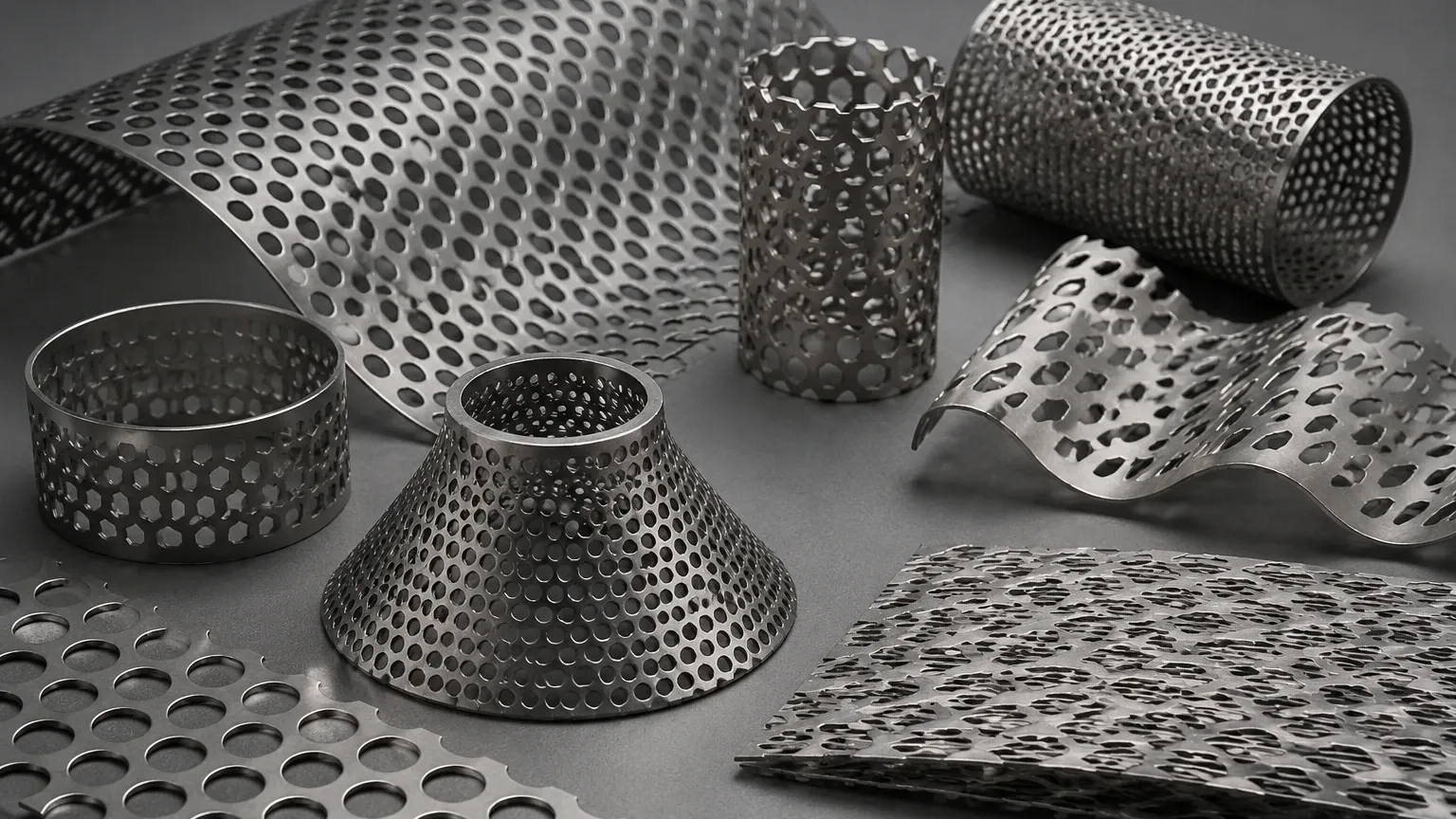
Industrial filtration requires more than just a barrier to catch particles; it requires a structural framework that can withstand differential pressures, chemical erosion, and thermal expansion. 3d perforated metal refers to perforated sheets that have been manipulated to provide a textured or structural profile. This can include corrugated patterns, raised bridges, or conical hole geometries that extend beyond the primary plane of the metal sheet.
In filtration applications, the "3D" aspect often manifests in three specific ways:
1. Surface Geometry: Corrugations or pleats that increase the total surface area within a fixed footprint, allowing for higher flow rates and greater dirt-holding capacity.
2. Hole Architecture: Conical or tapered perforations where the inlet diameter differs from the outlet diameter. This geometry helps prevent particle blinding and facilitates easier backwashing.
3. Structural Integration: Perforated cylinders or cones that serve as the internal skeleton for multi-layered wire mesh filters, providing the necessary rigidity to prevent the collapse of fine mesh layers under high-pressure drops.
By moving beyond the flat plane, 3d perforated metal allows for more sophisticated control over fluid turbulence and mechanical stress distribution, making it a preferred choice for demanding chemical processing and hydraulic applications.
Material Selection and Engineering Properties
The performance of 3d perforated metal is fundamentally tied to its material composition. In industrial environments characterized by corrosive fluids or extreme temperatures, stainless steel remains the industry standard. Common grades include:
* AISI 304/304L: The most common grade, offering excellent formability and general corrosion resistance for food and beverage or water treatment applications.
* AISI 316/316L: Contains molybdenum, which provides superior resistance to chlorides and pitting. This is the baseline requirement for pharmaceutical and marine environments.
* Specialty Alloys: For highly aggressive chemical processing, alloys like Duplex stainless steel or Hastelloy may be used to ensure the structural integrity of the 3d perforated components.
Engineering properties such as yield strength and elongation are critical when designing 3d perforated metal. The process of creating three-dimensional features—such as deep drawing or embossing—introduces work hardening. Engineers must account for these changes in material properties to ensure the final component does not become brittle or prone to stress corrosion cracking in the field.
Performance Advantages: Flow Dynamics and Structural Support
The primary technical motivation for selecting 3d perforated metal over flat alternatives is the improvement in performance metrics. In any filtration system, the goal is to maximize flow while minimizing the pressure drop (ΔP).
Enhanced Flow Characteristics
3d perforated metal can be engineered to manage fluid flow more effectively. For instance, raised perforations can create controlled turbulence, which helps keep particles in suspension and prevents the rapid formation of a filter cake that would otherwise clog the system. In gas filtration, 3D structures can act as flow straighteners or diffusers, ensuring an even distribution of the medium across the entire filter surface.
Structural Integrity under High Differential Pressure
In hydraulic systems and high-viscosity fluid processing, filter elements are subjected to significant mechanical loads. A flat perforated sheet may deform or bow under these conditions. However, 3d perforated metal—specifically when formed into cylindrical or pleated shapes—inherently possesses a higher moment of inertia. This geometric stiffness allows the filter to maintain its shape even as the pressure drop increases due to contaminant loading.
Customization Options for Precision Filtration
Standard off-the-shelf solutions rarely meet the specific needs of complex industrial systems. Customization is the hallmark of effective 3d perforated metal production. At Kaifil, the focus is on providing tailored solutions that align with the precise engineering requirements of the application.
Customization variables include:
* Hole Patterns: Beyond standard round holes, options include square, hexagonal, slotted, or custom-engineered shapes designed to match specific particle geometries.
* Open Area Percentage: Balancing the need for high flow (high open area) with the need for mechanical strength (lower open area).
* Forming and Shaping: Precision rolling, welding, and flanging to create 3D components like conical strainers, basket filters, or multi-stage filter housings.
* Surface Finishes: Electropolishing or passivation to ensure the metal surface is free of contaminants and meets the sanitary standards required by the pharmaceutical and food industries.
When specifying 3d perforated metal, providing detailed CAD drawings and defining tolerances is critical. Precision manufacturing ensures that the component integrates seamlessly with existing housings and mating parts, reducing the risk of bypass or mechanical failure.
Critical Selection Criteria for Engineers and Purchasing Teams
Selecting the right 3d perforated metal component requires a multi-disciplinary approach, balancing mechanical engineering needs with procurement constraints. Technical teams should evaluate the following criteria before finalizing a specification:
1. Filtration Accuracy vs. Structural Role: Is the 3d perforated metal the primary filter media, or is it a support layer for a finer wire mesh? If it is a support layer, the hole size must be large enough to not impede flow but small enough to prevent the mesh from migrating or dimpling.
2. Chemical Compatibility: Ensure the selected grade of stainless steel is compatible with the process fluid, including cleaning agents used during maintenance cycles.
3. Mechanical Load Requirements: Calculate the maximum expected differential pressure. This determines the required thickness of the metal and the specific 3D geometry needed for reinforcement.
4. Operating Temperature: High temperatures can lead to thermal expansion. The 3D design must allow for these changes without compromising the seal or structural integrity of the filter assembly.
5. Regulatory Compliance: For food, beverage, and pharmaceutical applications, ensure the materials and manufacturing processes comply with FDA or equivalent international standards.
Maintenance and Lifecycle Considerations
The total cost of ownership (TCO) for 3d perforated metal is often lower than that of disposable alternatives, despite a higher initial investment. Because these components are typically made from high-grade stainless steel, they are designed for longevity and reusability.
Cleaning and Reusability
Unlike polymer-based filters, 3d perforated metal can be cleaned through various methods, including ultrasonic cleaning, backwashing, or chemical soaking. The 3D geometry, particularly tapered holes, facilitates the release of trapped particles during these cleaning cycles, restoring the filter to near-original performance levels.
Replacement Cycles
While highly durable, 3d perforated metal is not indestructible. Erosion from high-velocity abrasive particles or fatigue from pressure pulsations can eventually lead to wear. Regular inspection schedules should be established to check for hole enlargement, weld integrity, and signs of corrosion. Replacing a component before a catastrophic failure occurs is essential for protecting downstream equipment like pumps and precision valves.
Conclusion: Optimizing Systems with 3d Perforated Metal
3d perforated metal is a vital component in modern industrial filtration, offering a combination of mechanical strength, flow efficiency, and customization that flat materials cannot match. By understanding the engineering principles behind these structures—from material science to fluid dynamics—technical professionals can make informed decisions that improve system uptime and product quality.
As a specialist in custom stainless steel filtration solutions, Kaifil provides the technical expertise and manufacturing precision required to develop high-performance Perforated & Expanded Metal components. Whether your application involves chemical processing, food production, or hydraulic systems, selecting the right 3D configuration is a critical step toward achieving optimized filtration performance and long-term operational success.
