


Perforated Metal for Sale
In the industrial landscape, perforated metal serves as a critical component for filtration, separation, and structural support. When engineers and procurement professionals search for perforated metal for sale, the objective is rarely just to find a raw material; it is to secure a precision-engineered component that meets specific mechanical and chemical requirements. Selecting the right perforated metal involves a deep understanding of hole patterns, open area percentages, material properties, and manufacturing tolerances.
As a specialized manufacturer, Kaifil provides custom stainless steel filtration solutions where perforated metal often acts as the primary structural skeleton. This article examines the technical parameters that define high-quality perforated metal and offers guidance on selecting the appropriate specifications for demanding industrial applications.
Technical Specifications and Geometry
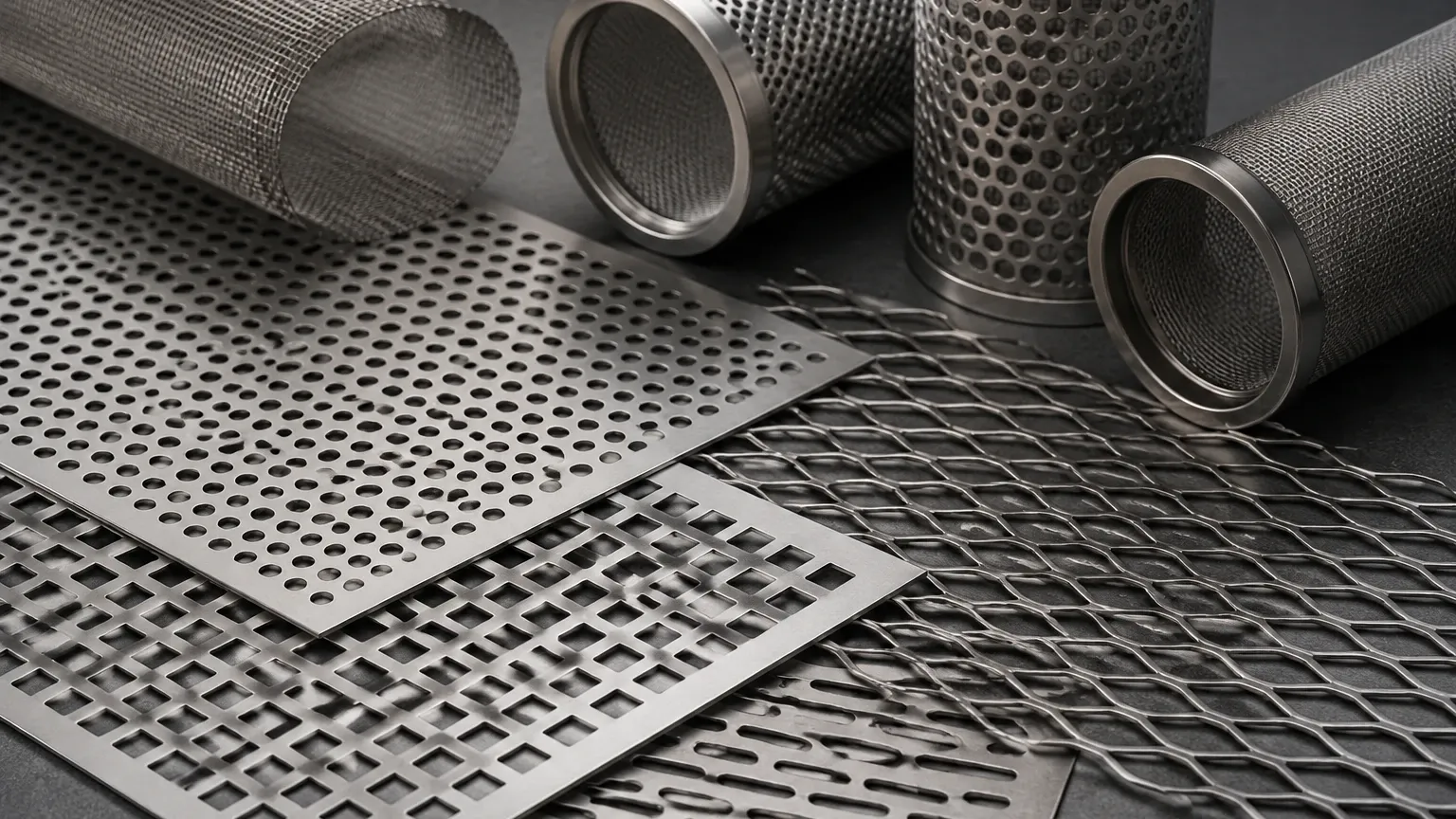
The performance of perforated metal is dictated by its geometry. Unlike standard sheet metal, the functionality of perforated products depends on the precise arrangement and size of the apertures. When evaluating Perforated & Expanded Metal options, three primary factors must be considered: hole shape, hole size, and the hole pattern.
Hole Shapes and Their Applications
* Round Holes: This is the most common and cost-effective configuration. Round holes offer high structural integrity and are ideal for general-purpose filtration and sorting. They provide a balanced distribution of stress across the sheet.
* Square Holes: Square perforations provide a higher open area compared to round holes of the same diameter. They are often used in applications where high airflow or visibility is required, though they may have lower structural rigidity under certain loads.
* Slotted Holes: Elongated or slotted holes are specifically designed for sorting and sifting processes. In filtration, they are used to prevent the passage of long, thin particles while maintaining a high flow rate for liquids.
* Hexagonal (Honeycomb) Holes: These provide the maximum possible open area while maintaining significant strength. They are frequently used in high-end architectural applications and specialized industrial venting.
Understanding Open Area
The "Open Area" is the percentage of the sheet that is comprised of holes. This is the most critical metric for filtration and airflow. A higher open area results in lower pressure drops across the filter but reduces the mechanical strength of the sheet. Calculating the open area requires precise formulas based on the hole diameter (D) and the center-to-center spacing, known as the pitch (P). For a standard 60-degree staggered round hole pattern, the formula is: `(D² × 90.69) / P²`.
Material Selection for Industrial Longevity
When sourcing perforated metal for sale, material selection is the primary determinant of the component's lifespan, especially in corrosive or high-temperature environments. Industrial applications typically demand metals that can withstand chemical exposure and mechanical stress.
Stainless Steel (300 Series)
Stainless steel is the industry standard for filtration and chemical processing.
* Type 304: Offers excellent corrosion resistance and is suitable for most food and beverage applications. It is the most common choice for general industrial use.
* Type 316/316L: Contains molybdenum, which provides superior resistance to chlorides and pitting. This is essential for marine environments, pharmaceutical manufacturing, and aggressive chemical processing.
Carbon Steel and Aluminum
* Carbon Steel: Chosen for its high strength and cost-effectiveness in dry environments. However, it requires coating (such as galvanizing or powder coating) to prevent oxidation.
* Aluminum: Preferred for its high strength-to-weight ratio and natural corrosion resistance. It is commonly used in aerospace, automotive, and architectural applications where weight reduction is a priority.
Manufacturing Precision and Quality Standards
Quality in perforated metal is not just about the holes; it is about the integrity of the remaining material. High-quality manufacturing processes ensure that the sheet remains flat and free of internal stresses that could lead to failure during installation or operation.
The Punching Process
Most perforated metal is produced using high-speed CNC punching presses. The precision of the die and punch determines the cleanliness of the hole. Poorly maintained tooling can result in "burrs"—sharp edges on the exit side of the hole. In filtration applications, burrs can trap contaminants or damage delicate filter media (like wire mesh) that might be wrapped around the perforated core.
Secondary Operations
After punching, the metal often undergoes several secondary processes to ensure it meets industrial standards:
* Leveling: The punching process naturally creates tension in the metal, causing it to curl. Leveling rollers are used to restore the sheet to a flat state.
* Deburring: Removing sharp edges is crucial for safety and for the integrity of subsequent coatings or welds.
* Degreasing: For pharmaceutical and food-grade applications, the lubricants used during punching must be thoroughly removed through ultrasonic cleaning or chemical degreasing.
Perforated Metal vs. Expanded Metal
While often grouped together, perforated metal and expanded metal are manufactured differently and serve different mechanical purposes.
Perforated Metal is created by removing material (the "slugs") from the sheet. This allows for extremely precise hole sizes and complex patterns. It is the preferred choice for precise filtration where a specific micron rating or flow rate must be maintained.
Expanded Metal is created by slitting and stretching the metal simultaneously. This process involves no waste, as no material is removed. Expanded metal is generally stronger per pound and provides a three-dimensional surface that offers excellent grip and structural reinforcement. However, it lacks the precision of perforated metal for fine filtration tasks.
For engineers looking for Perforated & Expanded Metal, the choice depends on whether the priority is filtration precision (perforated) or structural reinforcement and cost-efficiency (expanded).
Applications in Industrial Filtration
In the context of Kaifil’s expertise, perforated metal is most frequently utilized as a support structure. Fine wire mesh filters often lack the mechanical strength to withstand high-pressure differentials. In these cases, a perforated metal cylinder or plate acts as the "backbone."
Filter Cartridge Cores
In hydraulic and chemical filtration, perforated metal tubes serve as the inner core of filter cartridges. They must be strong enough to prevent the filter media from collapsing under pressure while providing enough open area to ensure the fluid flow is not restricted.
Strainer Baskets
Large-scale industrial strainers used in water treatment and oil and gas often use perforated metal baskets to capture large particulates. These baskets must be durable enough to be cleaned and reused multiple times, making stainless steel the preferred material.
Acoustic Dampening and EMI Shielding
Beyond filtration, perforated metal is used in industrial machinery housings to dampen sound or provide Electromagnetic Interference (EMI) shielding while still allowing for ventilation and cooling.
Purchasing Considerations: Beyond the Quote
When evaluating perforated metal for sale, technical buyers should look beyond the initial price per sheet. The total cost of ownership is influenced by the accuracy of the product and its compatibility with the final assembly.
Key Questions for Suppliers
1. What are the tolerance levels? For precision filtration, even a 0.5mm variance in hole pitch can affect the assembly of a filter cartridge.
2. Are custom margins available? Many applications require "blank" areas (margins) around the edges for welding or mounting. Standard off-the-shelf sheets may not provide these, leading to increased labor costs during fabrication.
3. Is the material certified? Ensure the supplier provides Mill Test Reports (MTRs) to verify the chemical composition of the stainless steel, especially for 316L requirements.
Customization Options
Kaifil specializes in OEM and customized filtration solutions. This means that instead of settling for standard sizes, engineers can specify exact dimensions, hole patterns, and material grades tailored to their specific environment. Customization reduces waste and eliminates the need for secondary cutting or forming by the end-user.
Conclusion
Perforated metal is a versatile and indispensable material in the B2B industrial sector. Whether it is used as a support core for a high-pressure hydraulic filter or as a screen in a food processing plant, its performance is a direct result of its technical specifications. When searching for perforated metal for sale, focusing on material grade, open area calculations, and manufacturing precision will ensure that the final component meets the rigorous demands of industrial service.
For those requiring high-performance filtration components, selecting a partner with deep engineering expertise in metal fabrication is essential. By understanding the relationship between hole geometry and fluid dynamics, companies can optimize their filtration systems for better durability and lower maintenance costs.
