


3d Perforated Metal Panel
In the landscape of industrial filtration and structural engineering, the 3d perforated metal panel represents a significant evolution from traditional flat-sheet components. While standard perforated sheets are utilized primarily for two-dimensional separation or simple enclosures, three-dimensional configurations introduce mechanical advantages that are critical in high-pressure, high-temperature, and high-precision environments. For engineers and procurement specialists, understanding the technical nuances of these components is essential for optimizing system performance and ensuring long-term durability.
Industrial applications often demand more than just a surface with holes; they require structural rigidity, increased surface area, and specific fluid dynamic properties. The integration of 3D geometry into Perforated & Expanded Metal products allows for the creation of components that serve as both functional filters and robust structural elements. This guide explores the engineering principles, material considerations, and application-specific benefits of 3D perforated metal panels within industrial sectors.
Technical Construction and Manufacturing Processes
The production of a 3d perforated metal panel involves a multi-stage manufacturing process that begins with high-precision CNC punching or laser cutting. However, unlike standard perforated sheets, these panels undergo secondary forming operations to achieve their three-dimensional profile.
Perforation Methods
To maintain the integrity of the material, manufacturers typically use mechanical punching for high-volume production where hole consistency is paramount. For complex geometries or thicker materials, laser or waterjet cutting may be employed to ensure clean edges and prevent heat-affected zones (HAZ) that could compromise the corrosion resistance of stainless steel alloys.
Secondary Forming
The "3D" aspect is achieved through techniques such as stamping, deep drawing, or hydraulic pressing. These processes distort the flat plane of the metal to create pyramidal, hemispherical, or corrugated patterns. In industrial filtration, this is not merely an aesthetic choice; the depth of the 3D profile directly influences the mechanical strength of the panel. For instance, a corrugated 3D profile significantly increases the moment of inertia, allowing the panel to withstand higher differential pressures without buckling compared to a flat sheet of the same thickness.
Material Selection for Demanding Environments
Kaifil specializes in stainless steel filtration solutions, and the choice of material for a 3d perforated metal panel is dictated by the chemical and thermal demands of the application. The most common materials include:
* Austenitic Stainless Steel (304/304L): The standard choice for general industrial use, providing excellent formability and good corrosion resistance in non-acidic environments.
* Molybdenum-Alloyed Stainless Steel (316/316L): Essential for chemical processing, pharmaceutical, and marine applications. The addition of molybdenum provides superior resistance to pitting and crevice corrosion, particularly in chloride-rich environments.
* High-Nickel Alloys: For extreme temperatures or highly corrosive chemical streams, specialized alloys may be used to maintain structural integrity where standard stainless steels would fail.
When selecting a material, engineers must consider the "work hardening" effect that occurs during the 3D forming process. Stainless steel tends to become harder and more brittle as it is shaped, which may require specialized annealing processes to ensure the final component does not develop stress-corrosion cracking during service.
Filtration Performance and Fluid Dynamics
One of the primary reasons for utilizing a 3d perforated metal panel in industrial filtration is the enhancement of fluid dynamics. In a flat filter screen, the flow of liquid or gas is perpendicular to the surface. However, a 3D profile can manipulate flow patterns to achieve several technical objectives:
Increased Surface Area
By introducing depth, the effective filtration area of a panel can be increased by 20% to 50% within the same footprint. This reduces the face velocity of the fluid passing through the holes, which in turn lowers the pressure drop across the filter. For engineers, this means longer intervals between cleaning cycles and reduced energy consumption for pumps and compressors.
Turbulence Control and Flow Dispersion
In chemical reactors or water treatment systems, 3D panels are often used as flow diffusers. The raised surfaces of the 3D geometry break up laminar flow and promote controlled turbulence. This ensures that the fluid is evenly distributed across the subsequent filter media or catalyst beds, preventing "channeling" where the fluid takes the path of least resistance and bypasses large portions of the active filtration area.
Debris Management
In intake screens or pre-filtration stages, 3D profiles can be designed to deflect larger debris while allowing the fluid to pass through the recessed areas. This "self-cleaning" effect is particularly useful in applications where the fluid contains a high concentration of suspended solids that would quickly blind a flat perforated sheet.
Structural Integrity and Load-Bearing Capabilities
In industrial equipment, the 3d perforated metal panel often serves as a support structure for finer mesh filters or as a protective cage for delicate internal components. The geometric stiffness provided by the 3D shape is a critical engineering consideration.
Resistance to Differential Pressure
In hydraulic systems or high-pressure gas filtration, the filter element must withstand significant pressure differentials as the media becomes loaded with contaminants. A 3D formed panel acts as a reinforced skeleton. The ridges and valleys created during the forming process function like structural beams, distributing the load across the entire surface and preventing the collapse of the filter cartridge.
Weight-to-Strength Ratio
By using a 3D profile, engineers can often specify a thinner gauge of metal than would be required for a flat plate to achieve the same structural rigidity. This reduction in material usage leads to lighter components, which is advantageous for large-scale installations or mobile industrial equipment, without sacrificing the durability required for heavy-duty operations.
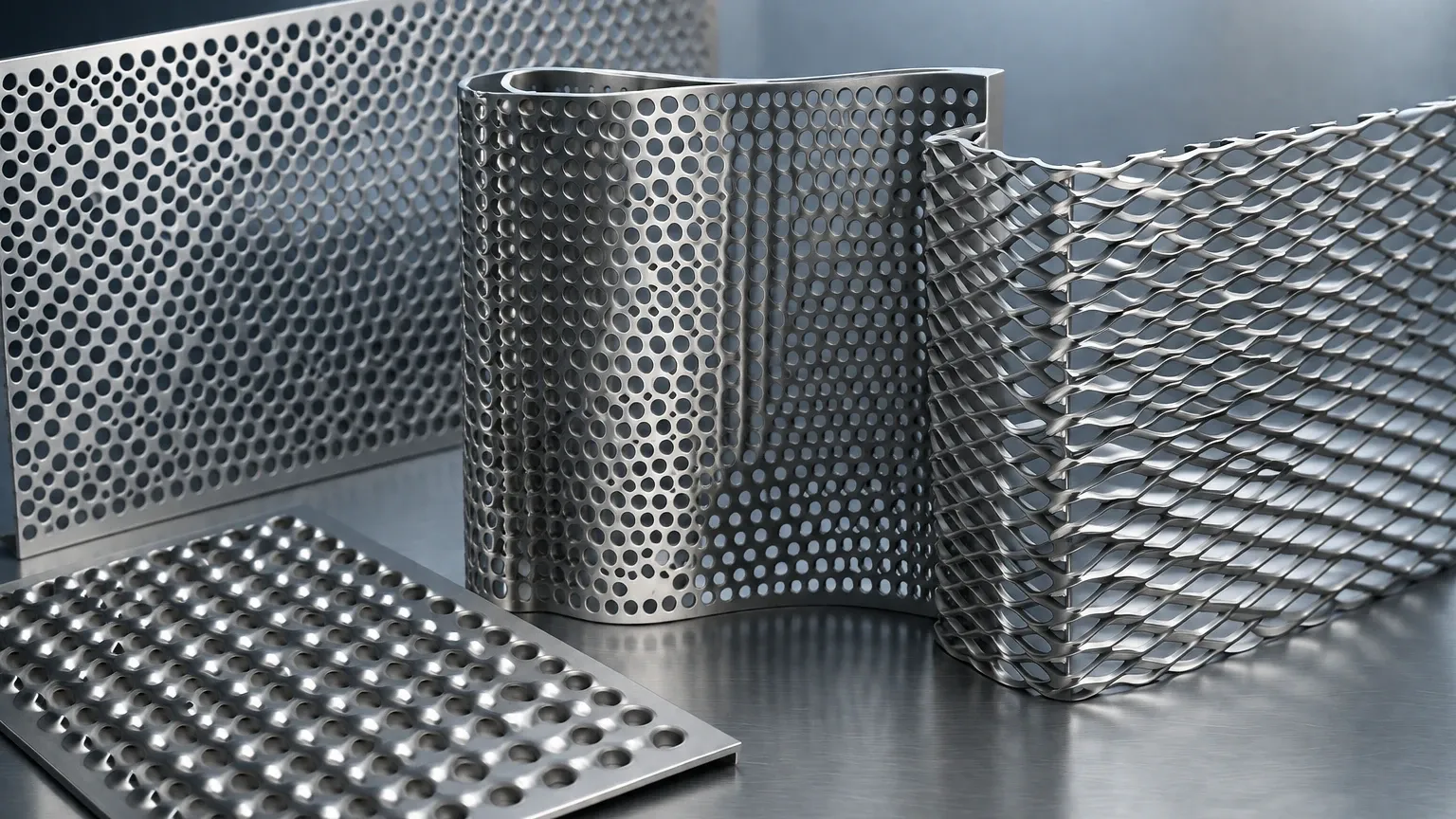
Customization Parameters for Industrial OEM
Customization is at the core of effective filtration. When specifying a 3d perforated metal panel, several variables must be precisely defined to meet application-specific requirements:
1. Hole Pattern and Open Area: The ratio of holes to solid metal (open area percentage) determines the flow capacity. Common patterns include staggered round holes, square holes, or slotted openings.
2. Pitch and Bridge: In expanded metal variations, the width of the "bridge" and the distance between openings (pitch) are critical for determining both the filtration rating and the structural strength.
3. Depth of Profile: The height of the 3D embossment must be balanced against the clearance available within the filter housing and the required increase in surface area.
4. Edge Conditions: For ease of installation and safety, panels can be manufactured with solid margins (unperforated edges) or specialized flange designs for bolting or welding into frames.
Kaifil provides OEM capabilities to tailor these parameters, ensuring that the 3D panel integrates seamlessly into the customer's existing filtration system or new equipment design.
Maintenance, Cleaning, and Replacement Cycles
For technical professionals, the total cost of ownership (TCO) is a primary concern. The longevity of a 3d perforated metal panel is significantly higher than that of synthetic or thinner wire mesh alternatives, but it still requires a structured maintenance regimen.
Clean-In-Place (CIP) Compatibility
Because these panels are typically constructed from high-grade stainless steel, they are highly compatible with CIP processes. They can withstand aggressive chemical cleaning agents and high-pressure steam sterilization (SIP), which is essential in the food, beverage, and pharmaceutical industries. The 3D geometry must be designed to avoid "dead zones" where bacteria or contaminants could accumulate, ensuring that the cleaning fluid can reach all surfaces.
Monitoring Wear and Fatigue
While 3D panels are robust, they are subject to mechanical fatigue in applications with pulsating flows or thermal cycling. Regular inspections should focus on the "valleys" and "peaks" of the 3D profile, as these are the areas of highest stress concentration. Signs of stress cracking or erosion around the hole edges indicate that the panel is approaching the end of its service life and should be replaced to prevent catastrophic failure of the filtration system.
Engineering Checklist for Procurement
Before finalizing a specification for a 3d perforated metal panel, engineering and purchasing teams should confirm the following technical details:
* Fluid Compatibility: Does the selected stainless steel grade (e.g., 316L) provide sufficient resistance to the process fluid's pH and chloride levels?
* Pressure Requirements: What is the maximum expected differential pressure (ΔP), and does the 3D profile provide an adequate safety factor against deformation?
* Filtration Accuracy: Is the hole size appropriate for the target particle retention, or is the panel intended only as a support for a finer mesh?
* Dimensional Tolerances: Are the tolerances for the overall panel size and the 3D profile depth compatible with the housing assembly?
* Surface Finish: Is a specific finish required (e.g., electropolishing) to enhance corrosion resistance or reduce particle adhesion?
By addressing these factors during the design phase, industrial operators can ensure that their 3D perforated metal components deliver reliable, long-term performance in even the most demanding filtration environments. Kaifil’s expertise in manufacturing these specialized components allows for a collaborative approach to solving complex filtration challenges through precision engineering and high-quality material selection.
