


50 Perforated Metal Panel
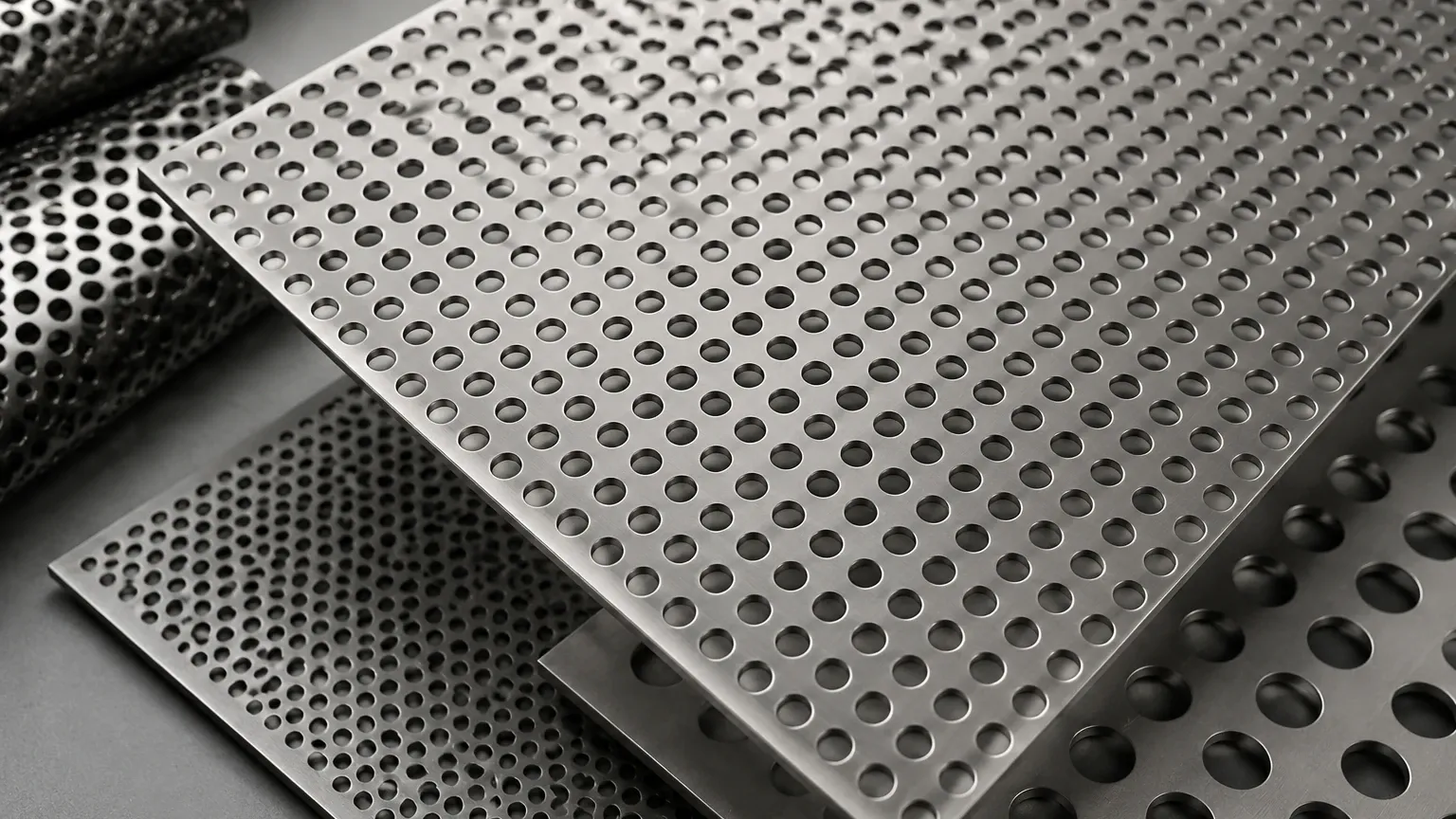
In industrial engineering and architectural design, the specification of a 50 perforated metal panel typically refers to a component defined by its open area percentage, hole diameter, or specific dimensional pitch. Most commonly, engineers specify a "50" panel when seeking a 50% open area—a critical threshold that balances structural integrity with high-performance throughput for air, light, or liquid. As a specialized manufacturer of stainless steel filtration and metal components, Kaifil provides precision-engineered perforated solutions designed to meet the rigorous demands of chemical processing, food production, and industrial filtration.
Understanding the technical nuances of these panels is essential for ensuring that the selected material performs reliably under pressure, maintains its shape during secondary fabrication, and provides the necessary filtration or ventilation characteristics for the intended application.
Technical Specifications and Open Area Calculations
The performance of a 50 perforated metal panel is primarily dictated by its geometric configuration. The term "50" most frequently signifies a 50% open area, which is the ratio of the area of the holes to the total area of the sheet. This ratio is determined by the hole diameter (D) and the center-to-center distance, known as the pitch (P).
The Geometry of Open Area
For a standard 60-degree staggered hole pattern—the most common and structurally efficient arrangement—the formula for calculating open area is:
% Open Area = (D² × 90.69) / P²
To achieve a 50% open area, the relationship between the hole size and the pitch must be precisely managed. For example, if an engineer requires a panel with 1/8" (3.175 mm) holes, the pitch must be approximately 0.168" (4.26 mm) to reach the 50% mark. This leaves a "ligament" (the metal remaining between the holes) of roughly 0.043". Choosing the right ligament width is vital; a ligament that is too narrow may lead to panel warping or structural failure under mechanical stress, while a ligament that is too wide will restrict flow.
Hole Patterns and Their Impact
While staggered patterns are the industry standard due to their uniform strength, straight-line patterns are also available. However, straight patterns typically offer lower structural rigidity for the same open area. When specifying a Perforated & Expanded Metal solution, the orientation of the pattern relative to the flow or the load-bearing axis must be considered to prevent premature fatigue.
The Significance of 50% Open Area in Industrial Filtration
In filtration applications, the 50% open area specification represents a "sweet spot" for many medium-pressure systems. It provides enough surface area to allow for high flow rates while maintaining a robust metal substrate that can support filter media or withstand backwashing cycles.
Flow Dynamics and Pressure Drop
For engineers, the primary concern is often the "clean pressure drop" (ΔP). A 50 perforated metal panel offers significantly less resistance than panels with 20% or 30% open area. This is particularly important in high-viscosity fluid filtration or high-velocity air systems where energy efficiency is a priority. By maximizing the open area without compromising the panel's ability to act as a support core, manufacturers can reduce the load on pumps and fans, leading to lower total cost of ownership (TCO).
Support for Fine Filter Media
In many Kaifil filtration solutions, a perforated metal panel serves as the inner or outer support cage for finer wire mesh or non-woven filter media. A 50% open area ensures that the support structure does not become the bottleneck of the filtration process. It allows the finer media to operate at its maximum efficiency while providing the mechanical backbone necessary to prevent the media from collapsing under differential pressure.
Material Selection: The Role of Stainless Steel
The longevity of a 50 perforated metal panel depends heavily on the alloy selected. Given that these panels are often used in corrosive or high-temperature environments, stainless steel is the preferred material for industrial B2B applications.
1. Grade 304 Stainless Steel: This is the standard choice for general industrial use. It offers excellent corrosion resistance and is cost-effective for applications in food processing, HVAC, and architectural screening where exposure to harsh chemicals is limited.
2. Grade 316/316L Stainless Steel: For more demanding environments, such as marine applications, pharmaceutical manufacturing, or chemical processing, Grade 316 is required. The addition of molybdenum provides superior resistance to pitting and crevice corrosion, particularly in chloride-rich environments. The "L" (low carbon) variant is essential if the panel will be welded, as it prevents carbide precipitation that can lead to corrosion at the weld joints.
3. Specialty Alloys: In extreme cases involving high temperatures or highly acidic bypasses, alloys like Duplex stainless steel or Monel may be used, though these are typically reserved for custom-engineered filtration components.
Engineering Considerations for Custom Panels
When ordering a 50 perforated metal panel, simply specifying the open area is often insufficient for a successful engineering outcome. Several secondary factors must be confirmed during the design phase:
Edge Margins and "Finished" Edges
Panels can be produced with "full holes" (where the pattern runs off the edge) or with "margins" (solid unperforated borders). Margins are critical if the panel needs to be welded into a frame or bolted to a flange. Specifying the exact margin width on all four sides ensures that the panel fits perfectly into the final assembly without requiring additional trimming, which can be difficult with high-open-area sheets.
Flatness and Stress Relieving
The perforation process involves punching thousands of holes into a metal sheet, which introduces significant internal stresses. This can cause the material to curl or "oil can" (bow in the center). For a 50% open area panel, where a large amount of material is removed, professional leveling is required to ensure the panel remains flat for subsequent processes like laser cutting or forming into cylindrical filter cartridges.
Thickness vs. Hole Diameter
A general rule in perforation is that the hole diameter should not be smaller than the material thickness (1:1 ratio). Attempting to punch small holes in very thick plate to achieve a 50% open area can lead to tool breakage and irregular hole shapes. For thicker panels, drilling or laser cutting may be necessary, though these methods are generally more expensive than traditional punching.
Applications of 50 Perforated Metal Panels
Beyond filtration, these panels serve diverse roles across multiple sectors due to their balance of transparency and strength.
* Acoustic Dampening: In industrial machinery enclosures, perforated panels with a 50% open area are used to face sound-absorbing insulation. The holes allow sound waves to pass through into the absorbent material rather than reflecting off the metal surface.
* Grain Drying and Storage: High open area is essential in agricultural silos to allow for uniform airflow through the grain mass, preventing rot and ensuring efficient drying cycles.
* Architectural Sunshades: In building design, these panels provide aesthetic appeal while functioning as functional sunscreens that reduce solar heat gain while still allowing for outward visibility and natural ventilation.
* Protective Guarding: For heavy machinery, a 50 perforated metal panel provides a safety barrier that allows operators to inspect internal components visually without exposing them to moving parts, all while maintaining cooling airflow.
Selection Guide: Confirming Requirements Before Purchase
To ensure the procurement of the correct 50 perforated metal panel, purchasing teams and engineers should document the following parameters:
* Primary Goal: Is the "50" referring to 50% open area, 0.50" hole size, or 50mm dimensions?
* Environment: Will the panel be exposed to salt spray, caustic cleaners, or high temperatures? (Determines 304 vs. 316 stainless steel).
* Load Requirements: Will the panel be self-supporting, or will it be reinforced by a frame?
* Dimensional Tolerances: What are the allowable variances in length, width, and flatness?
* Surface Finish: Does the application require a 2B mill finish, a polished surface for food safety, or a powder coating for aesthetics?
Kaifil’s expertise in manufacturing custom stainless steel filtration solutions allows us to assist clients in navigating these technical choices. Whether you require a standard sheet or a complex, pre-formed filter component, understanding the relationship between material science and perforation geometry is key to a successful installation.
For more information on material options and technical configurations, you can Review product options and application support to find the ideal specification for your industrial project.
