


Keckley Strainers
In industrial fluid handling and piping systems, the protection of downstream equipment—such as pumps, valves, meters, and spray nozzles—is a critical engineering priority. Industrial strainers serve as the primary line of defense against particulate contamination, scale, and debris. Among the established names in the fluid control industry, Keckley strainers have long been recognized for their robust construction and adherence to rigorous manufacturing standards.
For engineers and procurement professionals, understanding the technical nuances of these components is essential for maintaining system integrity and operational efficiency. While the external housing of a strainer provides the necessary pressure containment, the internal filtration element—the baskets and screens—determines the actual performance of the unit. This guide explores the engineering considerations, material specifications, and selection criteria relevant to Keckley strainers and the broader category of Strainers & Baskets.
Understanding the Role of Strainers & Baskets in Industrial Piping
Industrial strainers are essentially closed pressure vessels that remove solids from flowing liquids or gases using a perforated or wire mesh straining element. Unlike filters, which are typically designed to remove particles in the sub-micron range and are often disposable, strainers are designed for coarser filtration and are intended for frequent cleaning and reuse.
The choice between different strainer configurations often depends on the specific requirements of the application, including the nature of the fluid, the expected debris load, and the allowable pressure drop. In many heavy-duty industrial environments, Keckley strainers are specified due to their compliance with ASME standards and their ability to withstand high-pressure and high-temperature conditions.
However, the effectiveness of any strainer is ultimately limited by its internal component. Precision-engineered baskets and mesh inserts are what define the filtration accuracy. Whether a system utilizes a Y-strainer for compact protection or a basket strainer for higher debris capacity, the material and structural integrity of the internal element must match the demanding conditions of the process.
Technical Overview of Keckley Strainer Configurations
Keckley offers several primary configurations that are standard across the industry. Each design serves a specific operational purpose:
Y-Strainers
Y-strainers are characterized by their "Y" shaped body, which allows the straining element to be positioned at an angle to the main flow path. These are typically used in applications where the amount of material to be removed is small, or where frequent cleaning is not required. They are often preferred for steam, gas, or high-pressure liquid lines due to their compact footprint and ability to be installed in both horizontal and vertical positions.
Simplex Basket Strainers
Basket strainers feature a larger internal volume than Y-strainers, allowing them to hold more debris before requiring cleaning. The "basket" design provides a greater surface area, which results in a lower initial pressure drop. These are commonly found in liquid cooling systems, chemical processing lines, and water treatment facilities where the flow can be momentarily interrupted for cleaning.
Duplex Basket Strainers
For processes that cannot be shut down for maintenance, duplex strainers utilize two separate basket chambers connected by a diverter valve. This allows the operator to switch flow to a clean chamber while the other is being serviced, ensuring continuous operation in critical systems like fuel oil handling or continuous chemical production.
Material Engineering and Corrosion Resistance
Selecting the correct material for both the strainer housing and the internal basket is vital for preventing premature failure due to corrosion or mechanical stress. Keckley strainers are manufactured in a variety of materials to suit different industrial environments:
* Cast Iron and Ductile Iron: Commonly used for water and non-corrosive fluid applications where cost-effectiveness is a priority.
* Carbon Steel: Suitable for high-temperature and high-pressure steam or oil applications.
* Stainless Steel (304 and 316): Essential for chemical processing, food and beverage, and pharmaceutical industries where corrosion resistance and hygiene are paramount.
* Specialty Alloys: For highly aggressive environments, materials like Bronze, Monel, or Hastelloy may be required to resist specific chemical attacks.
The internal components, specifically the wire mesh and perforated metal used in the baskets, are almost exclusively made from stainless steel. High-grade stainless steel ensures that the filtration media does not degrade over time, maintaining the precise opening sizes required for consistent performance.
Filtration Precision: Mesh vs. Perforation in Basket Design
The performance of Keckley strainers is dictated by the specifications of the internal straining element. Engineers must choose between perforated plate and wire mesh based on the required level of filtration.
Perforated Plate
Perforated metal is used as the primary support or as the sole straining medium for coarse filtration (typically 1/32" to 1/2" openings). It offers high mechanical strength and is resistant to the stresses of high-velocity flow. Common perforation patterns include round holes or bridge slots, depending on the orientation of the debris.
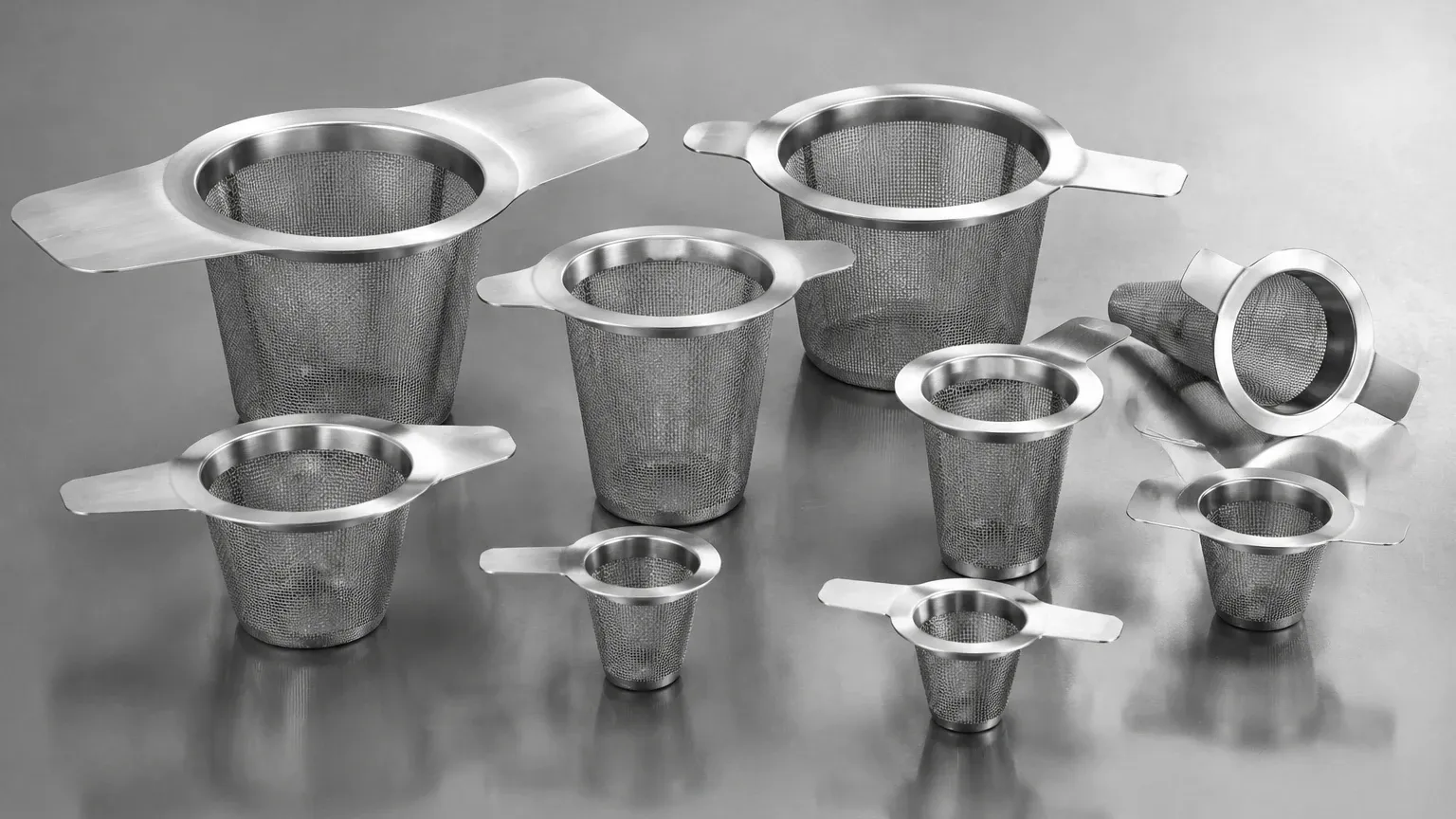
Wire Mesh Lining
For finer filtration, a stainless steel wire mesh is lined inside a perforated metal basket. The mesh count—the number of openings per linear inch—determines the micron rating. For example, a 100-mesh screen can remove particles down to approximately 140 microns. In high-precision applications, multi-layered mesh designs or sintered wire mesh may be used to provide both fine filtration and the structural rigidity needed to withstand differential pressure.
When evaluating Keckley strainers, it is important to confirm that the basket design provides a high "open area ratio." This ratio compares the total area of the holes to the total area of the pipe inlet. A higher ratio (typically 6:1 or greater) ensures that the strainer can accumulate a significant amount of debris without causing a substantial increase in pressure drop.
Operational Considerations: Pressure Drop and Flow Dynamics
One of the most critical factors in strainer selection is the clean pressure drop (ΔP). Every strainer introduces some resistance to flow. If the pressure drop is too high, it can lead to cavitation in pumps or insufficient flow to downstream processes.
The total pressure drop is a combination of the loss through the housing and the loss through the basket. Factors that influence ΔP include:
1. Fluid Viscosity: Thicker fluids require larger mesh openings or larger strainer bodies to maintain acceptable flow rates.
2. Flow Velocity: Higher velocities exponentially increase the pressure drop.
3. Debris Loading: As the basket fills, the available open area decreases, causing the pressure drop to rise.
Engineers typically install differential pressure gauges across the strainer to monitor the condition of the internal basket. A common rule of thumb is to clean or replace the basket when the differential pressure reaches 5-10 psi above the clean start-up pressure. Using high-quality Strainers & Baskets ensures that the internal elements can withstand these pressure differentials without collapsing or bypassing.
Maintenance and Longevity of Industrial Strainers
To ensure the longevity of Keckley strainers, a regular maintenance schedule is required. The frequency of cleaning depends entirely on the cleanliness of the fluid and the process conditions.
Cleaning Procedures
For Y-strainers, a blow-down valve can often be installed on the drain port, allowing the screen to be flushed without removing the cap. For basket strainers, the cover must be removed, and the basket manually cleaned. It is essential to inspect the gaskets or O-rings during each cleaning cycle to prevent external leaks.
Replacement Cycles
While the housing of a Keckley strainer may last for decades, the internal baskets are subject to wear, erosion, and potential damage during cleaning. Mechanical fatigue from pressure surges can also cause wire mesh to fray. Maintaining a stock of replacement baskets is standard practice for minimizing downtime. When sourcing replacement components, ensuring that the dimensions and material grades match the original OEM specifications is critical for maintaining the certified performance of the unit.
Custom Solutions for Specialized Filtration Requirements
While standard Keckley strainers meet a wide range of industrial needs, certain applications require customized filtration solutions. This is where the expertise of a specialized manufacturer becomes invaluable. Customization may involve:
* Modified Mesh Configurations: Utilizing specific weave types (such as plain, twilled, or dutch weave) to capture irregularly shaped particles.
* Reinforced Baskets: Adding heavy-duty support frames for applications with extreme pressure spikes.
* Magnetic Inserts: Incorporating magnets within the basket to capture fine ferrous particles that might otherwise pass through the mesh.
* Specialized Coatings: Applying PTFE or other coatings to the internal elements to prevent sticky debris from adhering to the mesh.
For engineers working in the chemical, pharmaceutical, or food and beverage sectors, the ability to customize the internal filtration component allows for the optimization of the process beyond what off-the-shelf components can provide. By focusing on the precision of the wire mesh and the durability of the stainless steel construction, manufacturers can provide replacement baskets and custom inserts that enhance the performance of existing Keckley installations.
Conclusion: Selecting the Right Filtration Partner
Specifying Keckley strainers is a sound engineering decision based on their reputation for quality and reliability. However, the total cost of ownership and the ultimate success of a filtration system depend on the performance of the internal baskets and the ability to adapt to changing process requirements.
When evaluating your filtration needs, consider the following checklist:
* Compatibility: Does the housing material and gasket type suit the chemical properties of the fluid?
* Performance: Is the mesh size appropriate for the smallest particle that needs to be removed without causing excessive pressure drop?
* Durability: Are the internal baskets constructed from high-quality stainless steel capable of withstanding the operational environment?
* Customization: Does the application require a non-standard basket design or specialized filtration media?
By combining the robust housing of established brands with high-precision, customized internal components, industrial facilities can achieve a balance of durability and filtration accuracy. For technical support in selecting or customizing filtration elements, professionals should Review product options and application support to ensure their systems operate at peak efficiency.
