


Fence Strainers
In the landscape of industrial fluid management, the term "fence strainers" often occupies a specialized niche within the broader category of Strainers & Baskets. While the term is frequently associated with agricultural wire tensioning, in the context of professional filtration and industrial processing, fence-style strainers refer to robust, high-capacity coarse filtration components designed to protect downstream equipment from large-scale debris. These components act as the first line of defense in intake systems, chemical processing lines, and water treatment facilities, ensuring that the integrity of the entire system is maintained against significant particulate ingress.
Selecting the appropriate filtration hardware requires a deep understanding of material science, fluid dynamics, and mechanical engineering. For engineers and procurement teams, the decision-making process involves balancing filtration efficiency with structural durability and long-term maintenance costs. This guide explores the technical specifications, application environments, and selection criteria for industrial-grade strainers and basket components.
Understanding Fence Strainers in Industrial Filtration
Industrial fence strainers are characterized by their structural design, which often utilizes heavy-duty wire mesh or perforated metal reinforced by a rigid frame. Unlike fine-mesh cartridges used for polishing fluids, these strainers are engineered to handle high flow rates and high-velocity impacts from large solids. They are "fences" in the literal sense—barriers that prevent the passage of oversized contaminants while allowing the fluid medium to pass with minimal resistance.
In B2B applications, these are typically integrated into suction intakes or large-diameter piping systems. The primary objective is to protect pumps, valves, and heat exchangers from damage caused by rocks, metal fragments, or large organic matter. Because these components are often the first point of contact for raw fluids, they must be manufactured to withstand corrosive environments and mechanical stress without deforming.
Engineering Considerations and Material Selection
The performance of any industrial filtration component is fundamentally limited by its materials. In the realm of high-performance filtration, stainless steel is the industry standard due to its exceptional strength-to-weight ratio and resistance to chemical degradation.
Grade 304 vs. Grade 316 Stainless Steel
Most industrial strainers are fabricated from either Grade 304 or Grade 316 stainless steel.
- Grade 304: Suitable for general industrial applications where high-temperature resistance and basic corrosion protection are required. It is a cost-effective choice for water treatment and non-corrosive chemical lines.
- Grade 316/316L: Contains molybdenum, which provides superior resistance to chlorides and acids. This is the preferred material for marine environments, pharmaceutical manufacturing, and aggressive chemical processing where pitting corrosion is a significant risk.
Mesh and Perforation Geometry
The "fence" aspect of these strainers is defined by the aperture size. Engineers must specify the maximum allowable particle size that can pass through the system. For coarse filtration, this might range from 1/8 inch to several inches. The open area ratio—the percentage of the total area that is open to flow—is a critical metric. A higher open area reduces the pressure drop across the strainer but may compromise the structural rigidity of the basket if not properly reinforced.
Performance Evaluation: Flow Rate and Pressure Drop
One of the most common questions engineers face is how a strainer will affect the overall system pressure. Every filtration element introduces a degree of resistance, known as the pressure drop ($ΔP$). For fence-style strainers, maintaining a low $ΔP$ is essential to prevent pump cavitation and energy inefficiency.
The Impact of Debris Loading
As the strainer captures debris, the effective open area decreases, leading to an exponential increase in pressure drop. In high-volume industrial settings, it is vital to select a basket size that offers a large dirt-holding capacity. This extends the time between cleaning cycles and ensures that the system can operate at peak efficiency for longer durations. Monitoring the differential pressure across the strainer is the standard method for determining when a cleaning or replacement cycle is necessary.
Velocity and Turbulence
High-velocity fluid streams can cause vibration in poorly constructed strainers. Industrial-grade fence strainers must be designed with reinforced seams and heavy-duty flanges to prevent fatigue failure. Precision welding, such as TIG or plasma welding, ensures that the mesh remains securely attached to the frame even under turbulent flow conditions.
Customization and OEM Solutions for Strainers & Baskets
Off-the-shelf solutions rarely meet the exacting requirements of specialized industrial processes. Customization is often necessary to accommodate unique piping geometries, specific flow characteristics, or unusual contaminant profiles. Professional manufacturers focus on providing tailored solutions that integrate seamlessly into existing infrastructure.
Tailored Structural Design
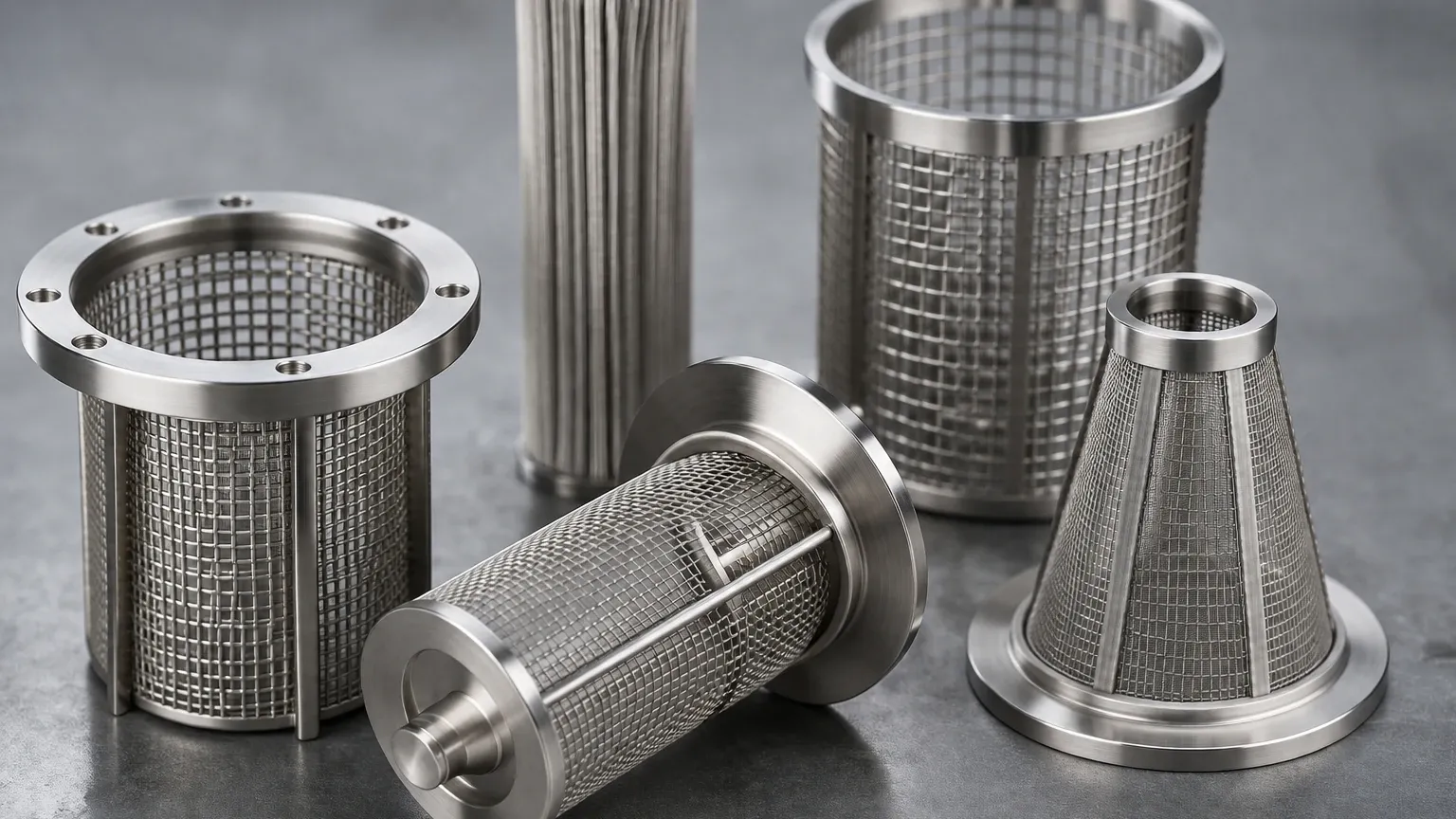
Customization options for Strainers & Baskets include varied handle designs for easy extraction, magnetic inserts for capturing ferrous particles, and multi-layered mesh configurations for graduated filtration. For applications involving fence strainers, the structural frame can be reinforced with additional support ribs or heavier gauge wire to handle extreme hydraulic shocks.
OEM Capabilities
For equipment manufacturers (OEMs), sourcing high-quality filtration components is a matter of brand reputation. A failure in a simple strainer can lead to the catastrophic failure of an expensive pump system. Partnering with a manufacturer that understands the nuances of wire mesh fabrication and precision metalwork allows OEMs to deliver more reliable products to their end-users.
Application Environments and Industry Requirements
The utility of robust straining solutions spans across multiple sectors, each with its own set of regulatory and functional demands.
Chemical and Petrochemical Processing
In these industries, the primary concern is chemical compatibility. Fence strainers used here must be resistant to a wide array of solvents and reagents. They often serve to protect sensitive instrumentation and prevent the clogging of spray nozzles in cooling towers.
Food and Beverage Production
Filtration components in the food industry must adhere to strict sanitary standards. This requires smooth surface finishes (often achieved through electropolishing) to prevent bacterial growth and facilitate easy cleaning. Stainless steel is the material of choice here because it does not leach contaminants into the product stream.
Water Treatment and Desalination
Large-scale water intake systems utilize fence-like strainers to prevent aquatic life and large debris from entering the treatment plant. These strainers must be exceptionally durable to withstand constant exposure to raw water and potential biofouling.
Installation and Maintenance Best Practices
Even the best-engineered strainer will underperform if not installed and maintained correctly. Engineers should consider the following during the implementation phase:
1. Orientation: Ensure the strainer is installed in the correct flow direction. Most baskets are designed for flow from the inside out, allowing debris to be collected within the basket for easy removal.
2. Accessibility: Place the strainer in a location where it can be easily accessed for maintenance. If a strainer is difficult to reach, it is less likely to be cleaned regularly, leading to system inefficiencies.
3. Seal Integrity: High-quality gaskets and seals are necessary to prevent bypass. Any fluid that bypasses the strainer carries contaminants directly to the downstream equipment.
4. Cleaning Protocols: Depending on the application, strainers may be cleaned via backwashing, manual scrubbing, or ultrasonic cleaning. For fence strainers handling heavy debris, manual removal of large solids is typically the first step.
Total Cost of Ownership and Selection Logic
When evaluating filtration options, the initial purchase price is only one part of the equation. The total cost of ownership (TCO) includes the cost of energy (due to pressure drop), the cost of downtime for cleaning, and the lifespan of the component.
Investing in a high-quality, custom-engineered stainless steel strainer often results in a lower TCO compared to cheaper, generic alternatives. A robustly constructed fence strainer reduces the risk of unplanned outages and extends the service life of more expensive downstream components like centrifugal pumps and turbines.
Key Questions for Engineers Before Purchase
Before finalizing a specification for fence strainers or industrial baskets, technical teams should confirm:
- What is the maximum flow rate and operating pressure?
- What is the chemical composition and temperature of the fluid?
- What is the size and nature of the smallest particle that must be captured?
- Are there specific regulatory standards (e.g., FDA, ASME) that must be met?
- What is the expected frequency of cleaning based on the contaminant load?
By addressing these questions, procurement teams can ensure they are selecting a filtration solution that provides the necessary protection without introducing unnecessary bottlenecks into the process.
Conclusion
Fence strainers and industrial baskets are essential components in the modern industrial toolkit. By acting as a reliable barrier against large-scale contamination, they safeguard the efficiency and longevity of complex fluid systems. Whether in chemical processing, food production, or water treatment, the choice of a strainer should be dictated by engineering precision and material quality. Selecting the right partner for custom filtration solutions ensures that these critical components are designed to meet the specific challenges of the application, providing peace of mind and operational stability.
