


Strainer Basket for Kitchen Sink
In the context of commercial food service, industrial food processing, and high-end architectural specifications, the strainer basket for kitchen sink is far more than a simple plumbing accessory. It is a critical filtration component designed to protect drainage systems, maintain hygiene standards, and ensure operational efficiency. For engineers and procurement professionals, selecting the right Strainers & Baskets involves understanding material science, flow dynamics, and the specific rigors of the application environment.
While a standard residential strainer might suffice for light domestic use, industrial-grade kitchen environments require components that can withstand thermal shock, corrosive cleaning agents, and high-volume debris loading. This guide examines the technical considerations essential for selecting and specifying high-performance strainer baskets.
The Engineering Role of Strainer Baskets in Commercial Systems
The primary function of a strainer basket is the mechanical separation of solids from liquid waste. In a commercial or industrial kitchen, this serves several vital purposes:
1. Drainage Protection: Preventing solid waste—such as food scraps, coffee grounds, and packaging debris—from entering the grease trap and the main sewage line. This reduces the frequency of professional pipe cleaning and prevents costly backups.
2. Regulatory Compliance: Many jurisdictions have strict codes regarding the size of particulates allowed into the municipal wastewater system. High-precision strainer baskets help facilities meet these environmental standards.
3. Equipment Longevity: In systems where sink drainage is pumped or processed (such as in large-scale food preparation plants), the strainer acts as a first line of defense for downstream pumps and valves.
For B2B buyers, the challenge lies in identifying a strainer basket for kitchen sink that balances high filtration accuracy with the necessary flow rate to prevent sink flooding during peak usage.
Material Selection: The Superiority of Stainless Steel
In industrial filtration, material integrity is non-negotiable. Most professional-grade strainers are manufactured from stainless steel, but the specific grade of the alloy significantly impacts the component's lifespan.
304 Stainless Steel
Type 304 is the most common grade used in kitchen environments. It offers excellent corrosion resistance to most oxidizing acids and is highly durable. It is suitable for standard commercial kitchens where exposure to highly concentrated salts or industrial-strength acids is limited.
316 Stainless Steel
For environments involving high salinity (such as seafood processing) or exposure to aggressive chemical cleaners, 316 stainless steel is preferred. The addition of molybdenum provides enhanced resistance to pitting and crevice corrosion, ensuring the strainer basket for kitchen sink remains structurally sound for years longer than lower-grade alternatives.
Finish and Hygiene
Beyond the alloy, the surface finish is critical. Electropolished or high-grit brushed finishes reduce surface roughness, which prevents the adhesion of biofilms and bacteria. This is a primary concern in food-safe environments where sanitation is a top priority.
Technical Specifications: Perforation vs. Wire Mesh
When specifying Strainers & Baskets, engineers must choose between different filtration media structures. Each has distinct advantages depending on the nature of the waste being managed.
Perforated Metal Baskets
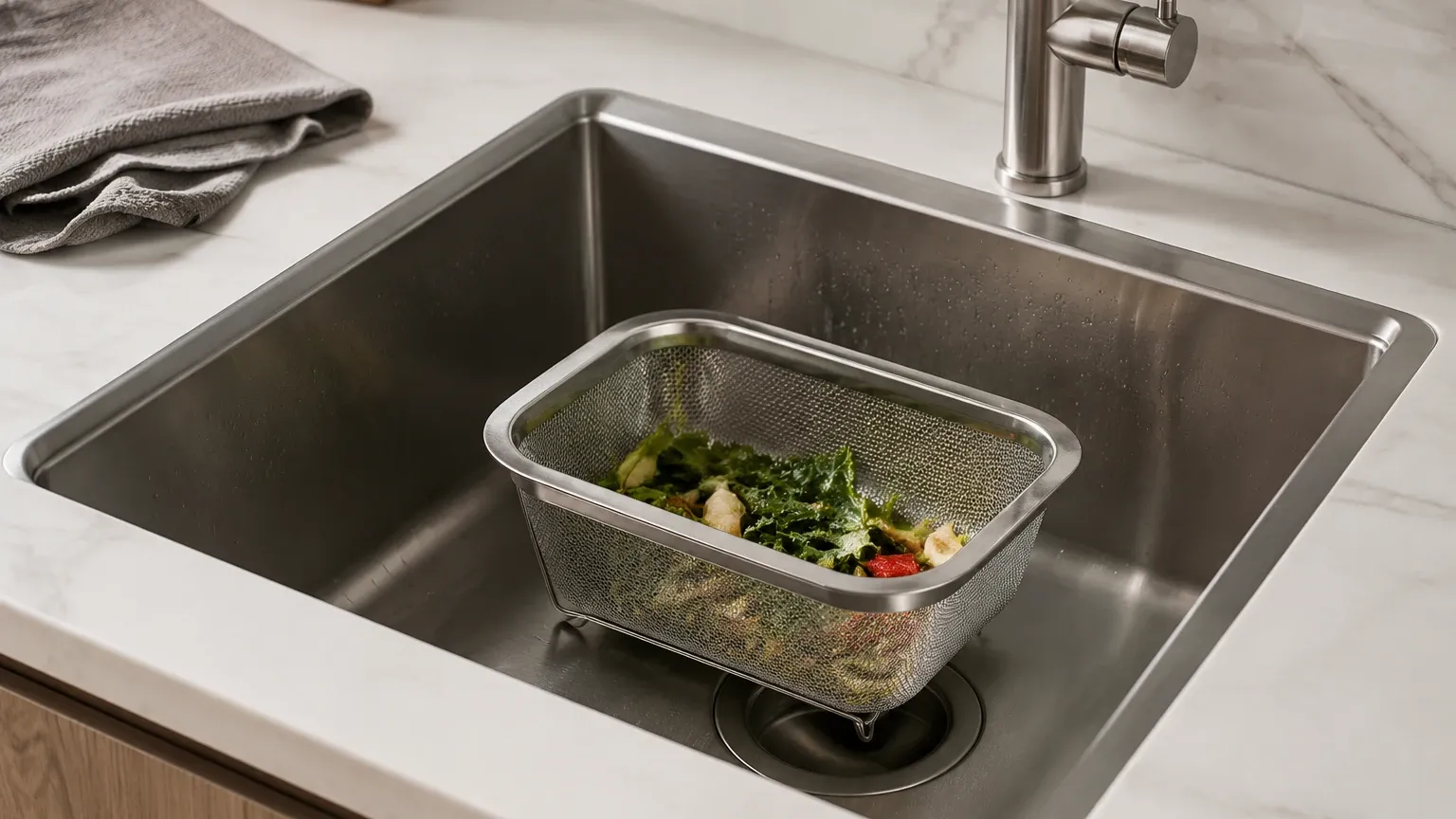
Perforated baskets are created by punching holes into a solid sheet of stainless steel. These are typically more robust and resistant to mechanical deformation. They are ideal for heavy-duty applications where the basket is frequently emptied and may be subjected to rough handling. Common perforation diameters for kitchen applications range from 1.5mm to 3mm, providing a balance between debris retention and rapid drainage.
Wire Mesh Baskets
Wire mesh strainers offer a higher percentage of open area compared to perforated metal, which allows for significantly higher flow rates. They are particularly effective at capturing finer particulates. However, they can be more difficult to clean if the debris becomes entangled in the weave. In high-volume industrial kitchens, a hybrid design—a perforated body with a fine mesh lining—is often used to provide both strength and high-precision filtration.
Design Variations and Fitment Considerations
A strainer basket for kitchen sink must interface perfectly with the sink flange to prevent bypass. Bypass occurs when water and debris flow around the edges of the strainer rather than through the filtration media, rendering the component ineffective.
Deep vs. Shallow Baskets
* Deep Baskets: These are designed for high-volume prep sinks. The increased depth allows for a larger collection capacity, reducing the frequency of emptying. This is essential in busy environments where staff may not have the time to clear the strainer every few minutes.
* Shallow Baskets: Often used in hand-wash sinks or bar sinks where the volume of solid waste is minimal. These prioritize a low profile to avoid interfering with under-sink plumbing or storage.
Sealing Mechanisms
In B2B applications, the sealing mechanism (the "stopper" function) must be reliable. High-quality strainers utilize durable gaskets made from NBR (Nitrile) or EPDM, which resist degradation from fats, oils, and greases (FOG). The mechanical lift-and-turn or spring-loaded mechanisms must be tested for thousands of cycles to ensure they do not fail under the repetitive use typical of commercial operations.
Evaluating Total Cost of Ownership (TCO)
For procurement departments, the initial purchase price of a strainer basket for kitchen sink is often a poor indicator of its true cost. A low-cost, thin-gauge strainer may fail within months due to corrosion or mechanical fatigue, leading to:
* Replacement Costs: The direct cost of purchasing a new unit and the labor to install it.
* Operational Downtime: If a strainer fails and allows a clog to form in the main line, the resulting kitchen shutdown can cost thousands of dollars in lost revenue.
* Maintenance Expenses: Frequent plumbing call-outs to clear drains that should have been protected by a high-quality strainer.
Investing in precision-engineered Strainers & Baskets made from heavy-gauge stainless steel reduces the TCO by extending the replacement cycle and minimizing the risk of drainage failure.
Customization for OEM and Industrial Applications
Many industrial equipment manufacturers (OEMs) require custom filtration solutions that standard off-the-shelf products cannot provide. This is where specialized manufacturing expertise becomes invaluable. Customization options often include:
* Bespoke Dimensions: Non-standard diameters or depths to fit proprietary equipment or specialized industrial sinks.
* Variable Micron Ratings: Specific mesh sizes tailored to capture particular waste products, such as those found in textile processing or chemical laboratories.
* Reinforced Structures: Adding support ribs or thicker flanges to withstand high-pressure washdowns or heavy mechanical loads.
* Integrated Handles: Designing ergonomic handles that allow for easy removal even when the basket is full and heavy, improving workplace safety.
Maintenance and Cleaning Protocols
To maintain the performance of a strainer basket for kitchen sink, a consistent maintenance schedule is required. In a B2B context, this should be integrated into the facility's standard operating procedures (SOPs).
1. Daily Cleaning: Baskets should be emptied and rinsed at the end of every shift. For food-service applications, they should be run through a commercial dishwasher to ensure complete sanitization.
2. Inspection for Damage: Staff should be trained to look for signs of "blinded" mesh (permanent clogging) or cracked welds. A damaged strainer allows debris to bypass the system.
3. Gasket Replacement: Seals should be inspected for brittleness or swelling and replaced periodically to maintain the watertight integrity of the sink.
Conclusion: Selecting the Right Partner for Filtration Solutions
The selection of a strainer basket for kitchen sink is a technical decision that impacts the hygiene, efficiency, and maintenance costs of a facility. By prioritizing high-grade materials, precise engineering specifications, and application-specific designs, B2B buyers can ensure their drainage systems remain protected under the most demanding conditions.
Whether you are an engineer designing a new commercial kitchen or a procurement specialist managing a facility-wide upgrade, focusing on the quality of Strainers & Baskets is an essential step in optimizing industrial filtration performance. Choosing a manufacturer with deep expertise in stainless steel fabrication and custom filtration ensures that the components you install today will continue to perform for years to come.
