


Fine Strainers
In industrial fluid handling, the distinction between coarse filtration and fine straining is critical for the protection of sensitive downstream equipment. Fine strainers serve as a primary line of defense in systems where particulate matter, even in small concentrations, can lead to mechanical wear, valve failure, or product contamination. Unlike standard pipe strainers designed to catch large debris like scale or welding slag, fine strainers are engineered to capture smaller particles, typically ranging from 50 to 500 microns, depending on the specific application requirements.
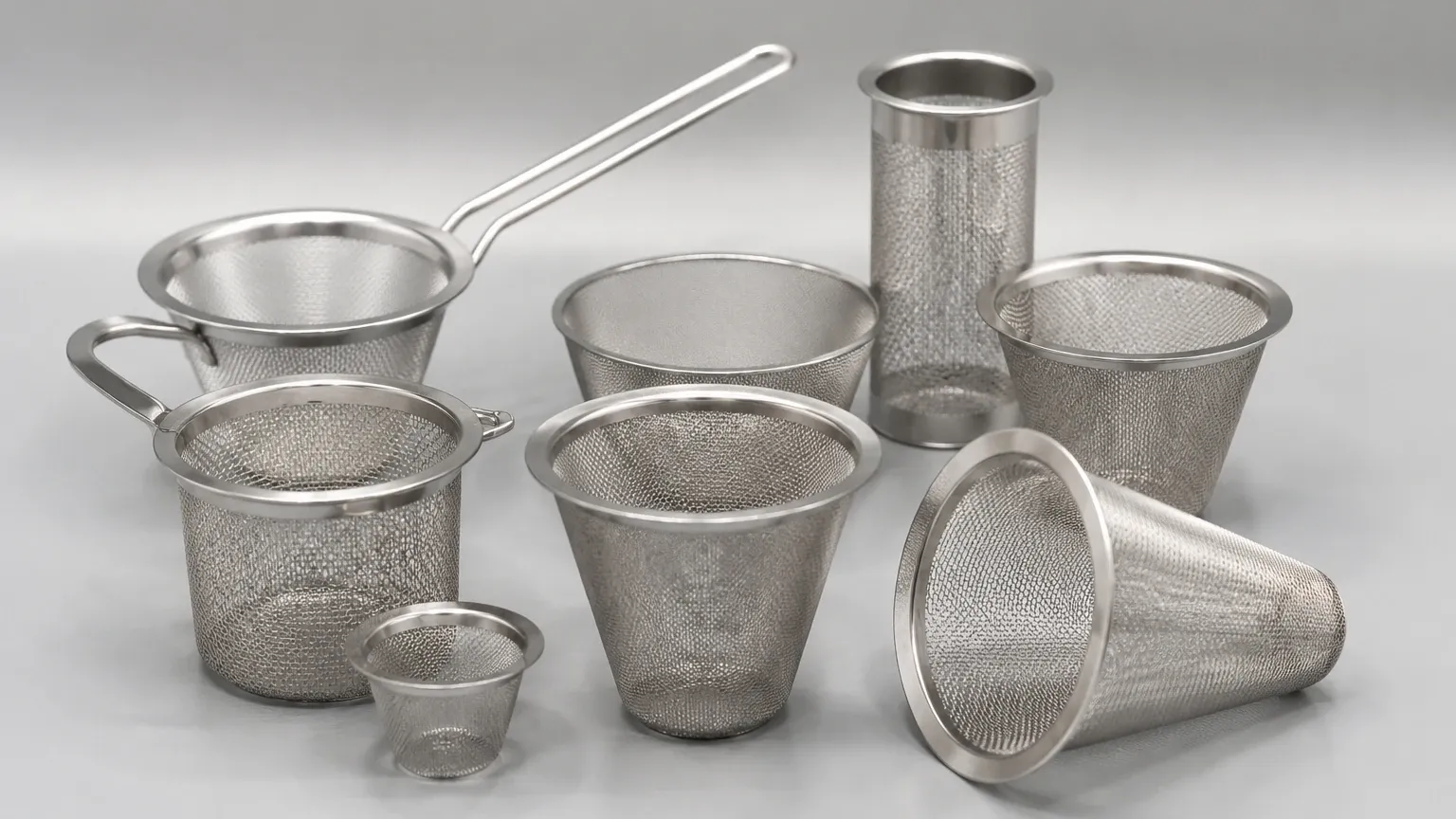
For engineers and procurement teams, selecting the appropriate Strainers & Baskets involves a detailed analysis of flow dynamics, material compatibility, and structural integrity. As industrial processes become more automated and tolerances tighter, the role of high-precision stainless steel filtration components has transitioned from a secondary consideration to a fundamental engineering requirement.
Understanding Fine Strainers in Industrial Filtration
The term "fine strainer" generally refers to a filtration component that utilizes a higher mesh count than standard industrial baskets. While a typical suction strainer might use a perforated plate with 1/8-inch holes, a fine strainer incorporates woven wire mesh or specialized sintered metal to achieve higher retention levels.
In many B2B environments—such as chemical processing, food and beverage production, and hydraulic systems—fine strainers are positioned before pumps, heat exchangers, and spray nozzles. Their primary function is to remove suspended solids that are too small for coarse strainers but large enough to cause operational inefficiencies. Because these components must operate under varying pressures and flow rates, the design must balance filtration fineness with the physical strength required to resist collapsing or bypassing.
Engineering Criteria for Selecting Fine Strainers
When specifying fine strainers for an industrial system, engineers must look beyond simple dimensions. Several technical factors determine the long-term viability and efficiency of the filtration solution.
Micron Rating vs. Mesh Count
One of the most common points of confusion in strainer selection is the relationship between mesh count and micron rating. Mesh count refers to the number of openings per linear inch, while the micron rating defines the size of the particles the mesh can theoretically retain. For fine strainers, the wire diameter significantly impacts the open area. A higher mesh count does not always provide better filtration if the wire diameter is too thin, as this can lead to structural instability. Engineers must confirm whether the micron rating provided is "nominal" (an approximate retention value) or "absolute" (guaranteed retention of a specific particle size).
Effective Filtration Area (EFA)
Fine strainers inherently create more resistance to flow than coarse strainers due to the increased density of the wire mesh. To mitigate excessive pressure drop, manufacturers often use pleated designs or multi-layered mesh configurations to increase the Effective Filtration Area (EFA). A larger EFA allows for lower flow velocity through the mesh, which reduces the risk of particle "breakthrough" and extends the time between cleaning cycles.
Flow Velocity and Particle Retention
Flow velocity is a critical variable in fine straining. High velocities can force deformable particles through the mesh openings or cause impingement erosion on the wire surfaces. For applications involving abrasive particles, reducing the velocity through the strainer basket is essential to prevent premature wear of the stainless steel mesh.
Material Integrity and Chemical Compatibility
The environment in which a fine strainer operates dictates the material selection. Stainless steel is the industry standard due to its mechanical strength and resistance to corrosion. However, the specific grade of stainless steel must be matched to the fluid being processed.
* Grade 304 Stainless Steel: Suitable for general industrial applications, water treatment, and mildly corrosive environments. It offers excellent durability and cost-effectiveness for standard Strainers & Baskets.
* Grade 316/316L Stainless Steel: Required for applications involving chlorides, acids, or high-temperature steam. The addition of molybdenum in 316 stainless steel provides superior resistance to pitting and crevice corrosion, making it the preferred choice for the pharmaceutical and chemical industries.
* Surface Finishes: In the food and beverage or pharmaceutical sectors, the surface finish of the strainer is as important as the mesh size. Electropolished surfaces reduce the risk of bacterial growth and make the cleaning process more effective by removing microscopic burrs and pits where contaminants can lodge.
Structural Design of Strainers & Baskets
A fine mesh on its own is often too fragile to withstand the differential pressure (Delta P) found in industrial pipelines. Therefore, the structural design of the strainer basket is paramount.
Support Structures
Fine strainers typically utilize a multi-layer construction. A fine inner mesh provides the filtration accuracy, while a heavier perforated metal cylinder or a coarse outer mesh provides the structural support. This "sandwich" construction ensures that the fine mesh does not distort or tear under the force of the fluid flow. In high-pressure applications, sintered mesh—where multiple layers are thermally bonded—offers the highest level of structural integrity.
Sealing Mechanisms
Bypass is the failure of a strainer to capture particles because the fluid flows around the filtration media rather than through it. In fine straining, even a small gap can render the filtration process useless. High-quality fine strainers utilize precision-machined flanges, O-rings, or specialized gaskets to ensure a positive seal within the housing. Engineers should specify the seal material (such as EPDM, Viton, or PTFE) based on the temperature and chemical nature of the process fluid.
Managing Pressure Drop and Flow Efficiency
Pressure drop is the difference in pressure between the inlet and outlet of the strainer. For fine strainers, monitoring this value is the most effective way to manage maintenance.
1. Initial Clean Pressure Drop: This is the resistance inherent in the strainer when it is first installed. It should ideally be kept below 2-3 PSI to allow for sufficient "dirt-holding capacity" before cleaning is required.
2. Terminal Pressure Drop: This is the point at which the strainer is considered clogged and must be cleaned or replaced. Operating beyond the recommended terminal pressure drop can result in mesh deformation or, in extreme cases, the total collapse of the basket.
By utilizing differential pressure gauges, maintenance teams can transition from scheduled maintenance to condition-based maintenance, ensuring that the fine strainers are cleaned only when necessary, thereby reducing downtime and labor costs.
Common Risks in Fine Strainer Applications
Implementing fine strainers involves navigating several technical risks that can impact system performance if not addressed during the design phase.
Mesh Blinding
Blinding occurs when particles that are roughly the same size as the mesh openings become wedged in the screen, effectively sealing it off. This is particularly common with fibrous or gelatinous materials. Selecting a different weave pattern, such as a dutch weave or a twilled weave, can sometimes alleviate blinding by changing the geometry of the pore.
Fatigue and Pressure Surges
In systems with frequent pump starts and stops, fine strainers are subjected to hydraulic shock or pressure surges. Over time, these surges can cause metal fatigue in the wire mesh, leading to cracks or broken wires. Custom-engineered strainers with reinforced longitudinal seams and heavy-duty support cages are necessary for these demanding environments.
Viscosity Considerations
As the viscosity of a fluid increases, the pressure drop across a fine strainer increases exponentially. Applications involving heavy oils, resins, or syrups require significantly larger strainer housings and baskets to maintain an acceptable flow rate. Engineers must provide accurate viscosity data at operating temperatures to ensure the strainer is correctly sized.
Customization and OEM Integration
Standard off-the-shelf strainers often fail to meet the specific needs of specialized industrial equipment. Customization is frequently required to optimize performance. This includes tailoring the physical dimensions to fit unique housing geometries, selecting specific mesh-to-perforation ratios, and integrating specialized handles or lift-out lugs for easier maintenance.
For original equipment manufacturers (OEMs), partnering with a manufacturer that understands the nuances of stainless steel fabrication is essential. Custom Strainers & Baskets can be designed to meet specific filtration targets while fitting within the spatial constraints of a larger machine. This collaborative approach ensures that the filtration component is an integrated part of the system's engineering rather than an afterthought.
Maintenance and Replacement Cycles
The longevity of a fine strainer depends on the particulate load and the cleaning protocol. While stainless steel strainers are designed to be cleaned and reused, there is a limit to their service life.
* Cleaning Methods: Depending on the contaminant, cleaning may involve backwashing, ultrasonic cleaning, or chemical soaking. It is vital to use cleaning agents that are compatible with the specific grade of stainless steel to avoid stress corrosion cracking.
* Inspection: During cleaning, baskets should be inspected for signs of wire thinning, broken welds, or distorted mesh. Even a single broken wire in a fine mesh screen can allow large particles to pass through, potentially damaging expensive downstream components.
* Total Cost of Ownership (TCO): When evaluating fine strainers, purchasing teams should consider the TCO, which includes the initial cost, the ease of cleaning, the durability of the mesh, and the potential cost of downstream equipment failure if the strainer fails. A higher-quality stainless steel basket often provides a lower TCO over several years compared to cheaper, less durable alternatives.
Conclusion
Fine strainers are indispensable components in modern industrial processes, providing the precision needed to maintain system fluid purity and protect mechanical assets. By focusing on material quality, structural design, and accurate sizing, engineers can ensure that their Strainers & Baskets deliver reliable performance even in the most demanding environments. Whether for chemical processing, hydraulic systems, or food production, the selection of a fine strainer should be guided by technical data and a clear understanding of the specific application's filtration requirements.
