


Guidi Strainers
In the landscape of industrial fluid management and marine engineering, the protection of downstream equipment from particulate matter is a critical operational requirement. Guidi strainers have established a significant presence in these sectors, particularly known for their application in raw water intake systems, cooling circuits, and industrial fluid processing. As a specialized manufacturer of high-performance filtration components, Kaifil provides the technical insight necessary to evaluate these components, ensuring that engineers and procurement teams select the most durable and efficient Strainers & Baskets for their specific applications.
Understanding the nuances of strainer design—from material compatibility to flow dynamics—is essential for maintaining system integrity. This guide explores the technical specifications, application environments, and engineering considerations surrounding Guidi-style strainers and their industrial counterparts.
Understanding the Role of Guidi Strainers in Industrial and Marine Systems
Guidi strainers are primarily designed to serve as the first line of defense in fluid systems. Their primary function is to intercept solid debris—such as seaweed, scale, sediment, and biological growth—before it can reach sensitive components like heat exchangers, pumps, and valves. In marine environments, these strainers are ubiquitous in engine cooling systems, where the failure to filter intake water can lead to rapid overheating and catastrophic engine failure.
In industrial contexts, the utility of these strainers extends to HVAC systems, chemical processing lines, and water treatment facilities. The design typically features a robust body with an internal basket that can be easily accessed for cleaning. Unlike disposable filters, these units are engineered for long-term service, relying on the structural integrity of the metal housing and the precision of the internal mesh to maintain performance over thousands of operating hours.
For engineers, the selection process involves more than just matching pipe sizes. It requires a deep dive into the fluid's viscosity, the expected debris load, and the allowable pressure drop across the filtration interface. As industrial systems become more complex, the demand for customized filtration solutions that can withstand corrosive environments or high-pressure cycles has led to a greater emphasis on material science and precision manufacturing.
Engineering Specifications: Materials, Mesh, and Flow Dynamics
The performance of any strainer is dictated by its construction materials and internal geometry. Traditional Guidi strainers often utilize high-quality bronze (such as CC491K or nickel-plated bronze) for the body, providing excellent resistance to galvanic corrosion in seawater applications. However, in modern industrial B2B applications, the choice of material must align with the chemical profile of the process fluid.
Material Selection
1. Bronze and Brass: Ideal for marine and general water applications. Bronze offers superior resistance to dezincification and biofouling.
2. Stainless Steel (304/316L): Preferred in chemical, pharmaceutical, and food processing industries. Stainless steel provides the necessary hygiene standards and resistance to aggressive chemical agents.
3. Polycarbonate Covers: Many Guidi-style strainers feature transparent covers, allowing for visual inspection of the basket without de-pressurizing the system. Engineers must ensure these covers are rated for the system's maximum operating pressure and temperature.
Mesh and Micron Ratings
The internal basket is the heart of the strainer. The filtration accuracy is determined by the mesh size or perforation diameter. For coarse filtration, a perforated plate with 1mm to 5mm holes may suffice. For finer applications, a stainless steel wire mesh liner is integrated into the basket. When specifying Strainers & Baskets, it is crucial to calculate the "Open Area Ratio." A higher ratio ensures lower initial pressure drop and longer intervals between cleaning cycles.
Evaluating Filtration Efficiency: Pressure Drop and Debris Retention
One of the most common challenges engineers face is balancing filtration fineness with flow efficiency. Every strainer introduces a degree of resistance to the flow, known as pressure drop (ΔP). A Guidi strainer that is improperly sized will cause an excessive pressure drop, forcing pumps to work harder and potentially leading to cavitation.
The Importance of the Clean Pressure Drop
Before installation, technical teams should consult flow coefficient (Cv or Kv) charts. These values indicate the flow rate at which a 1 psi (or 1 bar) pressure drop occurs. A well-engineered strainer body will have a smooth internal geometry to minimize turbulence. At Kaifil, we emphasize the importance of precision-fit baskets that prevent "bypass"—a condition where fluid flows around the edges of the basket rather than through the mesh.
Debris Retention Capacity
The volume of the basket determines how much contaminant the system can hold before the pressure drop becomes critical. In high-load environments, such as open-loop cooling towers or river water intake, a larger basket volume is required to reduce maintenance frequency. Engineers should confirm the "dirt holding capacity" based on the expected particulate concentration in their specific process.
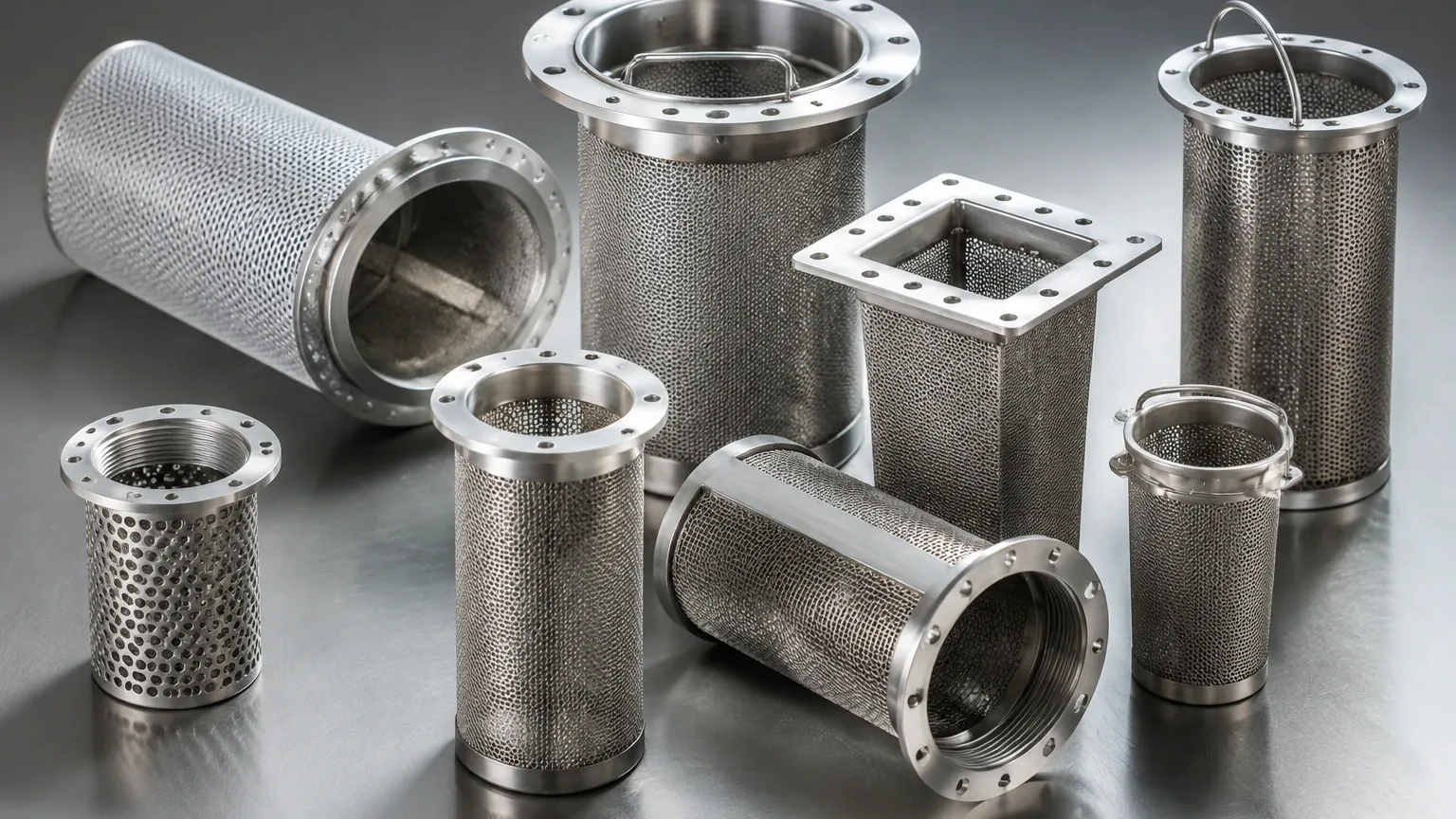
Customization Options for Strainers & Baskets
While standard off-the-shelf Guidi strainers meet many general needs, industrial applications often require bespoke modifications. Customization allows for the optimization of the strainer to meet unique spatial constraints or extreme operating conditions.
Tailored Mesh Configurations
In many cases, a standard 500-micron basket may not be sufficient. Custom manufacturers like Kaifil can produce multi-layered baskets that combine a heavy-duty perforated support with a fine Dutch weave wire mesh. This provides both structural strength and high-precision filtration (down to 10-20 microns if necessary).
Connection Types and Porting
Standard Guidi strainers typically feature BSP or NPT threaded ports. However, for high-pressure industrial lines, flanged connections (ANSI, DIN, or JIS) are often required for a more secure and leak-proof seal. Customizing the port orientation—such as offset inlets or specialized drain ports—can also simplify installation in cramped machinery rooms.
Coating and Surface Treatments
For highly corrosive chemical environments, the internal and external surfaces of the strainer can be treated. Options include electro-polishing for pharmaceutical applications or specialized epoxy coatings for aggressive wastewater treatment. These treatments extend the service life of the component and reduce the total cost of ownership.
Installation and Maintenance Best Practices for Longevity
The reliability of Guidi strainers is heavily dependent on correct installation and a rigorous maintenance schedule. Failure to adhere to these practices often results in seal failure, reduced flow, or downstream contamination.
Installation Considerations
* Orientation: Most basket-style strainers must be installed horizontally to ensure the basket remains seated and debris is trapped effectively.
* Accessibility: Ensure there is sufficient clearance above the strainer to remove the basket. In many marine installations, space is at a premium, making low-profile or side-entry designs more favorable.
* Isolation Valves: Installing isolation valves upstream and downstream of the strainer allows for maintenance without draining the entire system.
Maintenance Protocols
Regular inspection of the O-rings and seals is vital. In Guidi strainers, the seal between the cover and the body is a common point of air ingress in suction lines. Using compatible lubricants (such as silicone-based grease) can prevent the seal from drying out or cracking.
When cleaning the basket, it is important to avoid abrasive tools that could damage the wire mesh. A high-pressure water rinse or ultrasonic cleaning is recommended for stainless steel mesh to ensure all trapped particles are removed from the weave. If the mesh shows signs of fraying or the perforated support is deformed, the basket must be replaced immediately to prevent bypass.
Selecting the Right Filtration Solution for Demanding Environments
Choosing between a standard Guidi strainer and a custom-engineered industrial basket strainer depends on the criticality of the application. For standard marine use, the reliability of the Guidi brand is well-proven. However, when the application involves high temperatures, extreme pressures, or specific regulatory requirements (such as FDA compliance for food processing), a more specialized approach is necessary.
Engineers should confirm the following data points before finalizing a purchase:
1. Maximum Operating Pressure (MAWP): Does the strainer housing meet the safety factors required by local engineering codes?
2. Fluid Compatibility: Are the housing, basket, and seals compatible with the process fluid at peak temperatures?
3. Filtration Goal: Is the objective to protect a pump (coarse) or to ensure product purity (fine)?
4. Maintenance Access: Is the system design conducive to frequent cleaning, or is a duplex strainer (which allows for cleaning without stopping the flow) a better investment?
By focusing on these technical parameters, procurement teams can move beyond brand names and select filtration components based on empirical performance data. Whether you are replacing a single component or designing a new fluid processing line, the quality of your Strainers & Baskets remains a fundamental factor in system uptime and equipment longevity.
Kaifil continues to support the global industrial market by providing precision-manufactured stainless steel filtration solutions that bridge the gap between standard marine hardware and high-spec industrial requirements. Our expertise in wire mesh and metal fabrication ensures that every strainer basket we produce meets the exacting standards of modern engineering.
