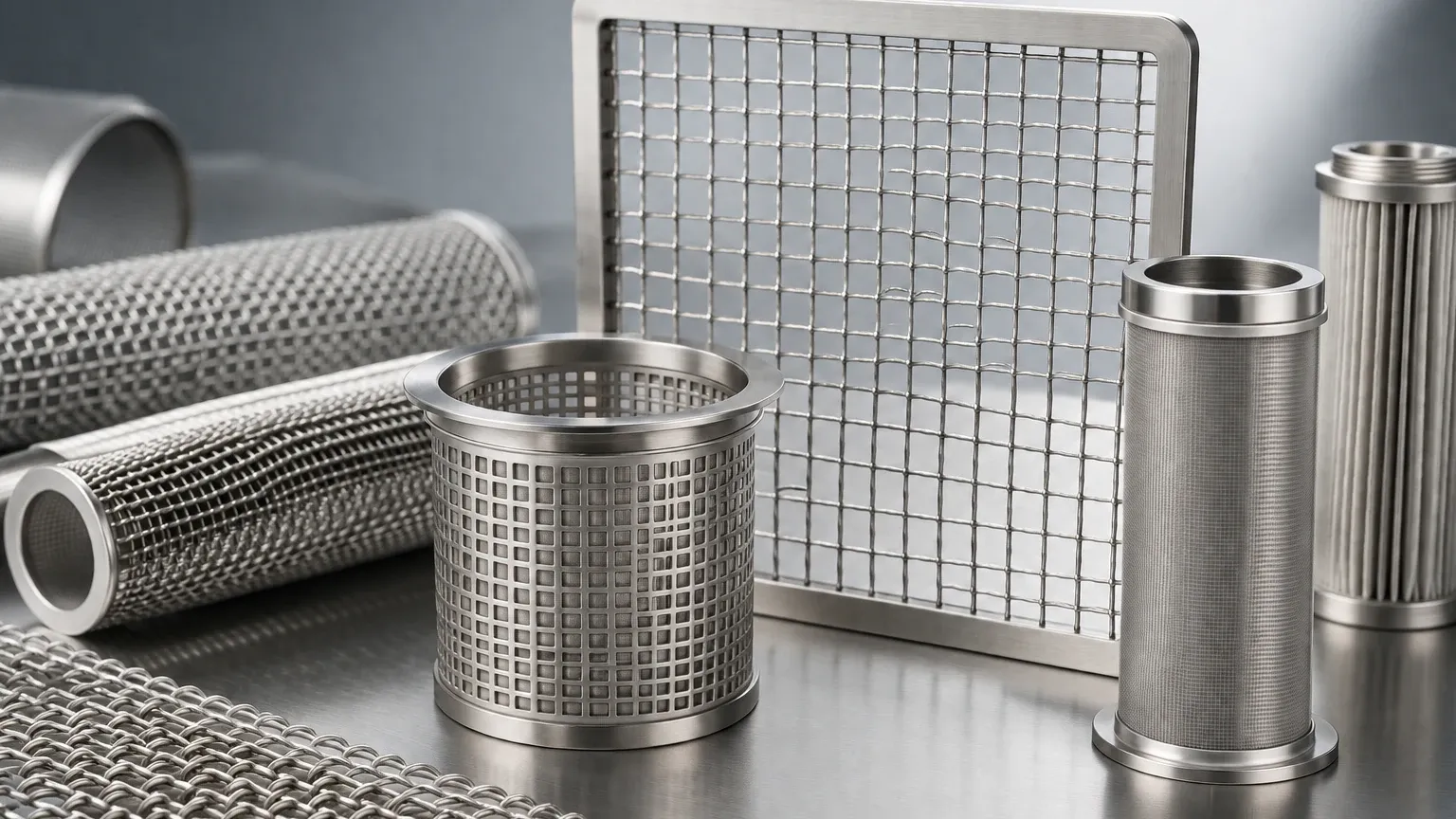
Strainer Grid
In the landscape of industrial fluid management, the efficiency of a filtration system is often determined by the components that remain out of sight. The strainer grid is one such critical element. Serving as the structural backbone for many filtration assemblies, the strainer grid ensures that filter media can withstand high-pressure differentials while maintaining the necessary flow characteristics. For engineers and procurement specialists, understanding the nuances of grid design, material properties, and hydraulic impact is essential for optimizing the performance of Strainers & Baskets.
The Functional Role of the Strainer Grid
A strainer grid is essentially a perforated or mesh-based support structure designed to hold filter media in place or to act as a primary coarse filter itself. In high-flow industrial applications, the mechanical stress exerted on a filter can be immense. Without a robust strainer grid, fine wire mesh or filter cloth would likely collapse or deform under the weight of accumulated debris and the force of the fluid stream.
Beyond structural support, the strainer grid plays a vital role in flow distribution. A well-engineered grid ensures that the fluid is distributed evenly across the entire surface area of the filter media. This prevents "channeling," where fluid forces its way through a small section of the filter, leading to premature wear and localized bypass of contaminants. By maintaining a uniform flow profile, the strainer grid extends the service life of the internal components and improves overall filtration efficiency.
Engineering Considerations: Materials and Metallurgy
Material selection is the most critical decision in the specification of a strainer grid. Because these components are often exposed to corrosive chemicals, high temperatures, and abrasive particulates, the choice of alloy must align with the specific demands of the operating environment.
Stainless Steel 304 and 316L
Stainless steel is the industry standard for most industrial strainer grids. Grade 304 offers excellent durability and corrosion resistance for general water treatment and hydraulic applications. However, in environments involving chlorides or acidic solutions—common in chemical processing and pharmaceutical manufacturing—Grade 316L is preferred. The addition of molybdenum in 316L provides superior resistance to pitting and crevice corrosion, ensuring the structural integrity of the strainer grid over long-term exposure.
Specialized Alloys
For extreme environments, such as those found in petrochemical refining or seawater desalination, specialized alloys like Duplex stainless steel or Hastelloy may be required. These materials offer higher tensile strength and exceptional resistance to stress corrosion cracking, which is vital when the strainer grid must support heavy loads in highly aggressive media.
Structural Design and Perforation Patterns
The geometry of a strainer grid significantly influences both its strength and its hydraulic resistance. Engineers must balance the "Open Area Ratio" (OAR) with mechanical rigidity. A higher OAR reduces pressure drop but can weaken the grid, while a lower OAR provides more support but may restrict flow.
Perforation Shapes
* Round Holes: The most common configuration, providing a good balance between strength and open area. Staggered hole patterns are typically used to maximize the number of openings without compromising the "bridge" (the material between holes).
* Square Holes: These offer a higher open area than round holes but may have lower structural resistance to high-pressure surges.
* Slotted Openings: Often used for viscous fluids or applications where elongated particles must be oriented in a specific way to be captured.
Calculating Open Area
For a staggered round-hole pattern, the open area percentage is calculated using the formula:
`Percent Open Area = (D² × 90.69) / C²`
Where `D` is the hole diameter and `C` is the center-to-center spacing. Maintaining an OAR that is significantly higher than the inlet pipe's cross-sectional area is a standard engineering practice to minimize initial pressure drop across the Strainers & Baskets.
The Relationship Between Grids and Filter Media
In many precision filtration systems, the strainer grid does not work alone. It acts as the "support cage" for a finer secondary layer, such as a multi-layer sintered wire mesh or a high-performance filter cloth.
When designing these composite structures, the grid's surface finish must be considered. Any burrs or sharp edges on the strainer grid can puncture or abrade the fine mesh during pressure pulsations. Precision manufacturing techniques, such as electrolytic polishing or specialized deburring, are employed to ensure the grid surface is smooth. Furthermore, the alignment between the grid openings and the mesh pores must be optimized to prevent "blinding," where the grid structure itself blocks a significant portion of the active filtration area.
Hydraulic Performance and Pressure Drop
One of the primary concerns for engineers is the "clean pressure drop" ($ΔP$) across the filtration unit. Every strainer grid introduces some level of resistance to the flow. If the grid is poorly designed, it can create turbulence and eddy currents, leading to energy loss and potential cavitation in downstream pumps.
To mitigate these risks, the transition zones where the fluid enters and exits the strainer grid must be carefully engineered. In high-velocity systems, a tapered or contoured grid design can help transition the fluid more smoothly. Monitoring the differential pressure across the grid is the standard method for determining when the assembly requires cleaning. A sudden increase in $ΔP$ usually indicates that the strainer grid or its supported mesh is becoming clogged with debris.
Customization and OEM Requirements
Industrial applications rarely follow a one-size-fits-all approach. Customization of the strainer grid is often necessary to accommodate unique housing dimensions, specific flow rates, or unusual contaminant profiles.
OEM (Original Equipment Manufacturer) solutions allow for the integration of specific features such as:
* Reinforced Seams: Using TIG or plasma welding to ensure the grid can handle extreme pressure shocks.
* Custom Flanging: Ensuring a bypass-free seal within the strainer housing.
* Variable Micron Ratings: Designing the grid to act as a multi-stage filter, with different perforation sizes in different zones of the basket.
When sourcing these components, it is essential to work with a manufacturer that understands the interplay between mechanical engineering and fluid dynamics. Precise tolerances in the outer diameter of the strainer grid are necessary to ensure a snug fit within the housing, preventing unfiltered fluid from bypassing the element.
Maintenance, Cleaning, and Replacement Cycles
The durability of a stainless steel strainer grid makes it a cost-effective long-term investment, but it is not maintenance-free. Over time, particles can become wedged in the grid openings—a phenomenon known as "peening" or "plugging."
Cleaning Protocols
* Mechanical Cleaning: Brushing or high-pressure water jets can remove surface debris.
* Chemical Cleaning: For scales or organic buildup, soaking the grid in compatible cleaning agents can restore the open area.
* Ultrasonic Cleaning: The most effective method for removing fine particulates lodged deep within the grid or the supported mesh.
Replacement Indicators
While the grid itself may last for years, it should be inspected regularly for signs of fatigue. Stress cracks near the welds, thinning of the material due to erosion, or permanent deformation (bowing) are clear indicators that the strainer grid has reached the end of its safe operational life. Replacing a compromised grid before it fails is critical to preventing catastrophic downstream damage to pumps, valves, and instrumentation.
Industry-Specific Applications
* Chemical Processing: Grids must be made of high-grade alloys to resist aggressive solvents and maintain structural integrity at elevated temperatures.
* Food and Beverage: The strainer grid must meet stringent sanitary standards. This involves using 316L stainless steel and ensuring all welds are ground smooth to eliminate "dead zones" where bacteria could proliferate.
* Water Treatment: In large-scale desalination or municipal plants, the strainer grid must handle high volumes of water while resisting the corrosive effects of salt and chlorine.
* Hydraulic Systems: Grids in hydraulic return lines must be able to withstand rapid pressure fluctuations and protect sensitive servo-valves from metal shavings and other wear particles.
Conclusion: Selecting the Right Component
The strainer grid is more than just a piece of perforated metal; it is a precision-engineered component that dictates the reliability and efficiency of industrial filtration. By focusing on material quality, structural design, and hydraulic compatibility, engineers can ensure their systems operate with minimal downtime and maximum protection.
When evaluating options for your facility, it is important to review the specific performance data and customization capabilities of your supplier. For detailed specifications on high-quality internal components and complete filtration assemblies, you can Review product options and application support to find a solution tailored to your operational requirements. Choosing a partner with technical expertise in stainless steel fabrication ensures that your strainer grid will perform reliably under the most demanding industrial conditions.