


Strainers Hvac
In large-scale commercial and industrial HVAC systems, the integrity of the hydronic loop is paramount to maintaining operational efficiency and equipment longevity. HVAC systems, whether utilizing chilled water, hot water, or steam, are susceptible to internal contamination from weld slag, pipe scale, rust, and environmental debris. The primary defense against these contaminants is the strategic integration of strainers. Understanding the technical nuances of strainers hvac applications is essential for engineers and facility managers tasked with protecting high-value components such as chillers, boilers, pumps, and heat exchangers.
Industrial filtration components, specifically Strainers & Baskets, serve as the mechanical barrier that removes solid particles from the flowing medium. Without effective straining, these solids can cause erosion of pump impellers, clog the narrow passages of plate heat exchangers, and lead to premature seal failure. This guide examines the engineering considerations, material requirements, and performance metrics necessary for selecting the correct filtration solutions for modern HVAC infrastructure.
The Critical Role of Strainers in HVAC Hydronic Loops
HVAC systems are generally divided into closed-loop and open-loop configurations, each presenting unique challenges for filtration. In closed-loop systems, such as chilled water or heating water circuits, the initial debris often consists of construction remnants. However, over time, internal corrosion can produce magnetite and other metallic scales that circulate through the system.
Open-loop systems, most notably cooling tower condenser water circuits, are exposed to the atmosphere. This introduces environmental contaminants like sand, organic matter, and biological growth. In these environments, the strainer must handle a significantly higher particulate load. The primary function of the strainer is to ensure that the fluid reaching sensitive equipment meets the manufacturer's cleanliness specifications. For instance, modern high-efficiency chillers often feature enhanced tubing with internal rifling; even small particles can settle in these grooves, reducing heat transfer efficiency and increasing the risk of localized pitting corrosion.
Comparing Y-Strainers and Basket Strainers for HVAC Applications
The two most common configurations used in HVAC systems are Y-strainers and basket strainers. Each has a specific set of performance characteristics that dictate its placement within the system.
Y-Strainers
Y-strainers are characterized by their compact, "Y" shaped design. They are typically used in applications where the amount of debris to be removed is relatively small. Their primary advantage is versatility in installation; they can be installed in either horizontal or vertical piping runs (provided the "leg" of the Y points downward to collect debris). In HVAC systems, Y-strainers are frequently found at the inlet of pumps and control valves. Because they have a smaller holding capacity than basket strainers, they are best suited for closed-loop systems where the fluid is relatively clean after the initial commissioning phase.
Basket Strainers
Basket strainers feature a larger, vertical chamber that houses a removable basket-shaped filtering element. These are designed for applications with higher debris loading. Because the basket can hold a significant volume of material before the pressure drop becomes critical, they are the preferred choice for cooling tower loops and large-diameter suction lines. Basket strainers are generally restricted to horizontal piping installations. A key engineering advantage of the basket design is the higher "Open Area Ratio" (OAR), which allows for longer intervals between cleaning cycles and lower initial pressure drops.
Engineering Specifications: Mesh Size and Open Area Ratio
Selecting a strainer based solely on pipe size is a common engineering oversight. The two most critical technical specifications are the filtration rating (mesh or hole size) and the Open Area Ratio.
Filtration Accuracy
The filtration rating must be balanced between protecting the equipment and minimizing pressure drop. If the mesh is too coarse, harmful particles pass through; if it is too fine, the strainer will clog rapidly, leading to increased maintenance and potential pump cavitation. In most HVAC water systems, a 20-mesh or 40-mesh stainless steel screen is standard for general protection. For more sensitive components like fine-nozzle humidifiers or high-precision heat exchangers, finer mesh inserts may be required.
Open Area Ratio (OAR)
The OAR is the ratio of the total area of the holes in the strainer element to the cross-sectional area of the inlet pipe. A high-quality industrial strainer should provide an OAR of at least 4:1 or higher. A higher ratio ensures that as the screen begins to capture debris, there is still enough unobstructed area to maintain flow without a significant increase in differential pressure (ΔP). This is vital for maintaining the energy efficiency of the system, as the pump does not have to work harder to overcome the resistance of a partially clogged strainer.
Material Selection: The Case for Stainless Steel
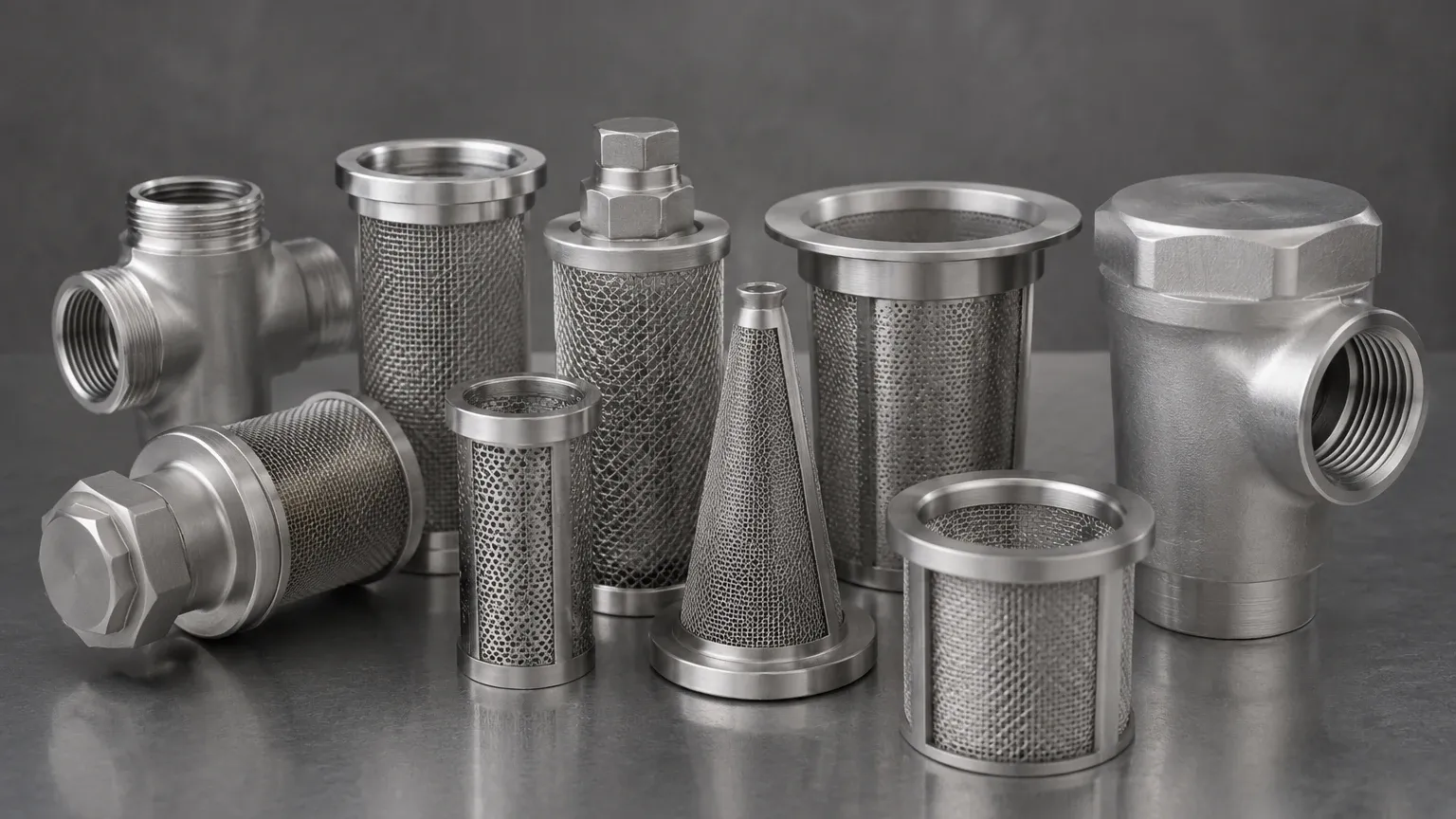
While the bodies of large HVAC strainers are often made of cast iron or ductile iron to manage costs, the internal filtration element—the screen or basket—must be constructed from high-grade materials. Stainless steel is the industry standard for these components due to several factors:
1. Corrosion Resistance: HVAC fluids often contain chemical inhibitors or glycol. Stainless steel (typically Grade 304 or 316) resists corrosion from these additives and the oxygen levels found in open-loop systems.
2. Structural Integrity: Under high-flow conditions, debris can strike the strainer screen with significant force. Stainless steel provides the mechanical strength to resist buckling or tearing.
3. Temperature Stability: HVAC systems can range from chilled water at 4°C (40°F) to low-pressure steam or hot water exceeding 100°C (212°F). Stainless steel maintains its properties across this entire spectrum.
4. Cleanability: Stainless steel mesh can be thoroughly cleaned and reused multiple times without degrading the filtration accuracy.
For specialized applications involving highly corrosive environments or high-salinity cooling water, Grade 316 stainless steel is preferred over Grade 304 due to its increased resistance to pitting and crevice corrosion.
Maintenance, Pressure Drop, and Total Cost of Ownership
The total cost of a strainer is not merely the purchase price; it includes the energy cost associated with pressure drop and the labor cost of maintenance.
Monitoring Differential Pressure
The most effective way to manage strainer maintenance is through differential pressure monitoring. By installing pressure gauges upstream and downstream of the strainer, operators can identify the exact moment the screen requires cleaning. A sudden jump in ΔP indicates a heavy debris load, while a gradual increase suggests normal accumulation. Modern building automation systems (BAS) often use differential pressure transducers to alert maintenance teams when the ΔP exceeds a pre-set limit (typically 5-10 psi over the clean pressure drop).
Blow-down and Cleaning
Many Y-strainers are equipped with a blow-down valve on the strainer cap. This allows for the flushing of loose debris without shutting down the system. However, blow-down is not a substitute for manual cleaning. Periodically, the system must be isolated, and the strainer element removed for inspection and deep cleaning. During this process, the integrity of the gaskets and seals should also be checked to prevent leaks.
Energy Impact
A clogged strainer is an energy drain. As the resistance through the strainer increases, the pump must increase its speed (in VFD-controlled systems) or operate further back on its curve to maintain the required flow rate. This leads to higher kWh consumption. By selecting strainers with optimized internal geometries and high OARs, engineers can significantly reduce the system's lifetime energy footprint.
Customization and OEM Requirements for HVAC Filtration
Standard off-the-shelf strainers do not always meet the requirements of complex industrial HVAC designs. Customization is often necessary when dealing with non-standard pipe sizes, specific pressure ratings (such as Class 300 or higher), or unique space constraints.
Custom manufacturers like Kaifil specialize in engineering filtration components that meet these specific demands. Whether it is a custom-sized wire mesh insert for an existing housing or a precision-engineered basket for a high-flow condenser line, the focus remains on durability and filtration accuracy. For OEM manufacturers of chillers and boilers, having a reliable partner for custom stainless steel filtration components ensures that the protective measures integrated into their equipment are as robust as the equipment itself.
When specifying strainers for HVAC projects, engineers should confirm several factors with their supplier:
* Material Certification: Ensure the stainless steel grade matches the fluid chemistry.
* Pressure Rating: Confirm the housing and element can withstand the maximum system surge pressure.
* Replacement Availability: Verify that replacement baskets or screens are readily available to minimize downtime.
* Customization Capability: Determine if the manufacturer can provide specialized mesh linings or reinforced baskets for high-velocity applications.
By prioritizing technical performance and material quality in the selection of strainers hvac components, engineering teams can ensure the long-term reliability and efficiency of the entire climate control infrastructure. High-performance Strainers & Baskets are not just accessories; they are fundamental safeguards for the heart of the building's mechanical systems.
