


Strainer Juice
In the industrial food and beverage sector, the process of extracting and refining juice requires precision filtration to ensure product consistency, clarity, and safety. The term "strainer juice" refers to the critical stage where raw extracted liquid is passed through mechanical filtration systems to remove unwanted solids such as pulp, seeds, skins, and stems. For engineers and plant managers, selecting the correct Strainers & Baskets is not merely a matter of equipment procurement but a fundamental decision that affects yield, equipment longevity, and final product quality.
Industrial juice processing involves high volumes and varying viscosities. Whether handling citrus, pome fruits, or tropical varieties, the filtration system must manage high flow rates while resisting the corrosive nature of organic acids. This article explores the technical engineering considerations, material requirements, and selection criteria for industrial juice straining solutions.
The Role of Strainers and Baskets in Beverage Production
Straining is typically the first line of defense in a juice production line. After the initial crushing or pressing stage, the resulting liquid contains a high concentration of suspended solids. While some "pulp-style" juices require a specific amount of fiber to remain, most commercial applications require a clear or controlled-texture output.
Strainers and baskets serve two primary functions in this environment:
1. Product Refinement: They define the final texture of the juice. By selecting specific mesh sizes, manufacturers can control the exact amount of particulate matter that remains in the liquid.
2. Downstream Protection: High-speed bottling lines, heat exchangers, and centrifugal separators are sensitive to large particles. If a stray seed or a piece of stem enters a plate heat exchanger, it can cause clogging, localized overheating, and significant downtime. Industrial strainers act as a safeguard for these expensive components.
In high-capacity facilities, the choice of strainer design—ranging from simple perforated baskets to multi-layered wire mesh configurations—directly impacts the efficiency of the entire production cycle.
Engineering Considerations for Juice Filtration
When designing a system for strainer juice applications, engineers must look beyond simple filtration. Several technical variables dictate the performance of the filtration component:
Viscosity and Flow Dynamics
Juice viscosity varies significantly depending on the fruit type and temperature. Cold-pressed juices are often more viscous than those processed under heat. The strainer must be sized to handle the peak flow rate without creating an excessive pressure drop (delta P). A high pressure drop can lead to "pulp blinding," where the solids are forced so tightly against the mesh that they seal the openings, halting production.
Acidity and Corrosion Resistance
Fruit juices are naturally acidic, with pH levels often ranging between 2.0 and 4.5. This acidity can lead to pitting corrosion in lower-grade metals. Industrial juice strainers are almost exclusively manufactured from high-grade stainless steel (SS304 or SS316L). SS316L is generally preferred for its superior resistance to chlorides and organic acids, ensuring that no metallic off-flavors are introduced into the product and that the equipment does not degrade over time.
Solids Loading
The ratio of solids to liquid in the raw extract determines how quickly a strainer basket will fill. For high-solids applications, larger basket volumes or duplex strainer systems are necessary to maintain continuous operation without frequent manual intervention.
Comparing Basket Strainer Designs for Juice Applications
Not all strainers are created equal. The mechanical housing and the internal basket design must be matched to the specific operational workflow of the plant.
Simplex Strainers
Simplex strainers are suitable for batch processing where the line can be shut down periodically to clean the basket. In juice production, these are often used in smaller-scale operations or at stages where the solids loading is minimal, such as final polishing before packaging.
Duplex Strainers
For continuous 24/7 production lines, duplex strainers are the industry standard. These systems consist of two separate strainer chambers connected by a diverted valve. When one basket becomes full, the flow is diverted to the second chamber, allowing the operator to clean the first basket without stopping the production flow. This is essential for maintaining the "strainer juice" throughput required in high-volume beverage manufacturing.
Custom Basket Configurations
At the heart of every strainer is the basket. For juice applications, baskets are often custom-engineered. A common configuration involves a perforated metal support basket lined with a fine stainless steel wire mesh. This "dual-layer" approach provides the structural strength needed to withstand high pressures while achieving the fine filtration required for juice clarity.
Material Integrity and Food-Grade Standards
In the B2B food processing environment, compliance with regulatory standards (such as FDA or EHEDG) is non-negotiable. The construction of strainers and baskets must prioritize hygiene and cleanability.
Surface Finish
The internal surfaces of the strainer and the mesh itself must be smooth to prevent bacterial growth. Electropolishing is a common treatment for stainless steel juice strainers. This process removes microscopic peaks and valleys in the metal, creating a mirror-like finish that is easier to sanitize and less prone to organic buildup.
Gasket and Seal Compatibility
While the metal components are critical, the seals within the strainer housing must also be food-grade. EPDM, Viton, or PTFE seals are typically used, depending on the cleaning chemicals (CIP) employed by the facility. These materials must resist the sugars and acids found in juice as well as the caustic or acidic cleaners used during sanitation cycles.
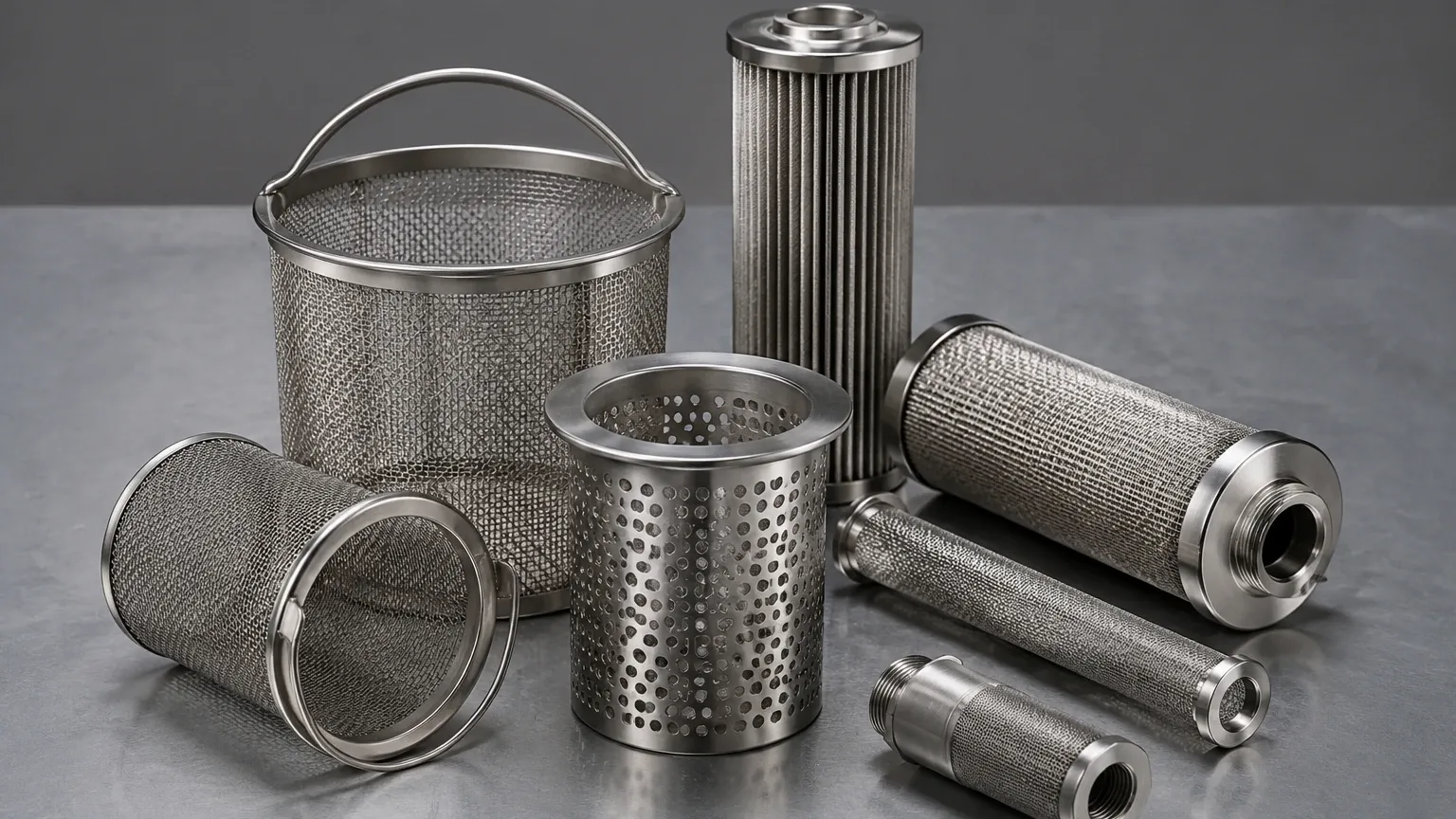
Optimizing Filtration Efficiency: Mesh and Micron Selection
One of the most common questions engineers face is determining the correct mesh size for their juice product. The goal is to achieve the desired "strainer juice" quality without over-filtering, which can remove essential flavor compounds or colors.
* Coarse Straining (20 to 60 Mesh): Used for removing large seeds, skins, and heavy pulp. This is common in the early stages of citrus processing.
* Medium Straining (80 to 150 Mesh): Often used for vegetable juices or cloudy fruit juices where a smooth mouthfeel is required but some microscopic solids are acceptable.
* Fine Filtration (200+ Mesh / Micron Ratings): Used for clarified juices or as a final safety filter before bottling. This level of filtration ensures that the juice is visually clear and free of any sediment that might settle in the bottle over time.
Engineers must balance the "Open Area Ratio" (OAR). The OAR is the ratio of the total area of the holes to the total area of the basket. A higher OAR results in a lower pressure drop and longer run times between cleanings. Custom-manufactured baskets allow for the optimization of this ratio based on the specific particulate profile of the juice being processed.
Maintenance, Cleaning, and Operational Longevity
In a juice plant, downtime is costly. The maintenance cycle of strainers and baskets is a key component of the total cost of ownership.
Clean-in-Place (CIP) Integration
Modern industrial strainers are designed to be compatible with CIP systems. This allows the internal components to be cleaned with high-temperature water and chemical agents without disassembling the entire housing. However, the baskets themselves must be robust enough to withstand the thermal shock and chemical exposure associated with CIP.
Replacement Cycles
Even high-quality stainless steel mesh has a finite lifespan. In juice processing, the abrasive nature of certain seeds or the high pressure of the flow can eventually lead to mesh fatigue or mechanical damage. Regular inspection of the baskets is vital. Signs of wear include "blind spots" that cannot be cleaned, distorted mesh patterns, or compromised weld points. Utilizing precision-manufactured OEM baskets ensures that replacements fit perfectly and maintain the original filtration specifications.
Key Procurement Factors for Engineering Teams
When sourcing Strainers & Baskets for juice applications, purchasing teams and engineers should confirm several technical details with the manufacturer:
1. Pressure Rating: Does the housing meet the maximum surge pressure of the pump system?
2. Customization Requirements: Can the basket handle be modified for easier extraction? Is a reinforced bottom necessary for high-viscosity fluids?
3. Documentation: Is there full traceability for the stainless steel materials? Are food-grade certificates available for all non-metallic components?
4. Micron Accuracy: Is the wire mesh woven to precision tolerances to ensure consistent juice quality across different production batches?
By addressing these factors, manufacturers can ensure that their "strainer juice" process is optimized for both quality and cost-efficiency. High-performance filtration components reduce the risk of product recalls, protect expensive downstream machinery, and ensure that the final beverage meets the sensory expectations of the consumer.
Conclusion
The production of high-quality juice relies heavily on the efficiency of the straining stage. By understanding the interplay between material science, fluid dynamics, and mechanical design, engineers can select the ideal straining solution for their specific application. Stainless steel strainers and baskets remain the gold standard in the industry, offering the durability and hygiene required for modern food and beverage production. Investing in precision-engineered filtration components is not just a technical requirement—it is a strategic move toward operational excellence in the juice industry.
