


Strainer Julep
In the specialized world of filtration and fluid handling, the term "strainer julep" refers to a specific design of perforated filtration tool characterized by its bowl-like shape and consistent hole patterns. While often associated with precise liquid separation in high-end hospitality, the engineering principles behind the strainer julep—material integrity, flow dynamics, and sanitary design—are foundational to the broader category of industrial Strainers & Baskets. For engineers and procurement professionals in the chemical, food and beverage, and pharmaceutical sectors, understanding these design nuances is essential for selecting components that ensure product purity and equipment longevity.
Industrial filtration requires more than just a barrier; it requires a calculated interface between the fluid and the filter medium. Whether a component is a small-scale strainer julep or a high-capacity industrial basket, the selection of stainless steel alloys and the precision of the perforation determine the efficiency of the entire processing line.
The Engineering Principles of Perforated Strainers
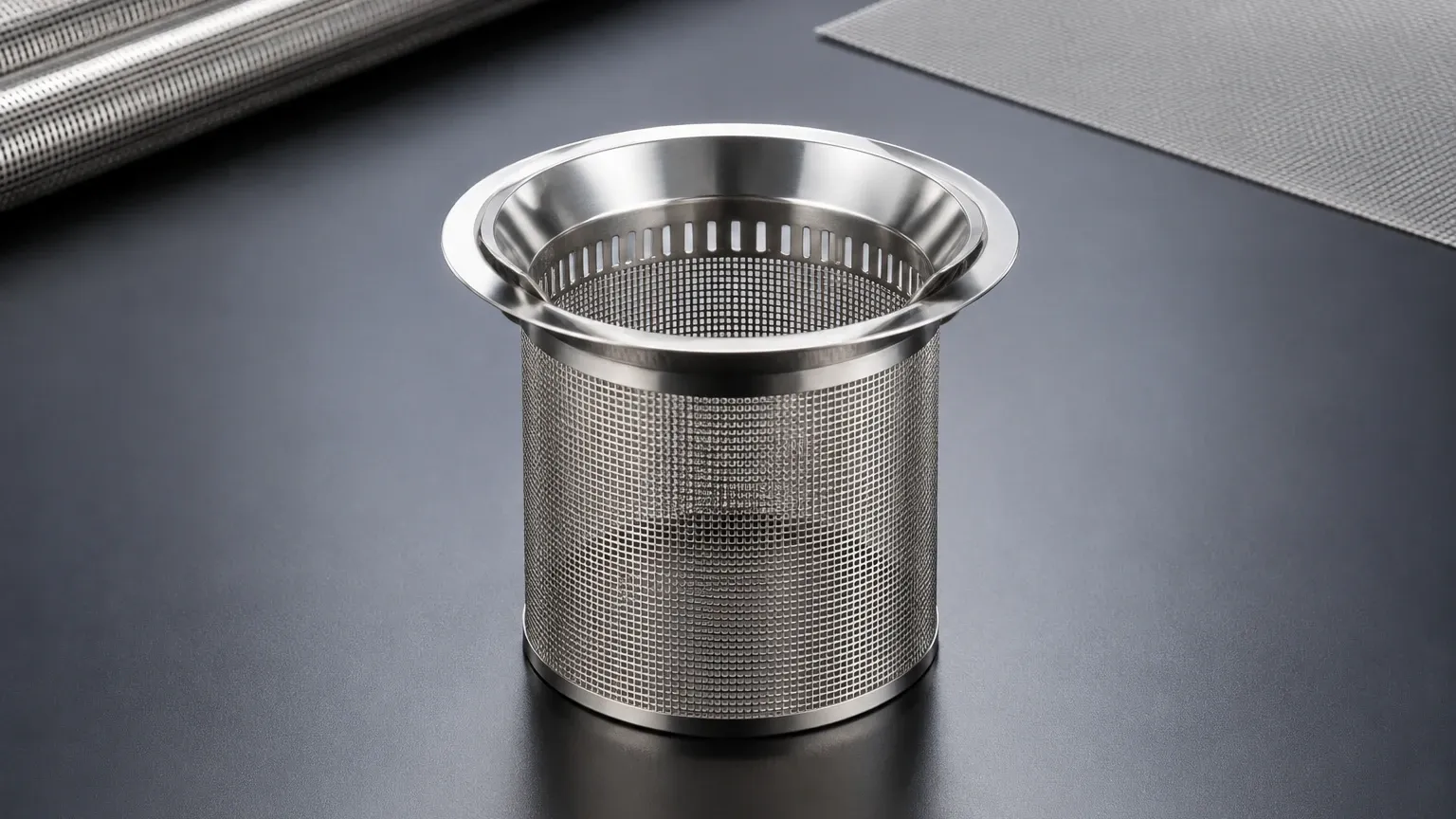
The fundamental function of a strainer julep is the removal of coarse solids from a liquid stream while maintaining a high flow rate. This is achieved through a perforated plate design, which offers several mechanical advantages over woven wire mesh in specific applications. Unlike mesh, which can shift under high pressure, a perforated plate provides a rigid, structural filter medium that maintains its aperture size regardless of the mechanical stress applied.
From an engineering perspective, the "julep" style—an oval or rounded bowl—is not merely aesthetic. The curvature increases the surface area available for filtration compared to a flat disc of the same diameter. This increased surface area reduces the velocity of the fluid as it passes through the holes, which in turn minimizes the pressure drop across the strainer. In industrial systems, managing this pressure drop is critical to preventing pump cavitation and ensuring consistent flow rates through heat exchangers and filling equipment.
Material Selection: Why Stainless Steel is the Standard
For any professional filtration application, the choice of material is dictated by the chemical environment and the required durability. Kaifil specializes in the manufacture of stainless steel filtration solutions because of the material's unique properties. When evaluating a strainer julep or industrial basket, two primary alloys are typically considered:
1. AISI 304 Stainless Steel: This is the most common grade for general industrial use. It offers excellent corrosion resistance and is suitable for most food-grade applications where high acidity or chloride levels are not present.
2. AISI 316L Stainless Steel: For pharmaceutical and chemical processing, 316L is the preferred choice. The addition of molybdenum enhances resistance to pitting and crevice corrosion, particularly in environments involving saline solutions or harsh cleaning chemicals (CIP processes).
Beyond corrosion resistance, stainless steel provides the mechanical strength necessary for repeated cleaning cycles. In industrial environments, filters are often subjected to high-pressure backwashing or ultrasonic cleaning. A well-manufactured stainless steel strainer can withstand these processes for years, offering a much lower total cost of ownership compared to disposable or lower-grade metal alternatives.
Comparing Strainer Julep Designs with Industrial Basket Strainers
While the strainer julep is a handheld or small-scale component, it shares the same DNA as the heavy-duty basket strainers used in large-scale piping systems. The primary difference lies in the housing and the volume of solids they are intended to manage.
* Flow Direction: In both designs, the fluid typically flows from the inside of the bowl or basket to the outside. This ensures that the captured solids are retained within the strainer, making them easy to remove during maintenance without contaminating the downstream fluid path.
* Structural Integrity: Industrial baskets often feature reinforced rims and handles, similar to the "tab" or handle found on a strainer julep. This allows for quick extraction from the strainer housing. In high-pressure applications, these baskets may also include internal support frames to prevent the perforated metal from collapsing under the weight of the captured debris.
* Customization: Just as a strainer julep might be sized for a specific mixing vessel, industrial Strainers & Baskets are customized to fit specific pipe diameters and flow requirements. This includes variations in flange types, handle lengths, and the inclusion of magnetic inserts to capture ferrous particles.
Filtration Accuracy and Perforation Patterns
The performance of a strainer julep is defined by its perforation pattern. Engineers must balance the "open area percentage" with the required filtration accuracy.
* Hole Size: The diameter of the perforations determines the smallest particle that will be reliably captured. In coarse filtration, this might range from 1mm to 5mm. For finer applications, the perforated plate serves as a support for a secondary layer of fine wire mesh.
* Pitch: The distance between the centers of the holes (the pitch) determines the structural strength of the plate. A staggered pattern (60-degree orientation) is usually preferred as it provides the highest open area while maintaining the integrity of the stainless steel sheet.
* Open Area: This is the ratio of the holes to the total surface area. A higher open area results in lower flow resistance but can make the strainer more fragile. For industrial baskets, an open area of 40% to 60% is common, providing an optimal balance between throughput and durability.
Applications in Sanitary and Food-Grade Processing
In industries such as dairy, beverage production, and pharmaceuticals, the "cleanability" of a strainer is as important as its filtration performance. A strainer julep used in these contexts must adhere to sanitary design standards. This means the surfaces must be polished to a specific Ra (Roughness Average) to prevent bacterial growth in microscopic crevices.
Kaifil’s manufacturing process involves precision welding and finishing techniques to ensure that there are no "dead zones" where product can stagnate. For food and beverage applications, the use of 304 or 316 stainless steel ensures that the strainer does not impart any metallic taste or leach chemicals into the product, which is a critical requirement for maintaining flavor profiles and regulatory compliance.
In hydraulic systems, these strainers serve a different but equally vital role: protecting sensitive valves and pumps from large contaminants that could cause catastrophic mechanical failure. Here, the focus shifts from sanitary polish to absolute structural reliability and the ability to handle high-viscosity fluids.
Maintenance, Durability, and Total Cost Considerations
When purchasing filtration components, looking at the initial price tag is often misleading. The true value of a high-quality stainless steel strainer julep or industrial basket is found in its operational lifespan.
Replacement Cycles
Lower-quality strainers made from thin-gauge materials or inferior alloys may deform or corrode within months. A precision-engineered stainless steel component from a specialized manufacturer like Kaifil is designed for longevity. By selecting the correct material grade and perforation thickness, facilities can extend replacement cycles from months to years.
Cleaning and Maintenance
One of the primary advantages of the perforated bowl design is the ease of cleaning. Unlike depth filters, which trap particles within a complex matrix, a strainer julep is a surface filter. Debris can be quickly rinsed or brushed away. In industrial settings, this translates to reduced downtime during maintenance windows. Furthermore, because stainless steel can withstand high temperatures, these strainers can be sterilized using steam (SIP) or caustic chemicals without degradation.
Customization Options
For many technical professionals, standard off-the-shelf solutions are insufficient. Customization options for Strainers & Baskets include:
* Variable Micron Ratings: Combining perforated metal with fine mesh liners.
* Reinforced Structures: Adding external ribs for high-pressure environments.
* Specific Geometries: Designing the strainer to fit existing, non-standard housings to avoid expensive piping modifications.
Conclusion: Selecting the Right Filtration Component
Whether you are looking for a specialized strainer julep for precise liquid handling or a heavy-duty set of baskets for an industrial processing plant, the technical requirements remain the same: material purity, structural integrity, and optimized flow dynamics.
Engineers and purchasing teams should confirm the following before finalizing a selection:
1. Chemical Compatibility: Does the alloy (304 vs 316L) match the fluid properties?
2. Flow Requirements: Is the open area sufficient to prevent excessive pressure drop?
3. Sanitary Standards: Does the finish meet the required Ra levels for the industry?
4. Mechanical Load: Can the basket withstand the expected differential pressure when clogged?
By focusing on these factual engineering boundaries, organizations can ensure they invest in filtration solutions that provide reliable performance and contribute to a more efficient production process. For those requiring tailored solutions, working with a manufacturer that understands both the micro-scale precision of a strainer julep and the macro-scale demands of industrial filtration is the most effective path forward.
