


Juice Strainer
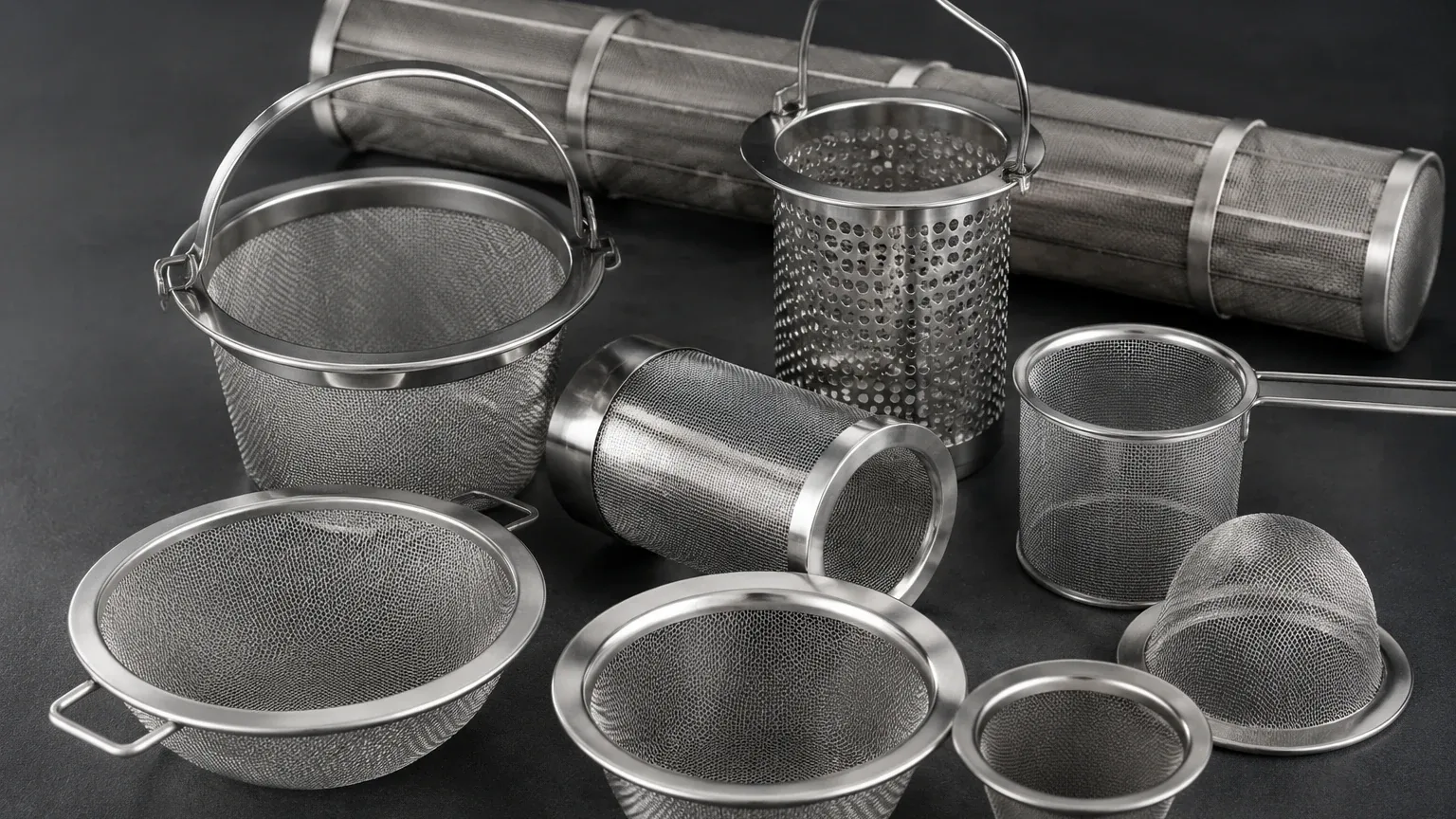
In the industrial food and beverage sector, the separation of solids from liquids is a critical phase that dictates product quality, shelf stability, and equipment longevity. While the term "juice strainer" might evoke images of domestic kitchen tools, in a B2B and industrial manufacturing context, it refers to high-precision, heavy-duty components integrated into complex processing lines. These components, often categorized under industrial Strainers & Baskets, are engineered to withstand high flow rates, varying pressures, and the corrosive nature of organic acids found in fruits and vegetables.
For engineers and procurement specialists, selecting the correct juice strainer involves a deep understanding of fluid dynamics, material science, and sanitary standards. This guide explores the technical requirements, design variations, and selection criteria for industrial-grade juice straining solutions.
The Role of Industrial Strainers in Juice Processing
Juice production involves several stages where solids must be removed or managed. From the initial crush to the final bottling, strainers and baskets serve as the primary line of defense. Their roles are generally divided into three categories:
1. Coarse Separation: Immediately following extraction, raw juice contains large amounts of pulp, seeds, skins, and stems. Coarse strainers, often featuring perforated metal or heavy-gauge wire mesh, remove these large particulates to protect downstream pumps and heat exchangers.
2. Clarification and Polishing: To achieve the clarity required for products like apple or grape juice, finer mesh strainers are utilized. These components remove smaller suspended solids that could cause cloudiness or sedimentation in the final package.
3. Equipment Protection: Even in "pulp-free" processes, stray particles or fragments from upstream machinery can enter the flow. Industrial strainers act as "police filters," ensuring that no foreign objects reach sensitive filling valves or homogenization units.
In these applications, the juice strainer must be designed for minimal pressure drop. A significant drop in pressure can lead to cavitation in pumps or reduced flow efficiency, which increases energy consumption and operational costs.
Material Integrity and Sanitary Engineering
Material selection is perhaps the most critical factor in the design of a juice strainer. Because fruit juices are naturally acidic—with pH levels often ranging from 2.5 to 4.5—the risk of pitting and crevice corrosion is high.
Stainless Steel Grades
Most industrial filtration components for this sector are manufactured from T-304 or T-316L stainless steel.
* 304 Stainless Steel: Suitable for many vegetable juices and less acidic fruit applications. It offers excellent durability and is cost-effective for standard wash-down environments.
* 316L Stainless Steel: The "L" denotes low carbon, which is essential for components that require extensive welding. 316L contains molybdenum, providing superior resistance to chlorides and organic acids. It is the industry standard for high-acid juices like lemon, lime, and cranberry.
Surface Finish and Hygiene
Beyond the alloy, the surface finish of the strainer is vital. Industrial juice strainers must comply with sanitary standards (such as 3-A or EHEDG). This requires smooth, non-porous surfaces with specific Ra (Roughness Average) values—typically 0.8 μm or smoother. Electropolishing is frequently used to remove microscopic peaks and valleys where bacteria could colonize, ensuring the component is compatible with Clean-in-Place (CIP) protocols.
Technical Specifications: Mesh, Perforation, and Micron Ratings
When specifying a juice strainer, engineers must balance filtration fineness with flow capacity. This is achieved through the selection of the straining media, which usually falls into two categories: perforated metal and wire mesh.
Perforated Metal Baskets
Perforated metal is used for the structural body of the basket or as a standalone coarse strainer. Common hole patterns include round, square, or staggered. In juice processing, round holes are preferred as they are easier to clean and provide uniform stress distribution. The "open area" percentage is a key metric here; a higher open area reduces pressure drop but may compromise the structural integrity of the basket under high-pressure surges.
Wire Mesh Liners
For finer filtration, stainless steel wire mesh is layered inside a perforated support basket.
* Plain Weave: The most common weave, providing a straight-through flow path and predictable micron ratings.
* Dutch Weave: A denser weave that offers higher strength and finer filtration, often used in high-pressure juice clarification.
* Mesh Count: This refers to the number of wires per linear inch. A 20-mesh strainer might be used for heavy pulp, while a 100-mesh or 200-mesh liner is required for fine clarification.
Customization and Engineering Considerations
Standard off-the-shelf strainers rarely meet the specific needs of a high-volume juice processing facility. Customization is often necessary to integrate the strainer into existing piping layouts or to handle unique fruit characteristics.
Structural Reinforcement
In high-viscosity applications—such as mango or banana puree—the force exerted on the strainer media can be substantial. Custom Strainers & Baskets may include reinforced longitudinal ribs, heavy-duty top rings, and thickened bottom plates to prevent collapsing or bypassing.
Handle and Lifting Designs
For manual cleaning cycles, the ergonomics of the basket are important. Custom handles, such as swing-up bails or dual-grip handles, allow operators to remove and replace heavy, juice-laden baskets safely. For larger systems, lifting eyes may be integrated for use with overhead hoists.
Connection Types
Industrial juice lines utilize various connection standards. While NPT threads are common in general industry, juice processing almost exclusively uses sanitary clamp (Tri-Clamp) fittings or DIN/SMS unions. These connections ensure there are no dead spaces or threads exposed to the product, which is a fundamental requirement for food safety.
Evaluating Flow Dynamics and Pressure Drop
An undersized juice strainer is a common point of failure in processing plants. If the surface area is too small, the velocity of the juice through the mesh increases, which can force soft pulp through the openings (extruding) rather than capturing it. This results in inconsistent product quality.
Engineers use the "Clean Pressure Drop" calculation to ensure the system operates within its design limits. Ideally, a clean strainer should not exceed a 2-3 PSI drop at maximum flow. As the basket collects solids, the pressure drop increases. Most industrial systems are equipped with differential pressure gauges; when the delta-P reaches a predetermined limit (often 10-15 PSI), the strainer must be cleaned.
To minimize downtime, many facilities use Duplex Strainers. These systems consist of two separate strainer housings connected by a diverting valve. When one basket becomes clogged, the flow is diverted to the clean side, allowing the operator to service the dirty basket without stopping the production line.
Maintenance and Replacement Cycles
Even the highest quality stainless steel juice strainer is a wear item. The abrasive nature of certain seeds and the high-pressure pulses from positive displacement pumps can eventually lead to wire fatigue or mesh blinding.
Cleaning Protocols
In the juice industry, the primary maintenance challenge is "blinding"—where sticky sugars and fine fibers become lodged in the mesh openings. While CIP systems are effective, periodic manual cleaning with ultrasonic baths or high-pressure spray is often required to restore the full open area of the mesh.
Inspection Points
Regular inspection of the strainer should focus on:
* Weld Integrity: Checking for cracks at the junction of the mesh and the support ring.
* Gasket Seating: Ensuring the O-ring or gasket that seals the basket into the housing is intact to prevent bypassing.
* Mesh Deformation: Looking for "quilting" or stretching of the wire mesh, which indicates the strainer has been subjected to excessive pressure.
Choosing the Right Partner for Filtration Solutions
Procuring an industrial juice strainer is not merely a transaction but a technical collaboration. A manufacturer like Kaifil provides the engineering expertise necessary to translate processing requirements into durable hardware. When consulting with a manufacturer, purchasing teams should be prepared to provide the following data points:
* Fluid Properties: Viscosity, temperature, and acidity (pH).
* Solids Loading: The percentage of solids by volume and the nature of the solids (hard seeds vs. soft pulp).
* Target Micron Rating: The specific particle size that must be retained.
* Flow Rate: Minimum, normal, and peak flow rates in GPM or m³/h.
* Regulatory Requirements: Necessary certifications for food contact materials.
By focusing on these technical boundaries, beverage producers can ensure that their filtration systems contribute to a high-quality end product while maintaining operational efficiency. Whether the goal is protecting a high-speed filler or achieving the perfect clarity in a premium juice, the engineering of the Strainers & Baskets remains a cornerstone of the production process.
