


Strainer Locknut
In industrial filtration systems, the integrity of the assembly is as critical as the micron rating of the filter media itself. While much engineering focus is placed on the mesh density or the flow rate of the filter element, the mechanical fasteners that secure these components—specifically the strainer locknut—play a decisive role in preventing bypass, maintaining seal compression, and ensuring long-term operational stability.
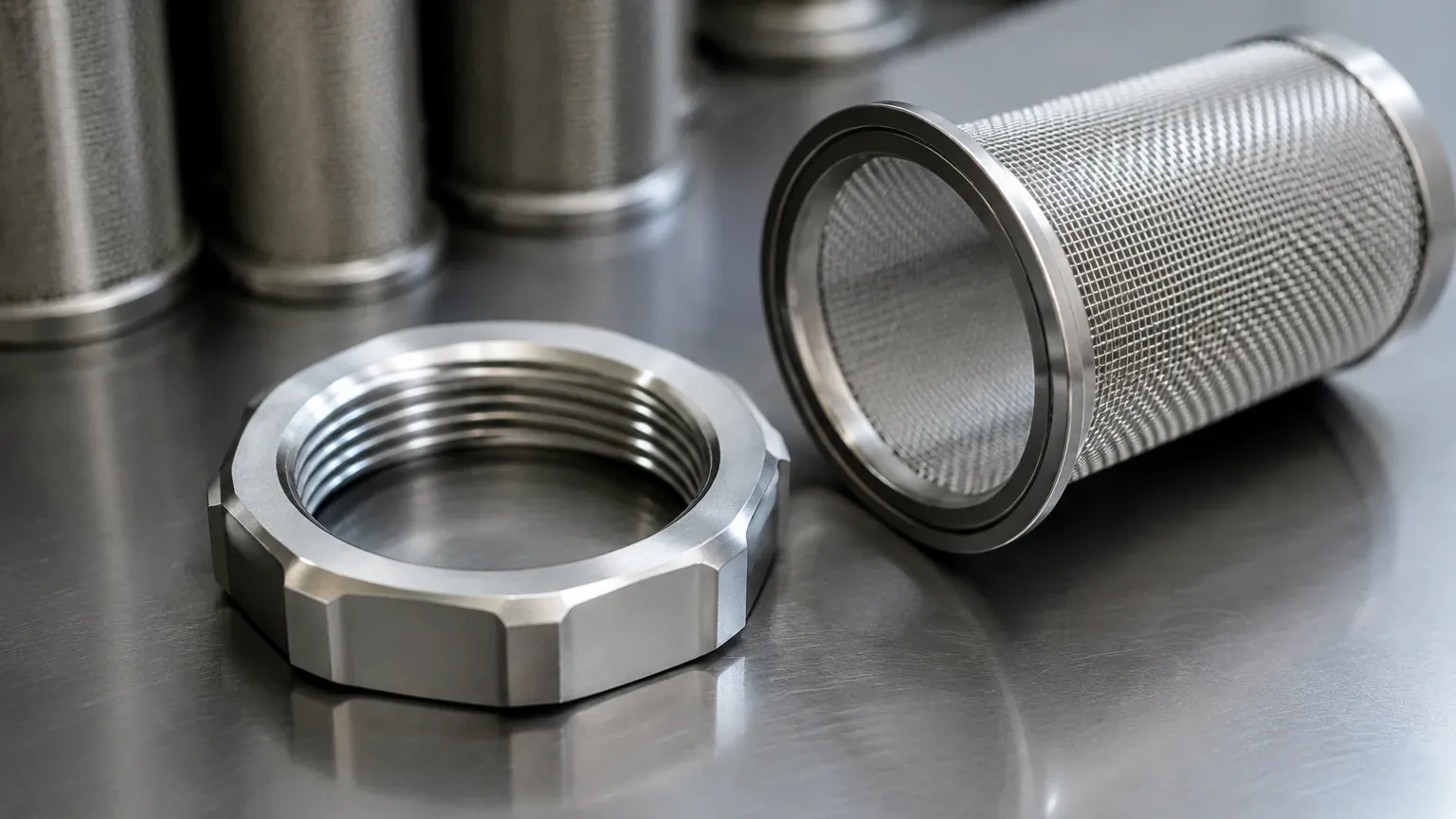
A strainer locknut is a specialized mechanical fastener designed to secure a strainer body, basket, or element within a housing or along a threaded pipe section. In the context of high-pressure or high-vibration industrial environments, the locknut must do more than simply hold parts together; it must resist loosening under thermal cycling and mechanical stress while facilitating a leak-proof interface. For engineers and procurement teams, understanding the technical nuances of locknut design is essential for maintaining the efficiency of Strainers & Baskets in demanding applications.
Mechanical Functionality and Sealing Dynamics
The primary function of a strainer locknut is to provide the necessary axial force to compress gaskets or O-rings, thereby creating a fluid-tight seal. In many industrial strainer designs, the locknut is positioned on the exterior of the housing or at the base of a basket assembly. When tightened, it draws the strainer flange or the basket rim against a seat.
In filtration, the concept of "bypass" is a significant concern. Bypass occurs when the process fluid finds a path of least resistance around the filter media rather than through it. This usually happens due to inadequate sealing pressure. A precision-engineered locknut ensures that the compression remains uniform across the entire circumference of the seal. If the locknut fails to maintain this tension—either due to thread deformation or vibration-induced loosening—the filtration efficiency of the entire system is compromised, potentially leading to downstream contamination and equipment damage.
Material Engineering and Chemical Compatibility
Since strainers are often used in corrosive environments, such as chemical processing, food and beverage production, or marine applications, the material of the strainer locknut is a critical selection factor. Kaifil specializes in stainless steel solutions because of the material's inherent durability and resistance to oxidation.
Stainless Steel Grades: 304 vs. 316
Most industrial locknuts are manufactured from Grade 304 or Grade 316 stainless steel.
- Grade 304: Suitable for general industrial use, providing excellent strength and basic corrosion resistance. It is commonly used in water treatment and standard hydraulic systems.
- Grade 316/316L: Contains molybdenum, which significantly enhances resistance to chlorides and acidic environments. This is the standard for pharmaceutical, chemical, and food-grade applications where sanitation and resistance to pitting are paramount.
Galvanic Corrosion Considerations
Engineers must also consider the metallurgy of the mating components. If a stainless steel locknut is used on a dissimilar metal housing, galvanic corrosion can occur, leading to "frozen" threads or structural failure. Ensuring that the locknut material matches or is electrochemically compatible with the strainer housing is a fundamental requirement for system longevity.
Addressing the Challenge of Thread Galling
A common technical issue when working with stainless steel fasteners like the strainer locknut is thread galling, also known as cold welding. Galling occurs when the protective oxide layer on the surface of the stainless steel is rubbed off during high-pressure sliding (tightening), causing the metal ions to bond together. This can result in the locknut becoming permanently seized to the strainer body.
To prevent galling, Kaifil emphasizes several engineering approaches:
1. Thread Precision: High-quality machining ensures that thread tolerances are tight, reducing the friction caused by misalignment.
2. Surface Treatments: Specialized coatings or finishes can be applied to the locknut to reduce the coefficient of friction.
3. Lubrication: In non-food-grade applications, the use of anti-seize compounds is recommended. In food or pharmaceutical applications, engineers must select USP-grade lubricants that are compatible with the process fluid.
Integration with Industrial Strainers & Baskets
The relationship between the locknut and the broader category of Strainers & Baskets is one of mutual dependence. In basket strainers, the locknut often secures the basket handle or the top cover, ensuring that the basket remains seated at the bottom of the housing even during high-velocity flow surges.
In "Y" or "T" type strainers, the locknut (or a series of them) may be used to secure the blow-off plug or the screen retainer. If the locknut is not designed to handle the specific pressure rating of the strainer assembly, it becomes a weak point in the pressure vessel. Therefore, when sourcing replacement locknuts or designing custom filtration units, the pressure-temperature (P-T) rating of the fastener must meet or exceed the system’s maximum operating parameters.
Thread Specifications and Standards
Industrial strainer locknuts are not universal; they must adhere to specific threading standards to ensure a secure fit. Common standards include:
- NPT (National Pipe Tapered): Common in North American plumbing and hydraulic systems, providing a seal through thread interference.
- BSP (British Standard Pipe): Widely used in Europe and Asia, available in both tapered (BSPT) and parallel (BSPP) forms.
- Metric Threads: Standardized threads used in many modern European and Japanese industrial machines.
For custom OEM filtration projects, the thread pitch and depth must be calculated based on the required torque and the thickness of the housing wall. A locknut with too few engaged threads may strip under pressure, while one with excessive thickness may interfere with the flow path or the spatial footprint of the machine.
Selection Criteria for Engineering and Procurement
When evaluating a strainer locknut for a specific application, engineers should confirm the following technical specifications before procurement:
1. Bore Diameter and Thread Pitch: Precision is required to ensure the nut matches the strainer body perfectly.
2. Nut Profile: Hexagonal nuts are standard for wrenching, but knurled nuts may be preferred for hand-tightened applications in low-pressure systems.
3. Load Distribution: In larger filtration units, a flanged locknut may be used to distribute the clamping force over a wider surface area, protecting the strainer housing from deformation.
4. Environmental Factors: Will the locknut be exposed to extreme temperatures? Thermal expansion rates must be considered to prevent the nut from loosening or over-tightening as the system heats up.
Installation Best Practices and Preventive Maintenance
Proper installation is as important as material selection. Over-torquing a strainer locknut can deform the threads or crush the gasket, leading to premature seal failure. Conversely, under-torquing leads to leaks and bypass.
Maintenance Checklist:
- Visual Inspection: Check for signs of weeping or moisture around the locknut, which indicates a failing seal or loose fastener.
- Thread Integrity: During routine filter cleaning, inspect the locknut threads for signs of wear, flattening, or corrosion.
- Vibration Monitoring: In systems with heavy pumps or compressors, ensure that the locknut has not backed off due to harmonic vibration. In such cases, the use of a secondary jam nut or a locknut with a nylon insert (Nyloc) may be necessary, provided the material is compatible with the operating temperature.
Customization for Specialized Filtration Applications
Standard off-the-shelf fasteners often fail to meet the rigorous requirements of specialized industrial processes. As a manufacturer, Kaifil provides customized filtration components where the locknut is designed as an integral part of the filter cartridge or strainer assembly.
Customization options include:
- Extended Lengths: For securing strainers through thick-walled cryogenic or high-heat jackets.
- Specialty Alloys: Such as Hastelloy or Monel for extremely aggressive chemical environments where even 316L stainless steel might fail.
- Integrated Seals: Designing the locknut with a recessed groove for a captive O-ring, simplifying the assembly process and reducing the risk of seal displacement during installation.
Conclusion
The strainer locknut is a small but vital component in the landscape of industrial filtration. Its ability to maintain structural integrity and seal pressure directly impacts the performance of Strainers & Baskets. By focusing on material compatibility, thread precision, and proper installation torque, engineers can significantly reduce the risk of system failure and minimize maintenance downtime.
For technical professionals managing complex fluid systems, selecting a locknut is not a matter of finding a generic fastener, but rather of choosing an engineered component that aligns with the chemical, thermal, and mechanical demands of the application. Kaifil remains committed to providing these high-precision components, ensuring that every layer of the filtration assembly—from the mesh to the locknut—performs to the highest industrial standards.
