


Pasta Strainers
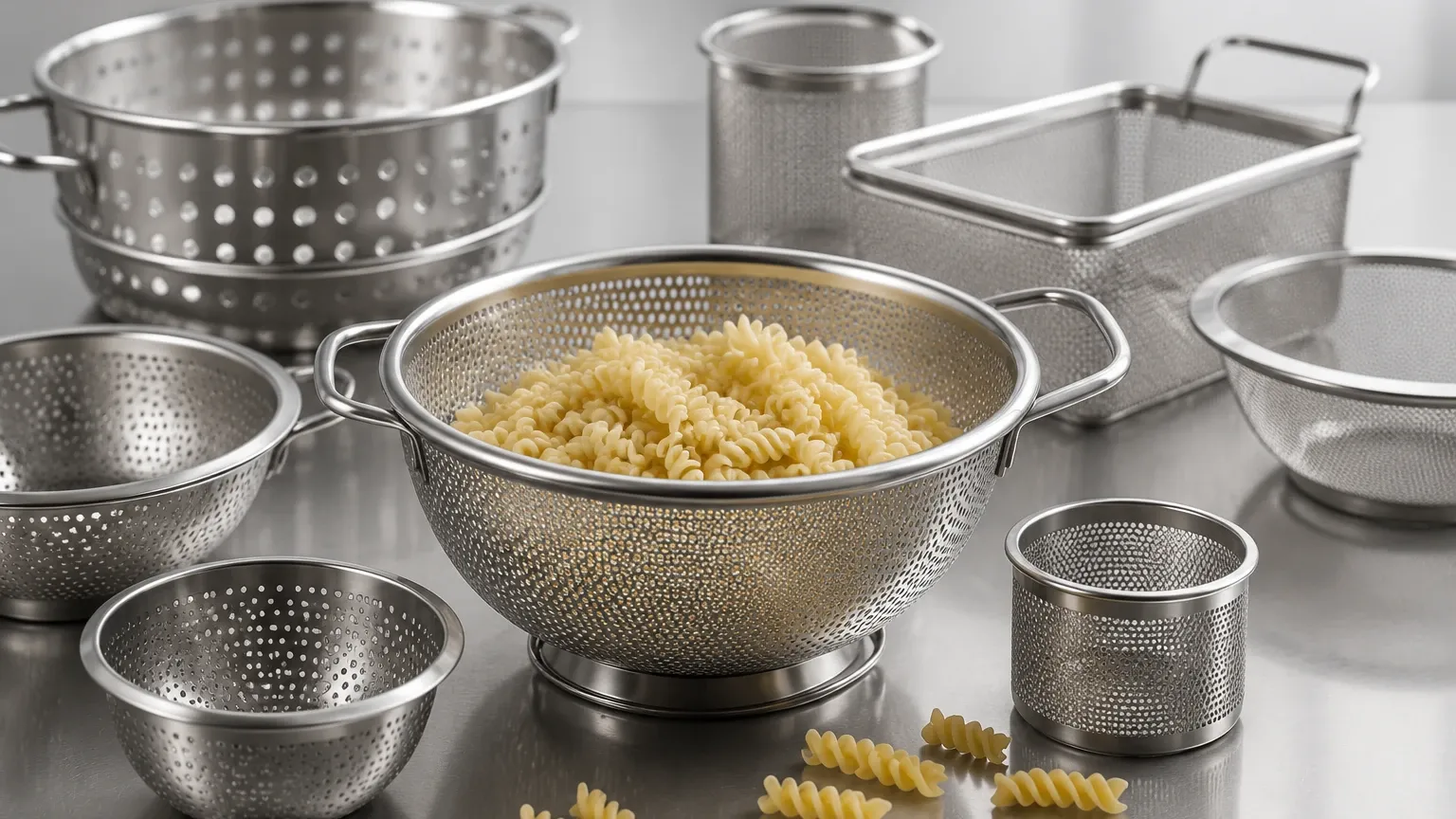
In the context of industrial food processing and large-scale commercial catering, the equipment used for separation and filtration must meet rigorous engineering standards that far exceed consumer-grade expectations. While the term "pasta strainers" often brings to mind domestic kitchen tools, in a professional B2B environment, these components are specialized Strainers & Baskets engineered for high-volume throughput, thermal resilience, and strict sanitary compliance. For engineers and procurement teams in the food and beverage sector, selecting the right filtration component is a matter of balancing drainage efficiency, material durability, and long-term operational costs.
Industrial pasta production and commercial food service require filtration solutions that can withstand continuous exposure to boiling water, varying starch concentrations, and frequent high-pressure cleaning cycles. Understanding the technical nuances of these components is essential for maintaining production uptime and ensuring product quality.
Engineering Considerations for Industrial Pasta Strainers
When specifying pasta strainers for industrial applications, the primary engineering focus is on material integrity and structural design. Unlike consumer products, industrial-grade strainers must maintain their shape and filtration accuracy under significant mechanical stress and thermal expansion.
Material Selection: 304 vs. 316 Stainless Steel
Stainless steel is the industry standard due to its corrosion resistance and ease of sterilization. However, the specific grade of steel is a critical decision point:
* Grade 304 Stainless Steel: This is the most common material for food-grade applications. It offers excellent corrosion resistance and is cost-effective for standard pasta boiling and straining operations.
* Grade 316 Stainless Steel: In environments where the water has high saline content or where aggressive chemical cleaning agents are used, Grade 316 is preferred. The addition of molybdenum provides superior resistance to chloride-induced pitting, extending the service life of the basket in demanding conditions.
Structural Reinforcement
In large-scale operations, a strainer may hold dozens of kilograms of product. To prevent deformation, industrial baskets often feature reinforced rims, cross-brace supports at the base, and heavy-duty wire mesh. The welding technique—typically TIG (Tungsten Inert Gas) or high-frequency spot welding—must ensure that there are no crevices where organic matter can accumulate, which would otherwise pose a biohazard risk.
Design Variations: Mesh vs. Perforated Metal
The choice between wire mesh and perforated metal defines the performance characteristics of pasta strainers. Each design offers distinct advantages depending on the specific stage of the food processing line.
Wire Mesh Strainers
Wire mesh provides a high percentage of open area, which translates to rapid drainage. This is critical in pasta production to stop the cooking process immediately and prevent overcooking. Engineers must consider the wire diameter and the weave type. A square mesh is standard, but the gauge of the wire must be thick enough to resist sagging while remaining fine enough to retain smaller pasta shapes or fragments.
Perforated Metal Baskets
Perforated metal is often used for the outer housing of heavy-duty baskets or for applications requiring extreme rigidity. While the open area is generally lower than that of wire mesh, perforated metal is easier to clean and offers higher resistance to impact. In many industrial designs, a perforated metal skeleton supports a fine wire mesh liner, combining structural strength with high-precision filtration.
Performance and Durability in Commercial Environments
In a B2B setting, the performance of Strainers & Baskets is measured by their ability to maintain flow rates and resist degradation over thousands of cycles. Several factors influence this durability:
1. Thermal Fatigue Resistance: Pasta strainers are subjected to rapid temperature fluctuations (from boiling water to cold rinse). High-quality stainless steel components are engineered to handle this thermal cycling without cracking at the weld points.
2. Corrosion and Scaling: Continuous exposure to starch-heavy water can lead to the buildup of films and scale. Smooth surface finishes, often achieved through electropolishing, reduce the adhesion of these materials, making the strainers easier to sanitize and more resistant to localized corrosion.
3. Mechanical Handling: In automated lines, strainers may be handled by robotic arms or mechanical hoists. The attachment points and handles must be designed with high shear strength to prevent mechanical failure during transit.
Selection Criteria for Purchasing Teams
For procurement professionals, the "cheapest" option often results in a higher total cost of ownership (TCO) due to frequent replacements and potential production halts. When evaluating suppliers for industrial pasta strainers, the following criteria should be prioritized:
* Filtration Accuracy: Confirm that the mesh size or perforation diameter is optimized for the specific product geometry. Too large a mesh leads to product loss; too small a mesh leads to slow drainage and starch buildup.
* Customization Capabilities: Standard sizes rarely fit specialized industrial vats or blanchers. A manufacturer’s ability to provide custom dimensions, handle configurations, and mounting brackets is often a decisive factor.
* Compliance and Certification: Ensure the materials used are FDA-compliant and that the manufacturing processes meet international standards for food-contact surfaces. This includes verifying that the lubricants used in the drawing or perforating process are food-safe.
* Drainage Efficiency: The ratio of open area to total surface area directly impacts the cycle time of a food processing line. High-efficiency designs allow for faster throughput, directly impacting the facility's bottom line.
Maintenance, Sanitation, and Replacement Cycles
To ensure the longevity of industrial pasta strainers, a structured maintenance and inspection protocol is required. Even the highest quality stainless steel components will eventually show signs of wear in a high-volume environment.
Sanitation Protocols
Sanitary design is a non-negotiable requirement in food processing. Strainers should be designed with radiused corners and smooth transitions to facilitate Clean-in-Place (CIP) or easy manual cleaning. Regular inspection should focus on the "dead zones" where the mesh meets the frame, as these are the most likely areas for bacterial growth.
Identifying Wear and Fatigue
Maintenance teams should monitor for the following signs of degradation:
* Mesh Fraying: Broken wires can contaminate the food product, posing a significant safety risk.
* Weld Failure: Stress fractures at the handle or rim attachments indicate that the component is nearing the end of its fatigue life.
* Permanent Deformation: If a basket no longer sits flush in its housing, it can lead to bypass, where product or debris escapes the intended filtration path.
Replacement Strategy
Rather than waiting for a catastrophic failure, many facilities implement a scheduled replacement cycle based on the number of operational hours or cycles. This proactive approach prevents unplanned downtime and ensures that the filtration system always operates at peak efficiency.
Integration into Industrial Food Processing Lines
While manual pasta strainers are used in commercial kitchens, the industrial application of these components often involves integration into complex machinery. This includes:
* Continuous Blanchers: Where baskets move through a heated trough on a conveyor system.
* Batch Cookers: Where large-capacity baskets are lowered into and raised out of boiling vats via hydraulic lifts.
* Cooling and Dewatering Stations: Where strainers facilitate the rapid removal of heat and moisture before the product is packaged or further processed.
In these systems, the strainer is not just a container but a critical component of the heat transfer and fluid dynamics of the entire line. Engineering the basket to allow for uniform steam or water distribution is essential for achieving a consistent product texture and quality.
Conclusion: Making Informed Purchasing Decisions
Selecting industrial pasta strainers—or more accurately, technical Strainers & Baskets—requires a deep understanding of the operational environment. For engineers and purchasing managers, the focus must remain on material quality, structural integrity, and sanitary design. By choosing components that are specifically engineered for the rigors of food processing, facilities can ensure higher productivity, better safety compliance, and a lower total cost of ownership.
When evaluating your next filtration requirement, consider the specific mechanical and thermal loads your equipment will face. Partnering with a manufacturer that understands these industrial challenges is the most effective way to secure reliable, high-performance filtration solutions that keep your production lines running smoothly.
