


Quirky Tea Strainers
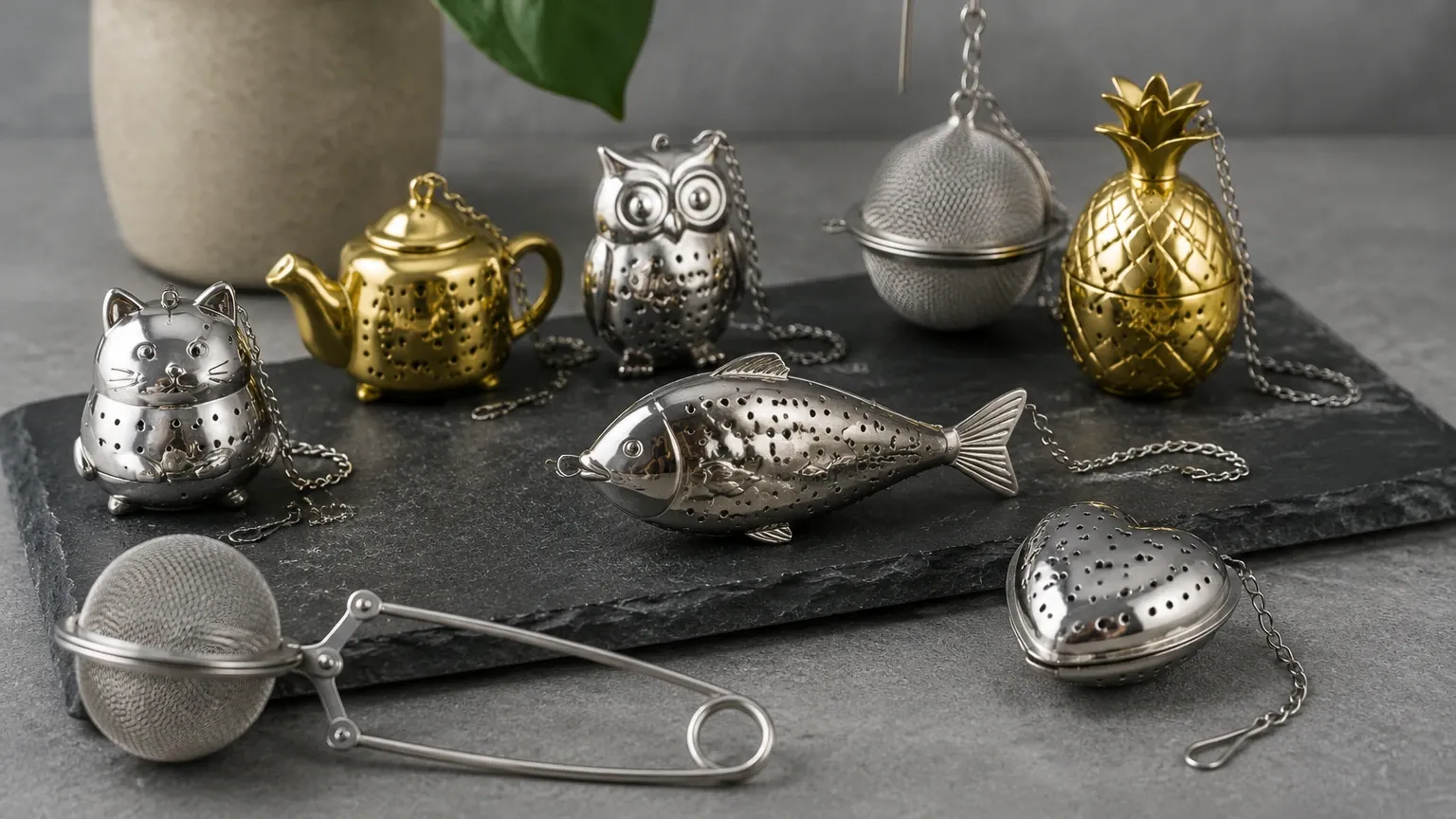
In the realm of fluid dynamics and particulate separation, even the most seemingly decorative items are governed by strict engineering principles. While the consumer market often focuses on the aesthetic appeal of quirky tea strainers, from a B2B and industrial manufacturing perspective, these items represent a specific subset of precision filtration. For engineers and procurement specialists, the "quirky" nature of a design is secondary to the material integrity, filtration accuracy, and mechanical durability of the component.
Understanding how these small-scale filters operate provides a baseline for evaluating more complex industrial Strainers & Baskets. Whether a filter is designed for a single cup of tea or a high-volume chemical processing line, the fundamental requirements for aperture size, flow rate, and material safety remain constant. This guide explores the technical considerations behind specialized filtration designs and how they bridge the gap between consumer novelty and industrial reliability.
Understanding the Engineering Behind Quirky Tea Strainers
The primary function of any strainer is to allow the passage of a liquid while retaining solids above a specific size. In the context of quirky tea strainers, the challenge for manufacturers lies in maintaining this function while deviating from standard geometric shapes. Standard cylindrical or hemispherical baskets are mathematically optimized for maximum surface area and even pressure distribution. When a design becomes "quirky"—incorporating irregular shapes or non-traditional silhouettes—the engineering must compensate for potential flow restrictions.
From a manufacturing standpoint, creating these specialized shapes involves precision metal stamping, photo-etching, or fine wire mesh forming. The goal is to ensure that despite the unusual exterior, the internal volume and the total open area (TOA) of the mesh are sufficient to prevent clogging. Engineers must calculate the ratio of the solid surface to the perforated area to ensure that the infusion process—essentially a low-pressure liquid-solid extraction—occurs efficiently.
Material Selection: Why Food-Grade Stainless Steel is Non-Negotiable
Regardless of the visual design, the material composition of a strainer is the most critical factor for safety and longevity. In both consumer and industrial applications, stainless steel is the gold standard. For quirky tea strainers, manufacturers typically utilize AISI 304 or 316 grade stainless steel.
1. Corrosion Resistance: Tea contains tannins and other acidic compounds that can cause pitting corrosion in lower-grade metals. Grade 304 provides excellent resistance to these organic acids, while Grade 316 is often preferred if the strainer will be exposed to more aggressive cleaning agents or saline environments.
2. Thermal Stability: Filtration components must maintain their structural integrity at high temperatures. Stainless steel does not leach chemicals or deform when exposed to boiling water, a critical requirement for food and beverage applications.
3. Cleanability: Smooth surface finishes are essential to prevent the buildup of organic matter. Industrial-grade polishing or electropolishing ensures that the "quirky" crevices of a specialized design do not become breeding grounds for bacteria.
For B2B buyers, confirming the specific alloy and the presence of material test reports (MTRs) is essential to ensure compliance with food safety regulations such as FDA or EU 1935/2004.
Functional Limitations of Novelty Filtration Designs
While a unique design can be a selling point, it often introduces technical trade-offs that engineers must mitigate. One of the most common issues with quirky tea strainers is "dead zones"—areas within the strainer where fluid flow is stagnant. In a standard basket, the symmetry promotes uniform liquid circulation. In an irregular shape, certain pockets may not receive adequate fluid exchange, leading to an uneven extraction or localized clogging.
Another consideration is the mechanical strength of the mesh. Intricate shapes often require sharper bends and more complex weld points. If the manufacturing process does not account for these stress concentrations, the mesh may pull away from the frame or develop micro-cracks over time. In industrial settings, where Strainers & Baskets are subjected to much higher pressures, these design flaws would lead to catastrophic failure. Even in a consumer-facing product, these weaknesses result in a shorter product lifecycle and potential contamination if mesh fragments break off.
From Consumer Goods to Industrial Applications
The transition from a specialized tea strainer to a large-scale industrial basket is a matter of scale and rigor, but the underlying logic is identical. Many industrial processes require custom-shaped filtration components to fit into existing machinery or to accommodate specific flow patterns. These are essentially the industrial equivalent of "quirky" designs—tailored solutions for non-standard problems.
In chemical processing or hydraulic systems, custom strainers are used to protect sensitive downstream equipment like pumps and valves. Just as a tea strainer must be easy to empty and clean, industrial baskets must be designed for rapid removal and maintenance. The use of high-quality Strainers & Baskets ensures that even when a custom shape is required, the filtration performance is not compromised. Kaifil’s expertise in OEM manufacturing allows for the development of these specialized components, ensuring that "custom" does not mean "unreliable."
Key Evaluation Criteria for Custom Filtration Components
When sourcing specialized or custom-designed strainers, technical professionals should evaluate the following criteria to ensure the product meets performance expectations:
* Micron Rating and Aperture Uniformity: The holes in the mesh must be consistent in size. Inconsistent apertures allow oversized particles to pass through, defeating the purpose of the filter.
* Total Open Area (TOA): This is the percentage of the mesh surface that is actually open. A higher TOA results in a lower pressure drop across the filter, which is vital for maintaining flow rates.
* Structural Reinforcement: For larger or more complex shapes, the mesh should be supported by a perforated metal backing or a solid frame to prevent collapsing under the weight of the retained solids.
* Joinery Quality: Look for TIG (Tungsten Inert Gas) welding or plasma welding. These methods provide clean, strong joints that are less likely to harbor contaminants or fail under thermal stress.
Common Risks in Non-Standard Filter Designs
Investing in quirky or non-standard designs without proper engineering oversight carries several risks. The most prevalent is the "form over function" trap, where the visual design restricts the filtration surface area so severely that the component becomes impractical.
In the B2B sector, the risk extends to the supply chain. Many "quirky" consumer products are manufactured using low-cost methods that do not provide the traceability required for industrial applications. If a purchasing team attempts to adapt a consumer-style design for a laboratory or pilot plant setting, they may encounter issues with material outgassing, heavy metal leaching (from low-quality alloys), or poor tolerances that lead to bypass—where fluid flows around the filter rather than through it.
To avoid these risks, it is imperative to work with a manufacturer like Kaifil that understands the balance between customized geometry and technical performance. Industrial-grade customization ensures that the final product adheres to the necessary micron ratings and structural requirements.
Sourcing Considerations: Moving Beyond Retail Solutions
For businesses looking to develop or procure specialized filtration components, the move from retail-grade quirky tea strainers to professional-grade industrial solutions involves a shift in focus from aesthetics to data-driven performance.
When contacting a manufacturer for custom Strainers & Baskets, engineers should be prepared to provide:
1. Fluid Characteristics: Viscosity, temperature, and chemical composition.
2. Particulate Load: The size and concentration of the solids to be removed.
3. Flow Requirements: Maximum allowable pressure drop and desired flow rate.
4. Operational Environment: Whether the component will be subjected to vibration, high pressure, or frequent manual handling.
By focusing on these technical parameters, procurement teams can ensure they receive a product that is both unique in design and superior in function. Whether the end goal is a specialized consumer product or a critical industrial component, the quality of the mesh and the precision of the manufacturing remain the ultimate deciders of success.
Conclusion
Quirky tea strainers serve as a practical example of how design and engineering intersect in the world of filtration. While their outward appearance may be playful, the requirements for their production—material safety, aperture precision, and durability—are deeply rooted in industrial standards. For those in the B2B sector, these small components highlight the importance of choosing the right manufacturing partner for any filtration need. By prioritizing high-grade materials and proven engineering principles, businesses can ensure that their Strainers & Baskets provide reliable, long-term service, regardless of how specialized the application may be.
