


Strainer Teapot
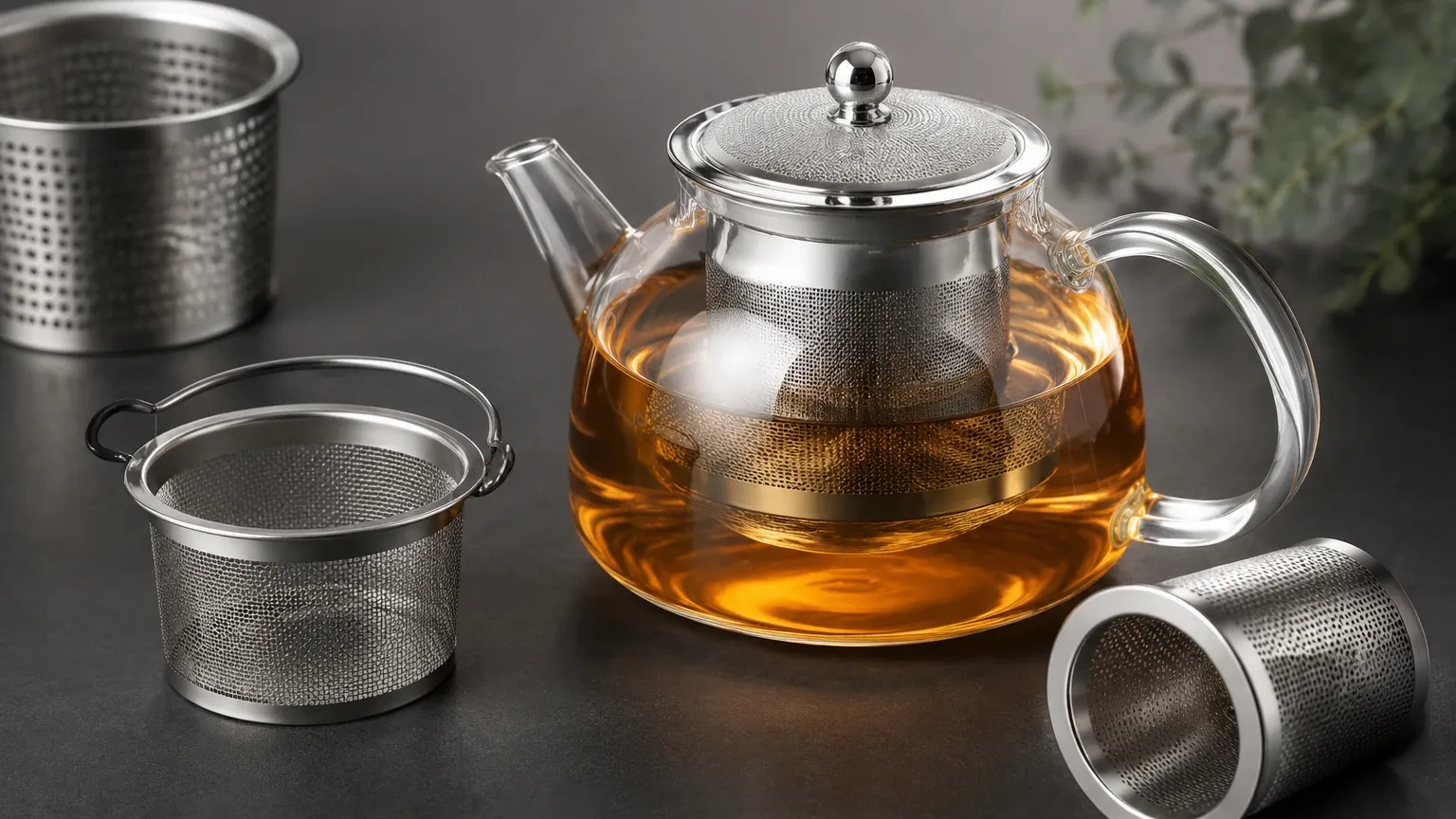
In the context of precision liquid processing and commercial beverage equipment, the term "strainer teapot" refers to the integration of high-quality mesh filtration within a vessel. While often associated with consumer use, the engineering behind these components is critical for industrial OEM manufacturers, commercial food service providers, and chemical processing labs that require precise solid-liquid separation. At the core of every high-performance strainer teapot is a specialized mesh basket or cartridge designed to withstand thermal stress, resist corrosion, and provide consistent filtration accuracy.
For engineers and procurement teams, selecting the right filtration component involves understanding the material properties, mesh configurations, and structural designs that define professional-grade Strainers & Baskets. This guide examines the technical specifications and manufacturing considerations essential for high-performance filtration inserts.
Engineering Principles of Precision Mesh Inserts
The efficiency of a strainer teapot depends entirely on the geometry and material of its internal filter. In industrial and high-end commercial applications, these are rarely simple "screens." They are engineered components that must balance flow rate with particle retention.
Wire Mesh vs. Perforated Metal
Most industrial-grade strainer inserts utilize stainless steel wire mesh or perforated metal, and occasionally a combination of both (pleated or layered).
* Woven Wire Mesh: Offers high open area ratios, which is essential for maintaining flow while capturing fine particles. For applications like tea or botanical extraction, a fine Dutch weave or a standard square weave is typically used to ensure that even the smallest particulates are retained without clogging.
* Perforated Metal: Provides superior structural rigidity. In larger commercial brewing systems, a perforated metal exterior may act as a support cage for a finer inner mesh, preventing the filter from collapsing under the weight of saturated solids or the pressure of high-volume liquid flow.
Micron Rating and Filtration Accuracy
Filtration accuracy is measured in microns. For a standard strainer teapot used in professional settings, the mesh must be fine enough to catch particles as small as 100 to 200 microns, yet robust enough to allow for rapid drainage. Achieving this balance requires precise control over wire diameter and aperture size during the manufacturing process.
Material Selection for Food and Beverage Applications
When dealing with consumable liquids, material integrity is the highest priority. Industrial filtration components must comply with strict hygiene standards to ensure no metallic leaching or contamination occurs during the steeping or filtration process.
Stainless Steel 304 vs. 316L
Stainless steel is the industry standard for strainer teapot components due to its durability and resistance to oxidation. However, the specific grade matters:
1. Grade 304: The most common grade, offering excellent corrosion resistance and value. It is suitable for most water-based filtration and standard beverage applications.
2. Grade 316L: Contains molybdenum, which provides enhanced resistance to chlorides and organic acids. For high-temperature applications or environments where the filter is exposed to aggressive cleaning agents, 316L is the preferred choice for long-term reliability.
Surface Treatment and Passivation
To further enhance corrosion resistance and ensure a smooth, easy-to-clean surface, high-quality Strainers & Baskets undergo passivation. This chemical process removes free iron from the surface of the stainless steel, creating a protective oxide layer that prevents rusting and maintains the purity of the liquid being processed.
Customization and OEM Manufacturing Considerations
For manufacturers of commercial brewing equipment, a "one-size-fits-all" approach to filtration is rarely sufficient. Customization is necessary to align the filter's performance with the specific viscosity of the liquid and the size of the particulates.
Tailored Dimensions and Fitment
A critical failure point in many filtration systems is the seal between the strainer and the vessel. If the basket does not fit precisely, "bypass" occurs—where liquid and solids flow around the filter rather than through it. Custom OEM manufacturing allows for precision-machined flanges and reinforced rims that ensure a flush fit within the teapot or processing tank.
Structural Reinforcements
In industrial environments, filters are often subjected to mechanical cleaning or high-pressure sprays. A standard consumer-grade mesh would quickly deform. Industrial inserts often feature:
* Reinforced Seams: Using argon arc welding or plasma welding to ensure the mesh does not pull apart at the joints.
* Support Ribs: Vertical or horizontal stainless steel bands that maintain the basket's shape under load.
* Handle and Lifting Lugs: Ergonomically designed for easy removal and cleaning in a fast-paced commercial environment.
Performance Criteria for Industrial Strainers
Evaluating the performance of a strainer teapot component involves more than just checking the mesh size. Engineers must consider the total cost of ownership, which includes durability and maintenance efficiency.
Flow Rate and Pressure Drop
The "pressure drop" refers to the reduction in liquid pressure as it passes through the filter. A high-performance strainer should have a high percentage of open area to minimize this drop, ensuring that the liquid flows freely while the solids are effectively trapped. If the mesh is too dense, the filtration process becomes inefficient and time-consuming.
Durability and Fatigue Resistance
Repeated thermal cycling—moving from room temperature to boiling temperatures—can cause metal fatigue. High-quality stainless steel filters are annealed to relieve internal stresses, ensuring they can handle thousands of heating and cooling cycles without cracking or losing their structural integrity.
Maintenance and Cleaning of Stainless Steel Mesh
One of the primary advantages of using stainless steel Strainers & Baskets in a strainer teapot is their reusability. However, to maintain filtration efficiency, a proper cleaning regimen is essential.
1. Ultrasonic Cleaning: For fine mesh filters that have become clogged with organic oils or microscopic particles, ultrasonic cleaning is the most effective method. It uses high-frequency sound waves to create cavitation bubbles that dislodge debris from deep within the mesh pores.
2. Chemical Cleaning: Using food-grade alkaline cleaners can help dissolve tannins and organic buildup. It is vital to ensure the material is compatible with the cleaning agent to avoid pitting corrosion.
3. Backwashing: In some commercial setups, the filter can be cleaned by reversing the flow of liquid, which pushes trapped particles out of the mesh apertures.
Identifying Quality in Filtration Components
When sourcing components for a strainer teapot or a larger industrial filtration system, procurement teams should confirm several technical details before finalizing a purchase. This ensures the component will meet the operational demands of the application.
* Verification of Mesh Count: Ensure the manufacturer provides documented mesh counts and wire diameters.
* Weld Integrity: Inspect for smooth, continuous welds that leave no crevices where bacteria could accumulate.
* Material Certification: Request Mill Test Reports (MTRs) to verify the grade of stainless steel used.
At Kaifil, we understand that even a component as seemingly simple as a strainer insert requires rigorous engineering to perform reliably in a B2B environment. Our expertise in custom stainless steel filtration allows us to design and manufacture Strainers & Baskets that meet the exact specifications of our global partners, from pharmaceutical labs to commercial beverage equipment manufacturers.
By focusing on high-grade materials, precision welding, and customized designs, we provide filtration solutions that offer superior durability and performance. Whether you are developing a new commercial strainer teapot or upgrading an industrial processing line, selecting the right filtration partner is the first step toward achieving optimal liquid purity and system efficiency.
