


Strainer Target
In the landscape of industrial fluid handling and process engineering, the term "strainer target" carries dual significance. For some engineers, it refers to the physical target plates used during system commissioning to verify the cleanliness of a piping circuit. For others, it represents the specific performance benchmarks—filtration accuracy, flow capacity, and structural integrity—that a filtration component must hit to protect downstream equipment. Regardless of the interpretation, achieving the correct strainer target is essential for the longevity of pumps, valves, and heat exchangers.
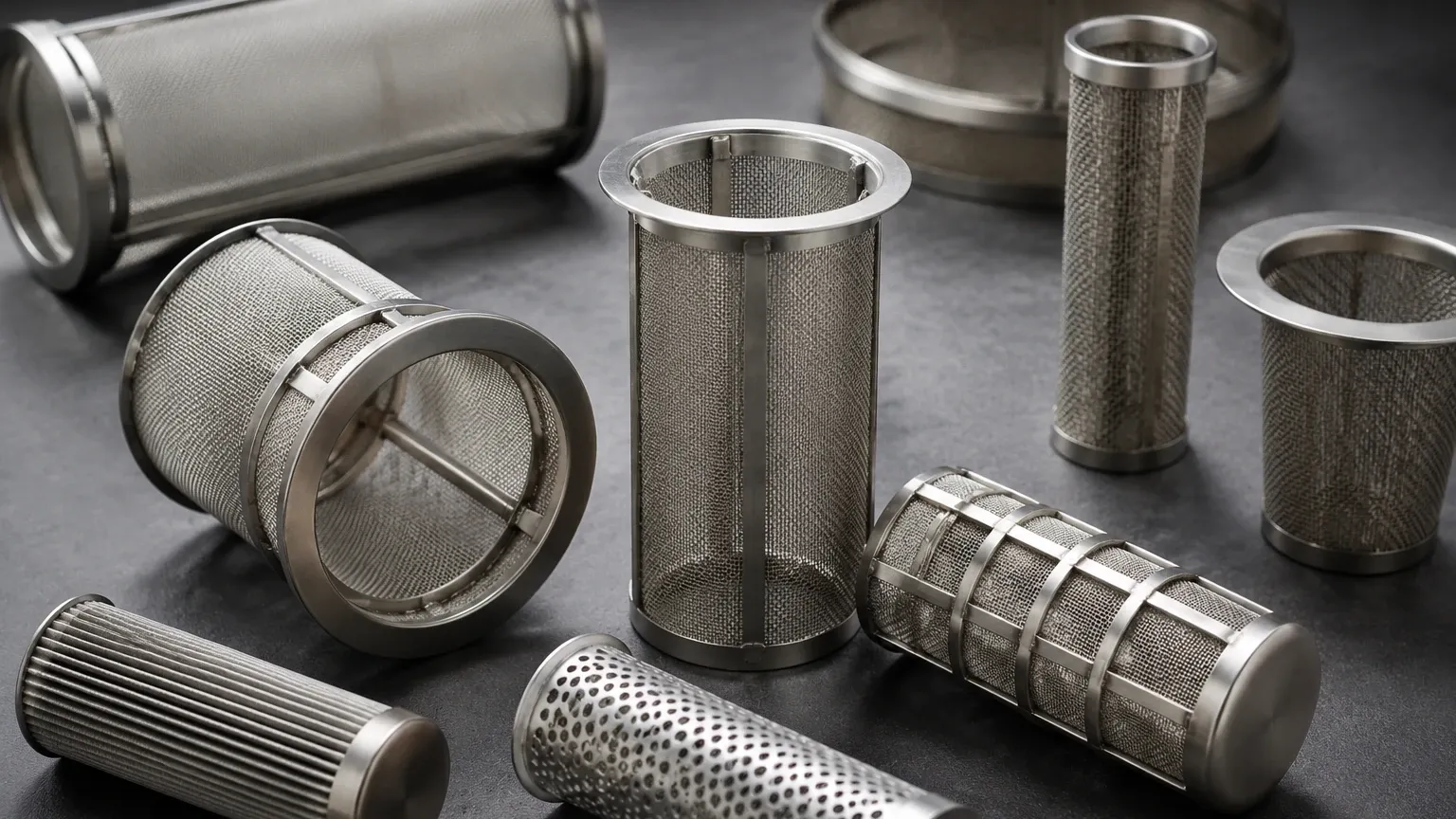
Industrial Strainers & Baskets serve as the first line of defense in mechanical systems. They are designed to remove large-scale debris, scale, and foreign particles that could cause catastrophic failure or significant wear. Selecting the right component requires a deep understanding of fluid dynamics, material compatibility, and the specific validation protocols required by modern industrial standards.
The Role of Target Plates in System Commissioning
In the context of system startup, particularly in high-pressure steam or hydraulic applications, a strainer target refers to a validation tool known as a target plate. During the flushing or "blowing" phase of a new installation, temporary strainers are installed to capture construction debris. To verify that the system is sufficiently clean, engineers place a polished target plate—often made of soft metal like copper, aluminum, or stainless steel—downstream of the strainer.
As fluid or steam passes through the system at high velocity, any remaining particles that bypass or pass through the strainer will impact the target plate, leaving visible "pips" or indentations. The "strainer target" protocol usually dictates a maximum allowable number of impacts per square inch over a specific time interval. If the plate exceeds this limit, the flushing process must continue. This rigorous validation ensures that the permanent Strainers & Baskets installed later will not be overwhelmed by initial construction debris, such as welding slag or sand.
Engineering Criteria for Strainers & Baskets
When transitioning from commissioning to steady-state operation, the focus shifts to the engineering targets of the permanent filtration hardware. The selection process for industrial baskets and strainers is governed by several critical factors that determine the efficiency of the entire process loop.
Material Selection and Metallurgy
Material compatibility is the primary target for any filtration solution. In chemical processing and marine environments, the choice of stainless steel (typically 304 or 316L) is standard due to its resistance to corrosion and oxidation. However, for highly aggressive media, specialized alloys may be required. Engineers must evaluate the pH levels, temperature fluctuations, and the presence of abrasive particulates when defining their material targets.
Micron Rating and Perforation Size
The filtration target is defined by the smallest particle size that must be removed to protect downstream components. This is achieved through a combination of perforated metal and fine wire mesh. A common mistake in procurement is "over-filtering"—selecting a mesh that is too fine for the application. This leads to rapid clogging, high pressure drops, and increased maintenance frequency. The engineering target should be to filter only as fine as necessary, not as fine as possible.
Performance Targets: Balancing Flow Rate and Pressure Drop
A critical strainer target for any design engineer is the maintenance of an acceptable pressure drop (ΔP). Every filtration element introduces resistance to the flow. If the resistance is too high, it can lead to cavitation in pumps and reduced system efficiency.
The Open Area Ratio
To optimize performance, engineers look at the "Open Area Ratio" (OAR). This is the ratio between the total open area of the strainer mesh and the cross-sectional area of the inlet pipe. A standard industrial target for a well-designed basket strainer is an OAR of at least 6:1. This high ratio ensures that even as the basket begins to fill with debris, there is still enough open surface area to maintain flow without a significant increase in differential pressure.
Velocity Considerations
Flow velocity also impacts the strainer target. High-velocity systems can cause turbulence around the strainer element, leading to vibration and potential fatigue failure of the mesh. Engineering guidelines typically suggest keeping liquid velocities below 10 feet per second (fps) for suction lines and 15 fps for discharge lines to ensure the structural integrity of the Strainers & Baskets over long-term operation.
Customization for Specific Industrial Applications
Not all industrial environments share the same strainer target. Customization is often necessary to meet the unique mechanical and regulatory requirements of different sectors. Manufacturers like Kaifil specialize in tailoring these components to meet exacting OEM specifications.
Food and Beverage Requirements
In food processing, the target is not just particle removal but also hygiene. Strainers must be designed with "sanitary" features, including smooth welds, polished surfaces (often Ra < 0.8 μm), and the absence of dead legs where bacteria could proliferate. Stainless steel 316L is the preferred material here due to its resistance to CIP (Clean-In-Place) chemicals.
Pharmaceutical and Chemical Processing
For pharmaceutical applications, the strainer target often involves high-precision filtration and strict traceability of materials. These systems may require specialized basket designs that can be easily sterilized and validated. In chemical processing, the target is often durability against high temperatures and corrosive reagents, requiring heavy-duty reinforced baskets that can withstand high differential pressures without collapsing.
Maintenance and Evaluation: When the Target is Met
Identifying when a strainer has reached its holding capacity is a vital part of operational management. The "target" in this sense is the maximum allowable differential pressure before cleaning is required.
Most industrial systems utilize differential pressure gauges to monitor the health of the filtration element. A common industry standard is to schedule a cleaning cycle when the pressure drop across the strainer reaches 5-10 psi above the clean pressure drop. If the pressure exceeds this target, the risk of "blow-through"—where the mesh or perforated plate deforms or ruptures—increases significantly.
Regular inspection of the baskets is also necessary to check for signs of erosion or mechanical wear. In abrasive applications, the high-velocity impact of particles can thin the metal over time. A proactive maintenance target involves periodic ultrasonic thickness testing or visual inspections to ensure the structural basket remains within safety margins.
Common Risks and Mitigation Strategies
Failure to meet the intended strainer target can lead to several common industrial risks. Understanding these risks allows engineers to implement better design and procurement strategies.
1. Bypass Leakage: This occurs when the strainer element does not seat properly within the housing. Even a small gap can allow large particles to pass through, defeating the purpose of the strainer. Ensuring precision machining of the basket flange and using high-quality gaskets or O-rings is the primary mitigation strategy.
2. Structural Collapse: If a basket is subjected to a pressure drop beyond its design limit, it can collapse inward. This usually happens during a surge or when maintenance is neglected. To mitigate this, heavy-duty support cages or thicker perforated backings should be used for high-pressure applications.
3. Material Incompatibility: Using 304 stainless steel in a high-chloride environment can lead to pitting corrosion and stress corrosion cracking. Engineers must verify the chemical composition of the fluid against metallurgical charts before setting their material target.
Conclusion: Achieving Optimal Filtration Performance
Setting and hitting the right strainer target requires a holistic approach to system design. From the initial commissioning phase using target plates to the long-term operation of high-capacity Strainers & Baskets, every technical decision impacts the reliability of the industrial process.
By focusing on the Open Area Ratio, material integrity, and precise micron ratings, purchasing teams and engineers can ensure they are not only protecting their equipment but also optimizing the total cost of ownership. Working with a manufacturer that understands these technical nuances allows for the development of customized solutions that meet the most demanding industrial targets. Whether the goal is protecting a sensitive turbine or ensuring the purity of a food product, the right strainer configuration is the foundation of a successful fluid handling system.
