


Strainer Uses and Functions
In industrial fluid handling systems, the integrity of downstream equipment is paramount to operational efficiency and safety. Industrial strainers serve as the first line of defense, acting as mechanical filters that remove unwanted solids from liquid or gas streams. While often categorized generally under filtration, the specific strainer uses and functions are distinct from fine filtration processes; they are primarily designed to protect expensive components like pumps, valves, flow meters, and heat exchangers from damage caused by scale, rust, weld slag, or other foreign debris.
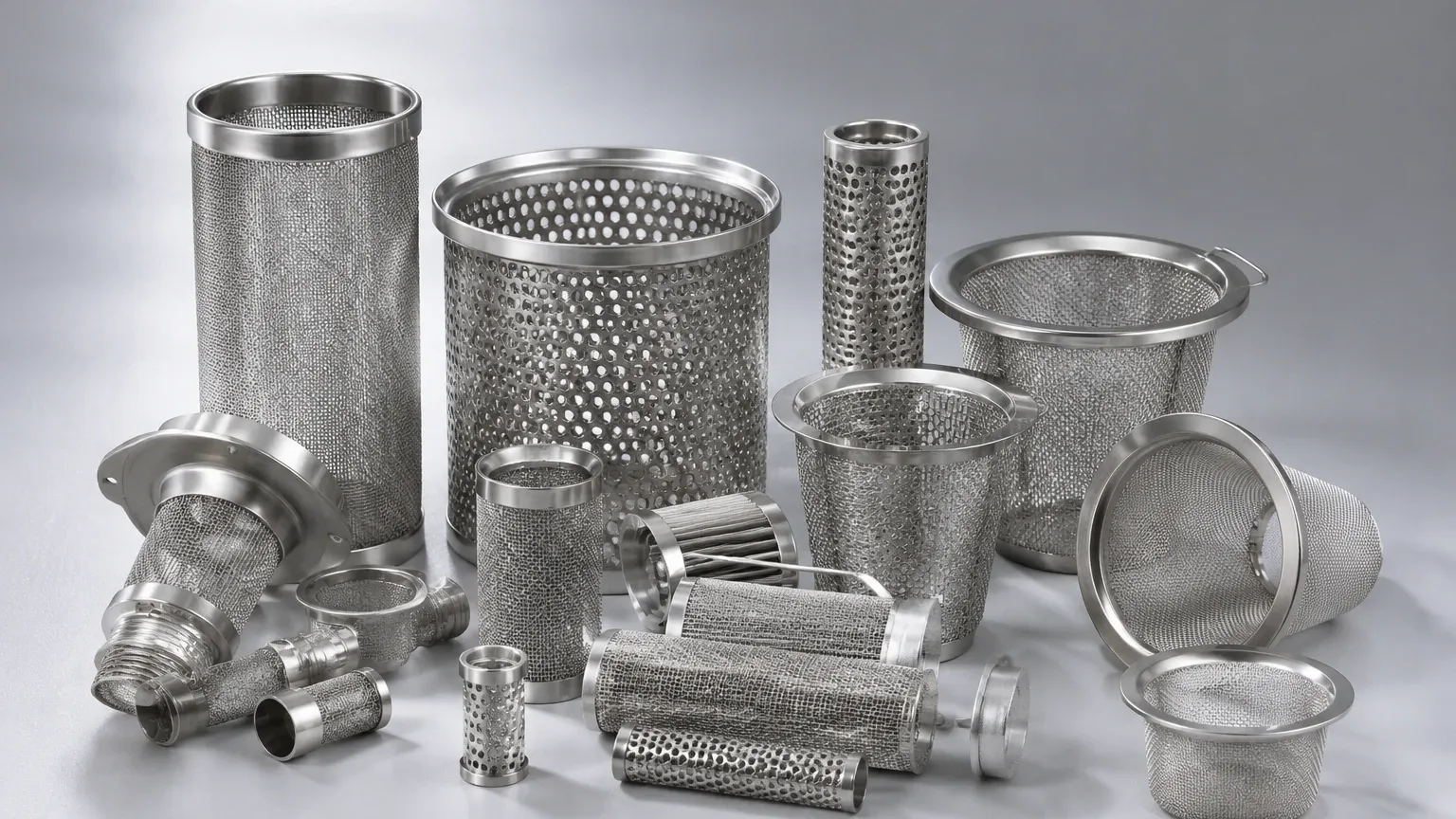
Selecting the correct Strainers & Baskets requires a deep understanding of fluid dynamics, material compatibility, and the specific mechanical requirements of the application. This article explores the technical functions of industrial strainers, the engineering considerations behind their selection, and the critical role they play in maintaining system uptime.
Core Functions of Industrial Strainers
The primary function of a strainer is the mechanical separation of solids from a flowing medium. Unlike fine filters, which may target sub-micron particles, strainers typically handle larger particulate matter. Their functions can be broken down into three critical areas:
1. Equipment Protection
Downstream components such as centrifugal pumps are highly susceptible to damage from solids. Hard particles can cause catastrophic failure of impellers or mechanical seals. Similarly, control valves with tight tolerances can become jammed or eroded by abrasive debris. By installing a strainer upstream, engineers ensure that only clean fluid reaches these sensitive components, significantly extending their service life.
2. Process Purity
In industries such as food and beverage or pharmaceutical manufacturing, the presence of even minor contaminants can lead to entire batches being rejected. Strainers help maintain the baseline purity of the process fluid by catching any incidental debris that may have entered the system during maintenance or from raw material inputs.
3. Prevention of Clogging
Heat exchangers and spray nozzles are prone to clogging if the fluid contains suspended solids. A clogged heat exchanger leads to reduced thermal efficiency and increased energy consumption, while clogged nozzles can result in uneven coating or cooling. Strainers ensure that the fluid remains free of particles large enough to obstruct these narrow passages.
Technical Classifications and Their Uses
Understanding the various types of strainers is essential for matching the component to the application requirements. Each design offers specific advantages regarding flow capacity, pressure drop, and ease of maintenance.
Y-Strainers
Y-strainers are named for their shape and are most commonly used in pressurized lines, whether for liquid or gas. They are particularly effective in applications where the amount of debris to be removed is relatively small. Because of their compact design, they can be installed either horizontally or vertically (downward flow), making them versatile for tight piping configurations. In steam applications, Y-strainers are the industry standard due to their ability to handle high pressures.
Basket Strainers
Basket strainers, often referred to as Simplex strainers, feature a vertical chamber that houses a large-capacity strainer basket. These are typically used in liquid applications where the debris load is higher. The main advantage of a basket strainer is its large surface area, which allows for a greater collection of solids before the pressure drop becomes excessive. They are designed for easy access; the top cover can be removed, and the basket lifted out for cleaning without disturbing the piping.
Duplex Strainers
In processes that cannot be shut down for maintenance, duplex strainers are required. A duplex system consists of two separate strainer chambers connected by a diverted valve. When one side becomes full, the flow is diverted to the second chamber, allowing the operator to clean the first basket without interrupting the process. This is critical in chemical processing and oil lubrication systems where continuous flow is mandatory.
Engineering Considerations for Selection
Choosing the right strainer involves more than just matching pipe sizes. Engineers must evaluate several technical parameters to ensure the strainer performs reliably under operating conditions.
Open Area Ratio (OAR)
The Open Area Ratio is the relationship between the total open area of the strainer mesh and the cross-sectional area of the inlet pipe. A common industry standard is an OAR of 4:1 or higher. A higher OAR means the strainer can accumulate more debris before the pressure drop reaches a critical level, thereby extending the intervals between cleaning cycles.
Pressure Drop (Delta P)
Every component in a piping system introduces a resistance to flow, resulting in a pressure drop. It is vital to calculate the clean pressure drop of the strainer to ensure the system pump has sufficient head. As the strainer collects debris, the pressure drop increases. If the differential pressure ($ΔP$) becomes too high, it can lead to basket collapse or pump cavitation. Most industrial systems utilize differential pressure gauges to monitor this and signal when maintenance is required.
Micron vs. Mesh Rating
The "tightness" of the filtration is defined by the mesh or micron rating. Mesh refers to the number of openings per linear inch, while micron refers to the actual size of the openings. For example, a 40-mesh screen has approximately 400-micron openings. Selecting a mesh that is too fine will lead to frequent clogging and unnecessary pressure drop, while a mesh that is too coarse will fail to protect downstream equipment. The rule of thumb is to select a mesh size slightly smaller than the smallest particle that needs to be removed.
Material Compatibility
The housing and the internal basket must be compatible with the process fluid. Stainless steel (Grade 304 or 316L) is the preferred material for most industrial applications due to its excellent corrosion resistance and mechanical strength. In highly corrosive environments, such as those involving brine or certain acids, specialized alloys may be required. Additionally, the seal materials (EPDM, Viton, or PTFE) must be chosen based on the temperature and chemical nature of the fluid.
Industry-Specific Strainer Applications
The versatility of strainers allows them to be utilized across a wide spectrum of sectors, each with unique challenges.
* Chemical Processing: In this sector, strainers must withstand aggressive chemicals and high temperatures. They are used to protect expensive reactors and blending equipment from particulate contamination that could catalyze unwanted reactions.
* Food and Beverage: Here, hygiene is the priority. Strainers are often made of polished 316L stainless steel with sanitary fittings to prevent bacterial growth. They are used to remove pulp from juices, seeds from preserves, or incidental solids from dairy lines.
* Water Treatment: Large basket strainers are used in intake structures to remove leaves, twigs, and stones from raw water before it enters the treatment plant. In desalination plants, they protect high-pressure RO (Reverse Osmosis) pumps from suspended solids.
* Oil and Gas: Strainers are used in pipeline operations to remove "black powder" (iron sulfides and oxides) and other debris that can erode turbine blades and damage meters during custody transfer.
Maintenance and Operational Longevity
The total cost of ownership (TCO) of a strainer system is heavily influenced by its maintenance requirements. A well-designed strainer should allow for rapid cleaning to minimize downtime.
1. Cleaning Cycles: Establishing a regular cleaning schedule based on differential pressure readings is essential. Allowing a strainer to operate in a blinded state (fully clogged) can result in structural damage to the basket or the housing.
2. Gasket Inspection: Each time the strainer is opened for cleaning, the gaskets or O-rings should be inspected for wear or compression set. Replacing these inexpensive components regularly prevents hazardous leaks.
3. Structural Integrity: Over time, high-velocity flow can cause erosion or fatigue in the strainer mesh. Periodic inspection of the basket for broken wires or distorted frames ensures that the strainer continues to provide the specified level of protection.
Customization and OEM Solutions
Off-the-shelf strainers may not always meet the rigorous demands of specialized industrial processes. Custom-engineered solutions are often necessary when dealing with non-standard pipe sizes, extremely high flow rates, or specific space constraints. Manufacturers like Kaifil specialize in developing bespoke Strainers & Baskets that are tailored to the exact micron rating and structural requirements of the client's application.
Customization options often include:
* Reinforced Baskets: For high-pressure applications where the differential pressure might spike unexpectedly.
* Magnetic Inserts: To capture fine iron or steel particles that might otherwise pass through a standard mesh.
* Specialized Coatings: For added abrasion or chemical resistance.
* Unique Footprints: To allow for the integration of strainers into existing skid-mounted systems where space is limited.
Conclusion
Industrial strainer uses and functions extend far beyond simple debris removal. They are critical components that safeguard the mechanical integrity of entire production lines. By understanding the nuances of flow rates, pressure drops, and material science, engineers can select filtration solutions that not only protect their equipment but also optimize the overall efficiency of their operations. Whether it is a simple Y-strainer for a steam line or a complex duplex system for continuous chemical processing, the correct selection and maintenance of these components are fundamental to industrial success.
