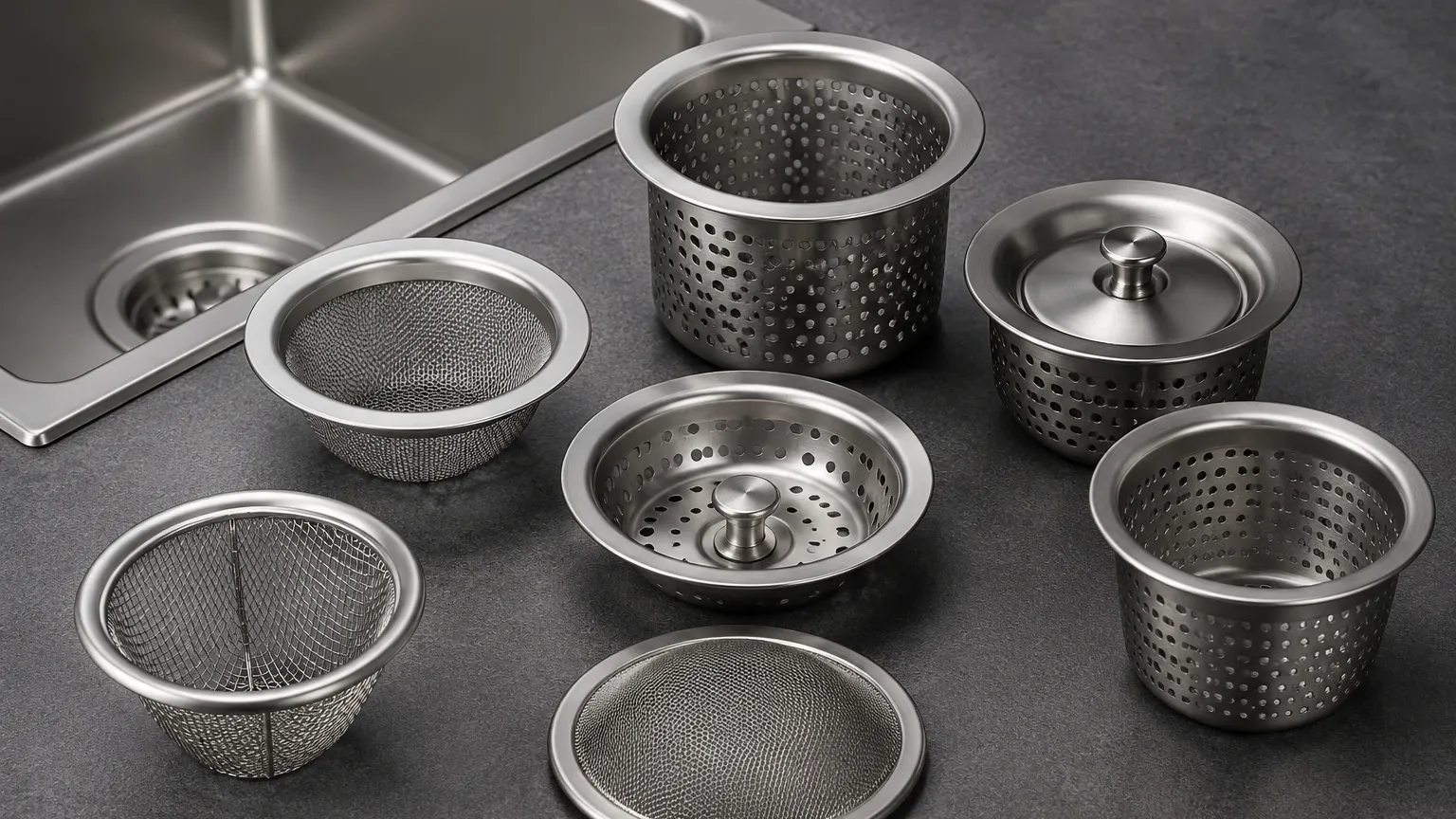
Utility Sink Strainers
In industrial and commercial environments, the utility sink serves as a critical interface between process operations and wastewater management. Unlike residential fixtures, industrial utility sinks are often subjected to high-volume discharge, corrosive chemicals, and heavy particulate loads. The efficiency of these systems relies heavily on the performance of Strainers & Baskets, which act as the primary line of defense for plumbing infrastructure and downstream filtration systems. Selecting the correct utility sink strainers requires a technical understanding of material compatibility, flow dynamics, and filtration precision.
The Role of Strainers & Baskets in Industrial Utility Systems
Industrial utility sinks are found in laboratory settings, chemical processing plants, food and beverage facilities, and maintenance workshops. The primary function of a strainer in these settings is to capture solid debris before it enters the drainage system. Failure to effectively capture these solids can lead to significant operational disruptions, including clogged piping, damage to centrifugal pumps, and contamination of water treatment facilities.
Engineers must view utility sink strainers not merely as hardware, but as precision-engineered components. These strainers are designed to handle specific flow rates while maintaining a low pressure drop. In many industrial applications, the "basket" design is preferred because it offers a larger surface area for debris collection compared to flat disc strainers. This increased surface area extends the time between cleaning cycles, which is a critical factor in maintaining operational uptime.
Technical Specifications for Utility Sink Strainers
The performance of utility sink strainers is determined by several technical parameters. When specifying these components for a B2B or industrial application, engineers typically evaluate the following:
1. Material Selection: SS304 vs. SS316
Stainless steel is the industry standard for industrial filtration due to its mechanical strength and resistance to oxidation.
- SS304: Suitable for general-purpose industrial use, providing excellent durability and resistance to most organic chemicals and cleaning agents.
- SS316: Contains molybdenum, which provides superior resistance to chlorides and acidic environments. In pharmaceutical or chemical processing facilities where corrosive substances are frequently rinsed into utility sinks, SS316 is the mandatory choice to prevent pitting and stress corrosion cracking.
2. Filtration Accuracy (Micron Rating and Mesh Count)
Utility sink strainers can be manufactured using perforated metal or woven wire mesh. The choice depends on the size of the particles that need to be excluded. For heavy-duty applications, a perforated metal basket with 1/8" or 1/4" holes may be sufficient. However, in precision environments like laboratories, a fine wire mesh liner may be integrated into the basket to capture particles down to several hundred microns.
3. Mechanical Integrity
Industrial strainers must withstand the weight of heavy debris and the force of high-pressure water discharge. Heavy-gauge stainless steel construction ensures that the strainer basket does not deform under load, which would otherwise allow bypass—where debris escapes around the edges of the strainer.
Evaluating Design Variations: Mesh vs. Perforated Baskets
The debate between mesh and perforated designs centers on the balance between filtration efficiency and flow capacity.
Perforated Baskets are typically used as primary strainers for large debris. They are exceptionally durable and easy to clean. The "open area" of a perforated basket—the ratio of the total area of the holes to the total area of the sheet—is a key metric. A higher open area results in lower hydraulic resistance, allowing the sink to drain faster even as the basket begins to fill with solids.
Wire Mesh Strainers provide much finer filtration. These are often used as secondary inserts within a larger basket or as standalone utility sink strainers in applications where fine particulates (such as metal shavings or plastic pellets) must be recovered or excluded. The challenge with fine mesh is the increased risk of blinding—where particles become lodged in the mesh openings. For this reason, mesh strainers in industrial utility sinks are often designed with a pleated structure to increase the available surface area and mitigate the risk of rapid clogging.
Flow Dynamics and Open Area Considerations
One of the most common mistakes in specifying utility sink strainers is overlooking the impact on flow dynamics. If a strainer has an insufficient open area, it creates a bottleneck in the system. This can lead to "ponding" in the sink, which is not only an operational nuisance but also a safety hazard in environments involving hazardous chemicals.
Engineers use the "Open Area Ratio" to determine the suitability of a strainer. Ideally, the total area of the openings in the strainer should be at least 2 to 4 times the cross-sectional area of the drain pipe. This ensures that even when the strainer is 50% full of debris, the flow rate remains consistent with the pipe's capacity. For high-viscosity fluids or liquids containing high concentrations of solids, an even higher ratio may be required.
Chemical Compatibility and Environmental Factors
In many B2B sectors, the utility sink is a disposal point for various process fluids. Therefore, the strainer must be chemically compatible with the entire range of substances it will encounter.
- Food and Beverage: Strainers must be made of food-grade stainless steel (often SS304 or SS316) and must feature smooth, crevice-free welds to prevent bacterial growth. This is known as sanitary design.
- Chemical Processing: The presence of solvents, acids, or bases requires a careful review of the alloy’s corrosion resistance charts. For example, while SS304 is resistant to many bases, it may fail rapidly in the presence of concentrated sulfuric acid.
- Thermal Stress: In applications where boiling water or steam cleaning is common, the strainer must be able to handle thermal expansion and contraction without losing its seal or structural integrity.
Installation and Maintenance Best Practices
To maximize the lifespan of Strainers & Baskets, proper installation and a rigorous maintenance schedule are essential.
Installation: The strainer must be seated perfectly within the drain flange. Any gaps between the strainer body and the sink drain will result in bypass, allowing debris to enter the plumbing. In industrial sinks, heavy-duty gaskets or precision-machined flanges are often used to ensure a leak-proof seal.
Maintenance Cycles: The frequency of cleaning depends on the particulate load. In high-use environments, a daily inspection is recommended. One advantage of stainless steel basket strainers is their ease of cleaning; they can typically be removed, inverted, and rinsed. For mesh strainers that have become blinded by oils or fine powders, ultrasonic cleaning or specialized chemical baths may be necessary to restore the original flow characteristics.
Replacement Indicators: While high-quality stainless steel strainers are designed for longevity, they are not permanent. Signs that a utility sink strainer needs replacement include:
- Visible deformation of the basket or mesh.
- Persistent clogging that cannot be cleared by standard cleaning.
- Corrosion or pitting on the surface of the metal.
- Failure of the sealing mechanism, leading to bypass.
Custom OEM Solutions for Specialized Filtration Requirements
Off-the-shelf utility sink strainers often fail to meet the rigorous demands of specialized industrial applications. This is where custom manufacturing becomes vital. Facilities with unique sink dimensions, non-standard flow requirements, or specific chemical exposures require tailored filtration solutions.
Customization options often include:
- Variable Mesh Sizes: Combining different mesh layers to achieve graded filtration.
- Reinforced Structures: Adding support ribs or thicker frames to baskets that must handle heavy metal debris.
- Specialized Coatings: Applying PTFE or other coatings to improve chemical resistance or to make the mesh "non-stick" for easier cleaning.
- Integrated Handles: Designing ergonomic handles that allow operators to remove heavy, debris-laden baskets safely.
By working with a manufacturer that understands the nuances of industrial filtration, procurement teams can ensure that their utility sink components are optimized for their specific process environment, reducing long-term maintenance costs and protecting the facility's infrastructure.
Total Cost of Ownership (TCO) in Strainer Selection
When evaluating utility sink strainers, the initial purchase price is only one component of the total cost of ownership. Low-quality, thin-gauge strainers may be cheaper upfront but often lead to higher costs due to frequent replacements, plumbing repairs caused by bypass, and labor costs associated with slow drainage.
Investing in high-quality stainless steel Strainers & Baskets reduces the TCO by extending the service life of the component and ensuring the continuous, trouble-free operation of the facility's drainage system. For engineers and facility managers, the goal is to select a solution that provides the necessary filtration accuracy without compromising the hydraulic efficiency of the utility system.
In conclusion, utility sink strainers are a fundamental yet often overlooked component of industrial fluid management. By focusing on material science, flow dynamics, and specific application requirements, organizations can implement filtration solutions that protect their assets and streamline their operations.