


Victorio Strainers
In the specialized field of food processing and fluid handling, the term "Victorio strainers" often refers to a specific design of conical or spiral-fed straining equipment used to separate solids from liquids, such as seeds and skins from fruit pulps. While these are widely recognized in small-scale and commercial food preparation, the engineering principles behind them—efficient particle separation, material durability, and ease of cleaning—are foundational to industrial-scale filtration. For engineers and procurement teams in the food, beverage, and chemical sectors, understanding the transition from basic straining mechanisms to high-performance industrial Strainers & Baskets is essential for maintaining process integrity and product quality.
Industrial filtration requires a level of precision and structural integrity that exceeds standard consumer-grade equipment. When scaling up processes that utilize the principles found in Victorio-style strainers, technical professionals must evaluate the metallurgy, mesh geometry, and structural reinforcement of the filtration components to ensure they can withstand continuous operational pressures and rigorous sanitation protocols.
The Engineering Behind Conical and Basket Straining
The fundamental design of a strainer involves a perforated or mesh-lined housing that captures debris while allowing the fluid medium to pass through. In the context of Victorio-style systems, the focus is often on a conical screen. In broader industrial applications, this evolves into sophisticated basket strainers designed for high-flow environments.
Material Selection: Beyond Basic Stainless Steel
While many entry-level strainers use generic stainless steel, industrial-grade components typically utilize AISI 304 or 316L stainless steel. The choice between these alloys depends on the chemical environment of the application:
* Grade 304: Suitable for most food processing applications where corrosion resistance is required against organic acids and moisture.
* Grade 316L: Preferred for high-salinity environments or processes involving aggressive cleaning chemicals (CIP). The addition of molybdenum provides superior resistance to pitting and crevice corrosion.
For custom OEM projects, the thickness of the wire and the type of weave (such as plain weave, twilled weave, or Dutch weave) are engineered to balance mechanical strength with the required filtration fineness.
Technical Specifications of Industrial Strainer Screens
When replacing or upgrading components for straining equipment, engineers must look past the brand name and focus on the technical data. A common challenge with standard Victorio strainers in a commercial setting is the rapid wear of the mesh screen under high-torque conditions.
Mesh Count and Micron Rating
Filtration accuracy is defined by the micron rating. In food processing, this might range from coarse separation (1000 microns) for removing large seeds to fine clarification (50 microns). It is critical to distinguish between:
1. Mesh Count: The number of openings per linear inch.
2. Wire Diameter: The thickness of the wire used in the mesh, which affects the "open area" percentage.
3. Open Area: The ratio of the total area of the holes to the total area of the screen. A higher open area reduces pressure drop but may compromise the structural strength of the basket.
Structural Reinforcement
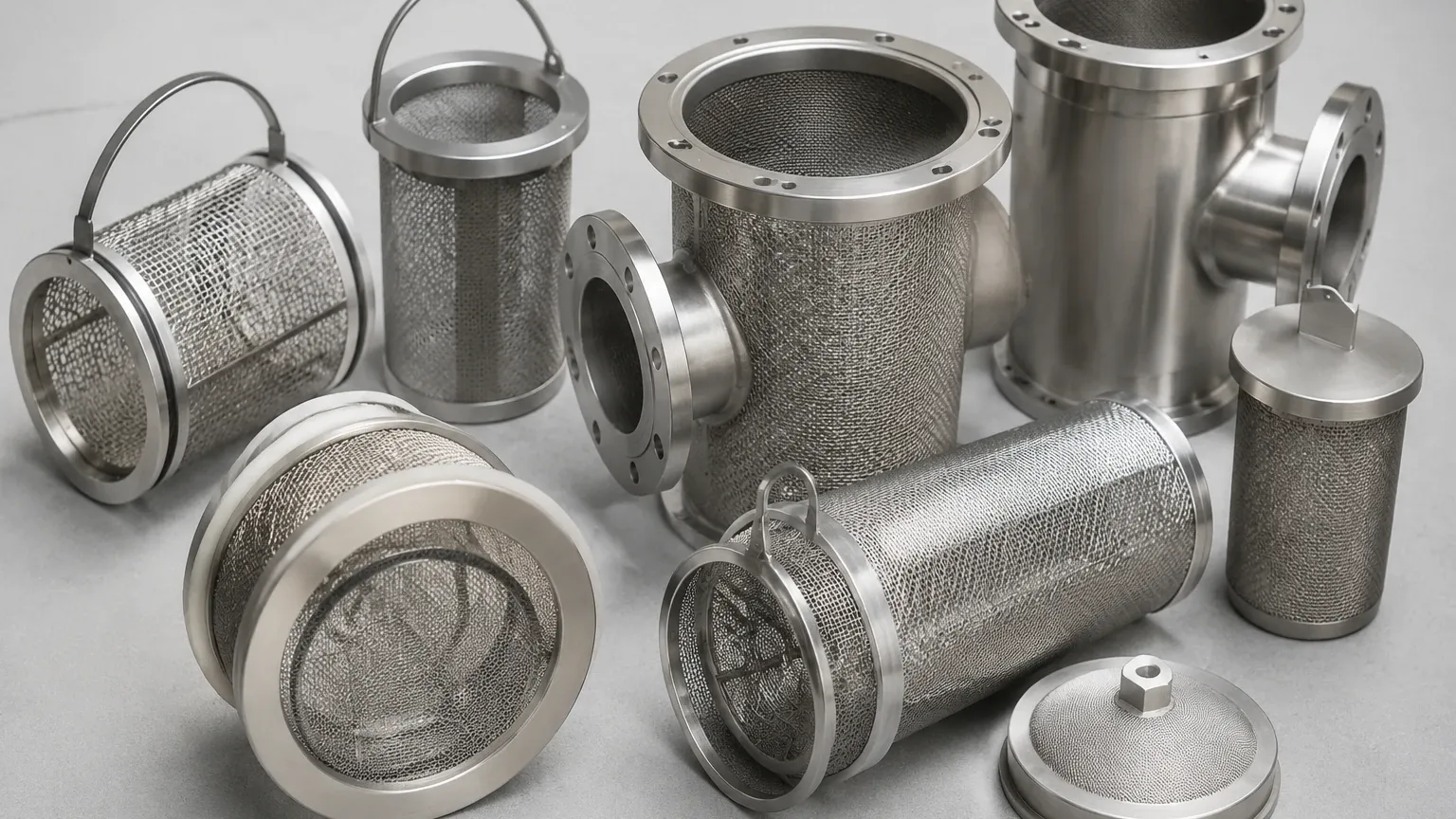
Unlike light-duty strainers, industrial Strainers & Baskets often feature a multi-layer construction. This may include a fine inner mesh for filtration supported by a coarser outer mesh or a perforated metal plate. This "layered" approach prevents the fine mesh from deforming under the hydraulic pressure of the fluid flow, extending the service life of the component significantly.
Operational Challenges in Fluid Separation
Implementing straining solutions at an industrial scale involves addressing several variables that do not affect small-batch processing. Engineers must calculate the Total Cost of Ownership (TCO) by evaluating the following risks and performance metrics.
Pressure Drop (ΔP)
Every strainer introduces a degree of resistance to the flow. As the strainer captures particles, the pressure drop across the screen increases. If the screen is not sized correctly for the flow rate, the resulting backpressure can damage pumps or lead to "blow-by," where particles are forced through the mesh. Industrial designs prioritize a low initial pressure drop to provide a larger "dirt-holding capacity" before cleaning is required.
Mechanical Fatigue
In systems where a spiral or auger presses material against the strainer screen—a common mechanism in pulp processing—the screen is subjected to constant mechanical stress. Industrial manufacturers like Kaifil address this through precision welding techniques, such as TIG (Tungsten Inert Gas) or plasma welding, which ensure that the seams of the conical or cylindrical filters do not fail under stress.
Customization and OEM Integration
Many industrial systems require bespoke filtration components that fit into existing machinery. Whether it is a modification of the Victorio strainer concept or a standard pipeline basket, customization is often necessary to meet specific process requirements.
Tailored Geometry
Standard sizes rarely meet the needs of specialized chemical or food processing lines. Custom manufacturing allows for the adjustment of:
* Flange and Connection Types: Ensuring a leak-proof fit with existing piping.
* Handle and Lifting Lug Configurations: Facilitating easy removal for cleaning in heavy-duty basket strainers.
* Internal Baffles: Directing flow to ensure even distribution across the entire surface area of the mesh.
Surface Treatments
To enhance the performance of stainless steel strainers, various surface treatments can be applied. Electropolishing, for instance, reduces surface roughness at a microscopic level. This is particularly important in the pharmaceutical and food industries, as it minimizes the ability of bacteria to adhere to the metal and makes the cleaning process more effective.
Maintenance and Sanitation Protocols
The longevity of industrial Strainers & Baskets is largely dependent on the maintenance regime. In B2B environments, downtime is the primary driver of cost, making the "cleanability" of a strainer a key engineering consideration.
Clean-In-Place (CIP) Compatibility
Industrial strainers must be designed to withstand CIP cycles, which involve high-temperature water and caustic cleaning agents. The materials and welds must be resistant to thermal expansion and chemical degradation. If a strainer screen is too fragile, the high-pressure spray balls used in CIP systems can tear the mesh.
Inspection and Replacement Cycles
Engineers should establish clear inspection intervals to check for:
* Wire Displacement: Where the mesh wires have moved, creating larger-than-specified openings.
* Corrosion Pitting: Small holes that can harbor contaminants.
* Structural Cracks: Particularly near weld points or support rings.
Providing a reliable supply chain for replacement screens and baskets is essential for preventing unplanned outages.
Selecting the Right Filtration Partner
Choosing a manufacturer for industrial straining components requires an assessment of their technical capabilities and quality control standards. When moving from a consumer-focused product like Victorio strainers to a professional industrial solution, the following factors should be confirmed with the supplier:
* Material Certification: Can the supplier provide Mill Test Reports (MTRs) to verify the grade of stainless steel?
* Filtration Accuracy Validation: How is the micron rating of the mesh verified?
* Customization Flexibility: Can the manufacturer produce small batches of custom-designed baskets or screens based on technical drawings?
* Durability Testing: What methods are used to ensure the structural integrity of the welds and the mesh-to-frame bonding?
By focusing on these technical parameters, procurement teams can ensure they are investing in filtration solutions that provide long-term reliability and precise performance. For those managing complex separation processes, high-quality Strainers & Baskets serve as the critical line of defense for both equipment protection and final product purity.
Conclusion
While the concept of the Victorio strainer serves as an excellent entry point for understanding solids-liquid separation, the demands of industrial processing require a more robust, engineered approach. By prioritizing high-grade stainless steel, precision mesh selection, and custom structural designs, engineers can optimize their filtration systems for maximum efficiency. Whether you are processing food products, chemicals, or industrial fluids, the right straining component is vital for maintaining the balance between flow rate and filtration accuracy.
