


Wireman Strainers
In industrial fluid handling systems, the protection of sensitive downstream equipment—such as pumps, valves, flow meters, and spray nozzles—is a primary engineering concern. Wireman strainers represent a specialized segment of industrial filtration designed to remove coarse particulate matter from liquid and gas streams. As a critical component within the broader category of Strainers & Baskets, these units utilize high-strength wire mesh and perforated metal reinforcements to ensure structural integrity under significant pressure differentials.
For engineers and procurement professionals, selecting the correct strainer involves more than simply matching a pipe diameter. It requires a deep understanding of fluid dynamics, material science, and the specific mechanical stresses of the application. This guide examines the technical specifications, selection criteria, and operational considerations of wireman strainers in modern industrial environments.
Technical Characteristics of Wireman Strainers
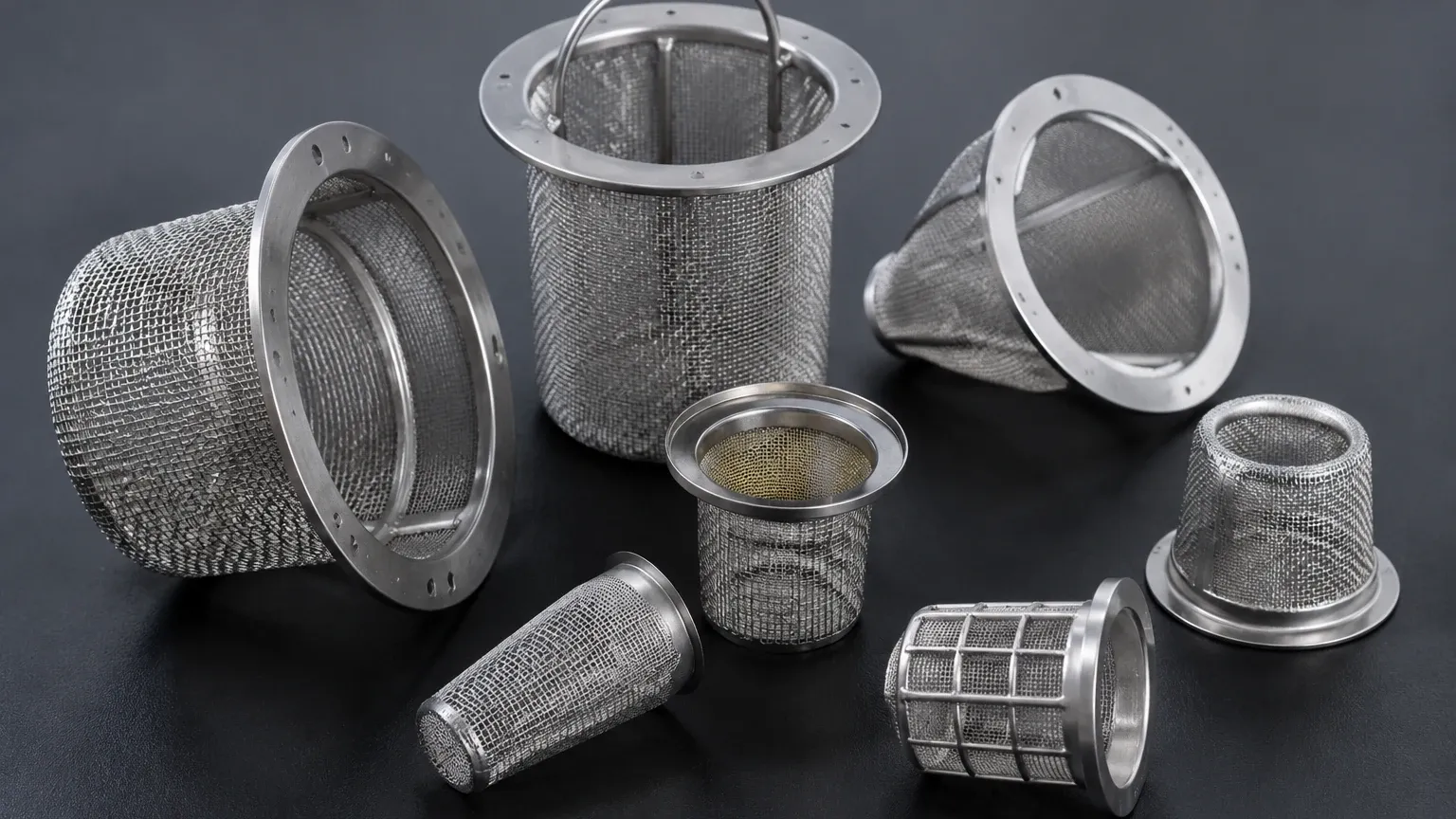
Wireman strainers are characterized by their robust construction and high-flow capacity. Unlike fine membrane filters that are designed for sub-micron separation, these strainers focus on "coarse" filtration, typically ranging from 40 microns up to several millimeters. The core of the strainer is usually a basket or cone-shaped element fabricated from stainless steel wire mesh.
Construction and Geometry
The geometry of a wireman strainer is engineered to maximize the "open area ratio." This ratio compares the total area of the holes in the mesh to the cross-sectional area of the inlet pipe. A high open area ratio is essential for minimizing initial pressure drop and extending the time between cleaning cycles.
Most industrial wireman strainers utilize a dual-layer design. The inner layer consists of a fine wire mesh that determines the filtration rating, while the outer layer is a heavy-gauge perforated metal cylinder that provides the mechanical strength necessary to resist collapsing under high flow rates. This "supported mesh" construction allows the strainer to handle high-viscosity fluids or surges in pressure that might otherwise deform a standalone mesh screen.
Integration with Strainers & Baskets
Within the hierarchy of filtration products, wireman strainers are often integrated into larger Strainers & Baskets assemblies, such as Simplex, Duplex, or Y-strainer housings. The choice of housing depends on whether the process can be shut down for maintenance (Simplex) or requires continuous operation (Duplex). The wireman element itself is the consumable or cleanable component that performs the actual separation work.
Material Engineering and Chemical Compatibility
The longevity of a wireman strainer is directly tied to its material composition. In industrial sectors such as chemical processing, food and beverage, and pharmaceuticals, the corrosive nature of the fluid or the cleaning agents used (such as CIP chemicals) dictates the grade of stainless steel required.
Stainless Steel Grades
* Type 304 Stainless Steel: The standard for general-purpose industrial applications. It offers excellent strength and good corrosion resistance for water treatment and hydraulic oil applications.
* Type 316/316L Stainless Steel: Contains molybdenum, which provides superior resistance to chlorides and pitting. This is the preferred choice for marine environments, pharmaceutical manufacturing, and acidic chemical processing.
* Specialty Alloys: For extreme environments involving high temperatures or highly aggressive chemicals, strainers may be fabricated from Monel, Hastelloy, or Duplex stainless steels. These materials prevent stress-corrosion cracking and maintain mechanical properties at elevated temperatures.
Gasket and Seal Selection
While the metal mesh is the focus, the seals within the strainer housing are equally important. Engineers must confirm that the gaskets—whether made of EPDM, Viton (FKM), PTFE, or Buna-N—are compatible with the process fluid and the operating temperature range. A failure in the seal can lead to "bypass," where unfiltered fluid escapes around the edges of the strainer basket, defeating the purpose of the filtration system.
Sizing and Selection Criteria for Engineers
Sizing a wireman strainer is a balance between filtration efficiency and system performance. An undersized strainer will lead to excessive pressure drop, cavitation in pumps, and frequent downtime for cleaning. Conversely, an oversized strainer increases the total cost of ownership and footprint of the system.
Mesh Count vs. Micron Rating
When specifying wireman strainers, it is important to distinguish between mesh count and micron rating.
* Mesh Count: Refers to the number of openings per linear inch. A higher mesh count indicates a finer screen.
* Micron Rating: Refers to the actual size of the particles that the mesh will intercept.
Engineers must also consider the "wire diameter." A thicker wire increases the durability of the mesh but reduces the open area, which in turn increases the flow resistance. For high-velocity systems, a heavier wire gauge is often necessary to prevent fatigue failure caused by fluid-induced vibration.
Calculating Pressure Drop ($ΔP$)
The "clean pressure drop" is the initial resistance the fluid encounters when passing through a new or freshly cleaned strainer. As debris accumulates, the pressure drop increases. It is an industry standard to design systems where the clean pressure drop does not exceed 2 PSI (0.14 bar). If the $ΔP$ reaches a critical threshold (often 10-15 PSI), the strainer must be cleaned to prevent damage to the mesh or the downstream pump.
Industrial Applications and Compatibility
Wireman strainers are utilized across a diverse range of sectors, each with unique performance expectations.
Chemical and Petrochemical Processing
In these environments, strainers are used to protect heat exchangers and reactors from scale, rust, and other pipeline debris. The ability to customize the mesh to specific chemical resistances is paramount. Wireman strainers used here often feature reinforced bottoms to handle the weight of heavy sludge or metallic particulates.
Food and Beverage Production
For food-grade applications, the strainers must meet stringent sanitary standards. This involves using 316L stainless steel with high-polish finishes (low Ra values) to prevent bacterial growth in crevices. Wireman strainers in this sector are designed for easy removal and cleaning, often featuring "quick-release" handles or swing-bolt covers on the housings.
Hydraulic and Lube Oil Systems
In hydraulic circuits, even small particles can cause catastrophic failure of precision valves. Wireman strainers serve as the first line of defense, removing large contaminants before the fluid reaches the high-efficiency fine filters. This staged filtration approach extends the life of the more expensive fine filter elements.
Maintenance, Cleaning, and Replacement Cycles
The total cost of ownership (TCO) of Strainers & Baskets is largely determined by maintenance requirements. Unlike disposable pleated filters, wireman strainers are typically designed to be cleaned and reused.
Monitoring Differential Pressure
The most effective way to manage a wireman strainer is through the installation of differential pressure gauges. By monitoring the pressure difference between the inlet and outlet, operators can determine the exact moment cleaning is required. Automated systems can trigger an alarm or switch flow to a secondary basket in a Duplex configuration when the $ΔP$ reaches a set point.
Cleaning Procedures
Cleaning methods vary based on the contaminant:
1. Manual Rinsing: For loose debris, a high-pressure water or air hose is often sufficient.
2. Ultrasonic Cleaning: For strainers used in oil or resin applications, ultrasonic baths can remove particles lodged deep within the mesh weave.
3. Chemical Soaking: Used when the contaminant has chemically bonded to the mesh, such as calcium scale or carbon deposits.
It is vital to inspect the mesh for signs of "blinding" (permanent clogging) or mechanical damage during each cleaning cycle. If the wire mesh shows signs of fraying or if the perforated support is dented, the element should be replaced immediately to prevent bypass.
Customization for Specialized Requirements
Standard off-the-shelf strainers often fail to meet the specific needs of complex industrial projects. Customization is a core strength of manufacturers like Kaifil, where engineering teams work to adapt wireman strainers to unique operational parameters.
OEM and Bespoke Designs
Customization options include:
* Dimensional Adjustments: Modifying the height, diameter, or flange type to fit into existing piping where space is limited.
* Reinforcement Structures: Adding internal baffles or external strengthening rings for high-pressure applications.
* Multi-Stage Filtration: Designing a single basket that contains multiple layers of different mesh sizes to provide graduated filtration in a single pass.
* Magnetic Inserts: Adding magnetic rods to the center of the wireman strainer to capture fine ferrous particles that might otherwise pass through the mesh.
When sourcing wireman strainers, providing the manufacturer with detailed data regarding flow rate, fluid viscosity, operating temperature, and the nature of the contaminants allows for a more precise engineering solution. This collaborative approach ensures that the resulting filtration component provides the optimal balance of protection and flow efficiency.
Conclusion
Wireman strainers are indispensable components in the industrial landscape, providing the essential first stage of protection for complex machinery. By understanding the nuances of mesh selection, material compatibility, and pressure drop management, engineers can significantly improve the reliability and efficiency of their fluid systems. Whether utilized in a simple water line or a complex chemical reactor, the quality of the Strainers & Baskets employed directly impacts the operational lifespan of the entire facility. Investing in high-quality, precision-engineered wireman strainers is a strategic decision that reduces long-term maintenance costs and prevents unplanned system downtime.
