


Strainer 1 Inch
In industrial fluid handling, the protection of downstream equipment is a fundamental engineering priority. A strainer 1 inch in size is one of the most common components utilized to remove unwanted solids from liquid or gas streams. While seemingly simple, the selection of a 1-inch strainer requires a deep understanding of fluid dynamics, material compatibility, and mechanical design to ensure the longevity of pumps, valves, and heat exchangers.
As a critical line of defense, these components prevent debris from causing mechanical wear, clogging narrow orifices, or contaminating final products. This guide examines the technical specifications, design variations, and engineering considerations essential for selecting and maintaining high-performance Strainers & Baskets in industrial environments.
Technical Specifications of 1-Inch Strainers
The designation "1 inch" typically refers to the Nominal Pipe Size (NPS), which corresponds to the internal diameter of the piping system the strainer is designed to serve. However, the physical dimensions of the strainer body vary significantly based on the design type and pressure rating.
Material Selection: SS304 vs. SS316
For most industrial applications, stainless steel is the preferred material due to its corrosion resistance and structural integrity under pressure.
* Stainless Steel 304: Suitable for general industrial use, including water treatment and mild chemical processing. It offers excellent strength and basic corrosion resistance at a lower cost point.
* Stainless Steel 316/316L: Higher molybdenum content provides superior resistance to chlorides and pitting. This is the standard for pharmaceutical, food and beverage, and marine applications where aggressive cleaning agents or corrosive fluids are present.
Connection Types
A strainer 1 inch in size is usually available with three primary connection methods:
1. Threaded (NPT/BSPT): Common for low to medium pressure systems where ease of installation is required.
2. Socket Weld: Used in high-pressure or high-temperature systems where a leak-proof, permanent joint is necessary.
3. Flanged (ANSI/DIN): Preferred for systems requiring frequent maintenance or where the strainer must be easily removed from the line without cutting the pipe.
Primary Design Types for 1-Inch Lines
When specifying a strainer for a 1-inch line, engineers must choose between different geometries based on the expected solids loading and the available installation space.
Y-Strainers
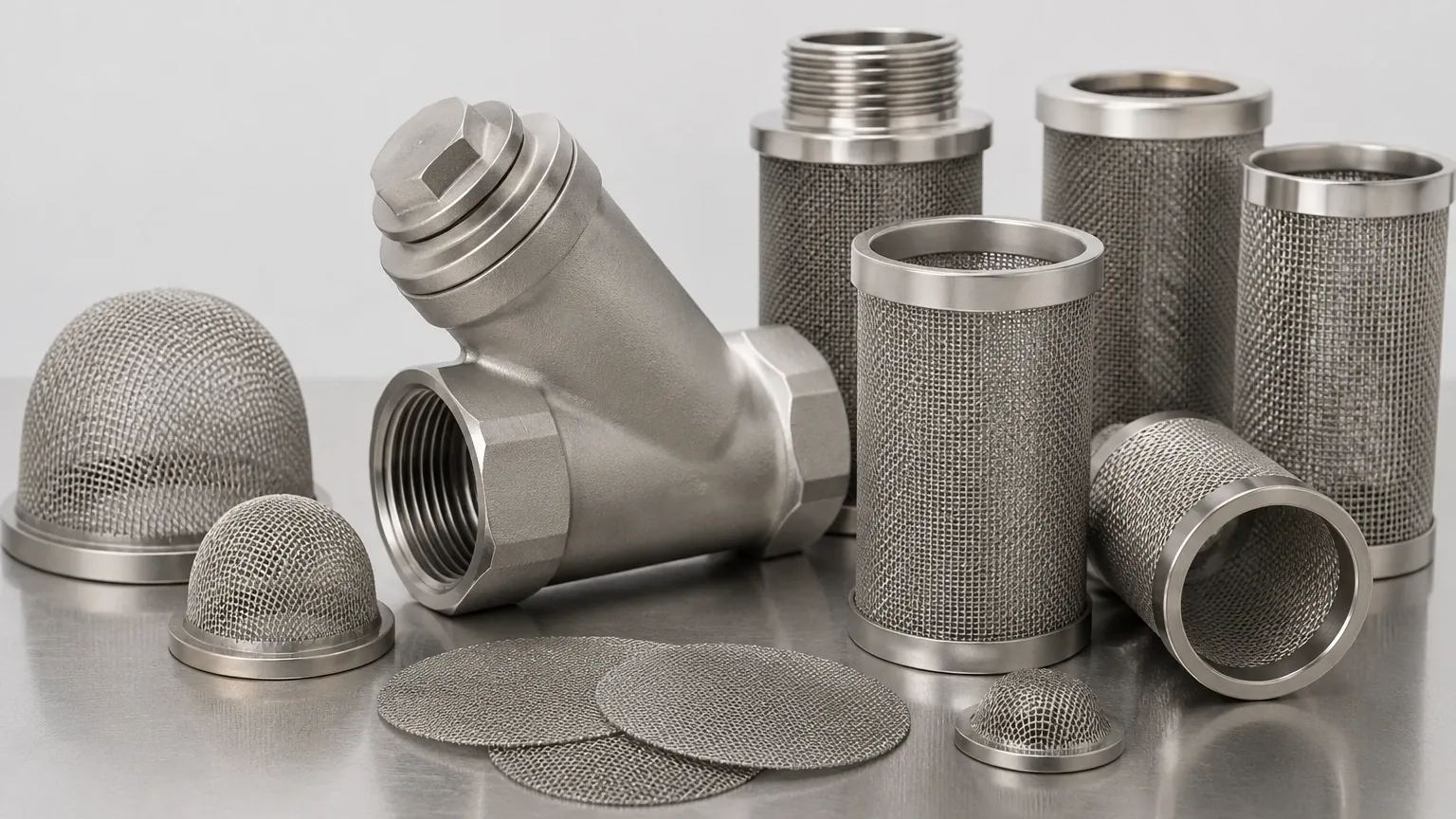
The Y-strainer is the most common design for 1-inch pipelines, particularly in steam, gas, or high-pressure liquid systems. Its compact, cylindrical shape allows it to be installed in both horizontal and vertical (downward flow) orientations.
* Advantages: Compact footprint, high pressure capability, and lower initial cost.
* Limitations: Smaller holding capacity for debris compared to basket types, leading to more frequent cleaning in high-solids applications.
Basket Strainers (Simplex)
Basket strainers feature a vertical chamber that houses a larger, removable basket. These are typically used in liquid applications where the flow is horizontal.
* Advantages: Significantly larger filtration surface area than Y-strainers, resulting in a lower pressure drop and longer intervals between cleanings.
* Engineering Consideration: Because the basket is removed from the top, these units require more vertical clearance for maintenance.
Duplex Strainers
In critical processes where flow cannot be interrupted, a duplex strainer 1 inch assembly is used. This consists of two separate strainer chambers connected by a diverter valve. When one side becomes clogged, the flow is switched to the clean chamber, allowing the operator to service the dirty basket without shutting down the system.
Engineering the Internal Filtration Media
The performance of a strainer is ultimately determined by the internal element, which is typically constructed from perforated metal or wire mesh. For a strainer 1 inch in size, the choice of media impacts both the filtration efficiency and the system's total head loss.
Perforated Metal vs. Wire Mesh
* Perforated Plate: Usually serves as the primary support or as a coarse strainer for large debris (e.g., 1/16" or 1/8" holes). It is robust and resistant to high differential pressures.
* Wire Mesh: For finer filtration (from 20 mesh down to 400 mesh), a stainless steel wire mesh is layered over a perforated metal support. This allows for the capture of much smaller particles while maintaining the structural integrity of the basket.
Calculating the Open Area Ratio
A critical engineering metric is the ratio of the strainer's open area to the cross-sectional area of the 1-inch pipe. A high-quality industrial strainer should provide an open area ratio of at least 6:1. This ensures that even as the strainer begins to collect debris, the pressure drop remains within acceptable limits, preventing cavitation in pumps or reduced flow in the process line.
Flow Dynamics and Pressure Drop (Delta P)
Every component added to a piping system introduces a degree of resistance. For a strainer 1 inch in size, engineers must calculate the clean pressure drop to ensure the system pump can handle the additional load.
Flow Coefficient (Cv)
The Cv value represents the flow of water in gallons per minute (GPM) that will pass through the strainer with a 1 psi pressure drop. A typical 1-inch Y-strainer might have a Cv ranging from 8 to 12, depending on the internal mesh. Basket strainers often have higher Cv values due to their larger internal volume.
Viscosity Considerations
If the fluid being filtered is more viscous than water (such as heavy oils or syrups), the pressure drop will increase exponentially. In these cases, it is often necessary to oversize the strainer body or select a coarser mesh to maintain the required flow rate. Failure to account for viscosity is a leading cause of premature strainer failure and system inefficiency.
Installation and Maintenance Best Practices
Proper installation is as important as the selection of the strainer itself. For a strainer 1 inch in size, following these guidelines will optimize performance:
1. Orientation: Y-strainers must be installed with the "leg" pointing downward to ensure that gravity assists in collecting debris in the sediment chamber. In vertical lines, the flow must be downward.
2. Differential Pressure Monitoring: Installing pressure gauges upstream and downstream of the strainer is the most effective way to monitor its condition. A significant increase in differential pressure indicates that the element is clogged and requires cleaning.
3. Blow-off Valves: Many 1-inch Y-strainers include a threaded plug in the cap. Replacing this plug with a ball valve (a blow-off valve) allows the operator to flush out accumulated debris without opening the strainer body, reducing downtime.
4. Cleaning Protocols: When cleaning a basket or mesh element, it should be inspected for signs of "blinded" mesh (where particles are permanently wedged in the openings) or mechanical damage. Damaged elements must be replaced immediately to prevent bypass, which could damage downstream components.
Common Risks and Selection Pitfalls
Choosing the wrong strainer 1 inch configuration can lead to significant operational risks. Engineers should be aware of the following common issues:
* Undersizing the Mesh: Selecting a mesh that is too fine for the application will lead to rapid clogging and excessive pressure drops. The goal should be to select a mesh that is just fine enough to protect the most sensitive downstream component, rather than trying to achieve the "cleanest" possible fluid.
* Material Incompatibility: Using SS304 in a high-chloride environment can lead to stress corrosion cracking. Always verify the chemical compatibility of the housing and the mesh with the process fluid.
* Ignoring Gasket Materials: While the body may be stainless steel, the seals (EPDM, PTFE, Viton) must also be compatible with the fluid temperature and chemistry. A 1-inch strainer in a high-temperature steam line requires specialized gaskets to prevent leaks.
Confirming Requirements Before Procurement
Before moving forward with the procurement of a strainer 1 inch unit, technical professionals should confirm the following data points with their manufacturer:
* Maximum Operating Pressure and Temperature: Ensure the housing rating (e.g., Class 150, 300, or 600) exceeds the system's peak conditions.
* Particle Size Distribution: What is the smallest particle that must be removed to protect downstream equipment?
* Flow Rate (Minimum and Maximum): Will the strainer handle the full range of process flows without excessive pressure drop?
* Maintenance Access: Is there sufficient clearance to remove the basket or unscrew the Y-strainer cap?
Customization and OEM Solutions
In many specialized industrial applications, standard off-the-shelf strainers may not meet the specific requirements of the process. Customization options for a strainer 1 inch assembly include specialized mesh linings, magnetic inserts for capturing fine ferrous particles, or unique housing geometries for tight spaces. Manufacturers like Kaifil specialize in providing engineered solutions that balance filtration efficiency with structural durability.
Whether you are designing a new hydraulic system, upgrading a chemical processing line, or maintaining a food production facility, selecting the correct Strainers & Baskets is a vital step in ensuring process reliability. By focusing on the technical fundamentals of material selection, mesh design, and flow dynamics, engineers can implement a filtration strategy that minimizes maintenance costs and maximizes equipment uptime.
In summary, the strainer 1 inch is a versatile and essential component. From the robust Y-strainer used in steam lines to the high-capacity basket strainer used in liquid processing, understanding the engineering nuances of these devices allows for better system design and more efficient industrial operations. Always consult with a filtration expert to ensure that your specific application requirements—including micron rating, pressure limits, and chemical compatibility—are fully met by the chosen hardware.
