


Strainer 100 Mesh
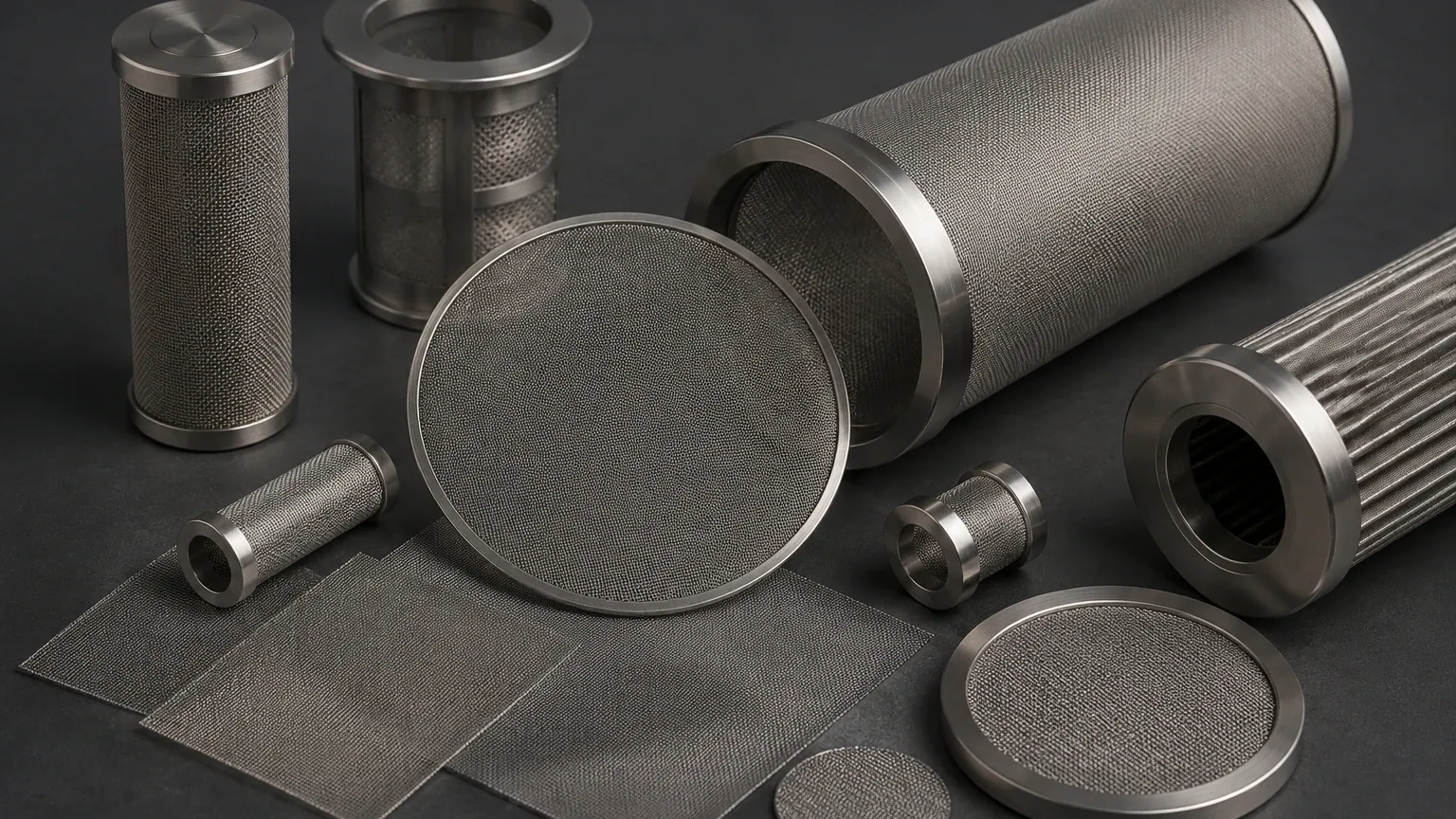
In industrial fluid handling, the selection of filtration media is a critical engineering decision that directly impacts equipment longevity, product purity, and operational efficiency. Among the various specifications available for Strainers & Baskets, the strainer 100 mesh configuration stands as one of the most versatile and widely utilized standards. It provides a balance between fine particle retention and manageable pressure drop, making it a staple in chemical processing, hydraulic systems, and food production.
Selecting a 100 mesh strainer requires more than just identifying the mesh count. Engineers must account for material compatibility, flow velocity, the physical characteristics of the contaminants, and the structural integrity of the filter element under varying pressure loads. As a specialized manufacturer of stainless steel filtration solutions, Kaifil provides precision-engineered components designed to meet these rigorous industrial requirements.
Understanding 100 Mesh in Industrial Filtration
The term "mesh" refers to the number of openings per linear inch of the wire cloth. A strainer 100 mesh specification means there are 100 wires and 100 openings in every inch of the material. However, the mesh count alone does not define the filtration capability; the wire diameter is equally important.
In a standard 100 mesh stainless steel weave, the wire diameter is typically around 0.0045 inches (0.114 mm). This results in an aperture or opening size of approximately 0.0055 inches, which translates to 149 microns. This micron rating places 100 mesh in the category of fine straining. It is capable of capturing sand, fine grit, and larger suspended solids that could otherwise damage sensitive downstream components like high-pressure pumps, spray nozzles, and heat exchangers.
One of the primary advantages of using 100 mesh in industrial Strainers & Baskets is the "Open Area" percentage. For a standard 100 mesh screen, the open area is generally around 30% to 36%. This ratio is high enough to allow for efficient flow rates while maintaining sufficient structural strength to resist deformation under standard operating pressures.
Technical Specifications and Performance Metrics
When evaluating a strainer 100 mesh for a specific application, technical professionals must look beyond the surface-level dimensions. The performance of the mesh is governed by several physical properties:
1. Micron Rating: As noted, 100 mesh corresponds to approximately 149 microns. This is a "nominal" rating in most wire mesh applications, meaning it will stop the vast majority of particles of that size, though some elongated particles may pass through depending on their orientation.
2. Wire Gauge: The thickness of the wire used in the weave affects both the durability and the flow capacity. Thicker wires increase the burst strength of the basket but reduce the open area, leading to higher initial pressure drops.
3. Weave Type: Most 100 mesh strainers utilize a Plain Weave, where each warp wire crosses alternately over and under each weft wire. This provides a consistent aperture size and is easy to clean. For specialized high-pressure applications, a Twilled Weave might be used, though this is less common at the 100 mesh level.
4. Structural Support: Because 100 mesh wire cloth is relatively thin (similar to a fine fabric), it is rarely used as a standalone structural element in industrial strainers. It is typically bonded or welded to a perforated metal backup cylinder or a heavy-duty frame to prevent collapsing under differential pressure.
Material Selection for 100 Mesh Strainers & Baskets
The environment in which the strainer 100 mesh operates dictates the material of construction. Stainless steel is the industry standard due to its mechanical strength and resistance to corrosion.
* Stainless Steel 304: This is the most common material for general industrial use. It offers excellent corrosion resistance for water treatment, food and beverage, and most atmospheric conditions. It is cost-effective and maintains its integrity at moderately high temperatures.
* Stainless Steel 316/316L: For more demanding environments, such as chemical processing or marine applications, 316 stainless steel is preferred. The addition of molybdenum enhances resistance to pitting and crevice corrosion, particularly in chloride-rich environments. The "L" (low carbon) version is essential if the strainer requires extensive welding, as it prevents carbide precipitation that can lead to intergranular corrosion.
* Specialty Alloys: In highly corrosive or high-temperature scenarios, materials like Monel, Hastelloy, or Inconel may be specified. These are often used in the petrochemical industry where 100 mesh filtration is required for aggressive acidic or alkaline streams.
Key Applications for 149-Micron Filtration
The 149-micron threshold provided by a strainer 100 mesh is a "sweet spot" for many industrial processes. It is fine enough to protect precision equipment but coarse enough to avoid the rapid clogging associated with sub-100 micron filters.
Protection of Spray Nozzles
In coating and cleaning systems, spray nozzles have precise orifices that can easily be blocked by small particles. A 100 mesh basket strainer installed upstream ensures that the fluid is free of debris that could disrupt the spray pattern or cause complete blockage, which would lead to costly downtime and product defects.
Hydraulic and Lube Oil Systems
Hydraulic fluids and lubricating oils must be kept clean to prevent wear on bearings and valves. While primary filtration often goes much finer, a 100 mesh strainer serves as an excellent suction-side filter or "safety screen" to catch larger contaminants before they reach the main pump.
Food and Beverage Processing
In the production of juices, syrups, and dairy products, 100 mesh strainers are used to remove pulp, seeds, or undissolved solids. The use of 316L stainless steel ensures compliance with sanitary standards and allows for frequent cleaning and sterilization.
Water Treatment and Irrigation
For industrial cooling water or large-scale irrigation, 100 mesh is effective at removing fine sand and organic matter that could clog emitters or foul heat exchanger plates.
Engineering Considerations: Flow Rate and Pressure Drop
One of the most critical aspects of implementing Strainers & Baskets with a 100 mesh screen is calculating the pressure drop ($ΔP$). As fluid passes through the mesh, the restriction causes a loss of pressure. This loss increases as the mesh becomes blinded by captured particles.
Engineers must ensure that the total surface area of the strainer 100 mesh is sufficient for the intended flow rate. A common mistake is undersizing the strainer, which leads to high fluid velocity through the mesh. High velocity can cause "impingement," where particles are forced through the mesh openings or become deeply embedded, making cleaning difficult. It can also lead to premature fatigue of the wire cloth.
To optimize performance, it is recommended to design the system with a "clean" pressure drop of less than 2 PSI. When the pressure drop reaches a predetermined limit (often 10-15 PSI), the strainer should be cleaned or replaced. Monitoring this via differential pressure gauges is a standard best practice in industrial filtration.
Custom Design and OEM Manufacturing Capabilities
Every industrial system has unique constraints, ranging from space limitations to specific flow characteristics. Standard off-the-shelf strainers often fail to meet the exact requirements of complex engineering projects. This is where custom manufacturing becomes essential.
Kaifil specializes in the production of custom strainer 100 mesh components. Our manufacturing capabilities include:
* Custom Geometry: Whether the application requires a conical (witch's hat) strainer, a pleated cartridge for increased surface area, or a large-capacity basket, we can engineer the dimensions to fit existing housings.
* Reinforcement Options: We provide various support structures, such as perforated metal cores or external mesh shrouds, to ensure the 100 mesh media can withstand high differential pressures without tearing.
* Edge Treatments: To ensure a bypass-free seal, we offer various flange and gasket options, including machined rings, silicone seals, and Viton O-rings.
* Multi-Layer Construction: In some cases, a 100 mesh layer is combined with a coarser outer mesh for structural support and a finer inner layer for graduated filtration, extending the service life of the element.
Maintenance and Operational Longevity
The durability of a strainer 100 mesh depends heavily on the cleaning protocol. Because these are mechanical barriers, they can be cleaned and reused multiple times, offering a lower total cost of ownership compared to disposable cartridges.
Cleaning Methods
* Backwashing: In automated systems, reversing the flow can dislodge particles from the surface of the mesh.
* Ultrasonic Cleaning: For 100 mesh screens used with sticky or viscous fluids, ultrasonic baths are highly effective at removing microscopic debris trapped in the wire intersections.
* Chemical Cleaning: If the mesh is fouled with scale or organic polymers, compatible chemical solvents can be used to restore the open area without damaging the stainless steel.
Inspection Points
During routine maintenance, technical teams should inspect the 100 mesh for "blinding" (permanent blockage of the pores), wire displacement, or signs of corrosion. Even small gaps in the mesh can allow oversized particles to pass, compromising the entire filtration strategy. If the mesh appears shiny or thinned in certain areas, it may be a sign of erosion from high-velocity particles, indicating that a larger strainer body or a different material may be required.
By selecting high-quality Strainers & Baskets and adhering to rigorous engineering standards, industrial facilities can achieve reliable, long-term filtration performance. Whether you are designing a new system or optimizing an existing process, the 100 mesh configuration remains a proven solution for precision debris control.
