


1 Gallon Elastic Top Strainers
In the landscape of industrial filtration, the requirement for efficient, small-batch liquid processing often leads engineers and procurement specialists to versatile solutions like 1 gallon elastic top strainers. While frequently associated with the coatings and paint industry, these filtration components serve a critical role across a broad spectrum of industrial applications where precision, ease of use, and container compatibility are paramount. As a subset of the broader category of Strainers & Baskets, these specialized bags are engineered to provide a secure, bypass-resistant fit over standard one-gallon containers, ensuring that particulate matter is effectively removed from the process stream.
Selecting the appropriate strainer involves more than simply matching the volume of the container. It requires a technical understanding of material science, micron ratings, and the mechanical stresses involved during the filtration process. For industrial professionals, the goal is to optimize throughput while maintaining the integrity of the final product.
The Fundamentals of 1 Gallon Elastic Top Strainers in Industrial Environments
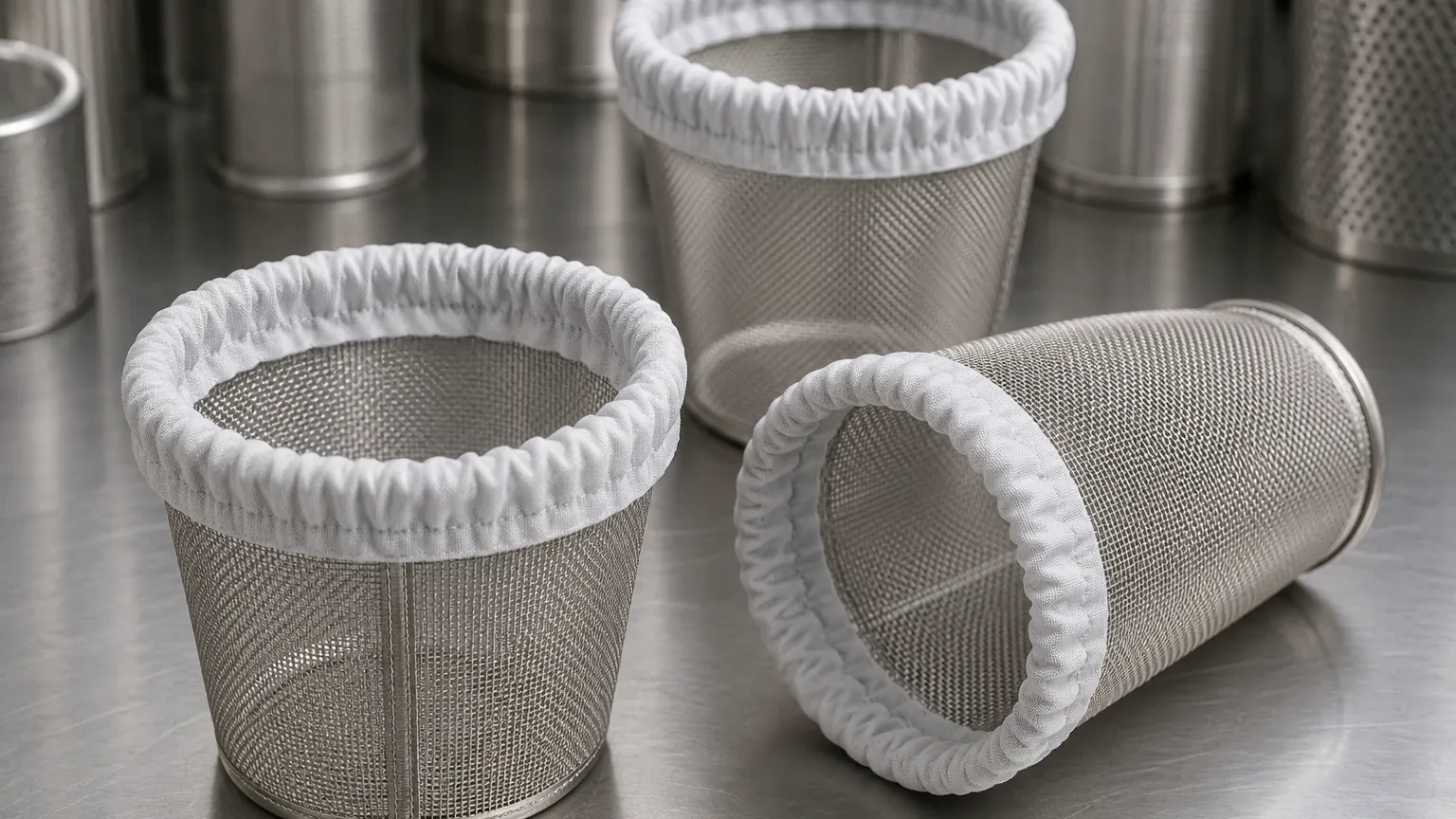
1 gallon elastic top strainers are designed as a primary or secondary filtration stage for liquids stored or processed in small-volume pails. The "elastic top" feature is an engineering solution to a common problem in gravity-fed or manual filtration: the risk of the filter slipping into the container or allowing fluid to bypass the mesh. By utilizing a high-tension elastic band sewn into the rim, the strainer creates a temporary but secure seal around the circumference of the bucket.
In an industrial context, these strainers are typically used for:
* Removing Oversized Particulates: Filtering out skins, clumps, or undissolved solids from paints, resins, and adhesives.
* Batch Quality Control: Ensuring that small production runs meet specific purity standards before packaging.
* Equipment Protection: Protecting downstream sprayers, nozzles, or precision pumps from clogging or abrasive wear.
Unlike rigid Strainers & Baskets used in high-pressure piping systems, elastic top strainers offer a flexible geometry that conforms to the shape of the container, maximizing the available surface area for filtration. This flexibility is essential when dealing with high-viscosity fluids that require maximum contact with the mesh to maintain flow rates.
Material Engineering: Nylon vs. Polyester in Mesh Filtration
The performance of 1 gallon elastic top strainers is largely dictated by the synthetic polymers used in their construction. The two most common materials are Nylon (Polyamide) and Polyester (PET). Each material presents distinct chemical and mechanical properties that must be aligned with the specific application.
Nylon (Polyamide) Mesh
Nylon is a popular choice for industrial strainers due to its exceptional abrasion resistance and high mechanical strength. From an engineering perspective, Nylon is hydrophilic, meaning it can absorb small amounts of water, which may lead to slight dimensional changes in some environments. However, its resistance to alkaline solutions and most organic solvents makes it ideal for many chemical processing applications. Nylon mesh is typically woven with high precision, offering consistent pore sizes that are critical for achieving repeatable filtration results.
Polyester (PET) Mesh
Polyester is often preferred when working with acidic solutions or in applications where dimensional stability is critical. Unlike Nylon, Polyester is hydrophobic and does not swell when exposed to water. It also offers excellent UV resistance and can withstand slightly higher continuous operating temperatures. For engineers managing processes with fluctuating pH levels, Polyester provides a broader range of chemical compatibility.
When evaluating 1 gallon elastic top strainers, it is also important to consider the construction of the seams. Industrial-grade strainers often utilize double-stitched or overlocked seams to prevent fraying and ensure that the bag can withstand the weight of the liquid and the accumulated solids without bursting.
Technical Specifications: Micron Ratings and Particle Retention
The most critical specification for any filtration component is its micron rating. This value defines the size of the particles that the mesh is designed to trap. For 1 gallon elastic top strainers, micron ratings typically range from "Extra Fine" (approx. 100 microns) to "Coarse" (approx. 600+ microns).
* Fine Filtration (100–200 Microns): Used for low-viscosity liquids where high clarity is required, such as thin varnishes, stains, or light oils.
* Medium Filtration (200–400 Microns): The standard for most industrial paints and coatings, effectively removing skins and larger debris without significantly impeding flow.
* Coarse Filtration (400–800 Microns): Suitable for high-viscosity materials or as a pre-filtration step to remove large contaminants before a finer secondary stage.
It is important to distinguish between "nominal" and "absolute" micron ratings. Most elastic top strainers are rated nominally, meaning they will trap a high percentage of particles at the specified size, but some bypass may occur due to the flexible nature of the mesh and the potential for pore enlargement under heavy loads. For applications requiring absolute retention, engineers may need to look toward multi-layered Strainers & Baskets or rigid filter cartridges.
Engineering the Elastic Top: Seal Integrity and Bypass Prevention
The elastic component of the strainer is more than a convenience feature; it is a functional seal. In industrial filtration, "bypass" refers to any fluid that escapes the filtration medium without being processed. If a strainer slips or does not fit tightly, contaminated fluid can flow over the rim and into the "clean" portion of the container.
High-quality 1 gallon elastic top strainers utilize industrial-grade elastic that maintains its tension even when exposed to solvents or varying temperatures. The tension must be sufficient to hold the weight of the bag when it is full of liquid. Engineers should evaluate the "grip" of the elastic on different bucket materials (such as HDPE plastic vs. tin-plated steel) to ensure a reliable seal during the entire filtration cycle.
Furthermore, the depth of the bag is a key design consideration. A bag that is too shallow will have limited surface area, leading to rapid blinding (clogging), while a bag that is too deep may rest on the bottom of the container, restricting flow and reducing the effective filtration area.
Industrial Applications: From Coatings to Chemical Processing
While the 1-gallon format is common in DIY paint applications, its industrial utility is found in specialized, small-scale manufacturing and laboratory settings.
Paint and Coatings Manufacturing
In the production of specialized coatings, 1 gallon elastic top strainers are used during the tinting and mixing stages. When small quantities of pigment or additives are introduced to a base, these strainers ensure that any undissolved particles are removed before the product is moved to the final packaging line.
Chemical and Laboratory Use
Laboratories often use these strainers for the initial separation of solids from liquids in bench-scale testing. The ability to quickly deploy a strainer over a standard beaker or pail allows for rapid processing without the need for complex vacuum filtration setups.
Food and Beverage Processing
In the food industry, specifically for small-batch artisanal oils, syrups, or extracts, stainless steel or food-grade synthetic Strainers & Baskets are essential. 1 gallon elastic top strainers made from FDA-compliant materials provide a cost-effective way to remove botanical matter or sediment from high-value liquid products.
Selection Criteria for B2B Procurement and Customization
When purchasing 1 gallon elastic top strainers for industrial use, procurement teams should look beyond the unit price and consider the total cost of quality. Key factors to confirm with a manufacturer like Kaifil include:
1. Chemical Compatibility: Does the mesh and the elastic material resist the specific solvents or chemicals used in your process?
2. Burst Strength: Can the strainer support the weight of the specific gravity of your liquid? High-density fluids put significantly more stress on the seams and the elastic band.
3. Consistency of Micron Rating: Does the manufacturer provide batch testing or certifications to ensure that the mesh size is consistent across all units?
4. Customization Options: In many industrial scenarios, a standard off-the-shelf bag may not suffice. Customizations can include specialized mesh materials (such as stainless steel wire mesh inserts), reinforced bottoms, or specific elastic tensions tailored to non-standard container rims.
For organizations requiring more robust or permanent solutions, exploring the full range of Strainers & Baskets is recommended. While elastic top bags are often treated as consumables, rigid stainless steel baskets offer longevity and the ability to be cleaned and reused indefinitely in demanding environments.
Optimizing Filtration Efficiency and Total Cost of Ownership
To maximize the efficiency of 1 gallon elastic top strainers, industrial users should implement standardized filtration protocols. This includes determining the optimal replacement cycle. Using a strainer past its point of saturation (blinding) not only slows down production but can also lead to seam failure due to increased hydrostatic pressure.
Moreover, the transition from disposable synthetic strainers to reusable metal Strainers & Baskets should be evaluated based on the volume of waste generated and the cost of replacement. In high-volume environments, the initial investment in a custom stainless steel strainer may be recouped quickly through reduced consumable costs and improved filtration consistency.
Kaifil specializes in bridging the gap between standard filtration products and high-performance engineering solutions. By understanding the nuances of fluid dynamics and material science, we help our partners select the right filtration components—whether it is a simple 1 gallon elastic top strainer for a quick batch check or a complex, custom-engineered metal filter cartridge for a continuous chemical process. Ensuring the purity of your liquid products starts with selecting a filtration partner that prioritizes technical accuracy and manufacturing excellence.
